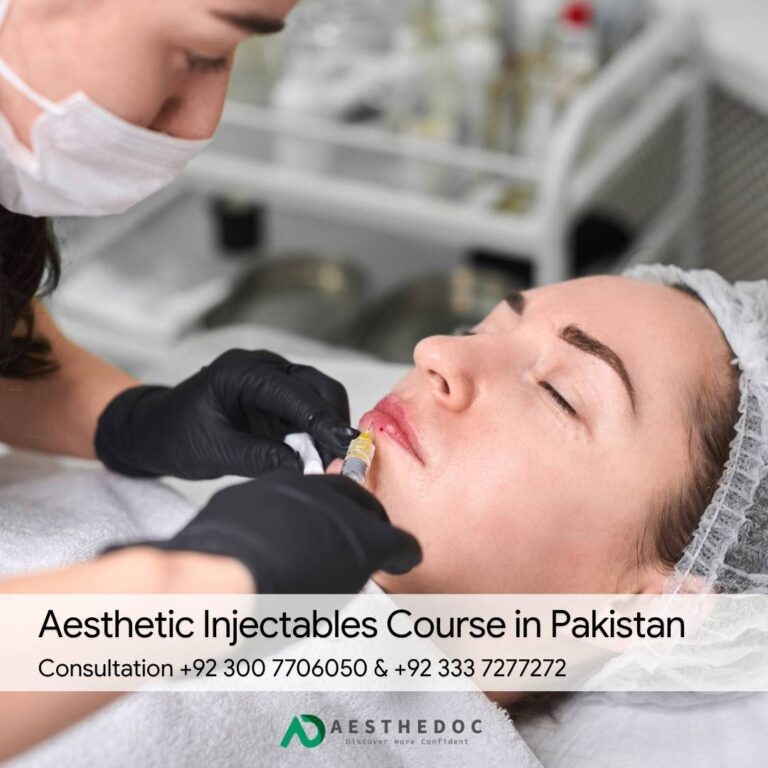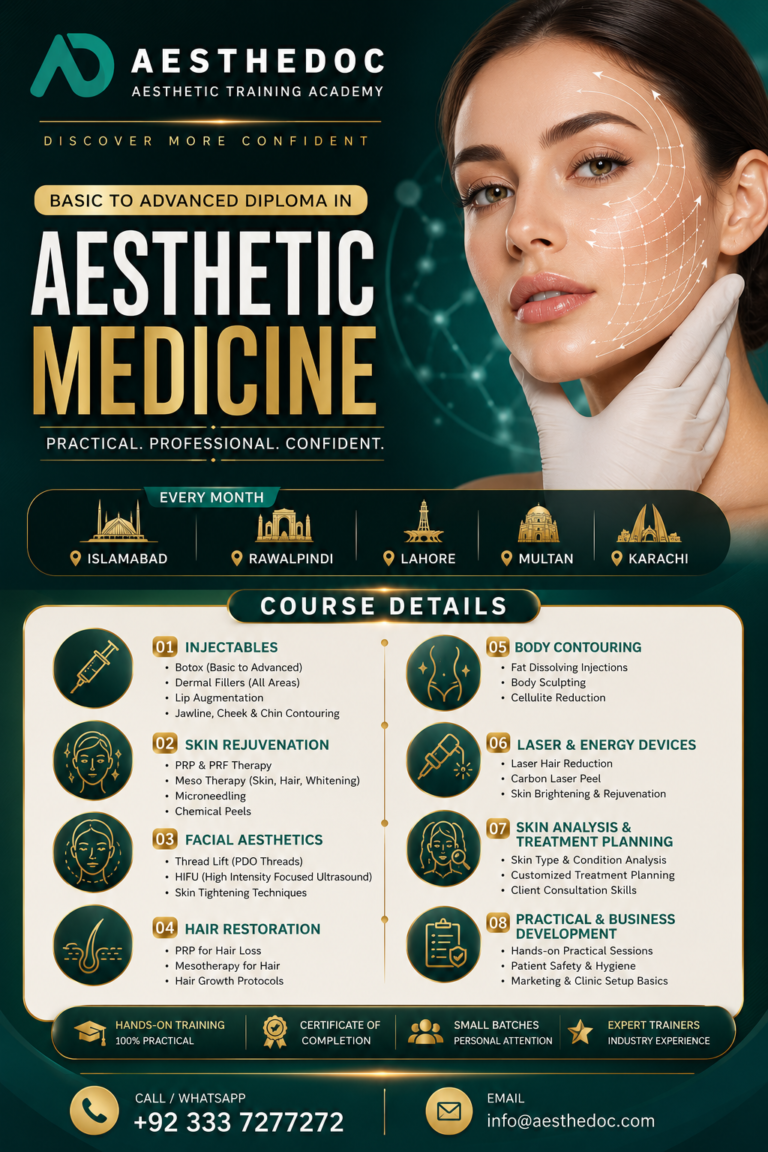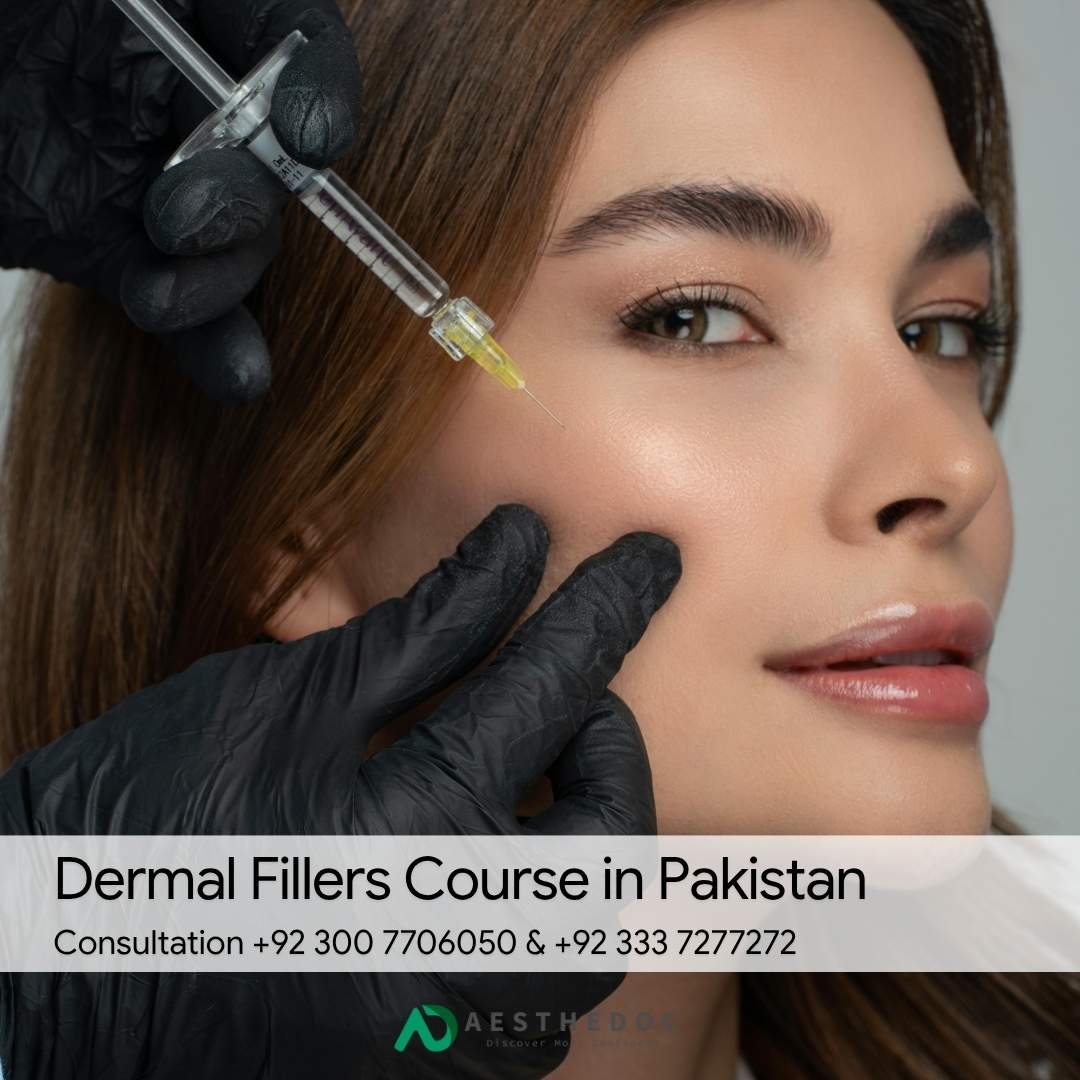
The aesthetic medicine industry in Pakistan continues its remarkable expansion, with non-surgical injectable treatments leading the surge. Dermal fillers have emerged as one of the most requested procedures for achieving youthful volume, defined contours, and natural-looking rejuvenation. In bustling cities like Islamabad, Rawalpindi, Lahore, Karachi, and Multan, clients seek subtle enhancements that boost confidence without surgery or long recovery.
A professional Dermal Fillers Course in Pakistan provides doctors, dermatologists, and aesthetic practitioners with the advanced skills needed to meet this demand safely and profitably. Whether you want to integrate fillers into your existing practice or build a specialized injectable clinic, this training delivers immediate clinical competence and strong business potential.
This comprehensive guide covers every essential aspect: science behind fillers, filler types and technologies, detailed course curriculum, hands-on mastery, complication management, pricing strategies, marketing, and long-term career success in Pakistan’s competitive market.
What Are Dermal Fillers?
Dermal fillers are injectable gels, primarily hyaluronic acid (HA)-based, designed to restore lost volume, smooth wrinkles, and enhance facial contours. They work by adding immediate structure beneath the skin, attracting water for hydration, and stimulating collagen over time.
Mechanism of Action: Hyaluronic acid fillers bind up to 1000 times their weight in water, creating plumpness and smoothness. Non-HA fillers like calcium hydroxylapatite (CaHA) or poly-L-lactic acid (PLLA) stimulate natural collagen production for longer-lasting results.
Key Benefits for Pakistani Clients:
- Instant visible improvement (same-day results)
- Minimal to no downtime
- Customizable for natural “desi” facial harmony
- Reversible (for HA fillers using hyaluronidase)
- Versatile across multiple facial zones
Unlike temporary creams or makeup, fillers offer 6–24 months of enhancement depending on the product and area.
Why Dermal Fillers Demand is Exploding in Pakistan
Several powerful drivers fuel this growth:
- Social Media & Beauty Standards — Instagram, TikTok, and bridal culture drive demand for plump lips, high cheekbones, and sharp jawlines.
- Rising Disposable Income — Middle and upper-middle class expansion makes treatments accessible.
- Non-Surgical Preference — Busy professionals and homemakers avoid surgical risks and downtime.
- Celebrity & Influencer Influence — Local and international stars normalize subtle enhancements.
- Medical-Dermatological Integration — Treatments for volume loss due to aging, weight changes, or conditions like HIV lipoatrophy.
- High Repeat Rate — Maintenance sessions create loyal clientele and recurring revenue.
Pakistan’s facial aesthetics market, including fillers, shows strong upward trajectory aligned with regional growth patterns.
Who Should Enroll in a Dermal Fillers Course in Pakistan?
This program targets:
- MBBS Doctors & Dermatologists
- Plastic Surgeons & Aesthetic Physicians
- General Practitioners with interest in aesthetics
- BDS Dentists (especially for facial work)
- Experienced Nurses & Injectors under supervision
- Beginners with strong medical background
Most foundation courses welcome licensed medical professionals. Advanced modules require prior injectable experience.
Course Overview – Professional Dermal Fillers Training
Duration: 2–7 days intensive (foundation to advanced diplomas) Mode: Blended theory, live demonstrations, and supervised hands-on practice Certification: Academy-issued, often aligned with international standards (e.g., CPD/CME points) Training Cities: Islamabad, Lahore, Karachi, Rawalpindi, Multan
Quality programs emphasize facial anatomy, safe injection planes, cannula vs needle techniques, and Pakistan-specific considerations like diverse Fitzpatrick skin types (III–VI).
Complete Course Modules (Detailed Breakdown)
1. Facial Anatomy & Aging Process
Deep knowledge prevents complications.
- Layer-by-layer facial anatomy (fat pads, ligaments, vessels, nerves)
- Danger zones (nasolabial, infraorbital, temporal)
- Gender and ethnic variations in Pakistani faces
- Dynamic vs static wrinkles
- Volume loss patterns (mid-face, temples, tear troughs)
2. Science of Dermal Fillers & Product Selection
Types of Dermal Fillers Comparison Table:
| Filler Type | Main Ingredient | Duration | Best Areas | Viscosity & G Prime | Reversibility | Approx. Cost per Syringe (PKR) | Key Brands Available in Pakistan |
|---|---|---|---|---|---|---|---|
| Hyaluronic Acid (HA) | Cross-linked HA | 6–18 months | Lips, cheeks, nasolabial, under-eye | Variable (low to high) | Yes (Hyaluronidase) | 25,000 – 80,000 | Juvederm, Restylane, Teosyal, Belotero |
| Calcium Hydroxylapatite | CaHA microspheres | 12–18 months | Cheeks, jawline, hands | High | No | 40,000 – 90,000 | Radiesse |
| Poly-L-Lactic Acid (PLLA) | PLLA | 18–24+ months | Temples, cheeks (gradual) | Stimulatory | No | 50,000 – 1,00,000+ | Sculptra |
| Polymethylmethacrylate | PMMA | Permanent | Deep volume (rarely first-line) | Very High | No | Higher | Bellafill (limited) |
Trainees learn rheology (how fillers behave), cross-linking technology, and how to match products to patient needs.
3. Patient Consultation & Treatment Planning
- Medical history, allergies, medications
- Aesthetic assessment tools (golden ratio, facial thirds)
- Managing expectations and photography
- Consent forms and documentation
- Combination protocols (fillers + Botox, threads, PRP)
4. Injection Techniques – Foundation to Advanced
Core Techniques Covered:
- Linear threading, fanning, bolus, micro-droplet
- Needle vs cannula (blunt-tip safety)
- Aspiration technique
- Depth control (supraperiosteal, subcutaneous, dermal)
Popular Treatment Areas Protocols Table:
| Treatment Area | Common Filler Type | Typical Volume (ml) | Technique Highlights | Average Price per Session (PKR) | Longevity |
|---|---|---|---|---|---|
| Lip Augmentation | Soft HA | 0.5 – 1.5 | Russian lips, tenting, vermillion border | 25,000 – 60,000 | 6–12 months |
| Cheek / Mid-Face | Medium-High HA or CaHA | 1 – 3 | Supraperiosteal bolus | 40,000 – 1,00,000 | 12–18 months |
| Tear Trough / Under Eye | Low G’ HA | 0.5 – 1 | Cannula, careful layering | 35,000 – 70,000 | 9–12 months |
| Nasolabial Folds | Medium HA | 1 – 2 | Linear + fanning | 30,000 – 65,000 | 9–15 months |
| Jawline & Chin | High G’ HA or CaHA | 2 – 4 | Structural contouring | 50,000 – 1,50,000 | 12–24 months |
| Temple Hollows | HA or PLLA | 1 – 2 per side | Deep bolus | 40,000 – 80,000 | 12+ months |
| Full Liquid Facelift | Combination | 4 – 8 | Multi-layer approach | 1,50,000 – 4,00,000+ | 12–18 months |
5. Complication Management & Safety
Critical module for ethical practice.
- Immediate: Vascular occlusion, bruising, swelling
- Delayed: Nodules, granulomas, Tyndall effect, biofilm
- Emergency protocols (hyaluronidase protocol, aspirin, hyperbaric oxygen awareness)
- Prevention through anatomy knowledge and slow injection
- Case studies from real scenarios in Pakistan and region
6. Advanced & Combination Therapies
- Liquid rhinoplasty
- Hand rejuvenation
- Non-surgical facelift protocols
- Skin boosters & hybrid fillers
- Gender-specific approaches (masculine jaw vs feminine contours)
7. Business, Marketing & Clinic Operations
- Pricing psychology and packages
- Inventory management & supplier sourcing
- Digital marketing (Reels showing natural transformations)
- Legal aspects and clinic licensing in Pakistan
- Building trust with conservative clientele
Hands-On Training – The Cornerstone of Mastery
Superior courses feature:
- Cadaver or advanced simulation for anatomy
- Live model practice under expert supervision
- One-on-one mentoring with small batches
- Progressive difficulty: foundation areas first, then high-risk zones
- Post-course support and refresher sessions
Graduates confidently perform full-face treatments immediately after certification.
Benefits of Joining a Dermal Fillers Course
- Rapid skill acquisition with high client satisfaction
- Premium service pricing and profit margins
- Portfolio-building for marketing
- Networking with aesthetic community
- Future-proof career in growing sector
Income Potential in Pakistan
Dermal fillers rank among the highest-ROI aesthetic procedures due to quick sessions and premium pricing.
Estimated Revenue Table:
| Practitioner Type | Monthly Clients | Average Revenue per Client (PKR) | Monthly Income (PKR) |
|---|---|---|---|
| New Practitioner | 8–15 | 35,000 | 2,80,000 – 5,25,000 |
| Established Clinic | 25–50 | 45,000 | 11,25,000 – 22,50,000+ |
| Part-Time (Weekends) | 6–10 | 40,000 | 2,40,000 – 4,00,000 |
ROI Example: Many recover full course fees after treating just 4–8 clients. A busy injector in Lahore or Karachi can generate substantial six-figure monthly income.
Setting Up Your Dermal Fillers Practice
Essential Setup Checklist:
- Sterile treatment room with good lighting
- High-quality HA fillers from authorized suppliers
- Cannulas, needles, hyaluronidase stock
- Photography equipment for documentation
- Emergency kit and insurance
Initial Investment Breakdown (Approximate):
| Item | Cost Range (PKR) |
|---|---|
| Training Course | 50,000 – 2,00,000 |
| Initial Filler Stock | 1,50,000 – 4,00,000 |
| Clinic Renovation & Tools | 3,00,000 – 8,00,000 |
| Marketing (First 3 Months) | 1,00,000 – 2,50,000 |
Marketing Strategies Tailored for Pakistan
- Instagram & Facebook Reels: Authentic before/after (with consent)
- Targeted ads to 25–45 age group in urban areas
- Google SEO for “dermal fillers Lahore” or “lip fillers Islamabad”
- Bridal packages and Eid/Wedding season promotions
- Educational content addressing myths (e.g., “fillers look fake”)
- Collaboration with salons, dermatologists, and influencers
Patient Psychology & Cultural Considerations
- Strong emphasis on natural results (“no one should know”)
- Privacy and female injectors for female clients
- Trust-building through transparent consultation
- Addressing religious or family concerns
- Focus on confidence rather than drastic change
Challenges & Practical Solutions
- Regulatory environment → Choose certified programs and maintain records
- Competition → Differentiate with advanced techniques and superior safety
- Product authenticity → Source only from reputable distributors
- Managing expectations → Use visual aids and staged treatments
With proper training, these become manageable opportunities.
Future of Dermal Fillers in Pakistan
The sector will continue expanding with new hybrid fillers, longer-duration products, and integration of regenerative options like exosomes or polynucleotides. Growing awareness, medical tourism potential, and technological advancements position trained practitioners for sustained success.
Why Choose Professional Dermal Fillers Training?
- Expert faculty with international exposure
- Emphasis on Pakistani facial anatomy and skin types
- Extensive hands-on with real models
- Business and complication management modules
- Ongoing mentorship and community support
- Small groups ensuring personalized attention
This course excels through its balance of science, artistry, safety, and commercial skills.
Final Thoughts
A Dermal Fillers Course in Pakistan represents more than technical training — it is your pathway to a rewarding, high-income career that transforms client confidence daily. By mastering safe, artistic injectable techniques, you join an elite group of aesthetic professionals thriving in one of healthcare’s fastest-growing niches.
Invest in quality education today. Master dermal fillers and build a premium, future-ready practice that delivers exceptional results and financial freedom.
Enroll Now – Master Dermal Fillers in Pakistan Limited seats in upcoming batches. Call / WhatsApp: +923007706050 Email: info@aesthedoc.com
Take the first step toward becoming a leading aesthetic injector!