Searching for labiaplasty in Quetta can be a sensitive experience. Many women have questions about the normal appearance of the labia, discomfort caused by excess or uneven tissue, changes after childbirth, the surgical process, recovery, cost, and whether labiaplasty is actually appropriate for them.
Labiaplasty is a surgical procedure that reshapes or reduces the labia, most commonly the labia minora. Women may consider the procedure because of persistent physical discomfort, irritation, difficulty with certain activities, concerns following injury or childbirth, or personal cosmetic preferences.
However, there is a very important point to understand before considering treatment: there is no single “normal” appearance of the vulva. Labia naturally differ in size, shape, symmetry, color, and length. Some women naturally have labia minora that extend beyond the labia majora, and this can be completely normal.
For women searching for labiaplasty in Quetta, an individual consultation with an appropriately qualified medical professional can help determine whether the concern is related to normal anatomical variation, a medical issue, or something that may be appropriate for surgical treatment.
Aesthedoc provides access to consultations with qualified gynecologists, plastic surgeons, and cosmetic surgeons for women considering labiaplasty and other cosmetic or reconstructive gynecology procedures.
What Is Labiaplasty?
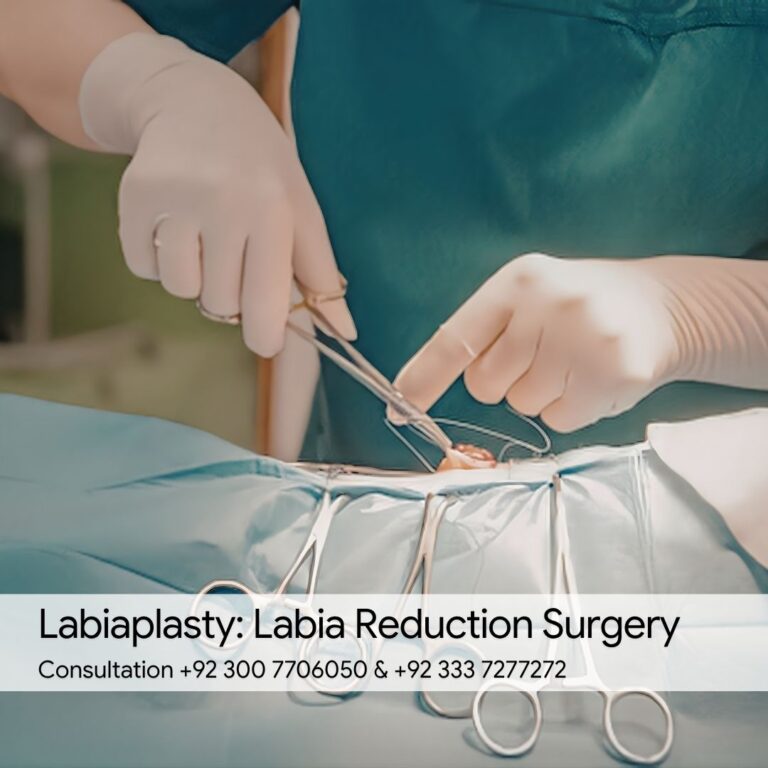
Labiaplasty is a surgical procedure used to reshape or reduce the labia, usually the labia minora.
The labia are folds of tissue forming part of the external female genital area, known collectively as the vulva.
Labiaplasty may involve removing or reshaping selected tissue while attempting to preserve the normal anatomy and function of the area.
The procedure should be individually planned because labial anatomy varies considerably from woman to woman.
A qualified surgeon should evaluate the patient’s anatomy, concerns, expectations, and medical history before recommending surgery.
What Are the Labia?
The external female genital area is called the vulva.
It includes:
- Labia majora
- Labia minora
- Clitoris
- Vaginal opening
- Urethral opening
- Surrounding vulvar tissues
The labia minora are the inner folds of tissue, while the labia majora are the outer folds.
There is considerable natural variation in the appearance of these structures.
One side may be longer than the other. The labia may be prominent, less prominent, darker or lighter in color, or have different shapes.
These variations can all occur naturally.
Is It Normal for the Labia to Be Uneven?
Yes.
Many women have some degree of asymmetry between the left and right sides of the vulva.
There is no requirement for the labia to be identical in size or shape.
Women sometimes become concerned about their anatomy after comparing themselves with edited photographs, pornography, social media content, or unrealistic images presented online.
Understanding normal anatomical variation is therefore an important part of any consultation.
Surgery should not be recommended simply because a patient’s anatomy differs from an imagined ideal appearance.
Why Do Women Consider Labiaplasty?
Women consider labiaplasty in Quetta for different reasons.
Some have physical symptoms, while others are concerned about appearance.
Possible reasons include:
- Persistent irritation
- Discomfort while exercising
- Discomfort from friction
- Difficulty wearing certain clothing
- Problems caused by tissue rubbing
- Concerns following childbirth
- Previous injury
- Asymmetry
- Personal cosmetic concerns
- Desire to discuss intimate-area appearance with a specialist
The reason for considering surgery is important because a medical assessment may reveal another cause of discomfort that can be treated without labiaplasty.
Labiaplasty for Physical Discomfort
Some women seek labiaplasty because enlarged or irregular labial tissue causes physical discomfort.
Symptoms may become noticeable during:
- Exercise
- Cycling
- Running
- Walking
- Certain sports
- Wearing tight clothing
- Sexual activity
However, discomfort in the vulvar area can also have other causes.
Skin conditions, infections, irritation, hormonal changes, pelvic floor problems, and other gynecological conditions can produce symptoms.
This is why a medical assessment should come before assuming that labiaplasty is the solution.
Labiaplasty After Childbirth
Pregnancy and childbirth can result in changes to the vulva and surrounding tissues.
Some women notice differences in:
- Tissue appearance
- Labial shape
- Symmetry
- Scar tissue
- Sensitivity
- Comfort during physical activity
These changes do not automatically mean that surgery is required.
If a woman experiences persistent symptoms following childbirth, a gynecological consultation can help identify the underlying issue and determine whether treatment is necessary.
Labiaplasty for Cosmetic Concerns
Some women consider labiaplasty because they are unhappy with the appearance of their labia.
Cosmetic concerns can involve:
- Labial asymmetry
- Prominent labia minora
- Uneven tissue
- Changes in appearance following childbirth
- Personal dissatisfaction with appearance
Before cosmetic surgery, patients should understand that normal vulvar anatomy has a wide range of appearances.
There is no single appearance that every woman should have.
The purpose of consultation should therefore be to understand the patient’s concerns and expectations rather than to define normal anatomy according to an artificial standard.
Labiaplasty in Quetta: Is Surgery Necessary?
Not always.
This is one of the most important questions for anyone searching for labiaplasty in Quetta.
If the concern is purely cosmetic, the decision requires careful consideration because surgery has potential risks and does not guarantee that a patient will feel more satisfied with her appearance afterward.
If the concern is physical discomfort, it is equally important to determine whether another medical condition is responsible.
A qualified gynecologist or surgeon can assess the situation and discuss whether:
- Reassurance is appropriate
- Conservative treatment may help
- Another medical condition needs treatment
- Pelvic floor treatment may be useful
- Surgery may be considered
How Is Labiaplasty Performed?
The exact surgical technique depends on the patient’s anatomy and the surgeon’s treatment plan.
Generally, labiaplasty involves reshaping or reducing selected areas of labial tissue.
The procedure may include:
- Preoperative consultation
- Medical history
- Examination and assessment
- Discussion of the desired outcome
- Surgical planning
- Anesthesia
- Reshaping or removal of selected tissue
- Closure using appropriate surgical techniques
- Postoperative instructions
- Follow-up care
The surgeon should explain the proposed technique before surgery, including what tissue will be treated and what outcome can realistically be expected.
How Long Does Labiaplasty Take?
The duration depends on the technique, the amount of tissue being treated, and whether another procedure is being performed at the same time.
Many labiaplasty procedures can be completed as outpatient surgery, but the exact arrangements depend on the patient and the surgical facility.
Your surgeon should explain:
- Expected procedure time
- Type of anesthesia
- Recovery arrangements
- Whether you can return home the same day
- Follow-up schedule
What Type of Anesthesia Is Used?
Depending on the procedure and clinical circumstances, labiaplasty may be performed under local anesthesia, local anesthesia with sedation, or general anesthesia.
The appropriate option should be determined by the treating medical team.
Before surgery, patients should provide accurate information about:
- Allergies
- Medications
- Previous operations
- Previous reactions to anesthesia
- Existing medical conditions
This information helps the medical team plan the procedure safely.
Is Labiaplasty Safe?
Labiaplasty is surgery and therefore carries potential risks.
Possible complications can include:
- Pain
- Bleeding
- Infection
- Swelling
- Bruising
- Scarring
- Changes in sensitivity
- Pain during intercourse
- Delayed healing
- Asymmetry
- Need for revision surgery
The risks vary according to the individual patient, surgical technique, and healing process.
A proper consultation should include a discussion of both the potential benefits and potential complications.
Labiaplasty Recovery
Recovery is an important part of the treatment.
Immediately after surgery, some swelling, bruising, soreness, and tenderness can occur.
Patients may be given instructions regarding:
- Keeping the area clean
- Medication
- Wearing comfortable clothing
- Limiting physical activity
- Avoiding pressure on the treated area
- Sexual activity
- Exercise
- Follow-up appointments
The surgeon’s individual instructions should always take priority because recovery differs from patient to patient.
How Long Does Labiaplasty Recovery Take?
Recovery varies according to the surgical technique and individual healing.
Some everyday activities may be resumed relatively quickly, while strenuous exercise and sexual activity generally need to be avoided during the initial healing period.
Swelling can take time to settle, and the final appearance may not be immediately visible after surgery.
Patients should therefore avoid judging the final surgical result during the early stages of recovery.
When Can Exercise Resume After Labiaplasty?
Exercise should be resumed gradually and according to the surgeon’s instructions.
Activities involving friction or pressure on the vulvar area may need to be avoided for longer.
These may include:
- Cycling
- Running
- Horse riding
- Gym exercises
- Heavy lifting
- Intense lower-body workouts
Returning to exercise too early may increase discomfort and interfere with healing.
When Can Sexual Intercourse Resume?
Patients should avoid sexual intercourse until the surgical area has adequately healed and the treating surgeon has confirmed that it is appropriate to resume.
The exact timeframe varies according to the procedure and individual recovery.
This restriction is important because sexual activity can place friction and pressure on healing tissues.
Does Labiaplasty Improve Sexual Function?
Labiaplasty should not be promoted as a guaranteed way to improve sexual pleasure or sexual satisfaction.
Sexual function involves multiple factors, including physical comfort, pelvic floor function, hormones, emotional wellbeing, relationship factors, and individual sexual health.
If a woman experiences pain during intercourse or reduced sexual satisfaction, the underlying cause should be evaluated rather than assuming that cosmetic surgery will resolve the problem.
Labiaplasty and Sensitivity
The vulva contains sensitive nerves, and surgical procedures in this area can potentially affect sensation.
This is why preservation of appropriate anatomy and careful surgical planning are important.
Patients should discuss concerns about sensation with their surgeon before surgery and understand that no procedure can guarantee a specific sensory outcome.
Labiaplasty and Labial Asymmetry
Perfect symmetry is not a normal requirement of human anatomy.
Many women naturally have one labium that is different in size or shape from the other.
Labiaplasty can sometimes be used to address significant asymmetry when this is appropriate, but the goal should be realistic rather than absolute symmetry.
A surgeon should explain what degree of correction can reasonably be achieved.
Labiaplasty Cost in Quetta
One of the most common searches is labiaplasty cost in Quetta.
There is no universal price because the cost can depend on the individual treatment plan.
Factors that may influence the overall cost include:
- Consultation
- Surgeon fees
- Surgical complexity
- Type of anesthesia
- Facility charges
- Preoperative investigations
- Medication
- Follow-up care
- Whether additional procedures are performed
Patients should request a complete treatment quotation during consultation.
Price should not be the only factor used when choosing a surgeon.
Qualifications, relevant surgical training, clinical facilities, privacy, informed consent, experience, and postoperative support should also be considered.
Labiaplasty in Quetta or Another City?
Women searching for labiaplasty in Quetta may decide to travel to another Pakistani city if they are looking for specific cosmetic gynecology or surgical services.
Traveling for treatment can be reasonable when specialist consultation is needed.
However, patients should plan carefully.
Before traveling, ask about:
- Consultation availability
- Surgical scheduling
- Preoperative requirements
- Expected recovery
- Recommended length of stay
- Follow-up arrangements
- What to do if a complication occurs after returning home
Planning these details before travel can make the treatment process easier.
What Should You Ask Before Labiaplasty?
A consultation is an opportunity to ask detailed questions.
Consider asking:
- Is my concern medically appropriate for labiaplasty?
- Is my anatomy within the normal range?
- Are there non-surgical alternatives?
- Which surgical technique would you recommend?
- How much tissue would be removed or reshaped?
- How will normal sensation be protected?
- What are the potential complications?
- How long should I expect to recover?
- When can I exercise again?
- When can I resume sexual activity?
- What is included in the total cost?
- How is follow-up handled?
- What happens if I am dissatisfied with the result?
A good consultation should allow enough time for these questions.
Choosing a Labiaplasty Surgeon
Choosing the medical professional is one of the most important decisions when considering labiaplasty in Quetta.
Patients should consider whether the surgeon:
- Has appropriate medical qualifications
- Has relevant surgical training
- Regularly performs the procedure
- Understands vulvar anatomy
- Explains risks honestly
- Provides informed consent
- Discusses realistic expectations
- Provides postoperative follow-up
- Works in an appropriate clinical environment
Patients should also be cautious of websites or advertisements that promise perfect results, guaranteed sexual satisfaction, or risk-free surgery.
No surgical procedure should be presented as completely risk-free.
Is There a “Normal” Labia?
Yes—and the normal range is broad.
There is no single standard appearance of the labia.
The labia can differ in:
- Length
- Width
- Shape
- Color
- Thickness
- Symmetry
- Texture
Some women have labia minora that extend beyond the labia majora. Others have labia that remain mostly covered.
Both can be normal.
This is important because cosmetic concerns are sometimes created by unrealistic images rather than an actual medical abnormality.
When Should You See a Gynecologist Instead of Booking Labiaplasty?
If you have symptoms such as:
- Persistent vulvar pain
- Burning
- Itching
- Unusual discharge
- Skin changes
- Recurrent irritation
- Bleeding
- Pain during intercourse
- New swelling
- A lump or lesion
you should have a medical evaluation.
These symptoms can have causes that require medical treatment and should not automatically be attributed to labial size or shape.
Labiaplasty for Exercise-Related Discomfort
Some women report discomfort caused by labial tissue rubbing against clothing during physical activity.
If symptoms occur specifically during exercise, a medical assessment can help determine whether the labia are actually responsible.
In some cases, simple changes such as clothing adjustments or supportive garments may help.
If persistent symptoms remain despite conservative measures, surgical options can be discussed where appropriate.
Labiaplasty After Previous Injury
Labial tissue can sometimes be affected by childbirth injuries, accidents, or previous surgical procedures.
When surgery is being considered because of an injury rather than purely cosmetic concerns, the treatment may have a reconstructive purpose.
This distinction matters because reconstructive surgery and elective cosmetic surgery have different clinical considerations.
A qualified professional can assess the affected tissue and determine the most appropriate approach.
Can Labiaplasty Be Combined With Other Procedures?
Some patients may be interested in more than one cosmetic gynecology procedure.
Depending on the patient’s anatomy and medical circumstances, procedures such as labiaplasty, vaginoplasty, or other treatments may be discussed during consultation.
However, combining procedures is not automatically appropriate.
The surgeon should consider the patient’s health, surgical risks, recovery requirements, and whether combining treatments provides a meaningful benefit.
Why Patients Consider Aesthedoc
Aesthedoc provides access to consultations across aesthetic medicine, cosmetic gynecology, plastic surgery, and related procedures.
For women searching for labiaplasty in Quetta, Aesthedoc can provide access to consultation with qualified gynecologists, plastic surgeons, and cosmetic surgeons.
The consultation allows patients to discuss their concerns privately, understand their anatomy, explore appropriate treatment options, and learn about the expected procedure and recovery.
Patients can also discuss related cosmetic gynecology concerns if more than one area requires evaluation.
The emphasis should be on professional assessment, realistic expectations, appropriate surgical planning, privacy, safety, and informed decision-making.
Planning Labiaplasty From Quetta
If you are considering traveling from Quetta for labiaplasty, planning your consultation in advance can be helpful.
You may want to establish:
- Consultation date
- Surgical availability
- Required medical information
- Preoperative tests if necessary
- Expected recovery period
- Follow-up schedule
- Travel arrangements
- Accommodation requirements
Patients should also understand that follow-up remains important after surgery, particularly if they are traveling from another city.
Frequently Asked Questions About Labiaplasty in Quetta
What is labiaplasty?
Labiaplasty is a surgical procedure that reshapes or reduces the labia, most commonly the labia minora.
Is it normal for the labia to be different sizes?
Yes. Natural asymmetry is common, and the size, shape, color, and appearance of the labia vary significantly between women.
Why do women have labiaplasty?
Some women consider it because of persistent physical discomfort, irritation, activity-related problems, previous injury, childbirth-related changes, asymmetry, or personal cosmetic concerns.
Is labiaplasty painful?
Some pain, swelling, bruising, and tenderness can occur after surgery. The degree varies between individuals.
How long does labiaplasty recovery take?
Recovery varies. Patients generally need a period of reduced activity, and strenuous exercise and sexual intercourse should be avoided until the surgeon confirms that healing is sufficient.
Can labiaplasty improve sexual satisfaction?
A specific improvement in sexual satisfaction cannot be guaranteed. Sexual function is influenced by many physical and non-physical factors.
Can labiaplasty affect sensitivity?
Because the area contains sensitive nerves, changes in sensation are a potential surgical risk. This should be discussed before treatment.
How much does labiaplasty cost in Quetta?
The cost varies according to the procedure, surgeon, facility, anesthesia, and other treatment requirements. An individual quotation should be obtained after consultation.
Can women from Quetta travel for labiaplasty?
Yes. Patients may travel to another city for specialist consultation and treatment. Travel and follow-up arrangements should be planned before surgery.
Can labiaplasty be performed with other cosmetic gynecology procedures?
In selected cases, additional procedures may be discussed. Whether combining procedures is appropriate depends on the patient’s individual circumstances.
Is labiaplasty suitable for everyone?
No. A professional assessment is necessary to determine whether surgery is appropriate and whether another treatment may better address the patient’s concern.
Final Thoughts on Labiaplasty in Quetta
For women searching for labiaplasty in Quetta, the first step should be understanding the difference between normal anatomical variation and a problem that genuinely requires treatment.
The appearance of the labia varies widely among healthy women. There is no single ideal size, shape, color, or degree of symmetry.
When physical discomfort, persistent irritation, previous injury, childbirth-related changes, or significant cosmetic concerns are present, a professional consultation can help determine whether labiaplasty is appropriate.
Patients considering surgery should understand the procedure, potential risks, recovery requirements, realistic outcomes, and the qualifications of the healthcare professional performing the treatment.
For women from Quetta who are considering specialist consultation elsewhere in Pakistan, Aesthedoc provides access to qualified gynecologists, plastic surgeons, and cosmetic surgeons for labiaplasty and related cosmetic gynecology procedures.
Book a Confidential Consultation With Aesthedoc
Patients from Quetta and across Pakistan can contact Aesthedoc to discuss their requirements and arrange a confidential consultation.
Phone: 0300 7706050 | 0333 7277272
Email: info@aesthedoc.com