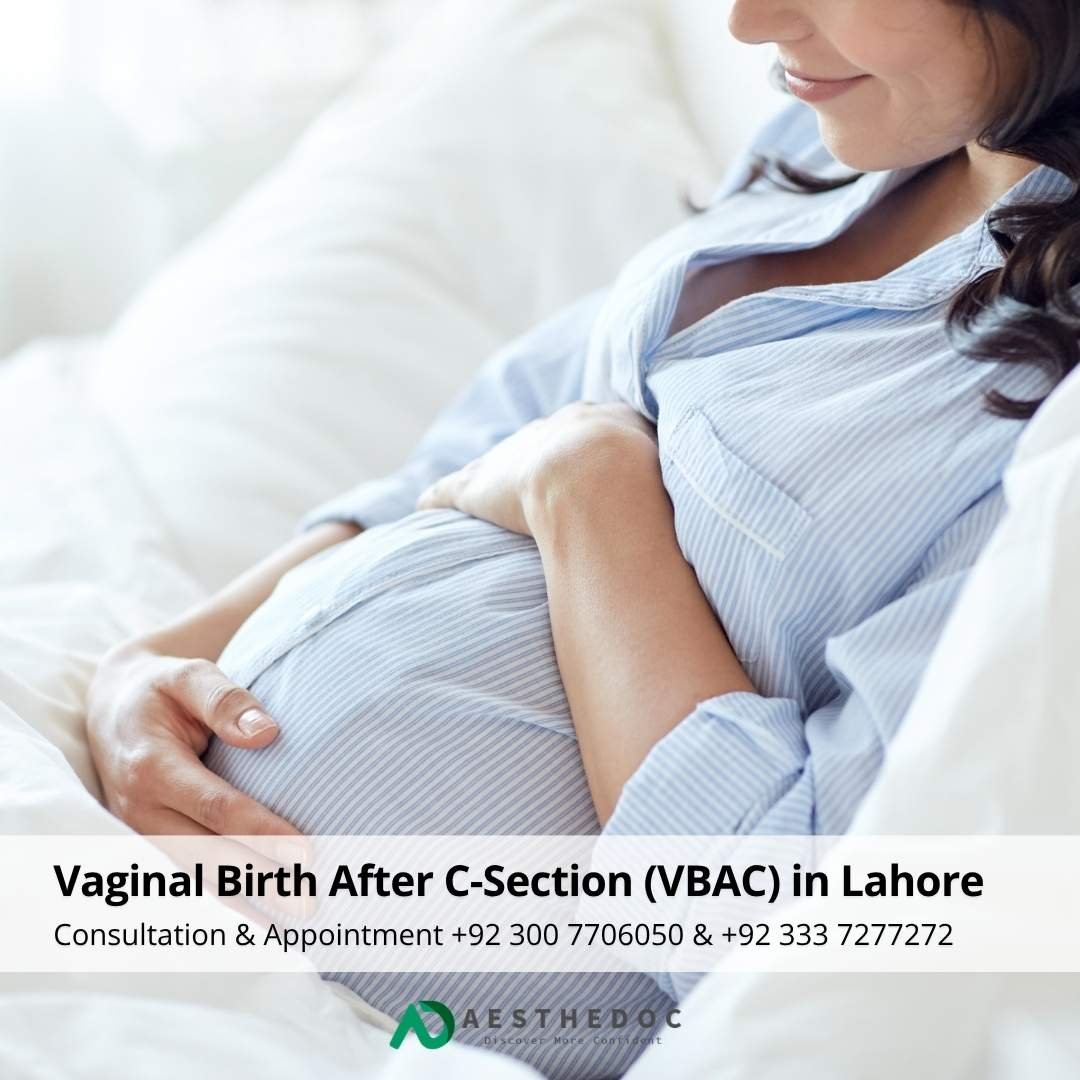
Many women who have previously delivered their babies through Caesarean section wonder whether they can have a normal vaginal delivery in their next pregnancy. This is one of the most common concerns among women planning another pregnancy after a C-section.
The good news is that a previous Caesarean section does not automatically mean that every future delivery must also be through surgery. Depending on the type of previous uterine incision, pregnancy history, current health, and the progress of the pregnancy, some women may be suitable candidates for vaginal birth after Caesarean (VBAC).
Women searching for VBAC in Lahore, normal delivery after C-section, or vaginal delivery after one Caesarean often want to understand whether their bodies can safely undergo labour again. They may also be concerned about uterine scar complications, the possibility of emergency surgery, recovery time, and the safety of their baby.
With appropriate antenatal assessment, careful patient selection, continuous monitoring during labour, and immediate access to emergency obstetric services, planned VBAC can be a suitable delivery option for many women.
This guide explains everything patients should understand about VBAC, including eligibility, medical assessment, success rates, benefits, risks, recovery, and when a repeat C-section may be the safer option.
Women in Lahore seeking professional obstetric and gynecological guidance can also enquire about consultation arrangements with Dr. Maimunah Faruque, Gyne Endoscopy and Laparoscopic Surgeon and Cosmetic Gynecologist, at Aesthedoc.
What Is Vaginal Birth After C-Section (VBAC)?
VBAC stands for Vaginal Birth After Caesarean. It refers to giving birth vaginally in a pregnancy after having previously delivered through a Caesarean section.
A Caesarean section involves delivering a baby through surgical incisions in the mother’s abdomen and uterus. After the operation, a scar remains in the uterine wall.
During a subsequent pregnancy, some women may be able to experience labour and deliver vaginally, provided their medical history and current pregnancy make this a suitable option.
VBAC is different from a normal vaginal delivery in a woman who has never had a C-section because the previous uterine scar must be considered when assessing the risks of labour.
What Is TOLAC?
Another important medical term is TOLAC, which means Trial of Labour After Caesarean.
TOLAC refers to an attempt to have a vaginal delivery after a previous Caesarean section.
There are two possible outcomes:
- Successful TOLAC: The mother delivers vaginally, resulting in a VBAC.
- Unsuccessful TOLAC: Labour does not progress safely or another complication develops, requiring a Caesarean delivery.
The distinction is important because VBAC describes the successful vaginal birth, while TOLAC describes the planned attempt to achieve it.
Can I Have a Normal Delivery After One C-Section?
Yes. Many women who have had one previous Caesarean section can be considered for vaginal delivery in their next pregnancy.
However, eligibility depends on individual medical circumstances.
A woman who previously underwent a C-section because her baby was in a breech position may have a different likelihood of successful VBAC compared with someone whose previous labour stopped progressing.
The doctor will review the previous operation, current pregnancy, uterine scar, placental position, baby’s presentation, and other medical factors.
According to the Royal College of Obstetricians and Gynaecologists (RCOG), approximately three out of four women with one previous Caesarean who go into spontaneous labour achieve a vaginal birth.
This is a general estimate, not a guarantee for an individual patient.
The likelihood of successful VBAC may be higher in women who have previously delivered vaginally, particularly those who have already had a successful VBAC.
Who Is Eligible for VBAC?
Not every woman with a previous C-section is automatically eligible for vaginal delivery.
The doctor must assess the type of previous surgery, number of previous Caesarean deliveries, maternal health, and the current pregnancy.
1. Women With One Previous Lower Segment C-Section
Women who have had one previous lower-segment Caesarean section are often considered potential candidates for VBAC if no other medical contraindications are present.
A lower-segment transverse incision is a horizontal incision made in the lower portion of the uterus.
It generally carries a lower risk of uterine rupture during subsequent labour than a classical incision involving the upper portion of the uterus.
However, the skin scar on the abdomen does not reliably reveal the type of uterine incision. The previous operative notes are important.
2. Women With a Previous Vaginal Delivery
Women who have delivered vaginally before their C-section may have a higher likelihood of successful VBAC.
Previous vaginal birth suggests that the mother has previously experienced labour and vaginal delivery.
A previous successful VBAC is particularly favourable when considering another planned vaginal delivery.
3. Women Whose Previous C-Section Was Due to Breech Presentation
If the previous Caesarean section was performed because the baby was in a breech position, this may be a favourable factor.
Breech presentation is a problem related to the baby’s position rather than necessarily indicating that the mother’s pelvis or ability to deliver vaginally is inadequate.
If the current baby is positioned head-down and no other complications are present, the doctor may consider VBAC.
4. Women With a Healthy Current Pregnancy
A woman with one previous lower-segment C-section and an otherwise uncomplicated pregnancy may be a suitable candidate.
The doctor will assess:
- Maternal blood pressure.
- Diabetes status.
- Baby’s growth.
- Placental position.
- Amniotic fluid.
- Baby’s presentation.
- Previous uterine surgery.
- Other pregnancy complications.
5. Women Planning Future Pregnancies
The number of children a woman plans to have may also influence her delivery decision.
Repeated Caesarean sections can increase certain risks in future pregnancies, including placenta accreta spectrum, adhesions, and surgical complications.
For women planning additional pregnancies, avoiding an unnecessary repeat C-section may be one consideration when evaluating VBAC.
However, the safest delivery option must always take priority over the number of future pregnancies.
Who May Not Be Suitable for VBAC?
There are certain medical circumstances in which planned vaginal birth after Caesarean may be contraindicated or may carry unacceptable risks.
Examples include:
1. Previous classical Caesarean incision: A previous vertical incision involving the upper part of the uterus generally makes planned VBAC unsuitable because of the increased risk of uterine rupture.
2. Previous uterine rupture: A history of uterine rupture is a major contraindication to planned VBAC in most circumstances.
3. Placenta previa: When the placenta covers the cervix, vaginal delivery may be unsafe, and Caesarean delivery is generally required.
4. Certain complicated uterine surgeries: Previous surgery involving the uterine wall may affect the safety of labour.
5. Other contraindications to vaginal delivery: Some fetal, placental, or maternal conditions may make Caesarean delivery the safer option.
Women who have undergone multiple Caesarean sections require particularly careful assessment. Selected women with two previous lower-segment Caesareans may be considered for VBAC after specialist counselling in an appropriately equipped hospital.
The final decision must be made by an experienced obstetrician after reviewing the complete surgical and pregnancy history.
How Does a Doctor Assess VBAC Eligibility?
Before recommending a vaginal delivery after C-section, the doctor performs an individualised assessment.
The objective is to determine whether labour can be attempted safely and whether the hospital has the facilities to respond quickly if complications arise.
1. Reviewing Previous Caesarean Operation Records
One of the most important steps is obtaining the medical record of the previous Caesarean operation.
The doctor may review:
- The reason for the previous C-section.
- The type of uterine incision.
- Whether there were surgical complications.
- Whether there was excessive bleeding.
- Whether the patient developed an infection.
- Whether the uterus required additional repair.
- The recovery period after surgery.
The uterine incision is particularly important because the abdominal skin incision and uterine incision may be different.
2. Number of Previous Caesarean Sections
The number of previous Caesarean deliveries influences the risk assessment.
Women with one previous lower-segment Caesarean are commonly assessed for VBAC.
Women with two or more previous Caesareans need more detailed counselling, taking account of their individual history and the availability of specialist obstetric care.
3. Previous Labour History
The doctor will want to know whether the woman has previously experienced:
- Spontaneous vaginal delivery.
- Successful VBAC.
- Prolonged labour.
- Failure to progress.
- Emergency Caesarean delivery.
- Assisted vaginal delivery.
The reason for the previous Caesarean can influence the likelihood of successful VBAC.
4. Ultrasound Examination
Ultrasound can help assess the current pregnancy.
It may evaluate:
- Baby’s presentation.
- Fetal growth.
- Placental position.
- Amniotic fluid.
- Gestational age.
- Other pregnancy-related concerns.
Ultrasound is useful for pregnancy assessment, but it cannot independently guarantee that a uterine scar will remain intact during labour.
5. Assessment of Maternal Health
Existing health conditions can influence delivery planning.
These may include:
- High blood pressure.
- Gestational diabetes.
- Obesity.
- Anaemia.
- Kidney disorders.
- Heart conditions.
- Other medical complications.
The doctor considers whether these conditions affect the safety of vaginal delivery.
6. Assessment of the Baby’s Position
A baby positioned head-down (cephalic presentation) is generally more favourable for vaginal birth.
A breech or transverse presentation may change the recommended delivery approach.
The position of the baby is assessed as the pregnancy progresses and closer to delivery.
What Is the Success Rate of VBAC?
The success rate of VBAC varies according to the patient’s medical history, previous delivery experiences, and current pregnancy.
According to RCOG patient guidance, approximately 75% of women with one previous Caesarean who enter spontaneous labour achieve vaginal birth.
In women who have previously delivered vaginally, the likelihood may increase to approximately 85–90%.
Factors associated with a higher likelihood of successful VBAC include:
- Previous vaginal delivery.
- Previous successful VBAC.
- Spontaneous onset of labour.
- A non-recurring reason for the previous C-section.
- A favourable current pregnancy.
- A baby in a head-down position.
Factors that may reduce the likelihood include:
- Previous Caesarean for labour dystocia or failure to progress.
- Induction of labour.
- Suspected larger fetal size.
- Maternal obesity.
- Certain maternal or pregnancy complications.
These factors help guide counselling, but they do not independently determine the outcome.
A woman should not be discouraged from seeking assessment simply because one or more factors may reduce her likelihood of successful VBAC.
Benefits of Vaginal Birth After C-Section
When successful and uncomplicated, VBAC can offer several advantages compared with another planned Caesarean operation.
1. Avoiding Another Major Abdominal Operation
A successful VBAC avoids another surgical incision through the abdominal wall and uterus.
This eliminates the immediate surgical risks associated with repeat Caesarean delivery.
2. Shorter Recovery Period
Women who experience an uncomplicated vaginal delivery generally recover more quickly than those undergoing Caesarean surgery.
They may be able to:
- Move around earlier.
- Resume everyday activities sooner.
- Experience less abdominal wound discomfort.
- Have a shorter hospital stay.
Recovery varies depending on the delivery and any complications.
3. Reduced Risk of Surgical Infection
Because VBAC does not involve abdominal surgery, it avoids the surgical wound and associated risks of wound infection.
However, vaginal delivery has its own potential complications, including perineal tears and postpartum infection.
4. Avoiding Additional Uterine Scarring
Each Caesarean section creates another surgical scar in the uterus.
Avoiding an unnecessary repeat Caesarean may help reduce the cumulative risks associated with multiple uterine operations.
5. Potential Benefits for Future Pregnancies
Multiple Caesarean sections are associated with increasing risks of certain placental complications, including placenta previa and placenta accreta spectrum.
A successful VBAC can help a woman avoid another uterine incision in the current pregnancy.
This may be an important consideration for women who plan to have more children.
6. Earlier Physical Mobility
Following an uncomplicated vaginal birth, many women can begin walking and performing basic activities sooner than after major abdominal surgery.
This may help with early newborn care and general postpartum recovery.
What Are the Risks of VBAC?
Although VBAC is a reasonable option for many women, it is not risk-free.
The most important complication is uterine rupture, but there are other risks that patients should understand before making a decision.
1. Uterine Rupture
Uterine rupture occurs when the uterine wall separates or tears, potentially affecting the previous Caesarean scar.
This is an uncommon but serious complication.
For women with one previous lower-segment Caesarean, RCOG estimates the risk at approximately 1 in 200 during planned VBAC.
Uterine rupture may cause:
- Severe maternal bleeding.
- Fetal oxygen deprivation.
- Emergency Caesarean delivery.
- Maternal shock.
- Need for blood transfusion.
- Rarely, hysterectomy.
- Serious harm to the baby.
This is why VBAC should be planned in a hospital where emergency Caesarean delivery, blood transfusion, anaesthesia, and neonatal support are immediately available.
2. Failed Trial of Labour
Not every attempt at VBAC results in vaginal delivery.
Labour may stop progressing, or concerns about the mother or baby’s health may require emergency Caesarean surgery.
An unsuccessful TOLAC may involve a more complicated clinical situation than an uncomplicated planned repeat C-section.
3. Excessive Bleeding
Some women may experience significant blood loss during labour or after delivery.
In certain cases, blood transfusion may be required.
4. Infection
Infection can develop following vaginal delivery or emergency Caesarean surgery.
The risk depends on the clinical circumstances and the type of delivery.
5. Assisted Vaginal Delivery
Some women may require assistance using forceps or a vacuum device if labour progresses but the baby needs assistance during the final stage of delivery.
The suitability of assisted delivery depends on the baby’s position and other clinical factors.
6. Perineal Tears
Vaginal birth can cause tears involving the vaginal opening and surrounding tissues.
Some tears are minor, while more severe tears may involve the anal sphincter.
Appropriate assessment and postpartum care are important.
VBAC vs Repeat C-Section: Which Is Better?
There is no single delivery method that is best for every woman after a previous Caesarean.
Both planned VBAC and elective repeat Caesarean section have advantages and disadvantages.
The right decision depends on the previous surgical history, current pregnancy, medical risks, and personal preferences.
| Comparison | Planned VBAC | Repeat C-Section |
|---|---|---|
| Delivery method | Vaginal delivery attempt | Surgical delivery |
| Abdominal surgery | Avoided if successful | Required |
| Recovery | Usually faster if uncomplicated | Usually longer |
| Uterine rupture | Small but important risk during labour | Much lower risk |
| Emergency surgery | May become necessary | Less likely if planned |
| Surgical wound | No abdominal wound if successful | Abdominal wound |
| Future pregnancies | Avoids another Caesarean scar if successful | Adds another uterine scar |
| Labour experience | Labour and vaginal delivery | Planned operation |
A planned repeat C-section can be the safer choice for women with specific uterine scars, placenta previa, previous uterine rupture, or other medical contraindications.
A planned VBAC may be appropriate for selected women with a previous lower-segment Caesarean.
The decision should follow informed discussion with the obstetrician.
Can VBAC Be Attempted After Two C-Sections?
Some women who have had two previous Caesarean sections may be considered for VBAC.
However, this requires more careful evaluation than a woman with one previous C-section.
The doctor may review:
- The type of uterine incisions.
- Previous surgical complications.
- History of vaginal delivery.
- Reason for the previous Caesareans.
- Current pregnancy condition.
- Placental position.
- Other obstetric risk factors.
Selected women with two previous lower-segment Caesarean deliveries may be offered a trial of labour following senior obstetric assessment and counselling.
The availability of immediate surgical intervention and appropriate hospital facilities is essential.
Women with three or more previous Caesareans require particularly individualised specialist advice, and planned VBAC is generally not recommended in standard RCOG guidance.
Can VBAC Be Attempted After Three Years or Five Years?
The time between pregnancies is one of the factors considered during delivery planning.
A longer interval between Caesarean delivery and the next pregnancy may be relevant when assessing maternal and uterine health.
However, there is no simple rule that a woman becomes eligible for VBAC merely because three, four, or five years have passed since her previous operation.
The type of uterine incision, number of previous surgeries, medical history, and current pregnancy are more important elements of the overall assessment.
Women should bring their previous surgical records to their consultation whenever possible.
Does Induction of Labour Affect VBAC?
Yes. Induction of labour can affect the likelihood and risks of VBAC.
Spontaneous labour generally has a higher likelihood of successful VBAC compared with induced labour.
Certain methods of induction can increase the risk of uterine rupture in women with a previous Caesarean scar.
The obstetrician may consider:
- The reason induction is required.
- Gestational age.
- Cervical condition.
- Type of previous uterine incision.
- Previous pregnancy history.
- The method of induction.
- Availability of emergency surgery.
Some induction methods may be considered in carefully selected cases, while certain medications or approaches may be unsuitable.
Induction after a previous Caesarean must never be attempted independently or without appropriate obstetric supervision.
How Is VBAC Managed During Labour?
A planned VBAC requires appropriate hospital-based labour care.
The aim is to monitor the mother’s health and the baby’s wellbeing while identifying potential complications early.
1. Hospital Admission
When regular contractions begin or the waters break, the woman should contact the maternity team promptly.
She should not wait until labour becomes advanced before seeking assessment.
2. Maternal Assessment
The medical team may evaluate:
- Blood pressure.
- Pulse and temperature.
- Contraction pattern.
- Cervical dilatation.
- Vaginal bleeding.
- Membrane status.
- General maternal wellbeing.
3. Continuous Fetal Heart Rate Monitoring
Electronic fetal monitoring, commonly called CTG, is generally recommended during planned VBAC labour.
It helps monitor the baby’s heart rate and identify changes that may indicate fetal distress or possible complications.
Changes in fetal heart rate may sometimes be an early warning sign of uterine rupture.
4. Monitoring Uterine Contractions
The medical team observes the frequency, duration, and strength of contractions.
Excessive uterine activity may require intervention.
5. Immediate Access to Emergency Caesarean
A facility providing planned VBAC should have the ability to perform emergency Caesarean delivery without avoidable delay.
Access to anaesthesia, blood transfusion services, and neonatal care is also important.
6. Pain Relief During Labour
Women planning VBAC can discuss different pain relief options with their medical team.
These may include:
- Breathing and relaxation techniques.
- Movement and positioning.
- Support from a birth companion.
- Appropriate medication.
- Epidural analgesia.
Having an epidural does not automatically prevent a woman from attempting VBAC.
What Happens If VBAC Is Not Successful?
Sometimes labour does not progress as expected.
A doctor may recommend Caesarean delivery if:
- The cervix stops dilating appropriately.
- The baby shows signs of distress.
- There is suspected uterine rupture.
- There is significant vaginal bleeding.
- Maternal health deteriorates.
- Another obstetric emergency develops.
An emergency Caesarean section may be necessary to protect the mother and baby.
Patients should understand that attempting VBAC means accepting the possibility of an emergency operation if vaginal delivery cannot be achieved safely.
This possibility should be discussed before labour begins.
Recovery After Successful VBAC
Recovery after an uncomplicated vaginal delivery is generally quicker than recovery after Caesarean surgery.
However, the recovery period differs between women.
First 24 Hours
The medical team monitors bleeding, blood pressure, pain, urination, and general wellbeing.
Women may usually begin walking when medically appropriate.
First Week
Mothers may experience:
- Vaginal bleeding or discharge.
- Perineal soreness.
- Uterine cramping.
- Breast tenderness.
- Fatigue.
- Discomfort while sitting or walking.
Rest, hydration, appropriate nutrition, and prescribed medication can support recovery.
Following Weeks
Gradual improvement is expected, although recovery may take longer if there were complications, significant tears, or excessive blood loss.
A postpartum follow-up appointment is important to assess physical recovery and address concerns.
How Can I Prepare for a Successful VBAC?
There is no guaranteed method of ensuring VBAC success, but appropriate preparation can help patients make informed decisions and improve the quality of care.
Consider the following steps:
1. Arrange early antenatal consultation. Discuss your delivery options during pregnancy rather than waiting until labour begins.
2. Obtain your previous C-section records. The operative notes can help establish the type of uterine incision.
3. Review your pregnancy history. Tell the doctor about previous vaginal deliveries, miscarriages, premature labour, and surgical complications.
4. Attend recommended ultrasound examinations. These help assess fetal growth, presentation, and placental position.
5. Manage existing medical conditions. Conditions such as diabetes, hypertension, and thyroid disorders should be appropriately controlled.
6. Discuss the delivery hospital. Confirm that the facility has emergency Caesarean, anaesthesia, blood transfusion, and neonatal support.
7. Understand both delivery options. Discuss the benefits, risks, and possibility of emergency surgery.
8. Follow your obstetrician’s advice. Do not attempt home induction or use unverified methods to initiate labour.
The purpose of preparation is not to force a vaginal delivery but to establish whether it is a safe and appropriate option.
When Should You Contact Your Doctor During a Planned VBAC?
Women planning VBAC should seek prompt assessment if they experience:
- Regular painful contractions.
- Vaginal bleeding.
- Leakage of amniotic fluid.
- Persistent or severe abdominal pain.
- Sudden unusual pain around the previous Caesarean scar.
- Reduced fetal movements.
- Severe weakness, fainting, or dizziness.
- Any other concerning change in their condition.
Severe abdominal pain, heavy bleeding, fainting, or reduced fetal movements require urgent maternity assessment.
Do not attempt to determine whether a symptom is related to the uterine scar at home.
VBAC in Lahore: Choosing the Right Gynecologist and Maternity Facility
Women searching for VBAC doctors in Lahore should look beyond the possibility of normal delivery and focus on the overall safety of pregnancy and childbirth.
A suitable medical consultation should include a review of the previous Caesarean operation, assessment of the current pregnancy, and a discussion of both vaginal and surgical delivery options.
Important questions to ask include:
- Am I medically eligible for VBAC?
- What type of uterine incision did I have?
- What is my estimated likelihood of successful VBAC?
- What are my individual risks of uterine rupture?
- Can labour be allowed to start naturally?
- What happens if induction becomes necessary?
- What monitoring will be required during labour?
- Is immediate emergency Caesarean delivery available?
- What are the benefits of a repeat Caesarean in my situation?
A qualified obstetrician should explain the medical reasoning behind the recommended delivery method.
Patients should also verify the maternity hospital’s emergency facilities before making a delivery plan. A consultation clinic and a hospital providing emergency childbirth services are not necessarily the same facility.
Frequently Asked Questions About VBAC in Lahore
1. Can I have a normal delivery after one C-section?
Yes. Many women with one previous lower-segment Caesarean can be considered for VBAC. Eligibility depends on the previous uterine incision, current pregnancy, maternal health, and availability of appropriate emergency facilities.
2. What is the success rate of VBAC?
Approximately 75% of women with one previous Caesarean who enter spontaneous labour achieve vaginal birth, according to RCOG patient information. Women with previous vaginal deliveries may have higher success rates.
3. Is VBAC safer than a repeat C-section?
Neither option is universally safer for every patient. Successful VBAC can avoid another operation and generally offers faster recovery. However, unsuccessful labour and uterine rupture are important risks. A planned repeat C-section may be safer in certain medical circumstances.
4. How many C-sections are allowed before VBAC is not recommended?
There is no universal number that determines eligibility in every case. Women with one previous lower-segment Caesarean are commonly considered. Selected women with two previous Caesareans may be assessed by a senior obstetrician. Three or more previous Caesareans generally make planned VBAC unsuitable under standard RCOG guidance.
5. Can I have VBAC after an emergency C-section?
Yes, some women can have VBAC after a previous emergency C-section. The reason for the previous operation and the type of uterine incision are important considerations.
6. Can I have VBAC after a planned C-section?
Yes. Whether the previous C-section was planned or performed as an emergency is not the only factor determining eligibility. The medical reason for surgery and the uterine incision must be reviewed.
7. Does VBAC cause uterine rupture?
Uterine rupture is a recognised complication of labour after Caesarean, but it is uncommon. For women with one previous lower-segment Caesarean, RCOG estimates approximately 1 in 200. Individual risk varies.
8. Can I have an epidural during VBAC?
Yes. Epidural analgesia can be used during VBAC labour when appropriate. It does not automatically prevent vaginal delivery.
9. Is VBAC possible after two C-sections?
Selected women with two previous lower-segment Caesareans may be considered after specialist assessment and counselling. Labour should take place in a suitably equipped hospital.
10. Can I have VBAC if my previous C-section was because of breech presentation?
Potentially, yes. A previous C-section due to breech presentation may be a favourable factor because the original reason for surgery may not recur in the current pregnancy.
11. Does a large baby prevent VBAC?
Not automatically. Suspected fetal macrosomia may reduce the likelihood of successful VBAC and influence the risk assessment. The doctor considers estimated fetal weight, previous birth history, and other clinical factors.
12. Can I have VBAC if I have gestational diabetes?
Some women with gestational diabetes may be suitable for VBAC. Blood glucose control, fetal growth, estimated birth weight, and other pregnancy complications must be considered.
13. How long after a C-section can I attempt VBAC?
The interval between deliveries and the interval between conception and the previous delivery may be relevant to risk assessment. There is no single waiting period that guarantees VBAC eligibility. Your obstetrician should review the exact dates and surgical history.
14. Is VBAC possible after a vertical C-section?
It depends on the type of uterine incision. A classical vertical incision involving the upper uterus is generally a contraindication to planned VBAC. A vertical abdominal skin scar does not necessarily mean that the uterine incision was also vertical.
15. Can I choose VBAC myself?
Your preferences are an important part of the decision. However, the doctor must assess whether a trial of labour is medically appropriate and explain the risks, benefits, and emergency arrangements.
16. Where can I get VBAC consultation in Lahore?
Patients can contact Aesthedoc to enquire about consultation arrangements with Dr. Maimunah Faruque and confirm availability for Lahore patients. The appropriate maternity hospital and emergency delivery arrangements should be discussed separately.
Final Thoughts: Is VBAC the Right Choice After a Previous C-Section?
A previous Caesarean delivery does not automatically eliminate the possibility of vaginal birth in a future pregnancy. Many women can be considered for VBAC after an appropriate medical assessment.
The most important factors include the previous uterine incision, number of Caesarean deliveries, reason for the previous operation, pregnancy history, maternal health, and current fetal condition.
While successful VBAC can offer the advantages of avoiding another major operation and recovering more quickly, it also involves a small but important risk of uterine rupture and the possibility of emergency Caesarean delivery.
The decision should never be based on pressure to have a normal delivery. It should be based on an informed discussion between the patient and her obstetrician, with maternal and fetal safety as the priority.
Women in Lahore who have previously undergone C-section and are planning another pregnancy should arrange an early consultation to understand their delivery options.
Consult Dr. Maimunah Faruque at Aesthedoc
Dr. Maimunah Faruque
Gyne Endoscopy and Laparoscopic Surgeon
Cosmetic Gynecologist
Qualifications:
- MBBS
- FCPS
- F.MAS
Dr. Maimunah Faruque is associated with women’s healthcare and gynecological services, including the assessment of gynecological conditions and laparoscopic surgical concerns.
Women who have previously undergone Caesarean delivery and want to understand their options for a subsequent pregnancy can contact Aesthedoc to enquire about consultation availability and appropriate obstetric assessment arrangements for Lahore patients.
Book a Consultation with Aesthedoc
If you have had a previous C-section and are considering vaginal birth in your next pregnancy, an individual medical assessment is an important first step.
Discuss your previous surgical history, pregnancy concerns, and delivery preferences with a qualified healthcare professional.
Aesthedoc – Women’s Healthcare and Gynecology Consultation
Phone: 03337277272
Phone: 03007706050
Email: info@aesthedoc.com
Contact Aesthedoc to enquire about an appointment with Dr. Maimunah Faruque and consultation arrangements for patients from Lahore.
Medical Disclaimer: This article is intended for general educational purposes and does not replace professional medical advice, examination, or diagnosis. VBAC suitability must be determined individually by a qualified obstetrician. Planned VBAC should only take place in a facility with appropriate maternal monitoring and immediate access to emergency Caesarean delivery, anaesthesia, blood transfusion, and neonatal care.