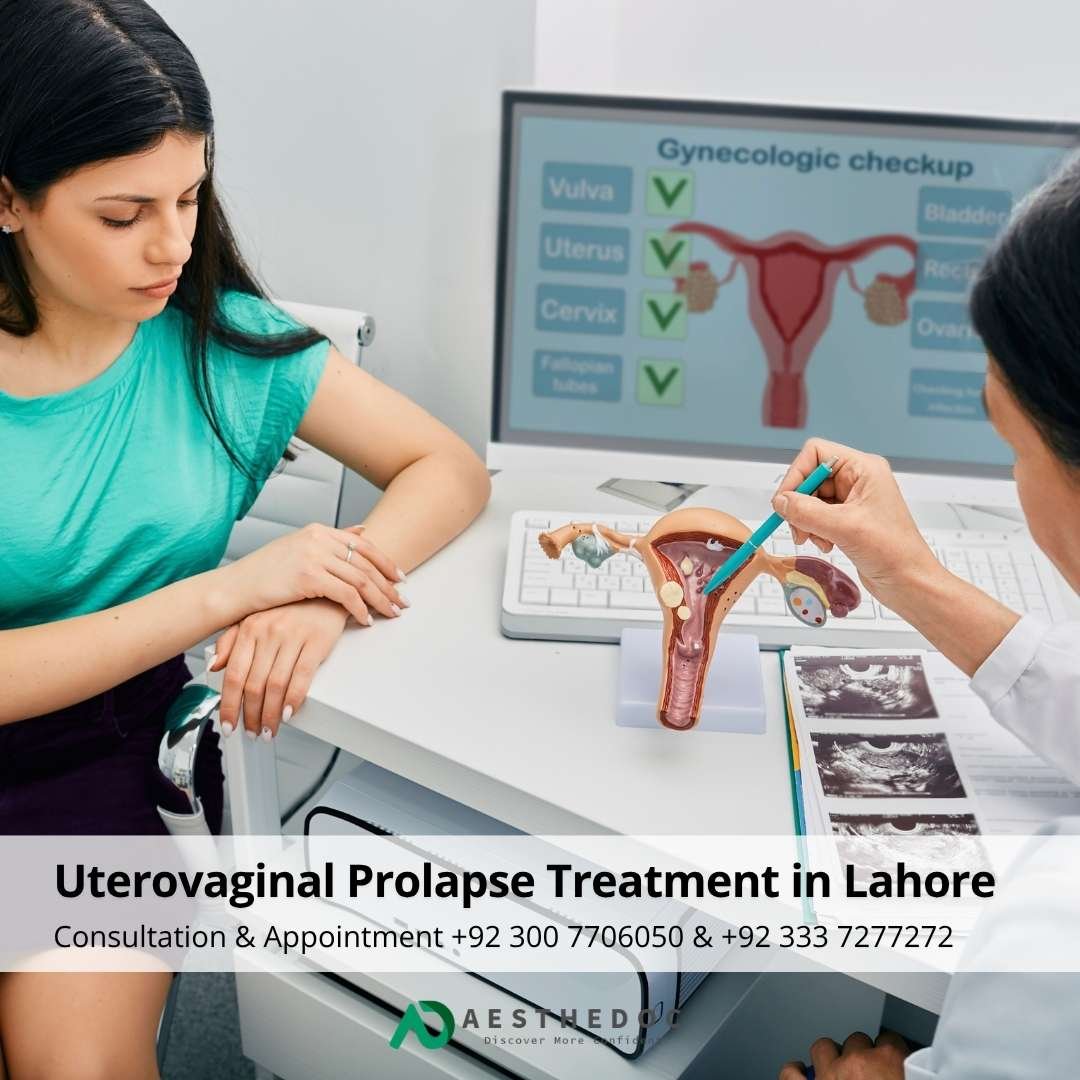
Uterovaginal prolapse is a pelvic floor condition in which the uterus gradually descends from its normal position into the vaginal canal because the muscles, ligaments and connective tissues supporting the pelvic organs become weakened or stretched. Some women experience only mild pelvic pressure, while others notice a vaginal bulge, difficulty passing urine, bowel problems or tissue protruding outside the vaginal opening.
Women searching for uterovaginal prolapse treatment in Lahore often want to understand whether the condition can be treated without surgery, whether a pessary can provide support, and whether the uterus must be removed to correct the prolapse. The appropriate treatment depends on the degree of prolapse, symptoms, general health, reproductive plans and personal preferences.
Treatment options may include observation, supervised pelvic floor muscle training, lifestyle modifications, vaginal pessaries and reconstructive surgery. In selected cases, the uterus can be preserved through a uterus-supporting procedure rather than removed.
This guide explains the causes, symptoms, stages, diagnosis and treatment options for uterovaginal prolapse, including the role of laparoscopic and vaginal surgical techniques.
What Is Uterovaginal Prolapse?
Uterovaginal prolapse, also called uterine prolapse, occurs when the uterus moves downwards into the vagina because its normal supporting structures have become weakened.
The uterus is normally supported by a combination of:
- Pelvic floor muscles.
- Uterine and vaginal supporting ligaments.
- Connective tissue and fascia.
- The surrounding pelvic support structures.
When these structures are stretched, damaged or weakened, the uterus may descend towards the vaginal opening. In more advanced cases, the cervix or uterus may protrude outside the vagina.
Uterovaginal prolapse is part of a broader condition called pelvic organ prolapse (POP). It can occur alone or together with bladder, vaginal wall or rectal prolapse.
The condition may develop gradually over several years. Some women have no noticeable symptoms, while others experience discomfort that affects walking, exercise, household activities, urination, bowel movements and sexual relationships.
Importantly, uterine prolapse is a medical condition, not a personal hygiene problem. It is common in women who have experienced pregnancy and childbirth, although it can also occur in women who have never given birth.
Difference Between Uterine Prolapse and Other Types of Vaginal Prolapse
Not every vaginal bulge is caused by the uterus descending. Different pelvic organs can push against the vaginal walls, and more than one type of prolapse can occur at the same time.
1. Uterovaginal Prolapse
The uterus descends into the vaginal canal. The cervix may move towards the vaginal opening and, in advanced cases, become visible outside it.
2. Anterior Vaginal Wall Prolapse (Cystocele)
The bladder pushes against the front wall of the vagina, creating a bulge. Women may experience urinary leakage, difficulty emptying the bladder or a sensation of pressure.
3. Posterior Vaginal Wall Prolapse (Rectocele)
The rectum pushes against the back wall of the vagina. It may cause constipation, difficulty passing stool or a feeling that bowel movements are incomplete.
4. Vaginal Vault Prolapse
This occurs when the upper part of the vagina loses support after a hysterectomy. The vaginal apex descends into the vaginal canal.
A proper pelvic examination helps determine which structures are affected. This distinction is important because the surgical procedure for uterine prolapse may be different from the repair required for bladder, rectal or vaginal vault prolapse.
Causes of Uterovaginal Prolapse
Uterovaginal prolapse usually develops due to a combination of factors that affect the muscles and connective tissues responsible for pelvic support.
1. Pregnancy and Vaginal Childbirth
Pregnancy places increased pressure on the pelvic floor. Vaginal delivery can stretch muscles, ligaments and supporting tissues.
The risk may increase after multiple vaginal deliveries, prolonged labour, difficult childbirth or delivery-related pelvic floor injury. However, prolapse does not occur in every woman who has delivered vaginally.
2. Ageing
Pelvic support tissues may gradually lose strength with age. Women may become more likely to develop prolapse as the supporting muscles and connective tissues change over time.
3. Menopause and Reduced Oestrogen
After menopause, changes in oestrogen levels can affect vaginal and urinary tissues. Reduced tissue elasticity and vaginal dryness may contribute to discomfort and other genitourinary symptoms.
Menopause is not the only cause of uterine prolapse, but it may be one contributing factor.
4. Obesity and Increased Abdominal Pressure
Excess body weight can increase pressure on the pelvic floor. Over time, this additional pressure may contribute to pelvic support problems.
5. Chronic Constipation
Repeated straining during bowel movements places pressure on pelvic floor structures. Long-term constipation should be addressed as part of prolapse management.
6. Chronic Cough
Persistent coughing, including coughing associated with smoking, asthma or respiratory conditions, can repeatedly increase pressure inside the abdomen.
7. Heavy Lifting and Repeated Straining
Frequent heavy lifting and activities involving repeated straining may worsen symptoms in some women, particularly when pelvic support is already weakened.
8. Previous Pelvic Surgery
Some women develop pelvic support problems after previous gynaecological operations. The risk depends on the type of procedure, existing support weakness and individual anatomy.
9. Connective Tissue Predisposition
Some women naturally have weaker connective tissues or a family history of pelvic organ prolapse. Genetic and anatomical factors may influence individual susceptibility.
Symptoms of Uterovaginal Prolapse
Symptoms vary according to the type and severity of prolapse. Some women have a mild anatomical change without discomfort, while others experience symptoms that interfere with everyday activities.
Common symptoms include:
- A feeling of heaviness or pressure in the vagina.
- A sensation that something is coming down.
- A visible or noticeable vaginal bulge.
- Feeling a lump inside or outside the vaginal opening.
- Pelvic dragging or discomfort after standing for long periods.
- Lower abdominal or pelvic pressure.
- Discomfort during sexual intercourse.
- Difficulty passing urine.
- A sensation that the bladder does not empty completely.
- Urinary leakage in some women.
- Constipation or difficulty passing stool when other compartments are affected.
- Irritation or rubbing of tissue protruding outside the vagina.
Vaginal Bulge or Something Coming Down
One of the most common complaints is a sensation of a lump or bulge in the vagina. Some women notice it while bathing, changing clothes or using the toilet.
The bulge may become more noticeable after prolonged standing, walking, coughing or physical activity. It may feel less prominent after lying down.
Pelvic Pressure and Heaviness
Women may describe a dragging sensation or pressure in the lower pelvis. The discomfort can increase towards the end of the day or after activities that increase abdominal pressure.
Urinary Problems
Uterovaginal prolapse may occur together with bladder support problems. Symptoms can include:
- Frequent urination.
- Difficulty starting urination.
- Weak urinary stream.
- Incomplete bladder emptying.
- Urinary leakage during coughing or sneezing.
- Recurrent urinary tract infections in some women.
Not every urinary symptom is caused by prolapse. A separate bladder assessment may be necessary.
Bowel Difficulties
When posterior vaginal wall prolapse or other pelvic floor problems occur alongside uterine prolapse, women may experience constipation, straining or difficulty completely emptying the bowel.
Sexual Discomfort
A vaginal bulge, dryness, irritation or pelvic discomfort may affect sexual activity. The impact varies from one woman to another, and treatment should consider her comfort and personal preferences.
Stages of Uterovaginal Prolapse
Doctors commonly use the Pelvic Organ Prolapse Quantification (POP-Q) system to assess the extent of pelvic organ descent.
POP-Q describes the position of the prolapsed tissues in relation to the hymen, which is used as an anatomical reference point during examination.
There are five stages, from stage 0 to stage IV.
Stage 0 – No Prolapse
There is no clinically significant descent of the pelvic organs. The uterus and vaginal walls remain within their expected anatomical support positions.
Stage 1 – Mild Prolapse
The uterus or vaginal support structures have descended slightly, but the lowest point remains more than 1 cm above the hymen.
Symptoms may be absent or mild. Some women experience occasional pelvic pressure without noticing a visible bulge.
Stage 2 – Moderate Prolapse
The lowest point of the prolapse is within approximately 1 cm above or below the hymen.
Women may begin to notice a vaginal bulge, pressure or discomfort, particularly during standing and physical activity.
Stage 3 – Advanced Prolapse
The prolapse extends more than 1 cm beyond the hymen, but the vaginal canal is not completely everted.
The cervix or uterus may become visible outside the vaginal opening. Women may experience significant discomfort, urinary difficulties or irritation of exposed tissues.
Stage 4 – Complete or Near-Complete Prolapse
This is the most advanced stage, involving essentially complete eversion of the vaginal canal.
The uterus and associated vaginal tissues may protrude significantly outside the vaginal opening. Exposed tissues can become dry, irritated, ulcerated or vulnerable to injury.
Important: The stage alone does not determine whether surgery is required. A woman with stage 2 prolapse may have substantial symptoms, while another woman with more advanced prolapse may report relatively little discomfort. Treatment decisions should consider symptoms, examination findings and personal circumstances.
When Should You Seek Medical Assessment?
A vaginal bulge, persistent pelvic pressure or difficulty emptying the bladder should be assessed by a qualified healthcare professional.
Seek urgent medical assessment if you experience:
- Inability to pass urine.
- Severe or rapidly worsening pelvic pain.
- Fever with pelvic or urinary symptoms.
- Heavy or unexplained vaginal bleeding.
- Prolapsed tissue that becomes severely swollen, dark or discoloured.
- Significant ulceration, discharge or signs of infection.
- Blood in the urine or unexplained postmenopausal bleeding.
Do not attempt to forcefully push painful or injured tissue back into place. An examination is important to identify the cause and determine the appropriate treatment.
Diagnosis of Uterovaginal Prolapse in Lahore
A clinical examination is usually the most important part of diagnosing uterine prolapse. The doctor assesses the pelvic support structures, identifies the affected compartments and determines the extent of descent.
1. Medical History
The doctor may ask about:
- Previous pregnancies and vaginal deliveries.
- Previous caesarean sections or pelvic surgeries.
- Age and menopausal status.
- Symptoms of vaginal bulging or pelvic pressure.
- Urinary leakage and difficulty emptying the bladder.
- Constipation and bowel symptoms.
- Sexual discomfort.
- Medical conditions and medications.
- Future pregnancy plans.
2. Pelvic Examination
A pelvic examination helps identify whether the uterus, cervix, bladder-supporting vaginal wall or rectal-supporting vaginal wall has descended.
The doctor may ask the patient to cough or strain to make the prolapse more visible.
If symptoms are not reproduced during the examination, assessment in a standing position may sometimes be useful.
3. POP-Q Assessment
The POP-Q system provides a standardised method for recording the position of different pelvic structures.
It helps classify the prolapse and may be used to compare examination findings before and after treatment.
4. Urinary Assessment
If urinary symptoms are present, further evaluation may include:
- Urine testing.
- Bladder diary.
- Assessment of bladder emptying.
- Post-void residual urine measurement.
- Additional bladder testing in selected cases.
5. Bowel Assessment
If constipation, incomplete bowel emptying or other bowel symptoms are present, the doctor may assess bowel habits and examine for associated posterior vaginal wall prolapse.
6. Ultrasound or MRI
Imaging is not routinely required to diagnose straightforward uterovaginal prolapse.
Pelvic ultrasound or MRI may be considered when there are additional pelvic symptoms, uncertain anatomical findings or suspected conditions that need further investigation.
7. Urodynamic Testing
Urodynamic studies may be considered in selected women with complex urinary symptoms or when the results could influence the planned treatment.
Not every patient requires all these investigations. The assessment should be tailored to the symptoms and clinical findings.
Treatment of Uterovaginal Prolapse in Lahore
The treatment of uterovaginal prolapse depends on several factors:
- The stage and type of prolapse.
- The severity of symptoms.
- Whether the prolapse affects urination or bowel movements.
- Age and general health.
- Menopausal status.
- Future pregnancy plans.
- Previous pelvic surgery.
- The patient’s preference for non-surgical or surgical management.
There is no single treatment suitable for every woman.
Some women need only monitoring and pelvic floor rehabilitation. Others benefit from a vaginal pessary, while women with persistent or severe symptoms may consider reconstructive surgery.
1. Observation and Monitoring
Women who have no symptoms or whose prolapse does not interfere with daily activities may not need immediate treatment.
Observation may involve periodic clinical assessment, monitoring for changes in symptoms and addressing factors that increase pressure on the pelvic floor.
A diagnosis of prolapse does not automatically mean surgery is necessary.
2. Pelvic Floor Muscle Training
Pelvic floor muscle training may help improve muscle function and reduce symptoms in selected women, particularly those with milder prolapse.
The exercises aim to strengthen the muscles that support the bladder, uterus, vagina and rectum.
A women’s health physiotherapist can assess pelvic floor muscle function and develop a suitable programme.
For selected women with symptomatic stage 1 or stage 2 prolapse, NICE recommends considering supervised pelvic floor muscle training for at least 16 weeks. The exact programme should depend on examination findings and individual needs.
Pelvic floor training may improve symptoms, but it does not reliably reverse advanced anatomical prolapse.
Why professional guidance matters: Not every pelvic floor problem is caused by weak muscles. Some women have pelvic floor muscle overactivity or difficulty relaxing the muscles. An individual assessment helps determine whether strengthening, relaxation or another form of rehabilitation is appropriate.
3. Lifestyle Modifications
Lifestyle changes may reduce pressure on the pelvic floor and help manage symptoms.
Useful measures include:
- Maintaining a healthy body weight.
- Treating chronic constipation.
- Avoiding repeated straining during bowel movements.
- Managing persistent coughing.
- Using appropriate lifting techniques.
- Avoiding activities that consistently worsen symptoms.
- Maintaining regular bowel habits.
- Seeking advice about safe physical activity.
These measures may help reduce discomfort and prevent additional strain, but they do not guarantee that an existing prolapse will disappear.
4. Vaginal Pessary Treatment
A vaginal pessary is a removable medical device placed inside the vagina to support the prolapsed uterus or vaginal walls.
It is one of the important non-surgical options for uterovaginal prolapse.
Pessaries may be suitable for women who:
- Prefer to avoid surgery.
- Have medical conditions that increase surgical risk.
- Have not completed their family.
- Need temporary support while considering surgery.
- Want to manage symptoms without an operation.
<em>Common types of vaginal pessaries</em>
Ring pessary: A commonly used support device that may be suitable for selected women with uterine prolapse.
Ring pessary with support: A modified design that provides additional support in appropriate cases.
Gellhorn pessary: A space-occupying device that may be considered for more advanced prolapse.
Other space-occupying pessaries: Different shapes and designs may be used depending on the patient’s anatomy, symptoms and the clinician’s assessment.
The correct pessary depends on the type and degree of prolapse. More than one fitting may be necessary before a comfortable and effective device is found.
Advantages of Pessary Treatment
- Avoids an operation.
- Can provide support while the device is in place.
- May reduce the sensation of vaginal bulging.
- Can be used for short-term or long-term management.
- May be suitable for women who are not ready for surgery.
Possible Pessary Complications
Some women experience:
- Vaginal discharge.
- Spotting or bleeding.
- Vaginal irritation.
- Difficulty removing the device.
- Pessary displacement or expulsion.
- Vaginal ulceration or erosion if complications are not identified and managed.
Regular follow-up is essential. The device needs appropriate removal, cleaning or replacement according to its type and the patient’s ability to manage it.
NICE advises discussing pessary fitting, possible complications and ongoing care before treatment. It also recommends that a pessary should be removed at least once every six months to prevent serious complications, with more frequent review where clinically necessary.
A pessary may support the prolapse but does not permanently repair the weakened pelvic structures. Symptoms may return when it is removed.
5. Vaginal Oestrogen in Selected Women
After menopause, some women develop vaginal dryness, irritation and fragile vaginal tissues.
A doctor may recommend low-dose vaginal oestrogen for selected women with menopausal genitourinary symptoms.
It may improve vaginal tissue symptoms and comfort, but it does not mechanically lift the uterus or cure uterovaginal prolapse.
Its suitability depends on medical history and individual risk factors. Women with a history of hormone-sensitive cancer or unexplained vaginal bleeding should discuss treatment with their healthcare professional before using it.
Surgical Treatment of Uterovaginal Prolapse
Surgery may be considered when prolapse symptoms remain troublesome despite non-surgical treatment or when a woman prefers surgical management after discussing the available options.
The purpose of reconstructive surgery is to restore pelvic support and reduce the descent of the uterus or vaginal apex.
The procedure depends on the affected structures, previous operations, medical history and reproductive plans.
1. Uterus-Preserving Surgery (Hysteropexy)
Some women wish to retain their uterus. In selected cases, reconstructive surgery can support the uterus without removing it.
These procedures are commonly described as hysteropexy.
Potential approaches include:
- Vaginal sacrospinous hysteropexy.
- Laparoscopic sacrohysteropexy.
- Other uterus-supporting techniques selected according to anatomy and surgical suitability.
The choice depends on the degree of prolapse, the surgeon’s assessment and the patient’s preferences.
Laparoscopic Sacrohysteropexy
Laparoscopic sacrohysteropexy is a reconstructive procedure in which the uterus or cervix is supported by attaching it towards the sacrum using a surgical support material.
It is performed through small abdominal incisions using a camera and specialised instruments.
The aim is to restore support while preserving the uterus.
Potential advantages include:
- Retaining the uterus.
- Restoring apical pelvic support.
- Using a minimally invasive abdominal approach in suitable patients.
- Avoiding hysterectomy where preservation is appropriate.
However, it is not suitable for every patient. The use of mesh or other implanted material involves specific benefits and risks that must be explained before surgery.
Future pregnancy after uterus-preserving prolapse surgery requires specialist discussion because pregnancy and childbirth may place additional strain on the repair.
2. Vaginal Sacrospinous Hysteropexy
This is a uterus-preserving procedure performed through the vagina.
The surgeon uses sutures to attach and support the cervix or uterus using a pelvic ligament, helping lift the prolapsed structures.
It may be considered in selected women depending on their anatomy, prolapse stage and surgical suitability.
As with other reconstructive procedures, there are potential risks, including bleeding, infection, pain and recurrence.
3. Vaginal Hysterectomy with Pelvic Support Repair
Some women with uterine prolapse may be advised to undergo vaginal hysterectomy, which involves removing the uterus through the vagina.
However, hysterectomy alone does not necessarily correct all pelvic support problems.
The surgeon may also perform an additional apical support procedure, such as:
- Uterosacral ligament suspension.
- Sacrospinous fixation.
- Other appropriate native-tissue support techniques.
The decision to remove the uterus should consider the patient’s symptoms, reproductive plans, associated uterine conditions and personal preferences.
4. Uterosacral Ligament Suspension
This procedure uses the patient’s own supporting ligaments to restore support to the upper vagina or vaginal apex.
It may be performed with other prolapse procedures, including hysterectomy in selected cases.
It is a form of native-tissue repair, meaning the surgeon uses the patient’s own tissues rather than an implanted mesh material for that support.
5. Surgery for Associated Vaginal Wall Prolapse
Some women have uterine prolapse together with anterior or posterior vaginal wall prolapse.
Additional procedures may be considered:
Anterior vaginal wall repair: Used to address selected cases of bladder-related vaginal wall prolapse.
Posterior vaginal wall repair: Used to repair selected cases of rectal-supporting vaginal wall prolapse.
The surgeon determines whether additional repair is necessary after examining the pelvic compartments.
Is Mesh Used in Uterovaginal Prolapse Surgery?
Mesh is a surgical material used in certain reconstructive procedures to provide additional support.
It is important to distinguish between:
- Mesh placed through an abdominal or laparoscopic approach.
- Mesh placed directly through the vaginal wall.
These approaches are not identical and have different risk profiles.
Potential mesh-related complications include:
- Mesh exposure or erosion.
- Infection.
- Chronic pelvic or vaginal pain.
- Pain during sexual intercourse.
- Injury to nearby organs.
- Difficulty removing implanted material.
- The possibility of additional surgery.
Native-tissue procedures may be appropriate for many women and do not require mesh.
A surgeon should explain the exact procedure, whether an implant is proposed, available alternatives and the long-term uncertainties before the patient makes a decision. The regulatory position and local availability of specific mesh procedures should also be confirmed rather than assumed.
Can Uterovaginal Prolapse Be Treated Without Removing the Uterus?
Yes. Hysterectomy is not the only surgical treatment for uterine prolapse.
Uterus-preserving procedures, including selected forms of hysteropexy, may be suitable for women who wish to retain their uterus.
However, not every woman is an appropriate candidate. The doctor must consider:
- The severity of prolapse.
- The condition of the uterus and cervix.
- Abnormal uterine bleeding.
- Previous pelvic operations.
- Cervical or uterine disease.
- Future pregnancy plans.
- Overall health and surgical risks.
The decision should be made after a detailed assessment and discussion of the advantages and limitations of each approach.
Can Women Become Pregnant After Uterovaginal Prolapse Surgery?
Pregnancy after prolapse surgery requires careful planning.
Women who wish to have children in the future should discuss this before choosing an operation.
Pregnancy and childbirth may place additional pressure on pelvic support structures and may increase the risk of recurrent prolapse.
For this reason, surgery is often delayed until childbearing is complete when this is medically and practically appropriate.
Some uterus-preserving operations retain the ability to carry a pregnancy, but that does not mean pregnancy after surgery is automatically advisable or risk-free.
The type of repair, recovery, reproductive plans and delivery considerations should be reviewed with the treating gynaecologist.
Recovery After Uterovaginal Prolapse Surgery
Recovery depends on the operation performed, the surgical approach, the patient’s health and whether multiple pelvic repairs are carried out.
A woman who undergoes a vaginal repair may have a different recovery experience from someone who undergoes laparoscopic reconstructive surgery.
Immediately After Surgery
The medical team monitors:
- Pain and discomfort.
- Bleeding.
- Urination and bladder emptying.
- Bowel function.
- Signs of infection.
- General recovery from anaesthesia.
Some women may temporarily require a urinary catheter.
First Few Weeks
During the initial recovery period, patients are generally advised to:
- Follow the surgeon’s wound-care instructions.
- Avoid heavy lifting.
- Avoid strenuous exercise until cleared.
- Prevent constipation and straining.
- Walk gently as advised.
- Attend scheduled follow-up appointments.
- Take prescribed medication as directed.
Returning to Normal Activities
The time needed to return to work, exercise and household activities varies according to the procedure.
Sexual intercourse and activities involving vaginal penetration should be avoided until the surgeon confirms that healing is adequate.
Patients should not use a fixed recovery timeline from another person’s experience as a substitute for their own postoperative instructions.
Risks and Possible Complications of Prolapse Surgery
Like other surgical procedures, uterovaginal prolapse repair has potential risks.
These may include:
- Bleeding.
- Infection.
- Anaesthesia-related complications.
- Injury to the bladder, ureters, bowel or surrounding structures.
- Difficulty emptying the bladder.
- New or persistent urinary leakage.
- Pain during sexual intercourse.
- Pelvic pain.
- Constipation or bowel symptoms.
- Scarring or healing problems.
- Recurrence of prolapse.
- Mesh-related complications where an implant is used.
Surgery aims to improve anatomical support and symptoms, but it cannot guarantee that every symptom will disappear.
Some urinary leakage may become noticeable after prolapse is corrected because the previous prolapse may have been masking an underlying stress urinary incontinence problem. This possibility should be discussed during preoperative assessment.
Can Uterovaginal Prolapse Come Back After Surgery?
Yes. Recurrent prolapse is possible after reconstructive surgery.
The risk depends on several factors, including:
- The original severity of prolapse.
- The surgical technique.
- Tissue quality.
- Age and general health.
- Previous prolapse operations.
- Ongoing factors that increase abdominal pressure.
- Individual healing and anatomical differences.
Managing constipation, chronic coughing and excess body weight may help reduce unnecessary strain on the pelvic floor.
Follow-up is important because recurrence can develop over time and may require further assessment or treatment.
Cost of Uterovaginal Prolapse Treatment in Lahore
The cost of uterovaginal prolapse treatment in Lahore depends on the treatment selected and the patient’s clinical requirements.
Non-surgical treatment, pessary management and reconstructive surgery have different cost structures.
Factors that may influence the total cost include:
- Initial gynaecological consultation.
- Pelvic examination and investigations.
- Ultrasound or additional diagnostic tests, if required.
- Pessary type, fitting and follow-up.
- Surgical technique.
- Hospital and operating theatre charges.
- Anaesthesia.
- Surgical materials or implants, if used.
- Medication and postoperative follow-up.
- Whether additional vaginal wall repair is required.
A simple prolapse assessment cannot establish the cost of surgery. A personalised estimate should be provided after the doctor identifies the type of prolapse and recommends an appropriate treatment plan.
Why Early Assessment Matters
Women sometimes delay seeking medical help because they feel embarrassed discussing a vaginal bulge or pelvic pressure.
However, an assessment can help identify the type of prolapse, determine whether the bladder or bowel is also affected and establish whether conservative treatment is appropriate.
Early assessment does not mean every patient needs surgery. In fact, many women can begin with non-surgical management.
A clear diagnosis also helps prevent confusion between uterine prolapse, bladder prolapse, rectocele and other gynaecological conditions.
Uterovaginal Prolapse Consultation at Aesthedoc
Women seeking uterovaginal prolapse consultation in Lahore can enquire with Aesthedoc about appointment arrangements and assessment options.
Dr. Maimunah Faruque is a gynaecological surgeon with experience in gynaecological and laparoscopic surgical care.
Dr. Maimunah Faruque
- MBBS
- FCPS
- F.MAS
- Gyne Endoscopy and Laparoscopic Surgeon
- Cosmetic Gynecologist
A consultation can help review symptoms, previous childbirth and surgical history, urinary or bowel complaints, examination findings and available treatment options.
The appropriate plan may involve pelvic floor rehabilitation, pessary management, further investigations or consideration of surgical treatment. Where a specific specialist service or procedure is required, the patient can be guided regarding the appropriate referral and care arrangements.
Women travelling from Lahore should contact Aesthedoc to confirm consultation availability and arrangements before visiting.
Book a Consultation with Aesthedoc
For information about gynaecological consultation and uterovaginal prolapse assessment:
Phone: 03337277272
Phone: 03007706050
Email: info@aesthedoc.com
A timely assessment can help women understand their condition and make informed decisions about their pelvic health.
Frequently Asked Questions About Uterovaginal Prolapse
1. What is the best treatment for uterovaginal prolapse?
The best treatment depends on the stage of prolapse, symptoms, age, general health and future pregnancy plans. Options include observation, supervised pelvic floor muscle training, vaginal pessaries and reconstructive surgery.
2. Can uterine prolapse be reversed naturally?
Lifestyle changes and pelvic floor muscle training may improve symptoms in selected women, particularly those with mild prolapse. However, they cannot reliably reverse advanced anatomical prolapse. A clinical examination helps determine the appropriate treatment.
3. Does every woman with uterine prolapse need surgery?
No. Many women can manage symptoms with pelvic floor rehabilitation, pessary treatment and lifestyle modifications. Surgery is considered when symptoms remain troublesome or when a woman prefers surgical treatment after informed discussion.
4. Can a pessary treat uterine prolapse permanently?
No. A pessary supports the pelvic organs while it remains in place. It does not permanently repair the weakened support tissues. Regular fitting, removal and follow-up are important.
5. Can a woman with uterine prolapse have sexual intercourse?
Many women with prolapse can continue sexual activity if it is comfortable. The effect depends on the degree of prolapse, associated vaginal symptoms and the type of pessary being used. Some pessaries can remain in place during intercourse, while others may need removal.
6. Is hysterectomy necessary for uterovaginal prolapse?
No. Selected women can undergo uterus-preserving procedures such as hysteropexy. Hysterectomy may be considered when clinically appropriate, but the decision depends on the patient’s condition and preferences.
7. What is the difference between stage 2 and stage 3 uterine prolapse?
In stage 2, the lowest point of the prolapse is approximately within 1 cm above or below the hymen. In stage 3, it extends more than 1 cm beyond the hymen but does not represent complete vaginal eversion.
8. Can uterine prolapse cause urinary problems?
Yes. Uterine prolapse may occur with bladder support problems and can be associated with urinary leakage, difficulty starting urination or incomplete bladder emptying. Separate bladder assessment may be required.
9. Can uterovaginal prolapse cause constipation?
It can be associated with bowel symptoms, especially when posterior vaginal wall prolapse or other pelvic floor dysfunction is also present. Constipation may also worsen pelvic pressure through repeated straining.
10. Can uterine prolapse return after surgery?
Yes. Recurrent prolapse can occur after surgery. The possibility depends on the original condition, tissue strength, surgical approach and other individual factors.
11. How long does recovery take after prolapse surgery?
Recovery varies according to whether the operation is performed vaginally or laparoscopically and whether additional repairs are needed. Heavy lifting, strenuous exercise and vaginal intercourse are usually restricted for a period determined by the surgeon.
12. Can women become pregnant after uterus-preserving prolapse surgery?
Some uterus-preserving operations retain the possibility of pregnancy. However, pregnancy may place strain on the repair and increase the risk of recurrence. Future pregnancy plans must be discussed before surgery.
13. Is uterovaginal prolapse common after multiple normal deliveries?
Pregnancy and vaginal childbirth are important risk factors for pelvic organ prolapse. Multiple vaginal deliveries may increase the risk, but not every woman who has normal deliveries develops prolapse.
14. When should a woman seek urgent care for uterine prolapse?
Inability to pass urine, severe pain, fever, significant bleeding, or prolapsed tissue that becomes very swollen or discoloured requires urgent medical assessment.
Final Thoughts
Uterovaginal prolapse can affect women’s comfort, bladder function, bowel habits, sexual wellbeing and daily activities. The condition ranges from mild pelvic support weakness to advanced descent of the uterus outside the vaginal opening.
Treatment should be based on a proper diagnosis rather than the stage alone. Pelvic floor muscle training and pessary support may help selected women, while reconstructive surgery can be considered for persistent or severe symptoms.
Importantly, hysterectomy is not the only surgical option. Some women may be suitable for uterus-preserving procedures, depending on their anatomy, medical history and reproductive plans.
Women experiencing vaginal bulging, pelvic heaviness or difficulty emptying the bladder should seek a professional assessment to understand the available treatment options.