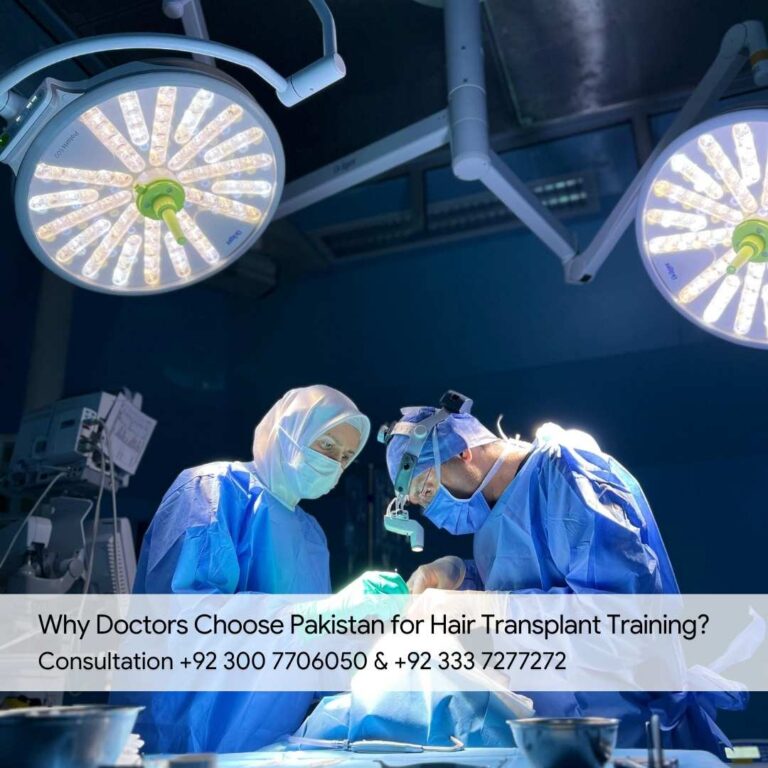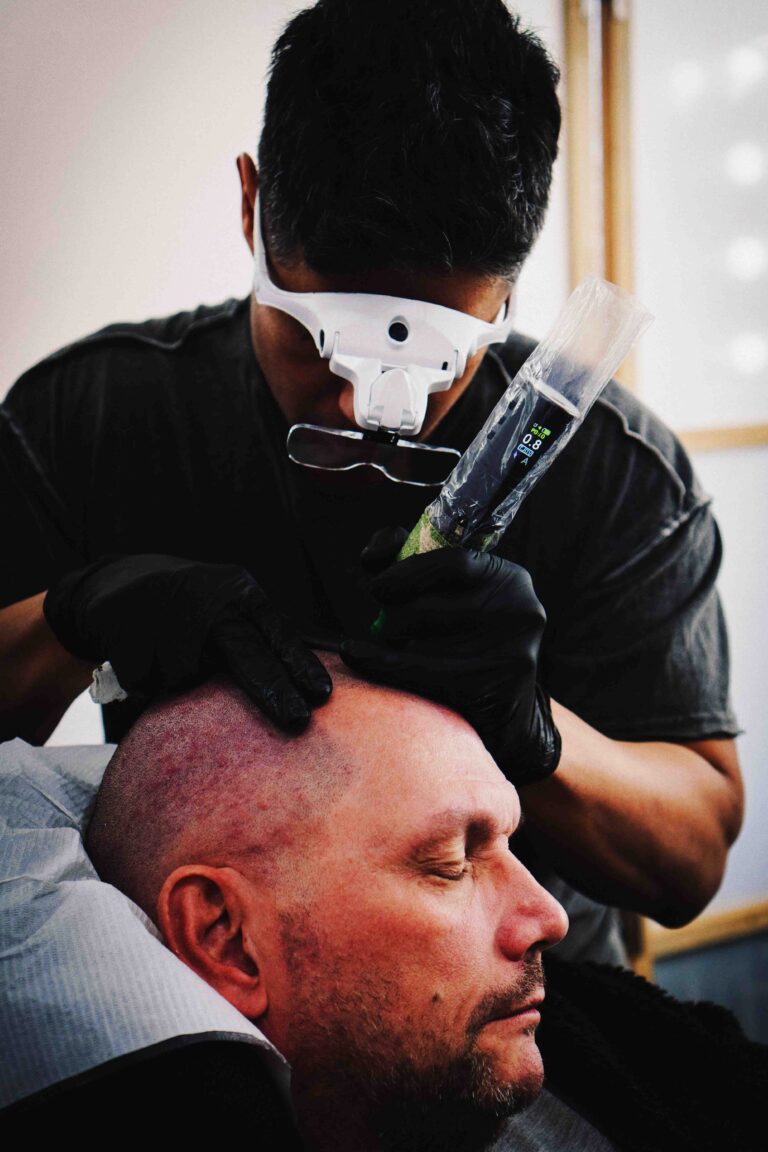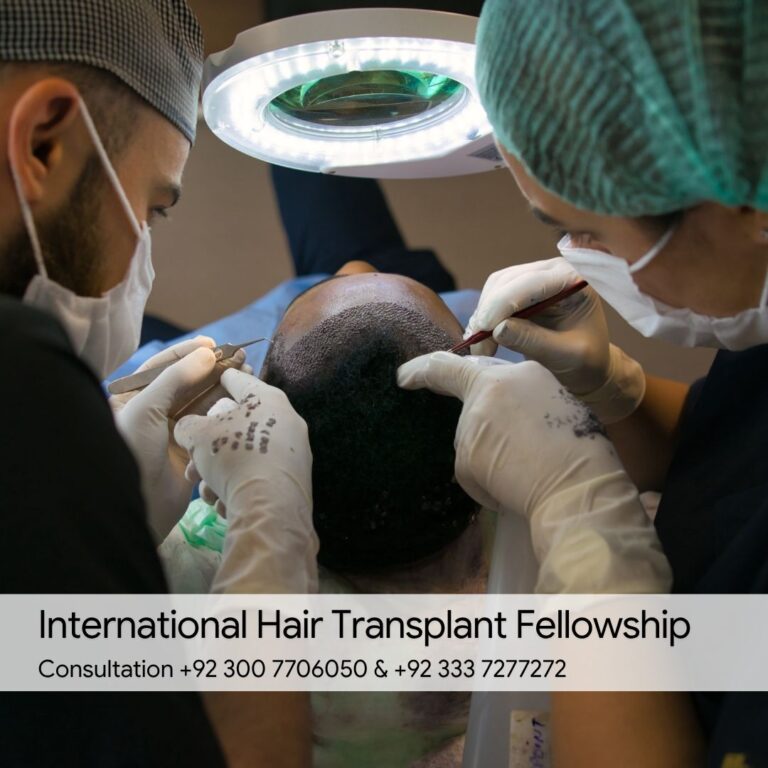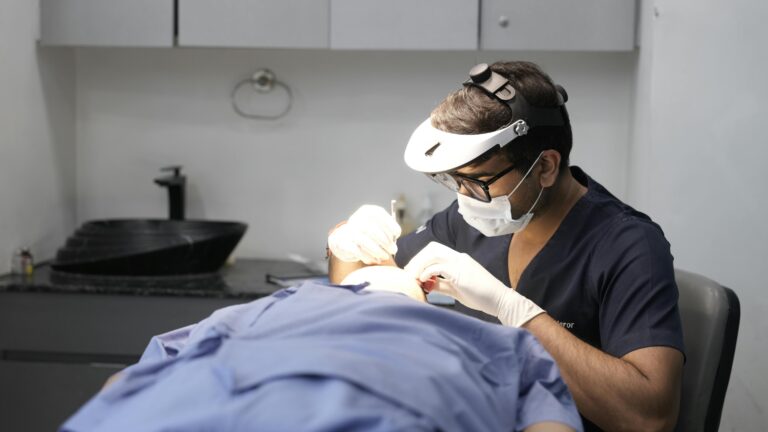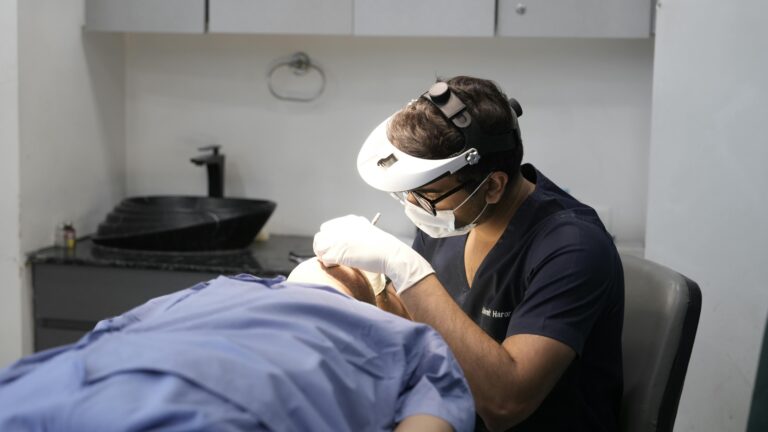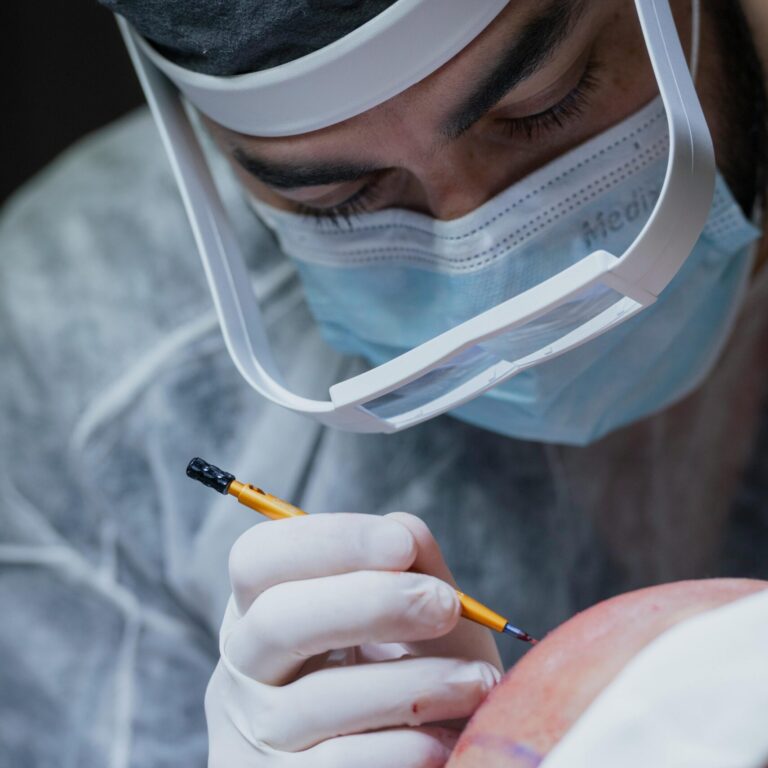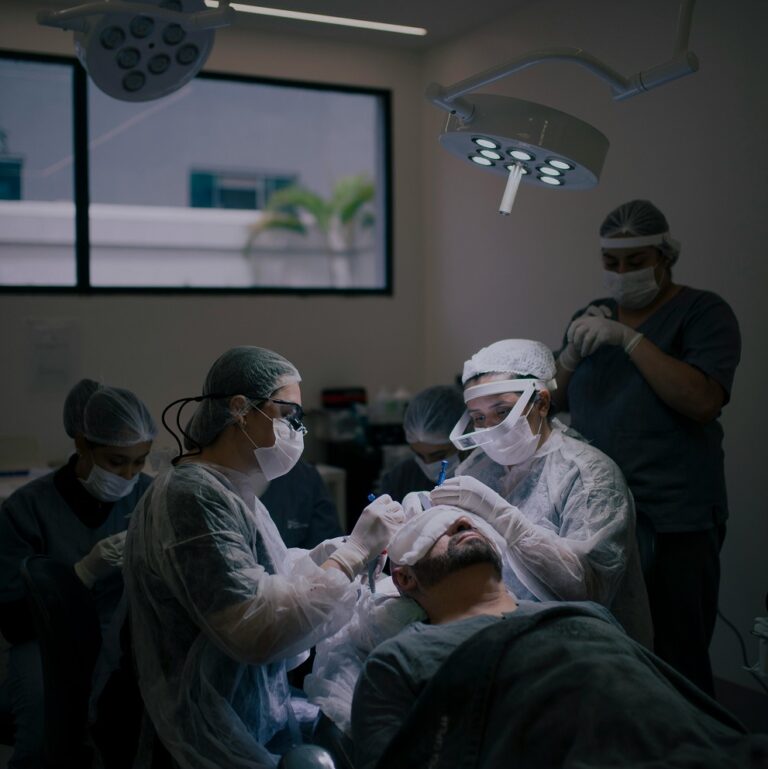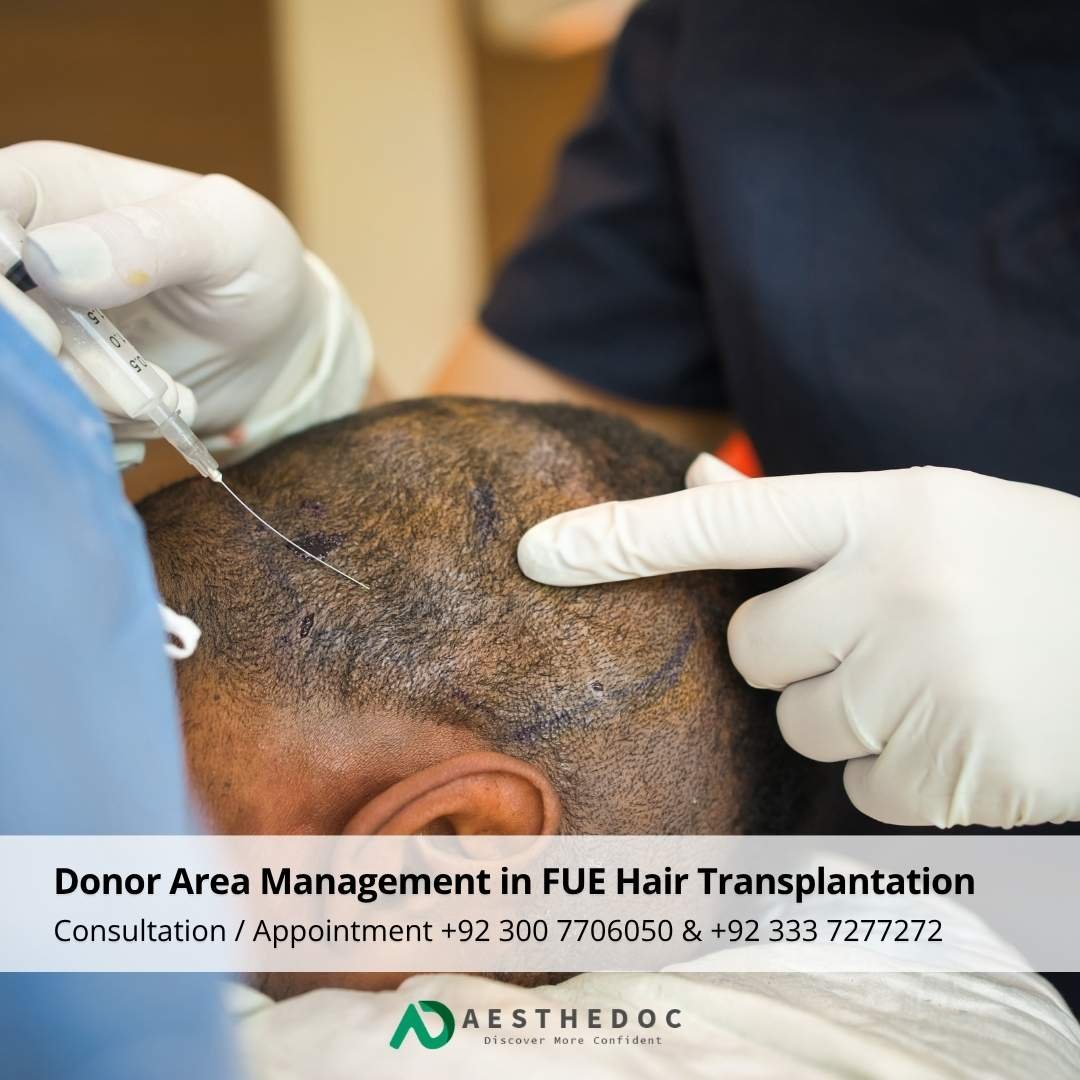
Hair transplantation is not simply the process of moving hair follicles from one part of the scalp to another. Successful hair restoration requires careful surgical planning, an understanding of follicular anatomy, appropriate patient selection and responsible management of the donor area.
Among all the technical aspects of Follicular Unit Extraction (FUE), donor area management is one of the most important determinants of long-term surgical planning.
The donor region contains a finite supply of follicular units. These follicles must be assessed, selected and harvested carefully to preserve the appearance and future treatment options of the patient. Excessive extraction, uneven harvesting, poor punch alignment or inappropriate patient selection can compromise the donor area and create visible thinning.
For doctors learning hair restoration surgery, understanding donor management is therefore essential. A surgeon may learn how to operate an FUE punch, but developing the clinical judgment to determine where, when and how many follicular units should be extracted requires a deeper understanding of scalp anatomy, hair characteristics and long-term hair loss progression.
This is why advanced hair transplant training should address donor area assessment as a separate and comprehensive subject rather than treating it as a minor component of graft extraction.
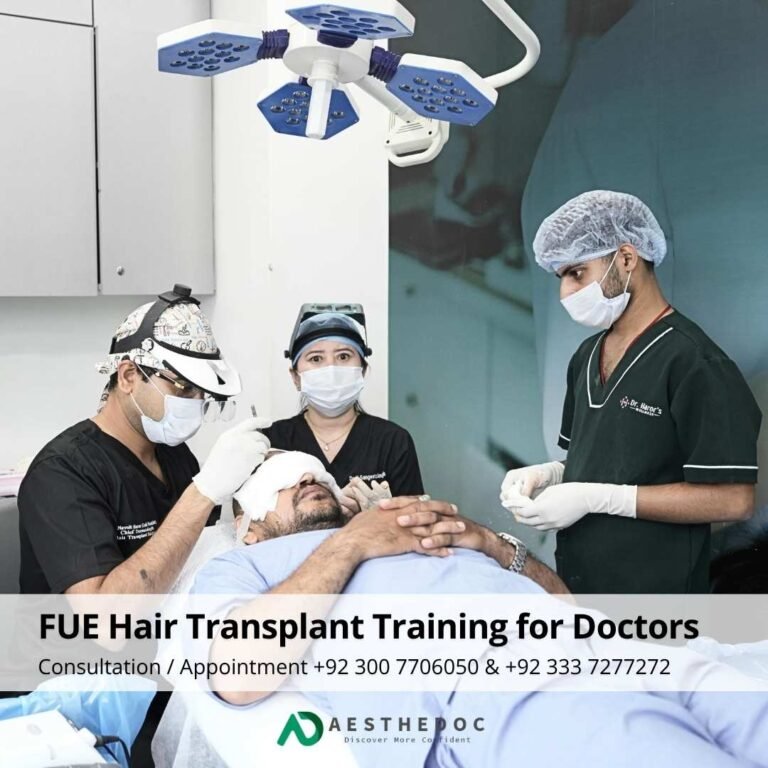
At Aesthedoc, hair transplant training is led by Dr. Adnan Bashir, a Diplomate of the American Board of Hair Restoration Surgery (ABHRS). The programme provides an opportunity for eligible medical professionals to study FUE principles, surgical planning, graft handling and modern hair restoration techniques.
This guide explores the anatomy, assessment, surgical planning and preservation principles involved in donor area management in FUE hair transplantation.
Quick Overview: Donor Area Management in FUE
Donor area management refers to the assessment, planning and controlled harvesting of follicular units from suitable donor regions while preserving the remaining hair and the patient’s long-term restoration options.
Important components include:
- Donor scalp anatomy and follicular distribution.
- Safe donor area assessment.
- Hair density measurement.
- Hair calibre and follicular unit characteristics.
- Donor capacity estimation.
- Extraction pattern planning.
- Punch selection and alignment.
- Follicular transection prevention.
- Avoiding overharvesting.
- Donor area healing and postoperative monitoring.
- Long-term donor preservation.
- Planning for future hair restoration procedures.
The objective is not simply to maximize the number of harvested grafts. It is to achieve an appropriate balance between recipient area requirements and donor area preservation.
1. Understanding the Donor Area in Hair Transplantation
The donor area is the region from which hair follicles are obtained for transplantation.
In conventional scalp hair transplantation, the occipital and parietal regions are commonly assessed because they may contain follicles that are relatively resistant to androgen-related miniaturization.
However, not every patient has an identical donor pattern. The distribution of hair density, follicular unit composition, hair calibre and miniaturization varies considerably.
A surgeon must evaluate the donor area individually rather than assuming that a standard anatomical boundary applies to every patient.
The Occipital Donor Region
The occipital region is located at the back of the scalp.
It frequently provides suitable follicular units for FUE procedures. However, the surgeon must evaluate the patient’s hair characteristics and identify whether the selected area is appropriate for harvesting.
Important assessment factors include:
- Hair density.
- Hair shaft diameter.
- Follicular unit composition.
- Scalp characteristics.
- Miniaturization.
- Previous surgical scars.
- Hair growth direction.
The upper and lower boundaries must be considered in relation to the patient’s individual pattern of hair loss.
The Parietal Donor Region
The parietal regions are located along the sides of the scalp.
They may contribute suitable follicular units depending on the patient’s anatomy and hair loss pattern.
The surgeon should examine these areas carefully because the relationship between the donor region and surrounding hair can influence postoperative appearance.
Temporal Donor Regions
The temporal areas require careful consideration because of their relationship to the frontal hairline and side profile.
Hair characteristics may differ from those in the occipital region.
Doctors learning FUE should understand that donor suitability depends on follicular quality, long-term stability and the planned extraction distribution.
Why Donor Boundaries Are Not Identical for Every Patient
The traditional concept of a safe donor area is a useful starting point, but it should not be treated as an identical fixed zone for every individual.
Age, family history, progression of androgenetic alopecia, miniaturization and individual anatomical characteristics may influence donor suitability.
A surgeon must assess the potential for future changes rather than planning surgery solely around the patient’s current appearance.
2. Donor Area Assessment Before FUE Hair Transplantation
A detailed donor assessment should take place before surgical planning.
The purpose is to determine whether the patient has sufficient suitable follicular units for the proposed restoration and whether harvesting can be performed without creating unacceptable donor depletion.
Medical History and Hair Loss Progression
The consultation should include a detailed medical and family history.
Doctors should investigate:
- Age at onset of hair loss.
- Family history of androgenetic alopecia.
- Previous hair transplant procedures.
- Previous scalp treatments.
- Medical conditions.
- Medication history.
- History of inflammatory scalp conditions.
- Previous episodes of significant shedding.
- Patient expectations.
The patient’s current degree of hair loss should be considered alongside the possibility of future progression.
A young patient with early hairline recession may require a different long-term plan from an older patient with a more established pattern of hair loss.
Clinical Examination
The scalp should be examined under appropriate lighting and magnification.
The surgeon should evaluate:
- Overall donor density.
- Follicular unit distribution.
- Hair shaft calibre.
- Signs of miniaturization.
- Scalp condition.
- Existing scars.
- Hair direction and angulation.
- Regional variations in density.
A trichoscopic examination may help identify follicular miniaturization and other features relevant to donor assessment.
Hair Density Measurement
Donor density is commonly evaluated by estimating the number of follicular units and individual hair shafts within a defined scalp area.
These are different measurements.
For example, a region may contain a relatively high number of follicular units but have a different average number of hairs per unit compared with another patient.
Doctors should distinguish between:
- Follicular units per square centimetre.
- Individual hairs per square centimetre.
- Average hairs per follicular unit.
- Hair shaft diameter.
- Miniaturized hair percentage.
This distinction is important because the total number of visible hairs does not necessarily represent the number of grafts available for transplantation.
Hair Calibre and Characteristics
Hair calibre influences the visual coverage achieved by transplanted follicles.
Coarse hair may provide greater visual coverage than fine hair, even when the follicular unit count is similar.
Other characteristics include:
- Hair colour.
- Contrast between hair and scalp.
- Hair curl.
- Hair length.
- Follicular unit composition.
These factors help the surgeon estimate the visual contribution of the available donor supply.
3. Estimating Donor Capacity and Available Grafts
One of the most important planning decisions in FUE is determining how much donor hair can reasonably be harvested.
Donor capacity should not be calculated using a universal graft number.
It depends on the size and characteristics of the suitable donor region, follicular unit density, miniaturization, hair calibre, previous extraction and the patient’s future hair restoration requirements.
Factors Influencing Donor Capacity
1. Available donor surface area
The size of the suitable donor region influences the potential number of follicular units available.
2. Follicular unit density
Areas with higher density may provide more potential grafts, but density alone does not determine safe extraction capacity.
3. Hair characteristics
Hair calibre, colour contrast and follicular unit composition influence the visual result and should be considered during planning.
4. Miniaturization
Miniaturized follicles may be unsuitable for harvesting if their long-term stability is uncertain.
5. Previous FUE procedures
Previous harvesting reduces the remaining follicular supply and may change the distribution of available donor hair.
6. Future hair loss progression
A patient may require additional treatment in the future. Donor planning should account for the possibility of further hair loss and revision requirements.
Why Graft Numbers Should Not Be the Only Surgical Objective
Patients sometimes request the highest possible number of grafts because they associate a larger graft count with a better result.
However, the number of grafts should be determined by the clinical requirements of the case.
Excessive extraction may cause:
- Visible donor thinning.
- Patchy extraction patterns.
- Reduced density in the donor region.
- Uneven scalp appearance.
- Increased difficulty with future harvesting.
- Limited options for corrective procedures.
The surgeon should explain the relationship between the requested graft count and the available donor supply.
A responsible treatment plan prioritizes appropriate distribution, preservation and realistic expectations.
4. FUE Extraction Planning and Distribution
Once the donor area has been evaluated, the surgeon can develop an extraction plan.
FUE involves harvesting individual follicular units using specialized punches.
The extraction process should be planned to distribute harvesting appropriately across suitable regions rather than concentrating too many extractions in a limited area.
Uniform Extraction Distribution
An important principle of FUE donor management is avoiding excessive concentration of extraction sites.
When harvesting is concentrated in one small region, the resulting reduction in density may become visible.
Appropriate distribution considers:
- Existing hair density.
- Follicular unit spacing.
- Hair direction.
- Regional differences.
- Total planned graft requirement.
- Previously harvested areas.
The objective is to preserve a natural appearance after the procedure.
Extraction Mapping
Preoperative donor mapping helps identify the planned harvesting regions.
The surgeon can document areas of suitable density, areas of miniaturization and regions that should be avoided.
Mapping also helps when a patient has undergone previous hair transplantation.
Clinical photography and standardized documentation can support comparison during follow-up.
Punch Selection
FUE punches are available in different diameters and configurations.
Selection depends on follicular unit characteristics, hair calibre, skin properties, instrument design and the surgeon’s experience.
A punch that is too large may remove unnecessary surrounding tissue, while an inappropriate punch size or alignment can increase the risk of follicular damage.
Training should therefore include the principles of instrument selection and the relationship between punch design and graft quality.
Extraction Angle and Depth
Follicular units emerge from the scalp at different angles and may curve beneath the skin.
The surgeon must understand the direction of follicular growth before extraction.
Inappropriate alignment between the punch and the follicular unit may contribute to transection.
This is one reason FUE training should include detailed demonstrations of scalp anatomy, magnification and instrument handling.
5. Understanding Follicular Transection During FUE
Follicular transection refers to damage or cutting through a follicular unit during extraction.
It is an important technical consideration in hair transplantation because damaged grafts may have reduced viability.
Common Factors Associated With Transection
Potential contributing factors include:
- Incorrect punch alignment.
- Inadequate understanding of hair direction.
- Inappropriate punch selection.
- Excessive extraction depth.
- Variations in follicular anatomy.
- Limited operator experience.
- Difficult scalp characteristics.
- Poor visualization.
How Surgical Training Addresses Transection
Training should help doctors understand the relationship between follicular direction, extraction angle, punch diameter and instrument control.
Important educational components include:
- Identifying follicular unit orientation.
- Understanding subcutaneous follicular curvature.
- Recognizing different scalp characteristics.
- Using appropriate magnification.
- Evaluating extracted grafts.
- Identifying damaged follicular units.
- Documenting extraction quality.
The goal is to develop a systematic approach to graft harvesting rather than relying solely on repetitive instrument movements.
6. FUE Overharvesting: Causes, Consequences and Prevention
Overharvesting is one of the major concerns in donor area management.
It occurs when excessive follicular units are removed from a region, resulting in undesirable reduction of donor density.
Overharvesting can affect both the appearance of the donor area and the patient’s options for future hair restoration.
What Does an Overharvested Donor Area Look Like?
Clinical features may include:
- Patchy areas of reduced hair density.
- Visible scalp between remaining hairs.
- Uneven extraction patterns.
- Reduced donor coverage.
- An unnatural appearance with short hairstyles.
- Areas with excessive concentration of extraction sites.
The severity depends on the number and distribution of extracted grafts, existing density and individual hair characteristics.
Why Does Overharvesting Occur?
Several factors may contribute.
Unrealistic graft expectations: Patients may request more grafts than their donor supply can reasonably support.
Inadequate donor assessment: Failure to evaluate density, miniaturization and future progression may lead to inappropriate planning.
Poor extraction distribution: Concentrating extraction in limited areas can produce visible thinning.
Repeated procedures: Multiple FUE procedures without accurate documentation can gradually reduce donor density.
Insufficient surgical experience: Poor instrument control and inappropriate harvesting decisions can compromise the donor region.
Preventing Donor Overharvesting
A responsible approach includes:
- Performing a comprehensive donor assessment.
- Evaluating follicular unit density.
- Identifying miniaturized follicles.
- Reviewing previous transplant records.
- Estimating realistic donor capacity.
- Planning an appropriate extraction distribution.
- Documenting the procedure.
- Preserving future treatment options.
Doctors should learn that donor preservation is a long-term responsibility, not simply a consideration during one surgical session.
7. Donor Area Management in Patients With Previous Hair Transplants
Patients seeking a second or third hair transplant present additional challenges.
Previous FUE procedures may have reduced density in parts of the donor region.
Some patients may also have linear scars from previous FUT surgery.
Assessing a Previously Harvested Donor Area
A repeat assessment should include:
- Review of previous surgical history.
- Examination of existing extraction patterns.
- Current donor density.
- Scalp scarring.
- Miniaturization.
- Remaining suitable follicular units.
- Patient expectations.
The surgeon should determine whether further harvesting is appropriate.
Repairing an Overharvested Donor Area
Management depends on the severity and distribution of donor depletion.
Selected cases may require a combination of strategies, such as:
- Careful hairstyle planning.
- Appropriate medical management where indicated.
- Scalp micropigmentation as a camouflage option.
- Selected corrective hair restoration procedures.
- Alternative donor sources in carefully selected patients.
Body hair transplantation may be considered in certain cases, but its suitability depends on hair characteristics, donor availability and the intended recipient area.
Corrective procedures require careful counselling because complete restoration of the original donor density may not be possible.
8. Body Hair as an Alternative Donor Source
Scalp donor hair remains the preferred source in many conventional hair transplantation cases.
However, selected patients may have limited scalp donor availability.
Body hair transplantation involves harvesting suitable follicles from areas such as:
- Beard.
- Chest.
- Abdomen.
- Other body regions in selected cases.
Beard Hair Transplantation
Beard follicles can sometimes be useful because of their calibre and growth characteristics.
They may provide additional coverage in selected scalp restoration cases.
However, beard hair differs from scalp hair in several ways, including its growth cycle, length and texture.
It should therefore be used according to a carefully designed restoration plan.
Chest and Body Hair
Body hair characteristics vary significantly between individuals.
Differences in calibre, curl, growth phase and growth length can influence suitability.
Doctors should understand the limitations of body hair transplantation rather than considering it a direct replacement for scalp donor follicles.
Why Body Hair Training Matters
Advanced hair restoration education should introduce the principles of alternative donor assessment and harvesting.
This is particularly relevant for doctors studying complex donor management and corrective hair restoration.
9. Postoperative Donor Area Care and Monitoring
Donor management continues after the extraction procedure.
Appropriate postoperative instructions and follow-up help assess healing and identify complications.
Immediate Postoperative Assessment
The clinical team should assess the donor area for:
- Bleeding.
- Swelling.
- Discomfort.
- Wound condition.
- Signs of infection.
- Unexpected skin reactions.
Patients should receive individualized postoperative instructions from the treating surgeon.
Healing and Recovery
The recovery process varies between patients.
Small extraction sites generally heal over time, although the appearance of the donor region depends on the extent of harvesting, surgical technique and individual healing characteristics.
Patients should be informed about:
- Appropriate scalp hygiene.
- Activity restrictions, if indicated.
- Medication instructions.
- Warning signs requiring medical review.
- Follow-up appointments.
- Expected healing changes.
Long-Term Monitoring
Long-term follow-up can help assess:
- Donor density.
- Healing.
- Scarring.
- Changes in surrounding hair.
- Patient satisfaction.
- Need for further treatment.
Photographic documentation is useful for comparing the donor region over time.
10. How Donor Area Management Influences Long-Term Hair Transplant Results
The donor area should be considered part of the overall hair restoration result.
A technically successful recipient area does not necessarily represent a successful procedure if the donor region has been unnecessarily depleted.
Balancing Recipient Density With Donor Preservation
The surgeon must determine how to distribute available grafts across the recipient region.
For example, a patient with extensive frontal and crown hair loss may not have enough donor supply to achieve the density they initially expect.
The treatment plan may therefore prioritize selected areas rather than attempting to cover the entire scalp in one procedure.
Planning for Progressive Hair Loss
Androgenetic alopecia may progress after transplantation.
The surgeon should consider how future loss of native hair could affect the patient’s appearance.
This is particularly important when designing the frontal hairline and estimating the long-term donor requirements.
Avoiding Unnecessary Surgical Sessions
Appropriate planning can help reduce the likelihood of avoidable corrective procedures.
However, no surgical plan can guarantee that additional treatment will never be required.
The patient’s long-term hair loss pattern, medical condition and treatment response must remain part of ongoing assessment.
11. Advanced FUE Training: Why Donor Management Requires Dedicated Education
FUE is a technically demanding surgical procedure.
Doctors need to understand more than the operation of an extraction device.
They must develop the ability to evaluate donor suitability, select appropriate instruments, recognize follicular anatomy and make responsible harvesting decisions.
A comprehensive training programme should include donor management throughout its curriculum.
Essential Learning Areas for Doctors
Donor Anatomy
Understanding the anatomical characteristics of the scalp and follicular unit distribution.
Density Assessment
Learning to differentiate between follicular units and individual hair counts.
Miniaturization Assessment
Recognizing areas where hair follicles may not be suitable for harvesting.
Donor Capacity Planning
Understanding the relationship between donor availability and recipient requirements.
FUE Extraction Principles
Studying punch selection, alignment, depth and follicular preservation.
Graft Evaluation
Understanding graft quality, transection and handling.
Overharvesting Prevention
Learning to plan extraction distribution and preserve remaining donor density.
Corrective Hair Restoration
Understanding the challenges associated with previously depleted donor areas.
The Importance of Supervised Clinical Education
Theoretical knowledge is essential, but it does not replace supervised clinical learning.
Doctors should seek training that provides appropriate exposure to surgical planning, demonstrations, graft handling and clinical case discussions.
Where practical participation is offered, its scope should be clearly defined and comply with applicable medical regulations and patient consent requirements.
12. What Should Doctors Look for in an Advanced FUE Training Course?
When comparing hair transplant training programmes, doctors should investigate the following areas.
| Training component | What to evaluate |
|---|---|
| Trainer qualifications | Medical credentials and hair restoration expertise |
| Donor assessment | Density and miniaturization evaluation |
| Extraction training | Punch selection and graft harvesting principles |
| Graft handling | Preservation and transection assessment |
| Surgical planning | Donor-to-recipient planning |
| Patient safety | Sterility and complication management |
| Clinical exposure | Appropriate live case observation |
| Supervision | Clearly defined trainer involvement |
| Corrective cases | Previous FUE and donor depletion cases |
| Postoperative care | Follow-up and complication protocols |
A quality programme should explain what doctors will study, what practical exposure is available and what competencies are not covered.
A short course should not be represented as sufficient preparation for independent surgical practice.
13. Hair Transplant Training at Aesthedoc, Pakistan
For doctors interested in developing their knowledge of modern hair restoration, Aesthedoc offers a hair transplant training programme in Pakistan.
The programme is led by Dr. Adnan Bashir, a Diplomate of the American Board of Hair Restoration Surgery (ABHRS).
Aesthedoc’s published programme information describes theoretical education, FUE surgical training, clinical case exposure and mentorship.
Meet Dr. Adnan Bashir
Dr. Adnan Bashir is an ABHRS-certified hair transplant surgeon with a medical and academic background.
His published professional qualifications include:
- MBBS – Foundation University Medical College, Islamabad.
- M.Phil Pharmacology – University of Health Sciences, Lahore.
- Diplomate – American Board of Hair Restoration Surgery.
- CPD UK-certified aesthetic trainer.
- Qualifi UK Level 5 and Level 7 trainer in aesthetic medicine.
- Certified HRA-Robograft provider.
- Advanced Cardiac Life Support certification from the American Heart Association.
His clinical profile describes experience in FUE hair restoration, beard transplantation, eyebrow reconstruction and corrective hair restoration.
What Doctors Can Study at Aesthedoc
The published training programme covers several areas relevant to modern hair restoration.
- Hair loss fundamentals and patient assessment.
- FUE hair transplant principles.
- Donor area evaluation.
- Hairline design.
- Graft extraction and handling.
- Recipient site creation.
- Implantation principles.
- Beard and eyebrow transplantation.
- Corrective hair restoration.
- Postoperative care.
- Complication management.
Doctors interested specifically in donor management should enquire about the depth of donor assessment instruction, extraction planning, supervised clinical exposure and opportunities for individual case discussion.
Who Can Enquire?
The programme is relevant to eligible medical professionals, including:
- Dermatologists.
- Plastic surgeons.
- General surgeons.
- MBBS doctors.
- Aesthetic physicians.
- Medical professionals with relevant surgical backgrounds.
Admission and clinical participation depend on the provider’s requirements and applicable professional regulations.
14. Common Mistakes Doctors Should Avoid in FUE Donor Management
Understanding common technical and planning errors is an important component of surgical education.
Mistake 1: Treating Every Patient’s Donor Area the Same Way
Donor characteristics differ between individuals.
A standardized approach without individual assessment can result in inappropriate extraction planning.
Mistake 2: Focusing Only on Graft Quantity
A high graft count does not automatically mean a better restoration.
The surgeon must consider graft quality, donor density, distribution and long-term preservation.
Mistake 3: Ignoring Miniaturization
Harvesting follicles from unstable or miniaturized areas may compromise long-term donor appearance.
Mistake 4: Concentrating Extraction in Small Areas
Uneven extraction can create patchy donor thinning.
Mistake 5: Ignoring Previous Procedures
Previous FUE or FUT surgery can change the available donor supply.
Mistake 6: Failing to Plan for Future Hair Loss
A treatment plan that focuses only on current baldness may create problems if hair loss progresses.
Mistake 7: Neglecting Documentation
Accurate preoperative and postoperative photographs and surgical records support long-term monitoring and future planning.
15. Frequently Asked Questions About FUE Donor Area Management
What is donor area management in FUE hair transplantation?
Donor area management is the process of assessing, planning and harvesting follicular units while preserving the remaining donor hair and future restoration options.
Why is donor management important in hair transplantation?
The donor supply is limited. Excessive extraction or poor distribution can cause visible thinning, patchy appearance and reduced options for future procedures.
What is the safe donor area in FUE?
The safe donor area refers to scalp regions containing follicles considered relatively suitable for long-term transplantation. Its boundaries vary between individuals and must be assessed clinically.
How is donor density measured?
Donor density can be assessed using magnification and appropriate examination techniques. Measurements may include follicular units per square centimetre and individual hairs per square centimetre.
What is follicular transection?
Follicular transection occurs when a follicular unit is damaged or cut during extraction. It can reduce graft quality and is an important technical consideration during FUE.
What causes FUE overharvesting?
Overharvesting may result from excessive extraction, poor donor assessment, uneven harvesting, inadequate planning or repeated procedures without proper evaluation.
Can an overharvested donor area recover?
The remaining hair may grow normally, but removed follicles are not reliably replaced. Management depends on the severity of depletion and may involve selected corrective or camouflage approaches.
Can FUE be repeated?
Repeat FUE may be possible in selected patients, depending on remaining donor density, previous extraction patterns, scalp condition and future restoration needs.
Can beard hair be used as a donor source?
Beard hair can be considered in selected patients, particularly when scalp donor availability is limited. Its different characteristics must be considered during planning.
Is donor area management included in hair transplant training?
Donor assessment and extraction planning are important components of comprehensive FUE education. Applicants should confirm the specific curriculum and practical training arrangements with their chosen provider.
Who should learn advanced donor management?
Eligible hair restoration surgeons, dermatologists, plastic surgeons and other appropriately qualified medical professionals may benefit from additional education in donor assessment and preservation.
Does learning FUE donor management qualify a doctor to perform hair transplant surgery independently?
No. Training attendance alone does not grant independent surgical privileges. Doctors must have appropriate qualifications, competence, professional registration and authorization under applicable laws.
16. Advance Your FUE Hair Restoration Knowledge With Aesthedoc
Donor area management is one of the foundations of responsible hair restoration surgery.
Doctors who understand donor anatomy, follicular density, miniaturization, extraction distribution and long-term preservation are better equipped to evaluate the complexities involved in FUE surgical planning.
For medical professionals interested in developing their hair restoration knowledge, Aesthedoc offers a structured hair transplant training programme in Pakistan under the leadership of Dr. Adnan Bashir, an ABHRS-certified hair transplant surgeon.
The programme provides theoretical education, FUE surgical training, clinical exposure and mentorship in modern hair restoration.
If you are a dermatologist, plastic surgeon, general surgeon or another eligible medical professional interested in advanced FUE education, contact Aesthedoc to discuss your training objectives and programme requirements.
Enquire About Hair Transplant Training
Institute: Aesthedoc
Lead Trainer: Dr. Adnan Bashir
Training Location: Pakistan
Programme: Hair Transplant Training for Doctors and Surgeons
WhatsApp / International Enquiries: +92 333 727 7272
Additional Contact: +92 300 7706050
Email: info@aesthedoc.com
Request information about the curriculum, upcoming training dates, donor management modules, clinical exposure, admission requirements and supervised practical learning opportunities.
Build a stronger understanding of FUE surgery through structured medical education and professional mentorship at Aesthedoc.
Medical Disclaimer
This article is intended for professional medical education and general information. Hair transplantation is a surgical procedure requiring appropriate medical qualifications, clinical competence and compliance with applicable professional regulations. Surgical participation must follow patient consent, clinical governance and relevant licensing requirements. Training does not independently confer specialist recognition or authorization to practise surgery.