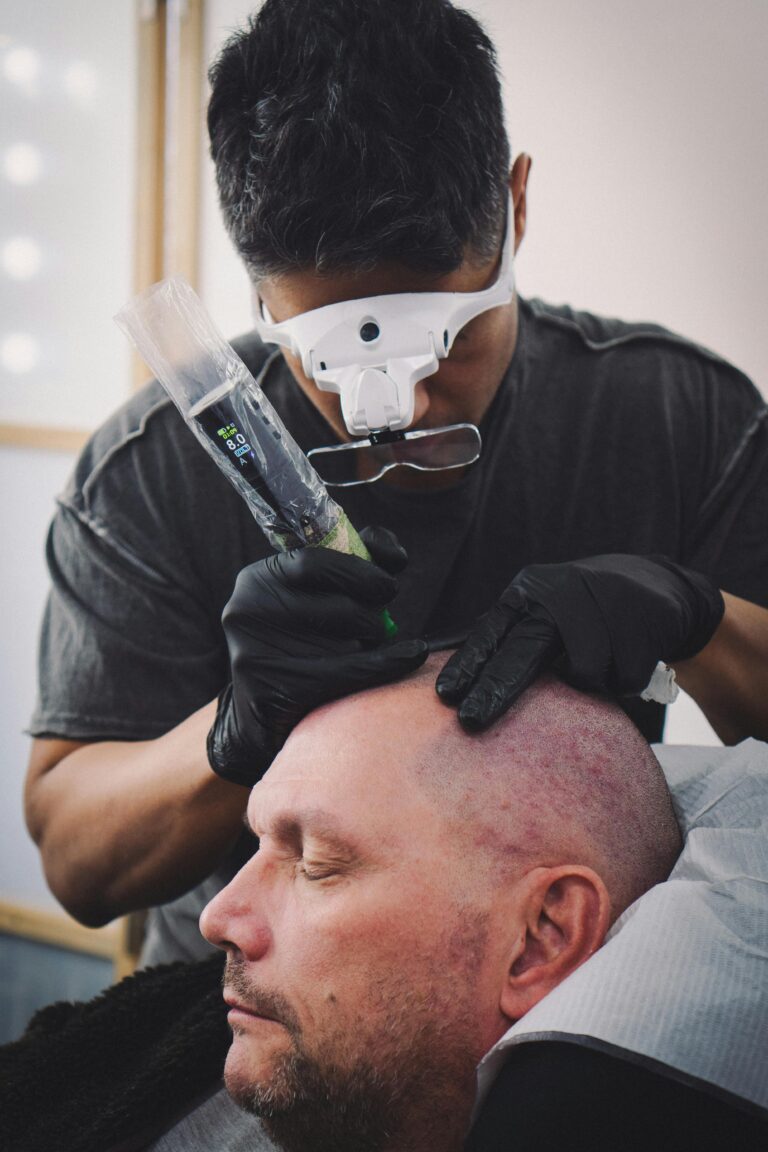
Hair loss is no longer just a cosmetic concern—it has become a significant psychological and social issue affecting millions across Pakistan. Recent estimates indicate that nearly 30 million Pakistanis, representing around 70% of middle-aged adults, experience some form of hair loss. This crisis spans urban centers like Karachi, Lahore, Islamabad, Rawalpindi, and Multan, driven by genetics, stress, pollution, nutritional deficiencies, and lifestyle factors. For many men and increasingly women, thinning hair or baldness impacts self-esteem, career prospects, and personal relationships.
In response to this surging demand, the field of hair transplantation has emerged as one of the fastest-growing specialties in aesthetic medicine. Patients seek natural-looking, permanent solutions, but the success of any procedure hinges entirely on the skill of the practitioner. Poorly performed transplants can lead to unnatural results, scarring, infection, or graft failure—highlighting the critical need for structured, hands-on professional training.
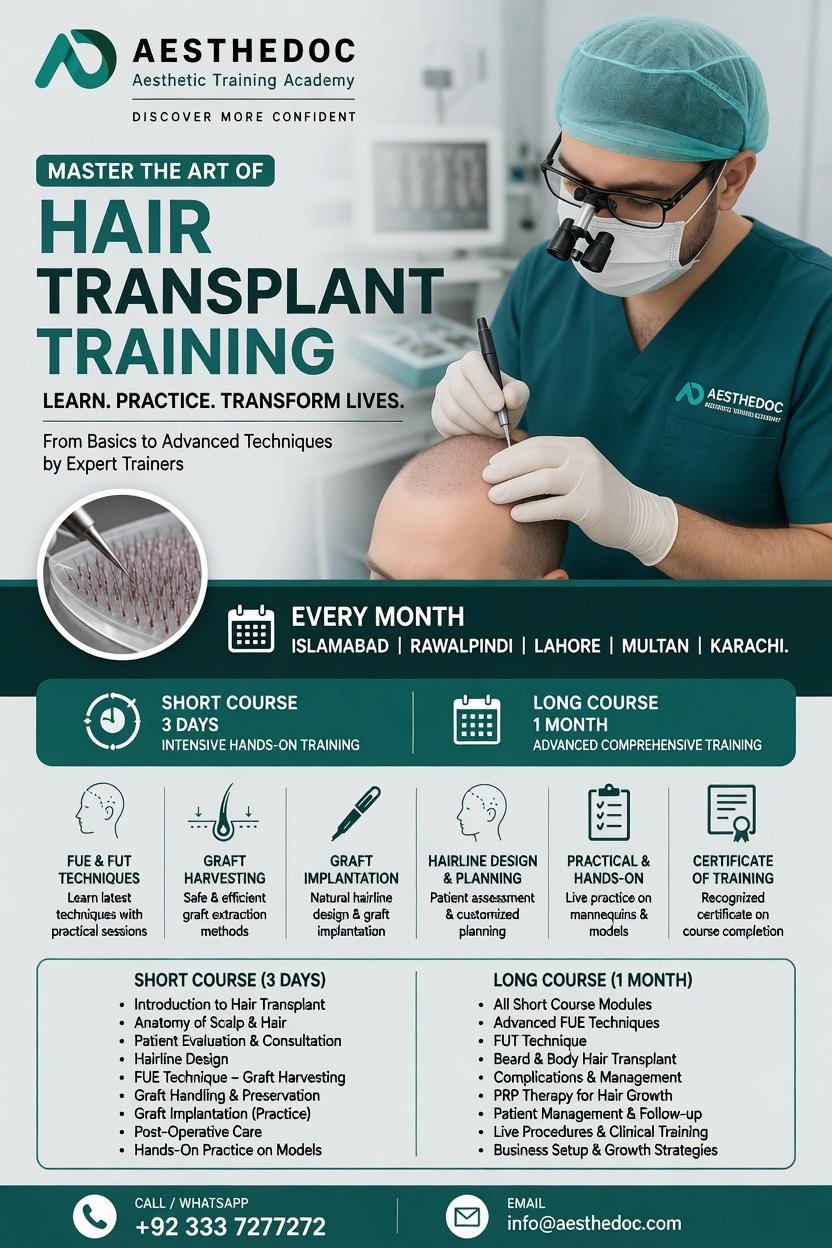
Enter AESTHEDOC Aesthetic Training Academy, a premier institution dedicated to equipping doctors, surgeons, and medical professionals with world-class expertise in hair transplant techniques. Their flagship program, “Master the Art of Hair Transplant Training,” offers both short (3-day) intensive and long (1-month) comprehensive courses. Delivered monthly across major Pakistani cities—Islamabad, Rawalpindi, Lahore, Multan, and Karachi—these programs blend theoretical knowledge with extensive practical experience.
This article explores every dimension of the AESTHEDOC program: its curriculum, techniques taught, real-world applications, career benefits, and why it stands out in Pakistan’s evolving aesthetic medicine landscape. Whether you are a dermatologist, plastic surgeon, general practitioner, or aspiring aesthetic professional, this guide will illuminate how mastering hair transplantation can transform not only patients’ lives but also your professional trajectory.
The Rising Demand for Hair Transplants in Pakistan and Globally
Pakistan’s hair transplant market is booming. With a young population and increasing disposable incomes in metropolitan areas, more individuals are investing in aesthetic procedures. Turkey remains a global leader in medical tourism for hair transplants, but local demand is shifting toward high-quality domestic options to avoid travel costs and complications.
Statistics reveal explosive growth in the Asia and Middle East regions, with annual procedure volumes rising at double-digit rates. In Pakistan, the shortage of qualified surgeons—estimated at only 150 against a need for thousands—creates a massive opportunity for trained professionals.
Patients today are more informed. They demand natural hairlines, dense packing, minimal scarring, and long-term results. This evolution requires practitioners who understand not just the surgery but also patient psychology, anatomy, graft survival science, and post-operative care. AESTHEDOC’s training addresses these gaps by producing confident, ethical, and technically proficient specialists.
About AESTHEDOC Aesthetic Training Academy
AESTHEDOC positions itself as a leader in aesthetic education with a clear mission: “Discover More Confident.” Their hair transplant program emphasizes “Learn. Practice. Transform Lives.” Courses are led by expert trainers who combine academic rigor with real clinical experience.
The academy operates in major cities, ensuring accessibility. Facilities feature modern surgical suites, high-resolution monitors for live demonstrations, and state-of-the-art tools for FUE and FUT procedures. The logo—a stylized “A” in teal and dark navy—symbolizes precision, trust, and innovation in aesthetic medicine.
Core Techniques Taught: FUE and FUT Explained in Depth
The foundation of any competent hair transplant surgeon lies in mastering Follicular Unit Extraction (FUE) and Follicular Unit Transplantation (FUT).
FUT (Strip Method): This classic technique involves removing a thin strip of scalp from the donor area (typically the back of the head, where hair is genetically resistant to balding). The wound is sutured, and the strip is meticulously dissected under stereomicroscopes into individual follicular units containing 1–4 hairs.
Advantages include:
- High graft yield in a single session (up to 4000+ grafts).
- Excellent for patients needing maximum density.
- Lower transection rates when performed by experts.
Disadvantages:
- Linear scar in the donor area (though minimized with trichophytic closure).
- Longer recovery time.
FUE (Follicular Unit Excision): The modern gold standard. Individual follicular units are extracted directly from the donor area using a small punch tool (0.7–1.2 mm diameter). No strip is removed, resulting in tiny, dot-like scars that are virtually invisible, especially with short haircuts.
Key steps in FUE:
- Donor area shaving and anesthesia.
- Precise punching with manual or motorized devices.
- Graft extraction and preservation in specialized solutions.
- Recipient site creation using custom blades or implanters.
- Implantation with forceps or Choi implanters for optimal angulation and density.
AESTHEDOC covers both techniques thoroughly, including hybrid approaches. Trainees learn graft harvesting, handling, preservation (critical for survival rates above 90%), implantation, and advanced variations like beard and body hair transplantation.
Hairline Design and Artistic Planning: The Hallmark of Excellence
Technical skill alone is insufficient. AESTHEDOC dedicates significant time to Hairline Design & Planning. This includes:
- Facial proportion analysis.
- Patient-specific Norwood or Ludwig scale assessment.
- Customizing density gradients (higher in front, softer transition zones).
- Considering age, ethnicity, future hair loss progression, and donor supply.
Trainees practice on mannequins and live models, learning to create natural, age-appropriate hairlines that avoid the “pluggy” look of outdated procedures.
Course Structure: Short vs. Long Programs
Short Course (3 Days) – Intensive Hands-On Training
Ideal for busy practitioners seeking foundational skills or refreshers. Curriculum includes:
- Introduction to Hair Transplant.
- Anatomy of Scalp & Hair.
- Patient Evaluation & Consultation.
- Hairline Design.
- FUE Technique – Graft Harvesting.
- Graft Handling & Preservation.
- Graft Implantation (Practice).
- Post-Operative Care.
- Hands-On Practice on Models.
This fast-paced program delivers immediate practical confidence.
Long Course (1 Month) – Advanced Comprehensive Training
Designed for those seeking mastery. It builds on the short course with:
- All short-course modules.
- Advanced FUE Techniques.
- FUT Technique.
- Beard & Body Hair Transplant.
- Complications & Management.
- PRP Therapy for Hair Growth.
- Patient Management & Follow-up.
- Live Procedures & Clinical Training.
- Business Setup & Growth Strategies.
The extended duration allows for deeper immersion, live surgeries, and business acumen—essential for launching a successful practice.
Course Highlights: What Makes AESTHEDOC Stand Out
- FUE & FUT Techniques – Latest methods with practical sessions.
- Graft Harvesting – Safe, efficient extraction minimizing transection.
- Graft Implantation – Natural hairline design and strategic placement.
- Hairline Design & Planning – Patient assessment and customization.
- Practical & Hands-On – Live practice on mannequins and models.
- Certificate of Training – Recognized upon completion.
Additional strengths include small batch sizes for personalized attention, expert faculty, and focus on complication prevention (e.g., shock loss, infection, poor growth).
Deep Dive into the Curriculum
Week-by-Week Breakdown (Long Course):
Days 1–5: Foundations Anatomy, physiology of hair growth cycle (anagen, catagen, telogen), pathology of androgenetic alopecia, consultation skills, photography standards, and informed consent.
Days 6–15: Core Surgical Skills Donor area management, anesthesia techniques (local with tumescence), harvesting (FUE punches, motorized systems, manual), strip excision (FUT), microscopic dissection, graft sorting and storage (hypothermic solutions, ATP additives).
Days 16–22: Recipient Area Mastery Site creation (needles, blades, implanters), slit vs. premade sites, implantation angles, dense packing protocols, megasessions.
Days 23–28: Advanced Modules Body/beard hair, corrective surgery for failed transplants, PRP and adjunctive therapies, laser-assisted techniques, scar camouflage.
Days 29–30: Business & Ethics Marketing, clinic setup, pricing strategies, patient retention, legal aspects, and continuing medical education.
Throughout, emphasis is placed on sterility, ergonomics to prevent surgeon fatigue, and ethical practice—never promising unrealistic results.
Hands-On Training: From Theory to Live Procedures
Theory occupies only a fraction of the program. The majority is dedicated to supervised practice. Trainees begin with synthetic models, progress to cadaveric or mannequin scalp simulations, and—under strict ethical oversight—observe and assist in live patient procedures.
Skills honed include:
- Punch alignment to minimize transection (<5% ideal).
- Gentle graft handling (no crushing or drying).
- Precise implantation depth and direction for natural growth.
- Managing difficult cases: curly hair, scarred donor areas, high Norwood stages.
Post-operative protocols cover medications (minoxidil, finasteride, antibiotics), wound care, and follow-up timelines (Day 1, Week 1, Month 3, Month 6, Year 1).
Managing Complications and Ensuring Patient Safety
No training is complete without addressing risks. AESTHEDOC covers:
- Intra-operative: Bleeding, vasovagal reactions, donor depletion.
- Post-operative: Edema, folliculitis, telogen effluvium, necrosis (rare).
- Long-term: Poor growth, unnatural appearance, donor scarring.
Trainees learn evidence-based prevention and management, aligning with international standards from bodies like ISHRS (International Society of Hair Restoration Surgery).
Career Opportunities and Business Potential
Graduates can:
- Join or establish dedicated hair restoration clinics.
- Add hair transplants as a high-margin service to existing dermatology or plastic surgery practices.
- Offer combined packages with PRP, mesotherapy, and laser therapy.
- Tap into medical tourism within Pakistan.
Financially, a well-run practice can generate substantial revenue. Single sessions often range from PKR 80,000 to 300,000+, with multiple cases per week possible. The business module teaches website development, social media marketing (before/after photos with consent), patient financing, and team building (technicians, nurses).
Patient Perspective: Transforming Lives
A successful hair transplant does more than restore hair—it restores confidence. Patients report improved social interactions, career advancement, and mental well-being. AESTHEDOC-trained doctors are equipped to deliver these transformative outcomes ethically and compassionately.
Conclusion: Your Journey to Expertise Begins Here
AESTHEDOC’s Hair Transplant Training represents a golden opportunity for medical professionals in Pakistan. In a market starved for skilled practitioners, completing these structured programs positions you at the forefront of aesthetic medicine.
Whether you opt for the intensive 3-day introduction or the immersive 1-month mastery track, you will gain the knowledge, skills, and confidence to excel. Contact AESTHEDOC today via +92 333 7277272 or info@aesthedoc.com to secure your spot in the next session.
The future of hair restoration in Pakistan is bright—and it needs dedicated, well-trained professionals like you to lead the way. Invest in your skills, transform patient lives, and build a rewarding career in one of medicine’s most satisfying fields.