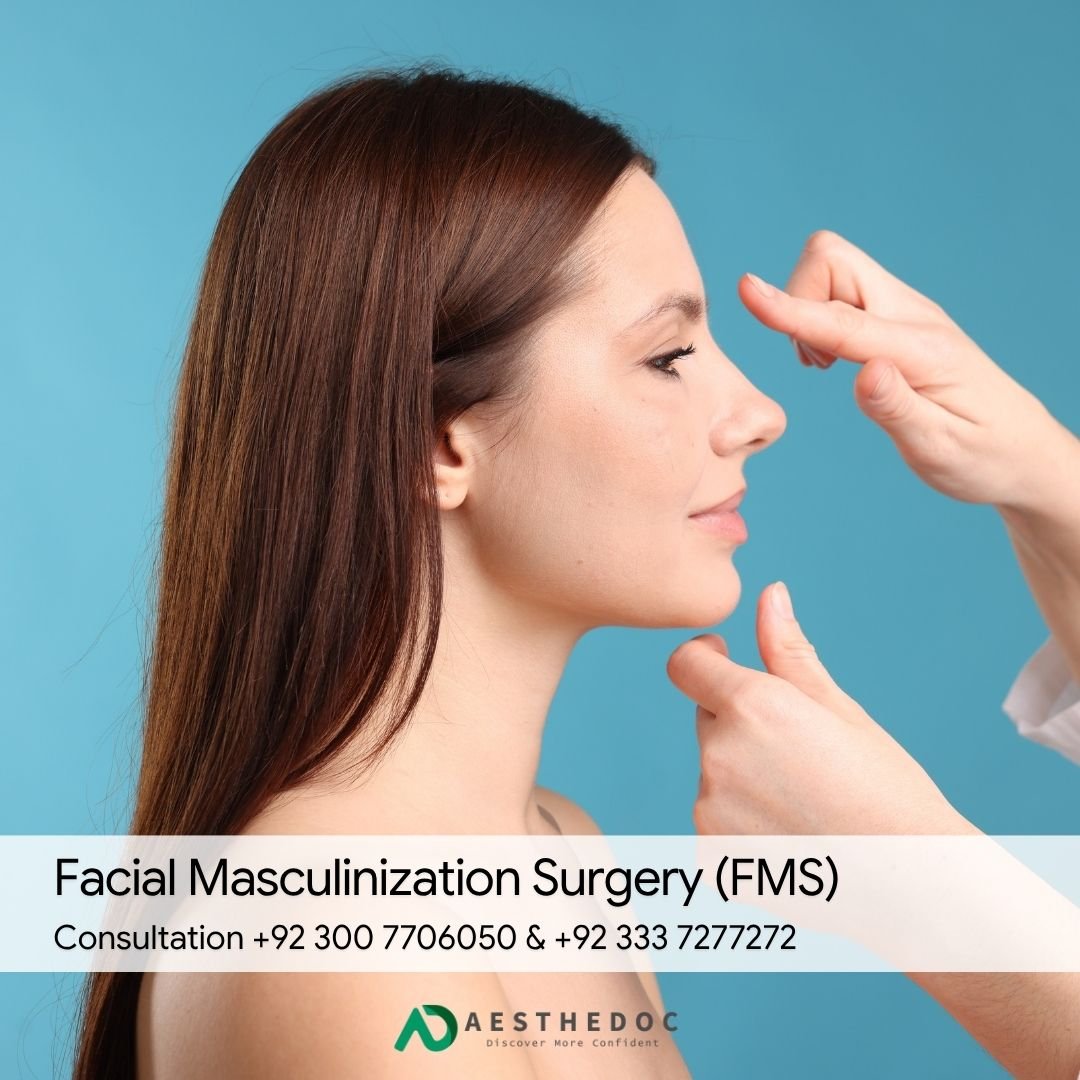
Facial Masculinization Surgery (FMS) refers to a group of facial surgical procedures designed to create stronger, more traditionally masculine facial features by modifying the forehead, nose, jawline, chin, cheeks, and other facial structures. The procedures are highly individualized and aim to improve facial proportions while maintaining natural appearance and facial function.
Some individuals naturally have softer facial features and seek greater definition of the jawline, chin, or forehead. Others may pursue facial masculinization as part of treatment for gender incongruence or after discussion with appropriate healthcare professionals. The specific procedures performed depend on each patient’s anatomy, goals, and clinical assessment.
Unlike injectable fillers or temporary contouring treatments, Facial Masculinization Surgery creates permanent structural changes to the facial skeleton and soft tissues.
Facial Masculinization Surgery may help improve:
- Weak jawline
- Receding chin
- Narrow lower face
- Flat cheek structure
- Soft facial profile
- Facial asymmetry
- Forehead contour
- Overall facial balance
Depending on the patient’s needs, FMS may include one or more of the following procedures:
- Chin Augmentation
- Sliding Genioplasty
- Jaw Contouring or Augmentation
- Facial Implants
- Rhinoplasty
- Forehead Contouring
- Facial Fat Grafting
- Neck Contouring
At Aesthedoc Clinic, Facial Masculinization procedures are planned by experienced Plastic, Reconstructive and Cosmetic Surgery Specialists using detailed facial analysis, modern imaging, and evidence-based surgical techniques to achieve balanced, natural-looking outcomes while prioritizing patient safety.
What is Facial Masculinization Surgery?
Facial Masculinization Surgery (FMS) is a customized group of facial procedures designed to enhance masculine facial characteristics through surgical modification of bone, cartilage, and soft tissue.
The treatment plan varies according to the patient’s anatomy and may include:
- Chin augmentation or reshaping
- Jawline enhancement
- Forehead contouring
- Nasal reshaping
- Facial implants
- Soft tissue augmentation
- Neck contour improvement
Rather than a single operation, FMS is often a combination of procedures selected to improve overall facial harmony.
Facial Anatomy
Successful facial contouring requires a detailed understanding of facial anatomy.
Important structures include:
- Frontal bone (forehead)
- Supraorbital ridge
- Zygomatic bones (cheekbones)
- Maxilla
- Mandible
- Chin (mental bone)
- Nasal bones
- Facial muscles
- Facial nerves
- Facial blood vessels
- Soft tissue envelope
Protecting these structures while improving facial proportions is essential for both safety and aesthetic outcomes.
Characteristics of Masculine Facial Features
Although facial appearance varies widely among individuals and populations, facial analysis often considers characteristics such as:
- More defined jawline
- Stronger chin projection
- Greater lower facial width
- Well-defined mandibular angles
- Prominent forehead contour
- Balanced nasal proportions
- Defined neck-to-jaw transition
Treatment goals are individualized rather than based on a single ideal appearance.
Why is Facial Masculinization Surgery Performed?
Patients may choose FMS for a variety of reasons, including:
- Desire for stronger facial definition
- Weak or recessed chin
- Less defined jawline
- Facial imbalance
- Congenital facial differences
- Reconstructive needs after trauma
- Gender-affirming treatment following appropriate evaluation
The objective is to improve facial harmony while preserving natural facial movement and function.
Conditions Facial Masculinization Surgery May Address
Weak Chin
Chin augmentation or sliding genioplasty may improve chin projection and lower facial balance.
Soft Jawline
Jawline enhancement procedures may create greater definition and improve facial contour.
Flat Midface
Selected patients may benefit from facial implants or fat grafting to improve facial structure.
Forehead Contour
Forehead contouring may improve upper facial proportions in carefully selected patients.
Facial Asymmetry
Customized surgical planning may improve mild to moderate asymmetry.
Post-Traumatic Facial Differences
Reconstructive facial procedures may help restore facial balance after selected injuries.
Benefits of Facial Masculinization Surgery
Potential benefits include:
- Stronger jawline definition
- Improved chin projection
- Better facial balance
- Enhanced profile
- Improved facial symmetry
- Permanent structural enhancement
- Personalized treatment planning
- Natural-looking outcomes
- Long-lasting results
- Increased confidence
Who is a Good Candidate?
You may be a suitable candidate if you:
- Desire stronger facial definition
- Have completed facial skeletal growth
- Are in good general health
- Have realistic expectations
- Do not smoke or are willing to stop before surgery
- Understand the benefits and limitations of surgery
A comprehensive consultation is required to determine which procedures are appropriate for your goals.
Who May Not Be a Suitable Candidate?
Facial Masculinization Surgery may not be appropriate for individuals with:
- Active facial or dental infections
- Poor wound healing
- Uncontrolled medical conditions
- Unrealistic expectations
- Medical conditions that substantially increase surgical risk
Your specialist will discuss appropriate alternatives when indicated.
Types of Facial Masculinization Procedures
Chin Augmentation
Improves chin projection and lower facial balance.
Sliding Genioplasty
Reshapes and repositions the patient’s own chin bone.
Jawline Enhancement
Improves lower facial definition using bone reshaping or implants where appropriate.
Facial Implants
Custom or standard implants may be used to enhance selected facial areas.
Rhinoplasty
Nasal reshaping may improve facial proportions when combined with other facial procedures.
Forehead Contouring
May enhance upper facial definition in carefully selected patients.
Facial Fat Grafting
Uses the patient’s own fat to improve volume and contour in selected areas.
Facial Masculinization Surgery vs Non-Surgical Facial Contouring
| Feature | Facial Masculinization Surgery | Non-Surgical Contouring |
|---|---|---|
| Permanent Results | ✔ | ✘ |
| Bone Modification | ✔ (when indicated) | ✘ |
| Structural Change | ✔ | Limited |
| Repeat Treatments | Rare | Usually required |
| Customized Combination Procedures | ✔ | Limited |
| Recovery Required | ✔ | Minimal |
The appropriate treatment depends on each patient’s anatomy, treatment goals, and whether skeletal or soft tissue modification is required.
Consultation and Evaluation
A comprehensive consultation includes assessment of:
- Facial proportions
- Jawline
- Chin projection
- Nose
- Forehead
- Facial symmetry
- Skin quality
- Medical history
- Previous facial procedures
- Treatment goals
Clinical photography and facial measurements assist in creating an individualized surgical plan.
Preparing for Facial Masculinization Surgery
Before surgery, patients are generally advised to:
- Stop smoking at least 4–6 weeks before surgery
- Avoid aspirin and certain blood-thinning medications under medical supervision
- Complete recommended laboratory investigations
- Maintain excellent oral hygiene
- Eat a nutritious diet
- Stay well hydrated
- Arrange transportation home after surgery
- Follow fasting instructions if general anesthesia is planned
- Carefully follow all personalized preoperative instructions
Proper preparation supports safer surgery, optimal healing, and long-term results.
Preparing for Facial Masculinization Surgery
Facial Masculinization Surgery requires careful planning because each patient’s facial anatomy and treatment goals are unique. During your consultation, the Plastic, Reconstructive and Cosmetic Surgery Specialist will perform a comprehensive facial analysis and discuss the procedures most appropriate for achieving balanced, natural-looking masculine facial features.
Preoperative planning generally includes:
- Comprehensive medical evaluation
- Review of previous facial surgeries or injuries
- Facial photography and measurements
- Three-dimensional facial assessment when indicated
- Discussion of treatment goals and realistic expectations
- Laboratory investigations if required
- Review of medications, supplements, and allergies
Patients are commonly advised to:
- Stop smoking at least 4–6 weeks before and after surgery
- Avoid aspirin and certain blood-thinning medications under medical supervision
- Maintain excellent oral hygiene
- Eat a balanced, nutritious diet
- Stay well hydrated
- Arrange transportation after surgery
- Follow fasting instructions before general anesthesia
- Carefully follow all individualized preoperative instructions
Good preparation supports safer surgery, smoother recovery, and more predictable long-term outcomes.
Step-by-Step Facial Masculinization Surgery Procedure
Facial Masculinization Surgery is not a single operation. Instead, it is a customized combination of procedures selected according to the patient’s anatomy and desired facial characteristics.
Step 1 – General Anesthesia
Most Facial Masculinization procedures are performed under general anesthesia.
During surgery, the anesthesia team continuously monitors:
- Heart rate
- Blood pressure
- Oxygen saturation
- Breathing
- Overall patient safety
Step 2 – Surgical Planning Confirmation
Immediately before surgery, the surgeon confirms:
- Facial proportions
- Jawline width
- Chin projection
- Forehead contour
- Nasal proportions
- Facial symmetry
- Planned surgical modifications
This helps ensure the procedure follows the individualized treatment plan.
Step 3 – Surgical Markings
External markings identify:
- Facial midline
- Jawline
- Chin position
- Forehead landmarks
- Planned incision sites
- Areas requiring augmentation or contouring
These markings provide guidance throughout surgery.
Step 4 – Chin Enhancement
When the chin is recessed or lacks projection, enhancement may be achieved through:
- Sliding genioplasty
- Chin implant placement
- Bone advancement techniques
The objective is to improve lower facial balance while maintaining natural proportions.
Step 5 – Jawline Enhancement
A stronger jawline is often an important component of Facial Masculinization Surgery.
Depending on the patient’s anatomy, jawline enhancement may involve:
- Mandibular augmentation
- Jaw implants
- Bone contouring
- Customized implants in selected cases
Treatment is individualized to achieve balanced lower facial definition.
Step 6 – Forehead Contouring
Selected patients may undergo forehead contouring to enhance upper facial definition.
Depending on anatomical requirements, this may involve:
- Bone contour refinement
- Forehead augmentation
- Contour correction
- Soft tissue adjustment
The procedure is designed to maintain facial harmony while improving forehead proportions.
Step 7 – Rhinoplasty (When Appropriate)
Some patients choose Rhinoplasty as part of comprehensive facial masculinization.
The procedure may improve:
- Nasal projection
- Dorsal profile
- Tip definition
- Overall facial balance
Rhinoplasty is performed only when it aligns with the patient’s treatment goals.
Step 8 – Facial Implants
Facial implants may be used to enhance selected areas, including:
- Chin
- Jaw angles
- Cheeks (in carefully selected patients)
Implants are selected according to individual anatomy and desired facial proportions.
Step 9 – Facial Fat Grafting
Some patients benefit from autologous fat grafting, which uses the patient’s own fat to improve soft tissue volume and contour.
Common treatment areas include:
- Temples
- Midface
- Cheeks
- Jawline transitions
Fat grafting may complement skeletal procedures by enhancing overall facial balance.
Step 10 – Neck Contouring
When indicated, neck contouring may be combined with facial masculinization to improve the transition between the jawline and neck.
Depending on individual anatomy, this may involve:
- Liposuction
- Soft tissue contouring
- Skin tightening procedures
Step 11 – Final Facial Assessment
Before completing surgery, the surgeon reassesses:
- Facial symmetry
- Chin projection
- Jawline definition
- Overall proportions
- Bone stability
- Implant position (if applicable)
Minor refinements are made if necessary.
Step 12 – Wound Closure
Incisions are closed using appropriate suturing techniques.
Depending on the procedures performed, incisions may be:
- Inside the mouth
- Within natural skin creases
- Hidden within the hairline
- Carefully positioned to minimize visible scarring
Combination Procedures
Facial Masculinization Surgery often combines several procedures during a single operation.
Common combinations include:
- Chin Augmentation + Jawline Enhancement
- Sliding Genioplasty + Jaw Implants
- Rhinoplasty + Chin Augmentation
- Forehead Contouring + Rhinoplasty
- Jawline Enhancement + Neck Liposuction
- Facial Implants + Fat Grafting
- Comprehensive Facial Masculinization Surgery
Combining procedures may improve facial harmony while reducing the need for multiple separate recovery periods.
How Long Does Facial Masculinization Surgery Take?
The duration depends on the number and complexity of procedures performed.
| Procedure | Estimated Surgical Time |
|---|---|
| Chin Augmentation | 1–2 hours |
| Sliding Genioplasty | 2–3 hours |
| Jawline Enhancement | 2–4 hours |
| Rhinoplasty | 2–4 hours |
| Facial Implants | 2–3 hours |
| Comprehensive Facial Masculinization Surgery | 5–10 hours |
Recovery After Facial Masculinization Surgery
Recovery varies depending on the procedures performed and individual healing.
First 24 Hours
Patients commonly experience:
- Moderate swelling
- Mild bruising
- Facial tightness
- Temporary numbness
- Mild discomfort
- Fatigue
Cold compresses may be recommended for certain procedures to help reduce swelling.
Days 2–7
During the first week:
- Swelling typically reaches its maximum
- Bruising becomes more noticeable
- A soft diet may be recommended if jaw procedures were performed
- Light walking is encouraged
- Heavy physical activity should be avoided
Most patients attend their first postoperative review during this period.
Week Two
Many patients experience:
- Reduced swelling
- Improved comfort
- Better facial movement
- Gradual return to routine daily activities
Patients with desk-based jobs may be able to return to work, depending on the extent of surgery and recovery.
Weeks 3–6
Healing continues with:
- Progressive reduction in swelling
- Improved facial definition
- Increased comfort
- Gradual return to exercise after medical clearance
Bone healing continues beneath the surface following skeletal procedures.
Months 2–6
As recovery progresses:
- Residual swelling gradually improves
- Facial contours become more refined
- Soft tissues adapt to structural changes
- Bone healing continues where applicable
Six to Twelve Months
By this stage:
- Healing is typically complete
- Facial contours stabilize
- Final results become more apparent
- Long-term outcomes can be evaluated
Recovery Timeline
| Time After Surgery | Typical Recovery Progress |
|---|---|
| Day 1 | Swelling and mild discomfort |
| Week 1 | Peak swelling and bruising |
| Week 2 | Noticeable improvement |
| Month 1 | Improved facial definition |
| Month 3 | Continued healing and contour refinement |
| Month 6 | Significant improvement |
| Month 12 | Final cosmetic outcome |
Aftercare Instructions
Following postoperative instructions is essential for safe healing and optimal results.
Patients are generally advised to:
- Sleep with the head elevated
- Apply cold compresses if recommended
- Take medications exactly as prescribed
- Maintain excellent oral hygiene if intraoral incisions were used
- Eat soft foods when advised
- Avoid smoking throughout recovery
- Avoid strenuous physical activity until medically cleared
- Protect healing incisions from excessive sun exposure
- Attend all follow-up appointments
- Contact the clinic promptly if increasing swelling, fever, severe pain, bleeding, or unusual drainage develops
Benefits of Facial Masculinization Surgery
Potential benefits include:
- Stronger jawline definition
- Improved chin projection
- Better facial balance
- Enhanced facial profile
- More defined lower face
- Improved facial symmetry
- Permanent structural enhancement
- Customized treatment planning
- Natural-looking results
- Increased confidence
Expected Results
The primary goal of Facial Masculinization Surgery is to enhance facial definition while maintaining a natural appearance.
Patients may notice:
- Improved jawline definition
- Stronger chin projection
- Better facial proportions
- Enhanced facial harmony
- More balanced profile
Although changes are visible immediately after surgery, swelling temporarily obscures the final outcome.
Before and After Expectations
Patients should understand that:
- Swelling and bruising are expected during early recovery.
- Temporary numbness may occur depending on the procedures performed.
- Bone healing takes several months when skeletal procedures are included.
- Soft tissues gradually adapt to the new facial structure.
- Final cosmetic results are generally evaluated 6–12 months after surgery.
The objective is to create balanced, individualized masculine facial features that complement the patient’s natural anatomy while preserving facial function.
Risks and Possible Complications of Facial Masculinization Surgery
Facial Masculinization Surgery (FMS) often combines multiple facial procedures, making careful patient selection, comprehensive planning, and experienced surgical care essential. When performed by a qualified Plastic, Reconstructive and Cosmetic Surgery Specialist, the procedure has a favorable safety profile. However, as with any surgical treatment, potential risks and complications should be discussed before surgery.
Possible complications include:
- Bleeding (hematoma)
- Infection
- Swelling
- Bruising
- Temporary pain or discomfort
- Temporary numbness of the face or lower lip
- Delayed wound healing
- Facial asymmetry
- Under-correction or over-correction
- Irregular bone contour
- Implant displacement (when implants are used)
- Implant infection (uncommon)
- Temporary weakness of facial muscles (rare)
- Nerve injury (rare)
- Bone healing complications (when bone surgery is performed)
- Visible or widened scars (depending on incision location)
- Temporary difficulty chewing (after jaw procedures)
- Adverse reaction to anesthesia
- Unsatisfactory cosmetic outcome
- Need for revision surgery
Although most patients recover without major complications, understanding these possibilities allows informed decision-making and realistic expectations.
How to Reduce the Risk of Complications
Patients can help minimize risks by:
- Choosing an experienced Plastic, Reconstructive and Cosmetic Surgery Specialist
- Completing all recommended medical evaluations
- Following all preoperative instructions carefully
- Stopping smoking at least 4–6 weeks before and after surgery
- Maintaining excellent nutrition and hydration
- Taking prescribed medications exactly as directed
- Following dietary recommendations after surgery
- Avoiding strenuous exercise until medically cleared
- Attending all scheduled follow-up appointments
- Promptly reporting increasing swelling, fever, bleeding, drainage, or severe pain
Careful preparation and close postoperative follow-up contribute significantly to successful long-term outcomes.
Success Rate of Facial Masculinization Surgery
Facial Masculinization Surgery generally has a high patient satisfaction rate when treatment is individualized and performed for appropriate indications.
Successful outcomes depend on:
- Comprehensive facial assessment
- Personalized treatment planning
- Accurate surgical execution
- Stable healing
- Soft tissue adaptation
- Realistic expectations
- Patient compliance with postoperative care
- Overall health
Because many procedures involve permanent skeletal modification or long-lasting implants, results are generally durable after healing is complete.
Facial Masculinization Surgery Cost in Pakistan
The cost depends on the number of procedures performed, surgical complexity, anesthesia, hospital charges, implants (if required), and postoperative care.
Estimated Cost Table
| Procedure | Estimated Cost (PKR) |
|---|---|
| Consultation | 3,000 – 10,000 |
| Chin Augmentation | 250,000 – 600,000 |
| Sliding Genioplasty | 400,000 – 800,000 |
| Jawline Enhancement | 500,000 – 1,200,000 |
| Facial Implants | 600,000 – 1,500,000 |
| Forehead Contouring | 600,000 – 1,400,000 |
| Comprehensive Facial Masculinization Surgery | 1,800,000 – 4,500,000 |
Disclaimer: These prices are approximate estimates for educational purposes only. Actual costs vary depending on the patient’s anatomy, surgical plan, hospital facility, anesthesia, implants, investigations, and any combined procedures.
Estimated Cost Around the World
| Country | Estimated Cost |
|---|---|
| 🇵🇰 Pakistan | USD 6,000 – 18,000 |
| 🇮🇳 India | USD 7,000 – 18,000 |
| 🇹🇷 Turkey | USD 8,000 – 20,000 |
| 🇹🇭 Thailand | USD 9,000 – 22,000 |
| 🇲🇾 Malaysia | USD 10,000 – 22,000 |
| 🇦🇪 UAE (Dubai) | USD 12,000 – 28,000 |
| 🇰🇷 South Korea | USD 15,000 – 35,000 |
| 🇬🇧 United Kingdom | USD 20,000 – 45,000 |
| 🇨🇦 Canada | USD 22,000 – 50,000 |
| 🇺🇸 United States | USD 25,000 – 60,000+ |
Frequently Asked Questions (FAQs)
What is Facial Masculinization Surgery?
Facial Masculinization Surgery is a customized combination of facial procedures designed to enhance masculine facial characteristics while maintaining facial harmony and function.
Is Facial Masculinization Surgery a single procedure?
No. It is a personalized treatment plan that may include one or more procedures such as chin augmentation, jawline enhancement, forehead contouring, rhinoplasty, or facial implants.
Are the results permanent?
Most skeletal procedures provide permanent structural changes. The longevity of other procedures depends on the technique used and individual healing.
Is the surgery painful?
General anesthesia is used during surgery. Postoperative discomfort is usually managed with prescribed medications.
How long does surgery take?
Depending on the number of procedures, surgery may take between 2 and 10 hours.
Will I have visible scars?
Many procedures use incisions inside the mouth or within the hairline. When external incisions are necessary, they are planned to make scars as inconspicuous as possible.
How long does swelling last?
Most swelling improves during the first few weeks, while subtle swelling may continue to resolve over several months.
When can I return to work?
Patients with office-based jobs often return to work within 2–4 weeks, depending on the extent of surgery.
Can Facial Masculinization Surgery improve facial symmetry?
It may improve mild to moderate facial asymmetry when appropriate procedures are included in the treatment plan.
Can several procedures be combined?
Yes. Combining compatible procedures is common and may improve overall facial balance while reducing the need for multiple recovery periods.
Will implants always be required?
No. Some patients achieve their goals with bone reshaping or repositioning alone, while others may benefit from implants depending on their anatomy.
Can Rhinoplasty be included?
Yes. Rhinoplasty is commonly combined with other facial contouring procedures when it contributes to overall facial harmony.
Is the procedure suitable for all adults?
Suitability depends on overall health, facial anatomy, treatment goals, and a comprehensive surgical evaluation.
Can Facial Masculinization Surgery correct a weak jawline?
Jawline enhancement procedures may improve jaw definition in carefully selected patients.
How long do titanium plates remain in place?
When used, titanium plates and screws are generally biocompatible and remain permanently unless removal becomes medically necessary.
When can I exercise again?
Light walking is encouraged during early recovery. More strenuous exercise should only be resumed after approval from your specialist.
Will facial expressions change?
The goal is to preserve normal facial movement while enhancing facial structure. Temporary changes due to swelling usually improve as healing progresses.
How long until the final results are visible?
Although early improvements are noticeable after swelling decreases, the final outcome is generally assessed 6–12 months after surgery.
Can Facial Masculinization Surgery be reversed?
Some procedures, such as implants, may be modified or removed, while skeletal procedures permanently reshape the underlying bone. Revision surgery may be possible in selected cases but should be discussed individually during consultation.
Am I a suitable candidate?
A consultation with a Plastic, Reconstructive and Cosmetic Surgery Specialist is necessary to determine whether Facial Masculinization Surgery is appropriate for your anatomy, health, and treatment goals.
Why Choose Aesthedoc Clinic?
At Aesthedoc Clinic, every Facial Masculinization treatment plan is customized according to the patient’s unique facial anatomy and desired outcomes. Our experienced Plastic, Reconstructive and Cosmetic Surgery Specialists combine comprehensive facial assessment with modern surgical techniques to provide evidence-based, individualized care.
Our approach includes:
- Detailed facial analysis
- Personalized treatment planning
- Advanced facial contouring techniques
- Modern surgical facilities
- Evidence-based treatment protocols
- Focus on natural-looking facial harmony
- Comprehensive postoperative care
- Long-term follow-up
- Patient safety as the highest priority
Whether your goal is to improve jawline definition, enhance chin projection, or achieve more balanced masculine facial features, our team is committed to supporting you throughout your treatment journey.
Related Procedures
Patients interested in Facial Masculinization Surgery may also consider:
- Chin Augmentation Surgery
- Sliding Genioplasty
- Jaw Contouring Surgery (V-Line Surgery)
- Facial Bone Reduction Surgery
- Facial Implants
- Rhinoplasty
- Facial Fat Grafting
- Neck Liposuction
- Forehead Contouring
- Blepharoplasty
- Facelift
- Plastic Surgery Consultation
Conclusion
Facial Masculinization Surgery is a highly individualized group of procedures that can improve facial definition, balance, and structural harmony. By combining appropriate facial contouring techniques based on each patient’s anatomy and goals, long-lasting improvements can often be achieved while preserving normal facial function.
A comprehensive consultation with an experienced Plastic, Reconstructive and Cosmetic Surgery Specialist is the first step toward understanding your treatment options and developing a personalized surgical plan.
Book Your Consultation at Aesthedoc Clinic
If you are considering Facial Masculinization Surgery, Aesthedoc Clinic offers comprehensive consultations with experienced Plastic, Reconstructive and Cosmetic Surgery Specialists who provide individualized treatment plans using modern facial contouring techniques.
Whether your goals include improving jawline definition, enhancing chin projection, or achieving more balanced facial proportions, our team is committed to delivering safe, evidence-based care with natural-looking results.
Schedule Your Consultation Today
📞 Phone: 0333-7277272 | 0300-7706050
📧 Email: info@aesthedoc.com
Book your confidential consultation to discuss your goals and receive a personalized treatment plan.