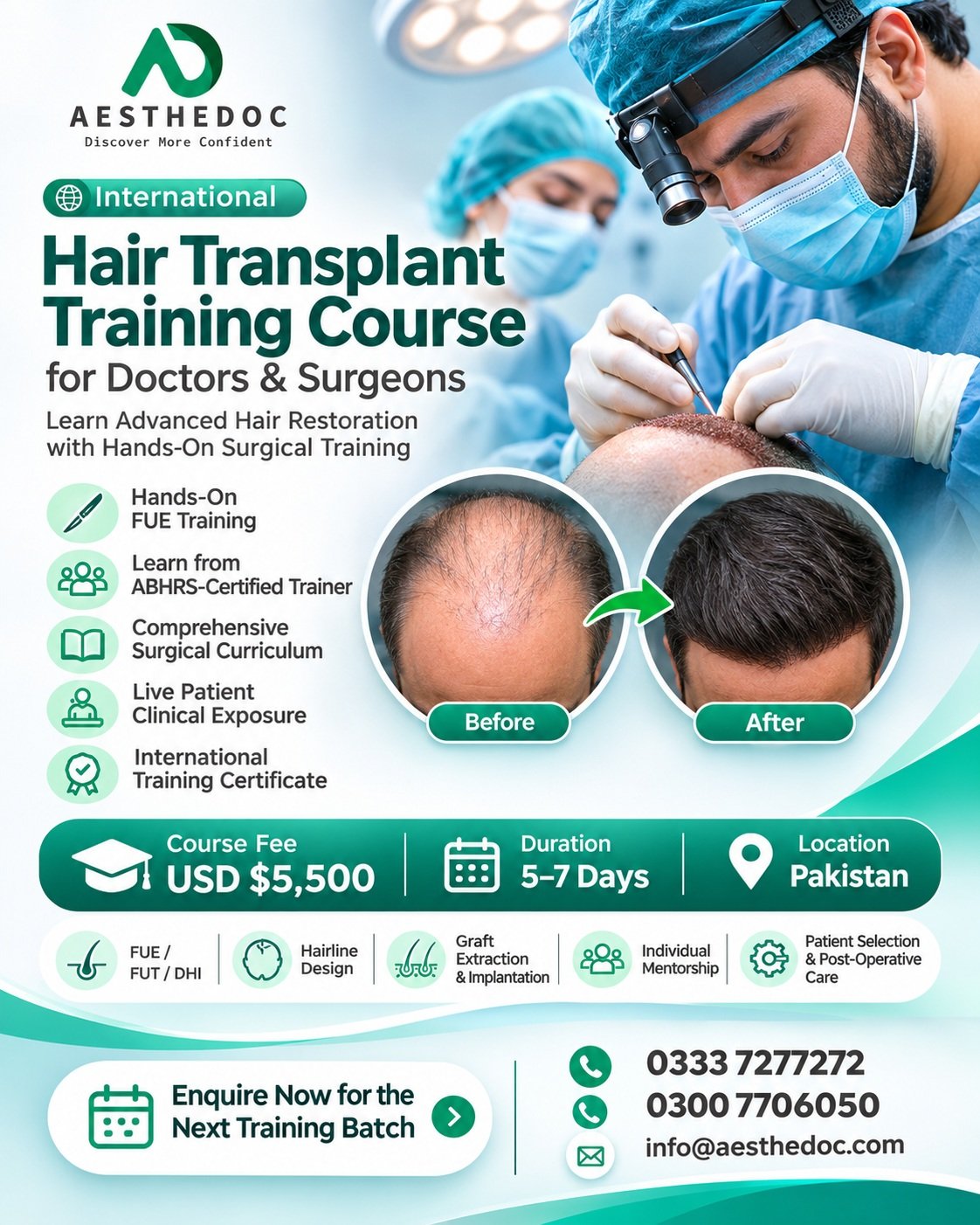
Choosing the Right International Hair Transplant Training Programme for Your Medical Career
Hair transplantation has developed into a specialized field of surgical hair restoration that combines dermatology, anatomy, surgical planning, aesthetic judgment and microsurgical precision. As demand for hair restoration procedures continues to grow across international markets, more medical professionals are exploring opportunities to acquire specialized training in Follicular Unit Extraction (FUE), Follicular Unit Transplantation (FUT), Direct Hair Implantation (DHI) and advanced hair restoration techniques.
For doctors considering this professional pathway, one important question arises: What is the best hair transplant training course in the world, and how can a medical professional identify a programme that provides meaningful surgical education rather than simply a course certificate?
The answer depends on several factors, including the qualifications of the trainer, clinical experience, practical exposure, surgical curriculum, patient safety standards, mentorship, training duration and the opportunity to develop skills under appropriate supervision.
A high-quality hair transplant training course should teach more than the mechanical steps of extracting and implanting hair follicles. It should develop a doctor’s ability to evaluate hair loss, assess donor capacity, select appropriate candidates, design natural hairlines, manage follicular grafts, understand surgical limitations and plan long-term restoration outcomes.
For international doctors, selecting the right training destination is equally important. Programmes in countries such as the United States, United Kingdom, Spain, Turkey, Georgia and Pakistan offer different educational formats, costs and clinical environments.
This guide explores the essential features of professional hair transplant training, the qualifications doctors should consider, the techniques covered in modern hair restoration education and how international medical professionals can evaluate training opportunities before investing in their surgical careers.
Quick Answer: What Is the Best Hair Transplant Training Course in the World?
The best hair transplant training course is not necessarily the most expensive, the longest or the one offering the most impressive certificate. It is a programme that combines experienced surgical mentorship, structured theoretical education, supervised clinical exposure, practical skill development and a strong commitment to patient safety.
When comparing international hair transplant training programmes, doctors should evaluate:
- The trainer’s qualifications, surgical background and professional credentials.
- Whether the programme is specifically designed for qualified medical professionals.
- Practical exposure to FUE, FUT or DHI techniques.
- Opportunities to observe and participate in clinical procedures under appropriate supervision.
- Training in donor assessment, graft extraction, handling and implantation.
- Hairline design and long-term aesthetic planning.
- Patient selection, contraindications and complication management.
- Individual mentorship and constructive feedback.
- Transparent course fees, curriculum and training arrangements.
- Whether the training credential is recognized by the relevant medical or professional authority.
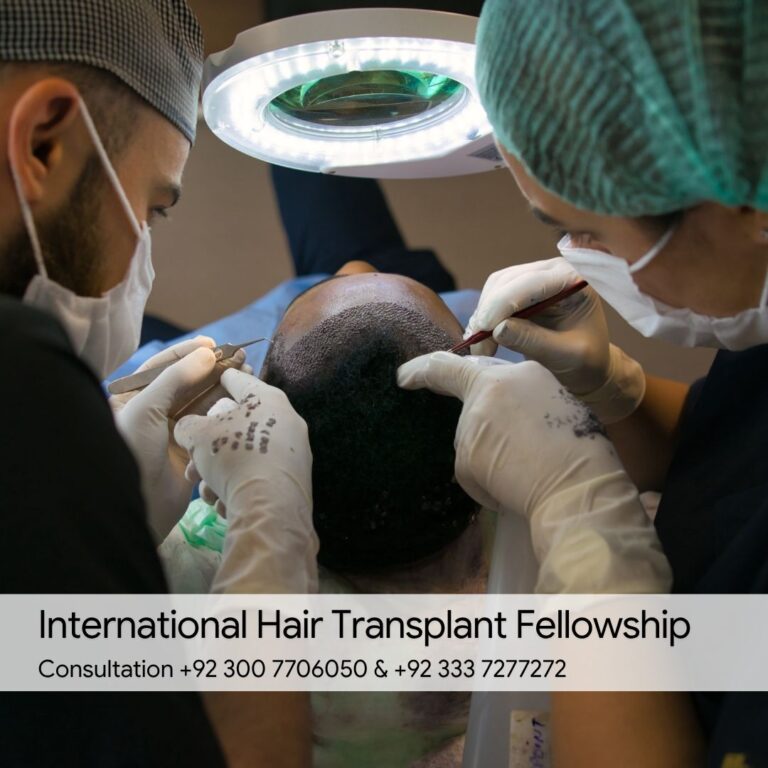
Aesthedoc in Pakistan offers an international hair transplant training programme led by Dr. Adnan Bashir, an ABHRS-certified hair transplant surgeon. Its programme is presented as an option for medical professionals seeking structured education, FUE surgical exposure and individual mentorship at an advertised course fee of USD $5,500.
The most appropriate programme ultimately depends on a doctor’s existing qualifications, experience, learning objectives and the legal requirements of the country where they intend to practise.
1. Understanding International Hair Transplant Training
Hair transplant surgery is a specialized procedure in which hair follicles are transferred from a suitable donor region to areas affected by hair loss. Although the fundamental concept appears straightforward, successful hair restoration requires detailed anatomical knowledge, surgical planning and an understanding of the biological characteristics of hair follicles.
A surgeon must consider several interconnected factors before performing a procedure.
These include:
- The cause and progression of hair loss.
- The patient’s age and expected future hair loss.
- The availability and quality of donor hair.
- Hair shaft thickness, curl and characteristics.
- Scalp condition and tissue characteristics.
- The number of grafts required.
- The distribution and direction of existing hair.
- The patient’s aesthetic expectations.
- Long-term donor management.
A doctor entering hair restoration should understand that transplanting more grafts does not automatically produce a better result. Surgical planning must balance the recipient area’s requirements with the limitations of the donor supply.
This is why comprehensive hair transplant training should combine theoretical knowledge with clinical observation, practical education and supervised surgical experience.
Why Are Doctors Pursuing Hair Restoration Training?
Medical professionals from different specialties are exploring hair restoration because it offers an opportunity to develop a focused area of clinical practice.
Common motivations include:
Specialization: Dermatologists, plastic surgeons and other eligible physicians may wish to expand their professional knowledge into surgical hair restoration.
Clinical development: Doctors already working in aesthetic medicine may want to understand the surgical side of hair loss management.
Practice expansion: Established medical practitioners may be considering adding hair restoration services to an appropriately equipped clinical practice.
International education: Medical professionals may seek training abroad to learn from experienced surgeons and observe different clinical approaches.
Professional development: Doctors who already have experience in hair restoration may want to improve specific competencies, including donor management, graft handling, hairline planning and corrective procedures.
However, entering this specialty requires more than completing a short course. Appropriate medical qualifications, supervised experience, professional competence and local regulatory authorization remain essential.
2. What Makes a Hair Transplant Training Course the Best?
There is no universally accepted global ranking that identifies one hair transplant training programme as the best for every doctor. Training providers also differ in their eligibility criteria, teaching methods, clinical exposure and educational credentials.
Rather than relying on promotional claims, medical professionals should evaluate programmes using measurable educational criteria.
A. Experienced and Qualified Surgical Trainer
The trainer is one of the most important elements of any professional surgical education programme.
Hair transplantation involves technical decisions that are difficult to understand through theoretical lectures alone. An experienced surgeon can explain why particular approaches are selected, how surgical challenges are addressed and when a procedure should be modified or avoided.
Before enrolling, doctors should investigate:
- The trainer’s medical qualifications.
- Relevant surgical experience.
- Hair restoration training and professional credentials.
- Current clinical practice.
- Experience with different hair transplant techniques.
- Academic contributions and professional involvement.
- Ability to provide individual supervision and feedback.
A professional trainer should also explain the limitations of different procedures and emphasize ethical decision-making.
B. Structured Practical Training
Practical education is essential when learning a surgical discipline.
A programme that consists entirely of lectures or demonstrations may introduce the theoretical concepts of hair transplantation, but it cannot provide the same learning experience as structured practical training.
Doctors should ask whether the programme includes:
- Instrument identification and handling.
- Extraction technique demonstrations.
- Practical exercises involving graft handling.
- Recipient site planning.
- Implantation principles.
- Clinical case discussions.
- Supervised participation where legally and clinically permitted.
Importantly, the term “hands-on training” should be clearly defined by the provider.
Prospective trainees should establish exactly which activities they will perform, whether they will work on simulation materials or real patients, what supervision is provided and how patient consent is obtained.
C. Comprehensive Surgical Curriculum
A strong hair transplant course should address the entire patient journey rather than focusing exclusively on graft extraction.
The curriculum should include consultation, diagnosis, patient selection, surgical planning, preparation, donor harvesting, recipient area preparation, graft implantation and postoperative monitoring.
Doctors should also learn how to identify unsuitable candidates and recognize circumstances in which medical management or further investigation is preferable to surgery.
D. Patient Safety and Ethical Surgical Practice
Patient safety should be a central component of hair transplant education.
Training should address informed consent, medical history assessment, contraindications, infection prevention, anesthesia considerations, appropriate clinical facilities, sterile technique and postoperative instructions.
Trainees should understand that clinical responsibility cannot be replaced by a course certificate.
E. Individual Mentorship
Surgical techniques require repeated practice and constructive evaluation.
A good mentor can identify technical mistakes, explain their possible consequences and help a trainee develop a more systematic approach to surgical planning.
Smaller training groups and individual feedback may improve the educational experience, particularly when the subject involves precise manual techniques.
3. Countries Offering Hair Transplant Training: How Should Doctors Compare Them?
International medical professionals have several options when searching for hair transplant courses abroad.
The most suitable destination depends on the programme’s clinical structure, instructor experience, practical arrangements, total expenditure and travel requirements.
Hair Transplant Training in the United States
The United States has an established medical and surgical education environment, with professional organizations, conferences and specialist educational opportunities.
Doctors researching hair restoration education in the USA may find programmes involving scientific lectures, workshops, surgical observation and professional development.
Potential considerations include:
- Programme fees and additional expenses.
- Availability of practical clinical training.
- Eligibility requirements for international doctors.
- Licensing and institutional requirements.
- Travel, accommodation and visa costs.
A course in the United States should be evaluated according to its actual educational content rather than its geographical location.
Hair Transplant Training in the United Kingdom
The UK provides opportunities for doctors to explore surgical hair restoration through professional education, clinical observation and specialized training providers.
International applicants should investigate the trainer’s qualifications, the clinical environment, the practical learning arrangements and the regulatory requirements applicable to their professional circumstances.
A particularly important consideration is the distinction between observing a procedure and being authorized to participate in surgery.
Hair Transplant Training in Turkey
Turkey is internationally associated with hair transplantation and has a large clinical hair restoration sector.
Doctors researching training opportunities in Turkey may encounter programmes covering FUE, DHI, Sapphire FUE, graft extraction, implantation and clinical workflow.
When comparing programmes, medical professionals should investigate who actually provides the instruction, how much direct surgical mentorship is available and whether the training is designed for licensed physicians or other healthcare personnel.
The commercial popularity of hair transplantation in a country does not automatically establish the educational quality of every course offered there.
Hair Transplant Training in Spain
Spain is another destination offering specialized FUE education.
Some programmes emphasize practical surgical environments, direct mentorship and supervised exposure to clinical procedures.
Doctors should compare the available training dates, language of instruction, eligibility requirements and the precise level of practical participation.
Hair Transplant Training in Georgia
Georgia has also attracted international medical professionals interested in hair restoration education.
Training opportunities may include surgical observation, practical instruction and mentorship from experienced hair transplant surgeons.
The value of a programme should be assessed through its curriculum, clinical supervision and the relevance of its training to the doctor’s intended scope of practice.
Hair Transplant Training in Pakistan
Pakistan is an option worth considering for international doctors comparing the overall cost of professional medical training.
Aesthedoc offers a hair transplant training programme in Pakistan under the supervision of Dr. Adnan Bashir.
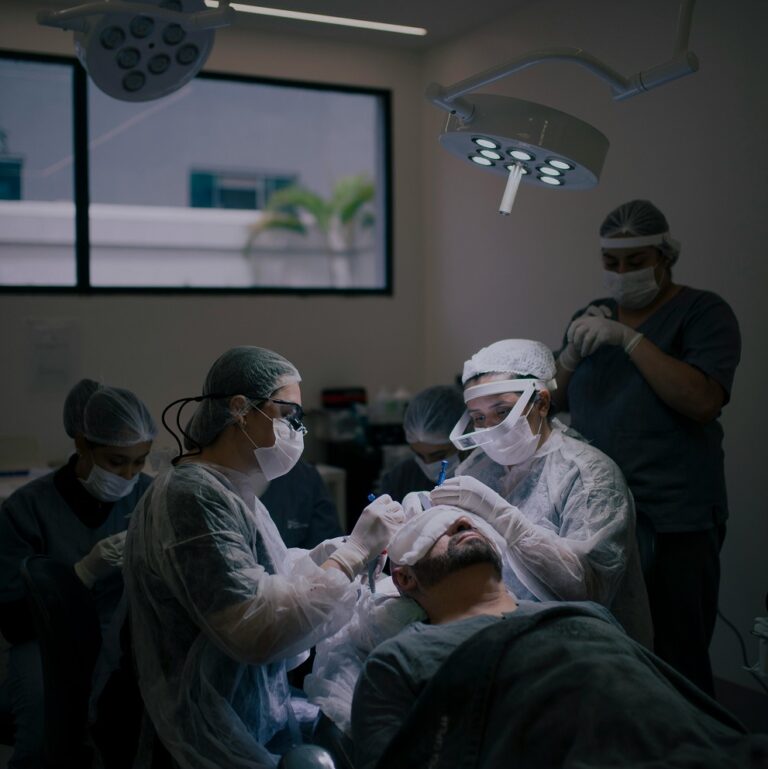
Its advertised programme fee is USD $5,500 and the published curriculum includes theoretical education, FUE surgical exposure, live patient cases, individual mentoring, preoperative planning, postoperative care and complication management.
For overseas doctors, Pakistan may provide an alternative to more expensive international training destinations, depending on the clinical arrangements and the educational requirements of the applicant.
The decision should be based on the trainer, practical learning opportunities, programme transparency and professional suitability rather than price alone.
4. Understanding the Main Hair Transplant Techniques Doctors Should Learn
A comprehensive hair transplant training programme should introduce the principal surgical approaches used in modern hair restoration.
Each technique has different indications, technical requirements and limitations.
Follicular Unit Extraction (FUE)
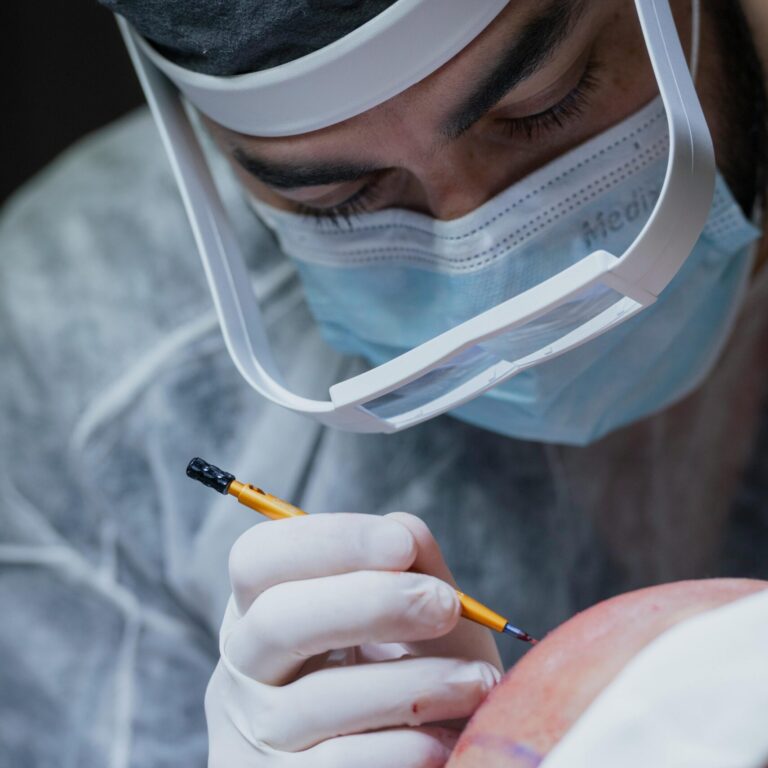
FUE is one of the most widely used approaches to follicular unit harvesting.
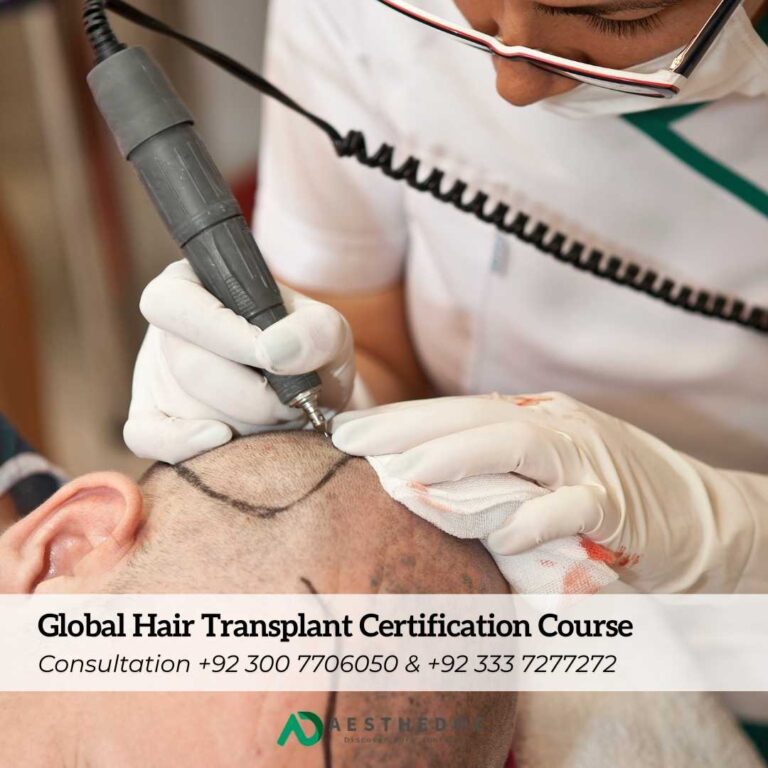
In this technique, individual follicular units are extracted from a suitable donor area using specialized instruments.
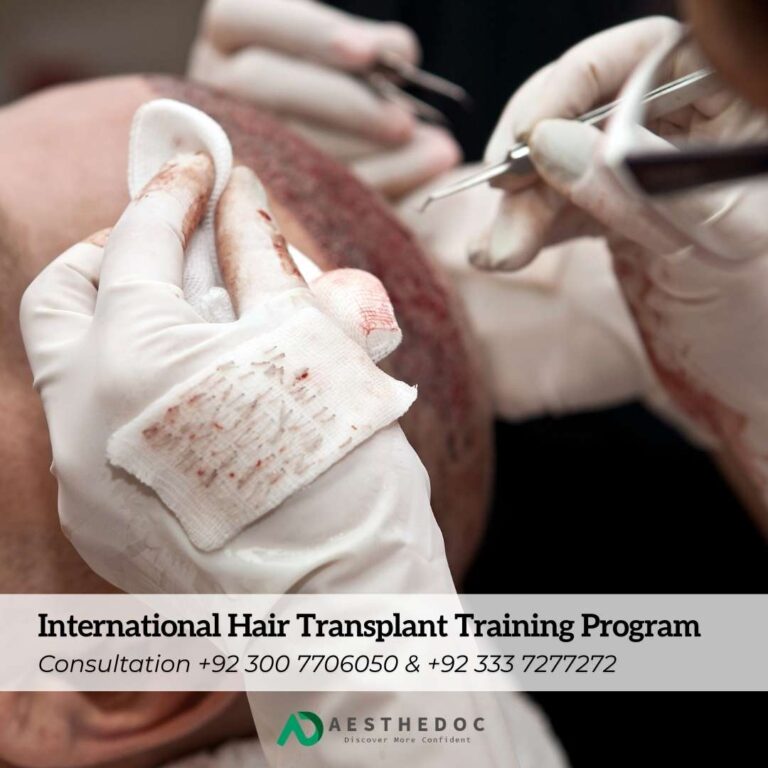
The harvested grafts are subsequently prepared and implanted into the recipient area according to the surgical plan.
Important educational areas include:
- Donor area assessment.
- Punch selection.
- Extraction angle and direction.
- Depth control.
- Follicular transection awareness.
- Graft handling and hydration.
- Graft storage conditions.
- Recipient site preparation.
- Implantation direction and angulation.
- Donor area preservation.
One of the most important concepts in FUE training is minimizing unnecessary trauma to follicular units.
The surgeon must also understand the relationship between extraction density and long-term donor appearance.
Overharvesting can compromise the donor region and reduce the availability of grafts for future procedures.
Follicular Unit Transplantation (FUT)
FUT, commonly known as the strip method, involves removing a strip of scalp tissue from the donor region.
The tissue is then dissected into individual follicular units for transplantation.
Doctors studying FUT should understand:
- Donor strip selection.
- Scalp laxity assessment.
- Surgical incision planning.
- Tissue handling.
- Microscopic graft dissection.
- Follicular unit preparation.
- Wound closure principles.
- Scar management.
- Donor area complications.
Although FUE and FUT differ in their harvesting methods, both require careful patient selection, graft preservation and appropriate surgical planning.
Direct Hair Implantation (DHI)
DHI is a term commonly used to describe implantation using specialized implanter devices.
The technique involves loading prepared follicular grafts into an implanter instrument and placing them into the recipient region according to the treatment plan.
Training topics may include:
- Implanter instrument components.
- Graft loading.
- Appropriate graft handling.
- Implantation depth.
- Direction and angle.
- Recipient area planning.
- Coordination between surgical team members.
Doctors should understand that DHI is not an entirely separate donor harvesting method. It generally refers to a particular implantation approach and is frequently combined with FUE harvesting.
Sapphire FUE
Sapphire FUE refers to the use of sapphire-bladed instruments for recipient site creation in certain hair transplant procedures.
Training should explain the differences between instrument types, their handling characteristics and the importance of appropriate recipient site design.
The use of sapphire instruments alone does not guarantee better growth, higher graft survival or superior aesthetic outcomes.
The surgeon’s planning, technical competence, patient characteristics and postoperative management remain important.
5. Essential Modules in an Advanced Hair Transplant Training Curriculum
Doctors evaluating the best hair transplant course should look for a curriculum that develops clinical judgment alongside technical skills.
The following educational modules provide a useful framework.
Module 1: Hair Anatomy and Physiology
Before learning transplantation techniques, doctors should understand the normal structure and growth cycle of hair.
Important subjects include:
- Hair follicle anatomy.
- Hair shaft structure.
- Anagen, catagen and telogen phases.
- Scalp anatomy.
- Follicular unit composition.
- Hair density and distribution.
- Donor and recipient area characteristics.
- Biological factors affecting hair growth.
Understanding normal hair physiology provides the foundation for evaluating hair loss and planning restoration procedures.
Module 2: Hair Loss Diagnosis and Patient Assessment
Not every patient experiencing hair loss is an appropriate candidate for hair transplantation.
A medical professional should understand the different causes of hair loss and the importance of establishing a diagnosis before considering surgery.
Topics include:
- Androgenetic alopecia.
- Female pattern hair loss.
- Alopecia areata.
- Scarring alopecia.
- Telogen effluvium.
- Traction alopecia.
- Hair loss associated with medical conditions.
- Medication-related hair loss.
Doctors should also understand when laboratory investigation, dermatological assessment or medical treatment may be necessary.
Module 3: Patient Selection and Surgical Planning
Patient selection is among the most important decisions in hair restoration surgery.
A patient may have significant hair loss but insufficient donor capacity for the desired level of coverage.
Similarly, a younger patient with progressive androgenetic alopecia may require careful long-term planning to avoid an unnatural appearance as hair loss advances.
Training should cover:
- Norwood classification.
- Ludwig classification.
- Donor density assessment.
- Hair shaft characteristics.
- Scalp evaluation.
- Expected future hair loss.
- Graft requirement estimation.
- Surgical candidacy.
- Patient expectations.
- Informed consent.
The objective is to develop realistic treatment plans that consider both present needs and future limitations.
Module 4: Hairline Design and Aesthetic Planning
Hairline design is an important part of natural-looking hair restoration.
A poorly planned hairline can produce an unnatural result even when graft survival is satisfactory.
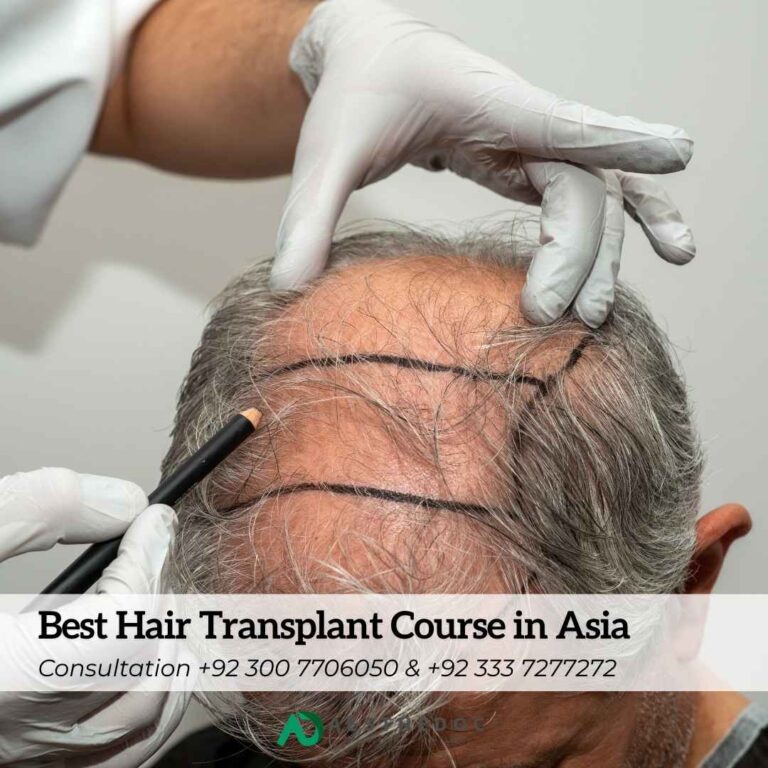
Doctors should learn how to evaluate facial proportions, age, existing hair characteristics and the likely progression of hair loss.
Important subjects include:
- Frontal hairline anatomy.
- Temporal recession.
- Frontal forelock design.
- Hairline irregularity.
- Single-hair follicular units.
- Natural hair direction.
- Density distribution.
- Facial proportions.
- Age-appropriate planning.
The objective should be a natural and sustainable design rather than simply creating the lowest possible hairline.
Module 5: Donor Area Assessment and Management
The donor region is a limited biological resource.
A surgeon must evaluate its density, distribution, characteristics and suitability before deciding how many grafts can safely be harvested.
Training should address:
- Safe donor zone assessment.
- Follicular unit density.
- Donor miniaturization.
- Extraction distribution.
- Punch size selection.
- Overharvesting prevention.
- Donor area appearance.
- Long-term donor preservation.
Doctors should learn that the donor area must be managed with future procedures in mind.
Module 6: Graft Extraction and Handling
Graft extraction requires precise instrument control and a good understanding of follicular anatomy.
Educational areas include:
- Manual and motorized FUE instruments.
- Punch diameter.
- Extraction angle.
- Depth control.
- Transection prevention.
- Graft inspection.
- Graft sorting.
- Hydration and storage.
- Minimizing handling trauma.
Training should emphasize the importance of maintaining graft integrity throughout the surgical process.
Module 7: Recipient Site Creation and Implantation
Recipient site creation determines the direction, distribution and overall arrangement of transplanted follicular units.
Doctors should study:
- Recipient area preparation.
- Site number and spacing.
- Incision direction.
- Angulation.
- Implantation depth.
- Density planning.
- Graft distribution.
- Frontal and crown restoration principles.
The relationship between recipient site creation and the patient’s existing hair is particularly important when aiming for a natural appearance.
Module 8: Postoperative Care and Complication Management
Hair transplant education should not end when the grafts are implanted.
Postoperative management is necessary to support appropriate healing and identify complications.
Topics should include:
- Postoperative wound care.
- Infection prevention.
- Swelling management.
- Bleeding and wound concerns.
- Folliculitis.
- Shock loss.
- Donor area healing.
- Graft growth timelines.
- Poor growth assessment.
- Revision considerations.
Doctors should also understand how to communicate realistic expectations to patients regarding the recovery and hair growth process.
6. Who Should Enrol in a Professional Hair Transplant Course?
Hair restoration training may be relevant to several medical specialties, although eligibility depends on the provider’s requirements and applicable regulations.
Dermatologists
Dermatologists have a clinical background in hair and scalp disorders.
For eligible dermatologists interested in expanding into surgical hair restoration, specialized training can introduce the surgical principles involved in donor assessment, graft extraction and implantation.
Their understanding of hair disorders can also support appropriate diagnosis and patient selection.
Plastic Surgeons
Plastic surgeons may be interested in hair transplantation because it combines surgical technique with aesthetic planning.
Training can help develop additional knowledge in hairline design, graft distribution, donor management and restoration of different anatomical areas.
General Surgeons
Eligible general surgeons may consider hair restoration training as an additional area of professional development.
The curriculum should address the specific surgical knowledge and supervised experience required for safe clinical practice.
MBBS Doctors and Medical Graduates
Doctors with an MBBS or equivalent medical qualification may explore introductory or advanced hair restoration education, subject to the course’s admission policy and their professional licensing status.
Completing a training course does not automatically authorize a graduate to perform hair transplant surgery independently.
Aesthetic Physicians
Medical professionals working in aesthetic medicine may wish to understand the surgical management of hair loss and the clinical workflow of hair restoration.
The appropriate level of training depends on their qualifications, surgical experience and legal scope of practice.
7. How Much Does the Best Hair Transplant Training Course Cost?
The cost of hair transplant training varies considerably according to the programme, country, trainer, duration, clinical exposure and educational format.
A short introductory workshop and an intensive clinical training programme should not be considered equivalent simply because both provide a certificate.
When comparing course fees, doctors should investigate exactly what is included.
Consider the following cost categories:
| Cost component | What to investigate |
|---|---|
| Tuition fee | Total programme cost |
| Theoretical sessions | Lectures and educational materials |
| Practical training | Simulation, demonstration and supervised activities |
| Clinical exposure | Patient observation and participation arrangements |
| Mentorship | Individual supervision and feedback |
| Instruments | Whether training materials are included |
| Accommodation | Hotel or lodging arrangements |
| Travel | International flights and local transportation |
| Certification | Nature and issuing organization of the certificate |
Is an Expensive Hair Transplant Course Always Better?
Not necessarily.
A higher fee may reflect the programme’s location, instructor profile, clinical arrangements or additional services. However, price alone cannot establish the quality of surgical education.
A doctor should compare the total educational value of a programme against its cost.
For example, a programme offering structured practical training and direct mentorship may be more relevant to a surgeon than a more expensive course consisting primarily of lectures and demonstrations.
Similarly, an inexpensive course may not provide sufficient supervised clinical exposure for a doctor seeking advanced surgical development.
The right decision requires an assessment of the curriculum, trainer, training environment and learning outcomes.
8. Aesthedoc International Hair Transplant Training Programme in Pakistan
For international medical professionals researching hair transplant training abroad, Aesthedoc offers a specialized training programme in Pakistan.
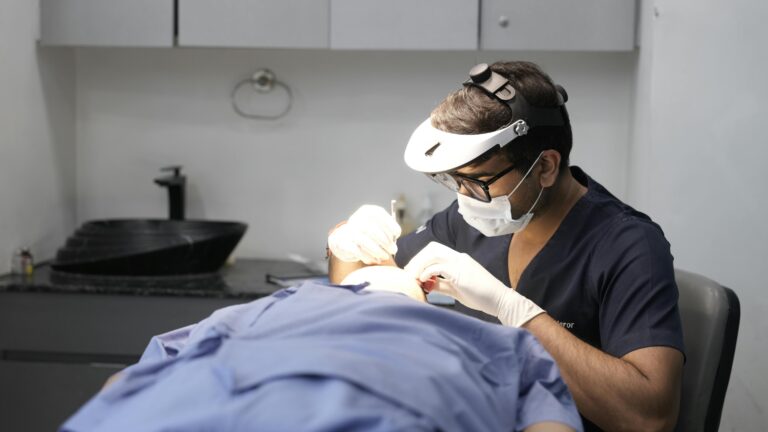
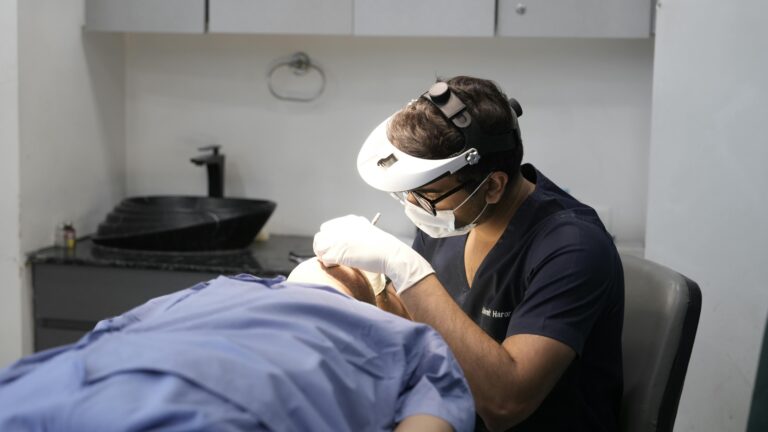
The programme is led by Dr. Adnan Bashir, an ABHRS-certified hair transplant surgeon and Master Aesthetic Trainer.
It is positioned for doctors and medical professionals seeking structured education in hair restoration, with particular emphasis on FUE surgical techniques and practical clinical exposure.
Meet the Trainer: Dr. Adnan Bashir
The trainer’s professional background is an important consideration when choosing a surgical training programme.
Dr. Adnan Bashir leads the hair transplant training programme at Aesthedoc.
His ABHRS certification is a relevant professional credential for doctors evaluating hair restoration education.
Prospective trainees should consider the trainer’s surgical background, teaching approach, clinical experience and the specific level of mentorship available during their intended training dates.
The programme focuses on developing an understanding of the complete hair transplant workflow, from patient assessment to postoperative care.
Aesthedoc Hair Transplant Course Fee
The currently published course fee is:
USD $5,500
The programme information lists the following educational components:
- Structured theoretical training.
- FUE surgical training and clinical exposure.
- Live patient case exposure.
- Individual mentoring.
- Preoperative planning.
- Postoperative care protocols.
- Complication management.
International applicants should confirm the latest fee, course schedule, practical participation arrangements and any additional expenses directly with the Aesthedoc team before making travel arrangements.
What Makes the Programme Relevant to International Doctors?
Doctors comparing international training opportunities may consider Aesthedoc for several reasons.
1. International training destination
Pakistan offers another option for doctors who want to explore professional hair restoration education outside the traditional training destinations of Europe, North America and Turkey.
2. Surgical education
The programme addresses important aspects of FUE hair transplantation, including extraction, graft handling, implantation and surgical planning.
3. Clinical learning environment
The published programme includes live patient case exposure. Applicants should confirm the precise level of observation and supervised participation available for their course.
4. Trainer-led mentorship
Learning directly from an experienced hair transplant surgeon can help doctors understand the reasoning behind technical decisions and patient-specific surgical planning.
5. Transparent advertised tuition
The published programme fee of USD $5,500 allows prospective international applicants to begin evaluating their educational investment.
6. Broader hair restoration knowledge
In addition to FUE principles, the programme information addresses hairline design, donor management, corrective restoration, beard and eyebrow transplantation, postoperative care and complications.
Who Can Apply?
The programme is intended for medical professionals interested in developing their knowledge of hair restoration.
Potential applicants include:
- Qualified medical doctors.
- Dermatologists.
- Plastic surgeons.
- General surgeons.
- Eligible aesthetic physicians.
- Medical professionals with relevant surgical backgrounds.
Admission eligibility should be confirmed individually. Applicants should provide their medical qualifications and explain their previous clinical experience when requesting course information.
9. Why International Doctors Consider Pakistan for Hair Transplant Training
Selecting a training destination involves more than comparing tuition fees.
International doctors must consider travel, accommodation, course accessibility, language, clinical learning opportunities and the relevance of the training to their home-country regulations.
Pakistan can be considered as an alternative destination for medical professionals seeking hair restoration education.
Cost Considerations
The total investment in international training includes more than the course fee.
Flights, accommodation, meals, transportation, visa arrangements and time away from clinical practice should all be considered.
An applicant comparing training in different countries should calculate the complete trip expenditure rather than comparing tuition fees alone.
Clinical Learning Environment
The quality of the clinical environment is central to surgical education.
Applicants should ask about the available facilities, operating protocols, supervision arrangements, patient consent procedures and opportunities to observe different stages of hair transplantation.
International Accessibility
Doctors travelling from the Middle East, Africa, Europe, Asia, North America and other regions should confirm the applicable visa requirements, travel arrangements and documentation before booking a course.
Applicants should also establish the language used during teaching and whether educational materials are available in a language they understand.
Accommodation and Travel Planning
International trainees should request guidance regarding nearby accommodation, transportation and the location of the training facility.
These arrangements can make the overall educational experience more convenient, particularly for doctors travelling to Pakistan for the first time.
10. What Should Doctors Be Able to Understand After Hair Transplant Training?
A professional course should provide a foundation for continued clinical development.
Doctors should not judge a programme solely by the certificate received at the end. They should assess whether the training has improved their understanding of surgical principles and clinical decision-making.
Important learning outcomes include:
Clinical assessment: Understanding the causes of hair loss, patient suitability and the role of medical versus surgical treatment.
Surgical planning: Evaluating donor capacity, estimating graft requirements and developing realistic restoration plans.
Hairline design: Understanding natural hairline structure, age-related planning and facial proportions.
FUE principles: Understanding extraction instruments, punch selection, graft integrity and donor management.
Graft preservation: Recognizing the importance of appropriate handling, hydration and storage.
Implantation principles: Understanding direction, angle, depth and recipient area distribution.
Postoperative management: Recognizing normal healing patterns and identifying complications requiring clinical attention.
Ethical practice: Communicating limitations, obtaining informed consent and avoiding procedures that are not clinically appropriate.
The extent to which these competencies can be developed depends on the programme’s duration, teaching format and actual supervised practical opportunities.
A short course should be considered one stage of professional education, not a substitute for continued supervised experience.
11. How to Choose Between a Hair Transplant Course, Fellowship and Masterclass
International medical education providers use different terms to describe their programmes.
Doctors should understand these distinctions before enrolling.
Hair Transplant Training Course
A training course usually provides structured education in selected aspects of hair restoration.
It may include theoretical sessions, practical demonstrations, clinical observation and supervised exercises.
The content and depth vary by provider.
Hair Transplant Fellowship
A fellowship generally refers to a more structured educational pathway involving defined learning objectives, mentorship and potentially a longer period of clinical development.
However, the word fellowship is not automatically evidence of accreditation or specialist recognition.
Applicants should verify the issuing organization and the professional standing of the qualification.
Hair Transplant Masterclass
A masterclass usually concentrates on specific techniques or advanced subjects.
Examples include:
- Advanced FUE extraction.
- Hairline design.
- Graft handling.
- Donor management.
- Corrective hair restoration.
- Beard and eyebrow transplantation.
Masterclasses are particularly relevant to doctors who already possess foundational knowledge and want to develop specific competencies.
Which Format Is Appropriate?
The right format depends on the doctor’s previous experience.
A doctor new to hair restoration may need a structured foundational programme. An experienced practitioner may benefit more from focused advanced training or mentorship in a particular technique.
12. Common Mistakes Doctors Should Avoid When Choosing a Hair Transplant Course
Selecting a training programme is a significant professional and financial decision.
Several mistakes can lead to unrealistic expectations or an unsatisfactory educational experience.
Choosing a Course Only Because It Is Cheap
A low fee does not necessarily mean good value.
Doctors should investigate the number of teaching hours, clinical exposure, trainer involvement and educational structure.
Choosing a Programme Based Only on Its Certificate
A certificate is evidence of course completion, not necessarily proof of independent surgical competence or eligibility for specialist registration.
Doctors should verify whether a certificate is issued by the training provider, an educational institution or an independent professional organization.
Ignoring the Trainer’s Background
A trainer’s relevant qualifications and clinical experience should be evaluated before payment.
Prospective trainees should ask who will personally deliver the teaching and supervise practical activities.
Confusing Observation with Hands-On Surgical Training
These are different educational activities.
Observing an operation can provide valuable insight, but it is not the same as performing supervised practical tasks.
Applicants should request a clear description of what they will actually do during the course.
Ignoring Local Medical Regulations
A training certificate obtained abroad does not automatically provide permission to perform hair transplant surgery in another country.
Doctors must check the applicable licensing, facility, scope-of-practice and professional requirements in the jurisdiction where they intend to practise.
Expecting to Become an Independent Surgeon After a Short Course
Hair transplantation requires continued education, supervised clinical development and experience.
A short course can introduce important principles and provide practical learning opportunities, but independent practice requires appropriate competence and legal authorization.
13. How International Doctors Can Apply for Hair Transplant Training in Pakistan
Doctors interested in attending an international hair transplant training programme should follow a structured application process.
Step 1: Review the programme
Read the curriculum and understand the techniques, educational modules and clinical arrangements.
Step 2: Confirm eligibility
Provide information about your medical qualification, professional registration and previous surgical experience.
Step 3: Discuss your learning objectives
Explain whether you are interested in foundational FUE training, advanced extraction, graft handling, implantation, hairline design or broader hair restoration education.
Step 4: Confirm the practical arrangements
Ask whether the programme includes live surgical observation, supervised participation, simulation or other practical activities.
Confirm patient consent and the level of supervision provided.
Step 5: Request the latest fee and schedule
Obtain written confirmation of the tuition fee, course dates, payment arrangements and any additional expenses.
Step 6: Plan international travel
Check the current visa requirements, travel documentation, accommodation and transportation arrangements applicable to your nationality.
Step 7: Attend the training
Participate in the theoretical and practical components, ask questions and use the opportunity to develop your understanding of hair restoration surgery.
Step 8: Continue professional development
After completing the course, continue developing your competencies through appropriate mentorship, supervised experience, professional education and compliance with local medical regulations.
14. Frequently Asked Questions About the Best Hair Transplant Training Course in the World
Which is the best hair transplant training course in the world?
There is no single universally recognized ranking of the best hair transplant training courses. The most suitable programme is one that provides qualified surgical mentorship, a comprehensive curriculum, appropriate practical exposure, patient safety education and transparent learning outcomes.
International doctors can compare programmes in the USA, UK, Turkey, Spain, Georgia and Pakistan according to their individual requirements.
Which country is best for hair transplant training?
The best country depends on the doctor’s budget, training objectives, travel preferences and desired level of clinical exposure.
The USA, UK, Turkey, Spain, Georgia and Pakistan are among the destinations doctors may investigate. The trainer’s experience and the quality of the clinical programme are more important than the country alone.
How much does an international hair transplant training course cost?
Fees vary considerably depending on the duration, trainer, curriculum and practical arrangements. Aesthedoc currently advertises its hair transplant training programme at USD $5,500.
International applicants should confirm the latest fee and clarify whether travel, accommodation and other expenses are included.
Can MBBS doctors learn hair transplant surgery?
Medical graduates with an MBBS or equivalent qualification may be eligible for certain hair restoration educational programmes, depending on the provider’s admission policy.
However, the ability to perform surgery independently depends on professional qualifications, relevant competence, licensing and the medical regulations of the country concerned.
Is FUE better than FUT?
Neither technique is universally superior for every patient.
FUE involves individual follicular unit extraction, while FUT involves removing a strip of donor tissue and dissecting it into follicular units.
The appropriate approach depends on donor characteristics, patient preferences, surgical objectives and the surgeon’s assessment.
What is the difference between FUE and DHI?
FUE describes a method of harvesting individual follicular units. DHI generally describes an implantation approach using specialized implanter devices.
They are not necessarily competing donor harvesting methods, as DHI implantation is commonly performed using grafts harvested through FUE.
Is hands-on hair transplant training important?
Yes. Practical learning is important for understanding instruments, graft handling, surgical workflow and technical principles.
However, applicants should clarify whether hands-on training involves simulation, supervised clinical tasks or participation in live procedures. These activities are not interchangeable.
How long does it take to learn hair transplant surgery?
The duration depends on the programme and the trainee’s existing medical and surgical experience.
An intensive course may introduce the principles and techniques, but developing independent surgical competence requires continued supervised practice, assessment and experience.
Does a hair transplant training certificate allow independent practice?
No universal answer applies to every country. A course certificate does not automatically provide medical licensure, specialist recognition or authorization to perform surgery independently.
Doctors must meet the relevant professional and regulatory requirements in their intended place of practice.
Can international doctors attend hair transplant training in Pakistan?
International doctors can contact training providers in Pakistan to enquire about eligibility, course dates, documentation, fees and practical arrangements.
Aesthedoc offers an international hair transplant training programme in Pakistan for eligible medical professionals.
Who conducts the Aesthedoc hair transplant training programme?
The programme is led by Dr. Adnan Bashir, an ABHRS-certified hair transplant surgeon and Master Aesthetic Trainer.
What is the Aesthedoc hair transplant course fee?
The published course fee is USD $5,500. Applicants should contact the Aesthedoc team to confirm current pricing, availability and what is included.
Does Aesthedoc offer FUE hair transplant training?
Yes. The published programme includes FUE surgical training and clinical exposure, alongside theoretical education, mentoring, preoperative planning and postoperative care.
Prospective trainees should confirm the specific practical activities available during their selected training dates.
Can doctors travel from the UK, USA, UAE or Africa for training in Pakistan?
International doctors can enquire about attending the programme from their respective countries. Admission, visa arrangements, travel requirements and eligibility should be confirmed individually.
15. Start Your International Hair Restoration Training Journey with Aesthedoc
Choosing a hair transplant training course is an important step for medical professionals interested in developing their knowledge of surgical hair restoration.
The right educational programme should offer more than an introduction to extraction and implantation. It should develop a doctor’s understanding of hair loss diagnosis, donor assessment, patient selection, hairline design, graft management, surgical planning and postoperative care.
For doctors seeking international hair transplant training, Aesthedoc provides a programme in Pakistan led by Dr. Adnan Bashir, an ABHRS-certified hair transplant surgeon.
With an advertised course fee of USD $5,500, the programme is an option for eligible medical professionals looking for structured theoretical education, FUE clinical exposure and mentorship.
Whether you are a dermatologist, plastic surgeon, general surgeon or another eligible medical professional, the first step is to discuss your qualifications, professional objectives and previous surgical experience with the training team.
Enquire About the Aesthedoc International Hair Transplant Training Course
Training Provider: Aesthedoc
Lead Trainer: Dr. Adnan Bashir
Professional Credential: ABHRS-Certified Hair Transplant Surgeon
Training Location: Pakistan
Published Course Fee: USD $5,500
Programme Focus: FUE Hair Transplantation, Surgical Planning, Graft Handling, Clinical Exposure and Hair Restoration Education
WhatsApp / International Enquiries: +92 333 727 7272
Contact the Aesthedoc team to request the latest curriculum, available training dates, admission requirements, practical training details and international applicant information.
Develop your knowledge of hair restoration through structured education, experienced mentorship and a commitment to ethical surgical practice.
Medical and Professional Disclaimer
This article is intended for medical education and professional information. Hair transplant training does not replace recognized medical qualifications, specialist education, supervised clinical experience or professional licensing. The scope of surgical practice is determined by the relevant regulatory authorities in each jurisdiction. All surgical participation must comply with applicable laws, clinical governance requirements, patient consent and supervision standards.