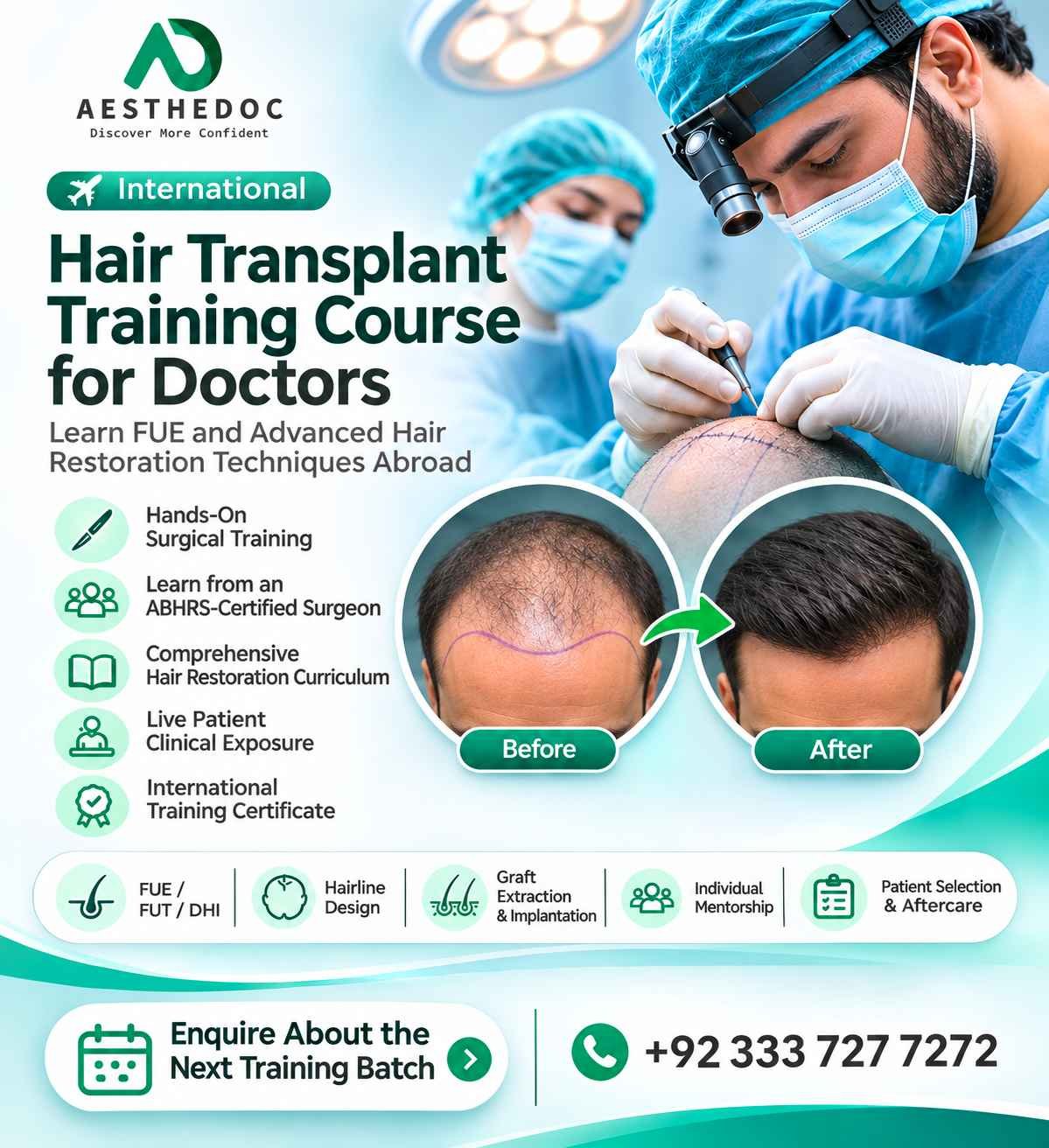
A Complete Guide to International Surgical Training, Practical FUE Education, Clinical Exposure and Professional Development
Hair transplantation has become an increasingly specialized area of modern aesthetic and surgical medicine. With growing interest in hair restoration among men and women, medical professionals across different countries are exploring opportunities to develop expertise in Follicular Unit Extraction (FUE), Follicular Unit Transplantation (FUT), Direct Hair Implantation (DHI) and advanced hair restoration procedures.
For doctors interested in entering this specialty, finding the right international hair transplant training course can be an important step in professional development.
However, choosing a course abroad involves more than finding a training centre or comparing tuition fees. Medical professionals need to evaluate the surgeon conducting the training, the clinical environment, surgical curriculum, practical learning opportunities, patient safety protocols and the relevance of the programme to their professional qualifications.
Some doctors want to learn the fundamentals of FUE hair transplantation. Others already have experience in aesthetic medicine, dermatology or surgery and want to develop additional competencies in graft extraction, recipient site creation, implantation, donor management and hairline design.
International training provides an opportunity to learn from experienced practitioners, observe different surgical approaches and develop a deeper understanding of modern hair restoration.
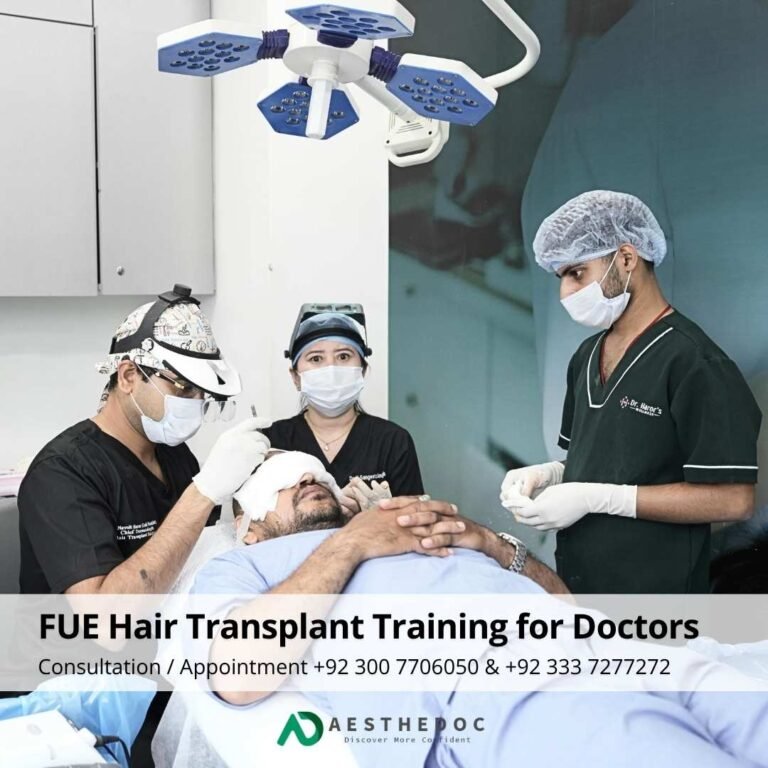
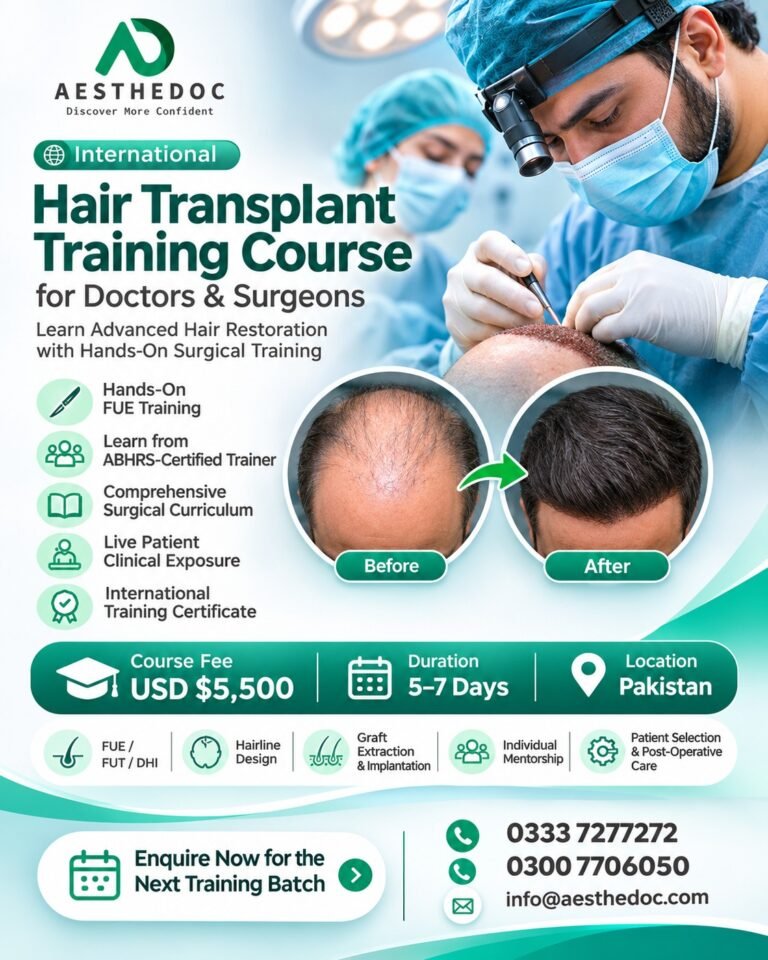
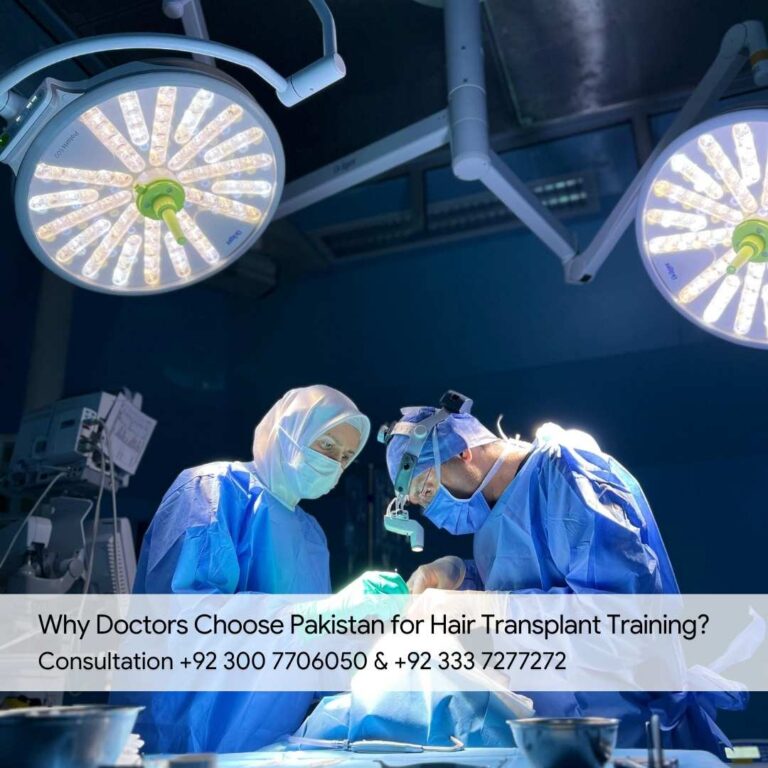
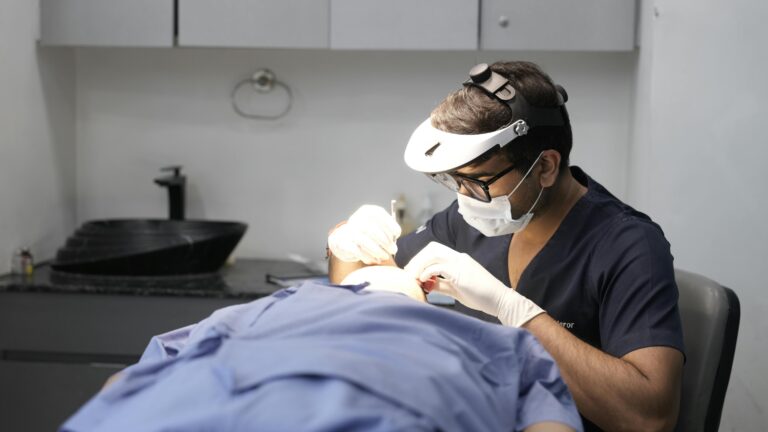
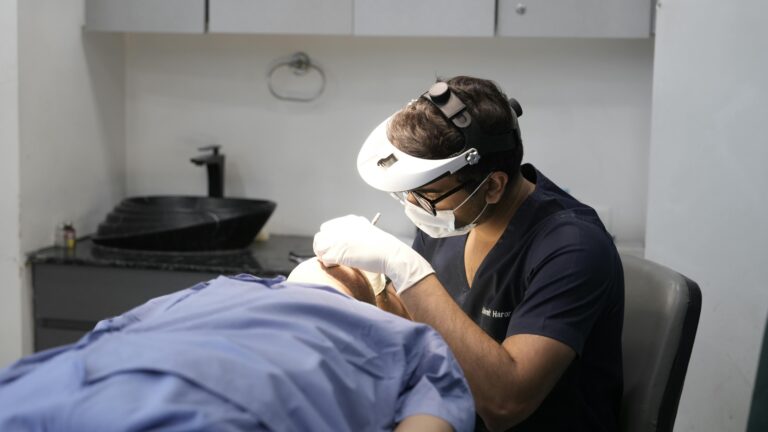
Pakistan is one destination international doctors can consider when comparing hair transplant training opportunities. Aesthedoc offers a professional hair transplant training programme led by Dr. Adnan Bashir, an ABHRS-certified hair transplant surgeon, with an advertised course fee of USD $5,500.
This guide explains what international doctors should look for in a hair transplant training programme, which techniques are important to learn, how to evaluate overseas training providers and what prospective trainees should know before applying to Aesthedoc in Pakistan.
Quick Overview: International Hair Transplant Training for Doctors
International hair transplant training is specialized medical education designed to help eligible medical professionals understand the clinical and surgical principles of hair restoration.
A comprehensive programme may cover:
- Hair anatomy and physiology.
- Diagnosis and classification of hair loss.
- Patient assessment and surgical eligibility.
- FUE hair transplantation.
- FUT fundamentals.
- DHI implantation principles.
- Donor area assessment and preservation.
- Hairline design and aesthetic planning.
- Follicular graft extraction and handling.
- Recipient site creation and implantation.
- Beard and eyebrow restoration.
- Postoperative care and complication management.
- Ethical medical practice and informed consent.
Aesthedoc International Hair Transplant Training
| Programme detail | Information |
|---|---|
| Training provider | Aesthedoc |
| Lead trainer | Dr. Adnan Bashir |
| Professional credential | ABHRS-certified Hair Transplant Surgeon |
| Training location | Pakistan |
| Advertised course fee | USD $5,500 |
| Main training focus | FUE hair transplantation |
| Learning approach | Theoretical education, clinical exposure and mentorship |
| Intended audience | Eligible doctors and medical professionals |
| Enquiries | +92 333 727 7272 |
Course availability, eligibility, practical participation and current fees should be confirmed directly with the training team.
1. Why Are Doctors Looking for International Hair Transplant Training?
Hair loss affects individuals across different age groups, genders and geographical regions. Although medical treatments remain important for many forms of hair loss, surgical hair restoration is an established treatment option for appropriately selected patients.
This has created interest among doctors who want to understand the clinical and surgical aspects of hair restoration.
International training can offer several educational advantages.
Access to Experienced Hair Transplant Surgeons
Learning directly from an experienced surgeon provides an opportunity to understand the reasoning behind surgical decisions.
A doctor studying FUE, for example, needs to understand more than how an extraction instrument works. They must also recognize appropriate punch selection, extraction angle, follicular unit characteristics, donor limitations and the importance of minimizing graft trauma.
An experienced trainer can explain how these considerations influence the surgical plan and why different approaches may be appropriate for different patients.
Exposure to Different Hair Restoration Cases
Hair transplant patients do not all present with the same pattern of hair loss.
A surgeon may encounter:
- Male pattern hair loss.
- Female pattern hair loss.
- Frontal hairline recession.
- Crown thinning.
- Diffuse thinning.
- Beard hair loss or reconstruction requirements.
- Eyebrow restoration requirements.
- Previous unsuccessful hair transplantation.
- Scalp scarring following injury or surgery.
Understanding these different presentations is important when developing clinical judgment.
Training programmes that provide appropriate exposure to different cases can help doctors appreciate the relationship between patient selection, surgical planning and restoration objectives.
Learning Modern Surgical Techniques
Hair restoration technology and surgical instruments have evolved.
Doctors entering the specialty should understand conventional FUE principles, manual and motorized extraction systems, graft handling, recipient site creation and different implantation approaches.
International training can introduce doctors to different instruments, workflows and clinical approaches used by experienced hair restoration practitioners.
Developing a Specialized Professional Interest
For dermatologists, plastic surgeons and other eligible physicians, hair restoration education may complement an existing medical practice.
However, surgical hair transplantation requires appropriate medical qualifications, relevant competence and authorization under the applicable laws and professional regulations.
Completing a training programme should be considered part of continued professional development rather than automatic authorization to practise independently.
2. What Should an International Hair Transplant Training Course Include?
One of the most important decisions when selecting a training provider is evaluating the actual curriculum.
A course that only explains basic extraction and implantation may not provide the broader knowledge needed to understand hair restoration surgery.
Doctors should look for a programme that addresses the complete treatment process.
Hair Anatomy and Follicular Unit Physiology
Understanding the anatomy of hair follicles is fundamental to hair restoration.
A follicular unit generally contains one or more hair follicles, along with associated structures. The number and characteristics of follicles vary between individuals and different scalp regions.
Training should explain:
- Hair follicle anatomy.
- Hair shaft structure.
- Follicular unit composition.
- Hair growth cycle.
- Scalp anatomy.
- Donor and recipient area characteristics.
- Hair density.
- Hair calibre and texture.
- Factors influencing hair growth.
This knowledge helps doctors understand why follicular units must be handled carefully during surgical harvesting and implantation.
Hair Loss Diagnosis and Classification
Before considering transplantation, the cause of hair loss must be established.
Androgenetic alopecia is a common indication for hair restoration, but not every patient experiencing hair loss is a suitable surgical candidate.
A comprehensive educational programme should introduce different conditions, including:
- Male pattern hair loss.
- Female pattern hair loss.
- Alopecia areata.
- Telogen effluvium.
- Traction alopecia.
- Scarring alopecia.
- Medication-related hair loss.
- Hair loss associated with systemic conditions.
Doctors should understand the importance of medical history, scalp examination and appropriate investigations.
Surgery should not be considered a substitute for diagnosing an underlying medical condition.
Patient Selection and Consultation
Patient selection has a direct influence on surgical planning.
A patient with advanced hair loss may have limited donor availability. Another patient may be too young to establish a reliable long-term restoration strategy.
Training should explain how to evaluate:
- Age and progression of hair loss.
- Family history.
- Donor hair density.
- Scalp condition.
- Hair shaft characteristics.
- Medical history.
- Previous hair restoration procedures.
- Patient expectations.
- Contraindications and limitations.
The purpose of patient assessment is to determine whether transplantation is appropriate and, if so, what type of treatment plan is realistic.
Hairline Design and Aesthetic Planning
Hairline design is an important component of natural-looking hair restoration.
The frontal hairline influences the overall appearance of the face, and an inappropriate design can create an unnatural result.
Doctors should learn the principles of:
- Age-appropriate hairline placement.
- Facial proportions.
- Frontal hairline irregularity.
- Temporal recession.
- Hair direction.
- Density distribution.
- Single-hair follicular unit placement.
- Long-term hair loss considerations.
A well-planned hairline should account for the patient’s current appearance and potential future progression of hair loss.
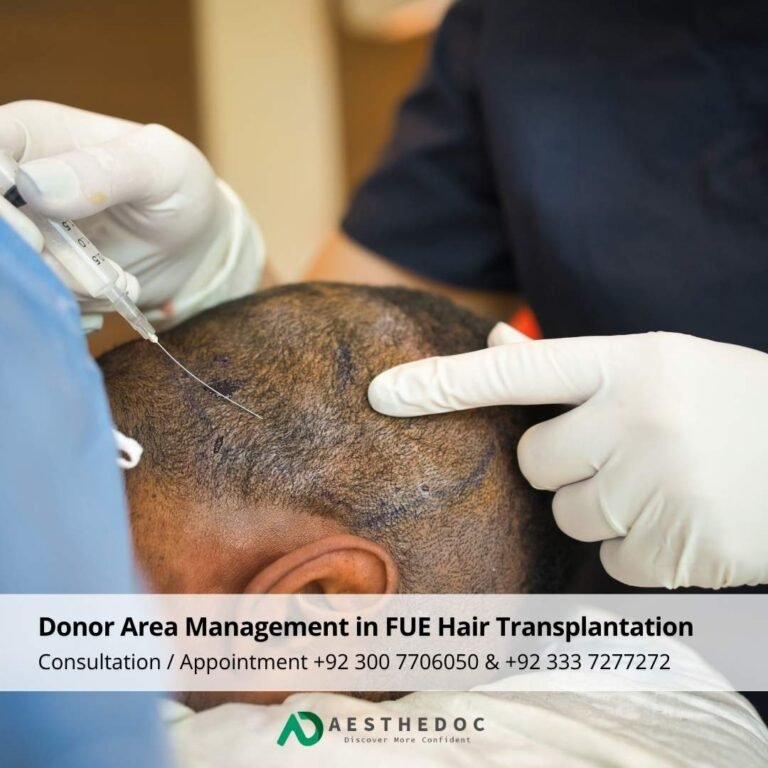
Donor Area Assessment and Management
The donor area is a limited resource.
In many patients, the occipital and parietal scalp regions provide suitable follicular units for transplantation. However, donor density, miniaturization, scalp characteristics and individual variation must be considered.
Training should address:
- Donor zone assessment.
- Follicular unit density.
- Donor capacity estimation.
- Extraction distribution.
- Punch selection.
- Avoiding excessive extraction.
- Donor area appearance.
- Long-term preservation.
Overharvesting can create visible thinning and compromise the donor area for future procedures.
Graft Extraction and Handling
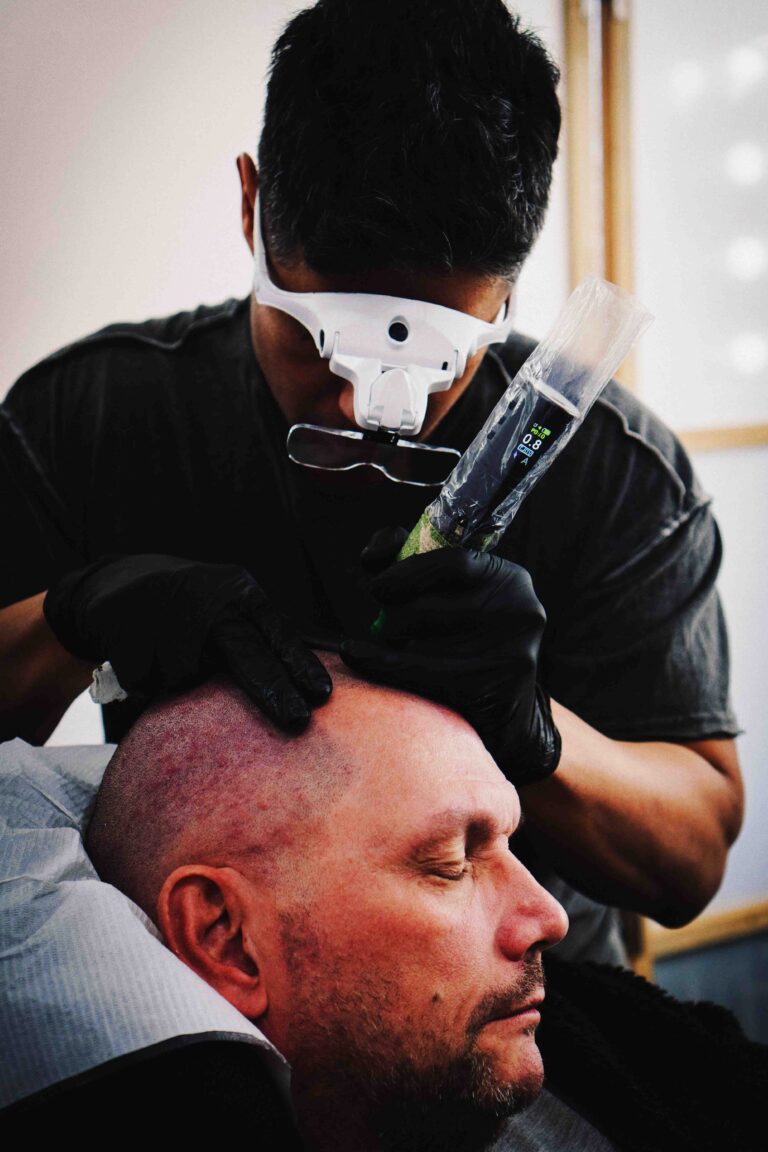
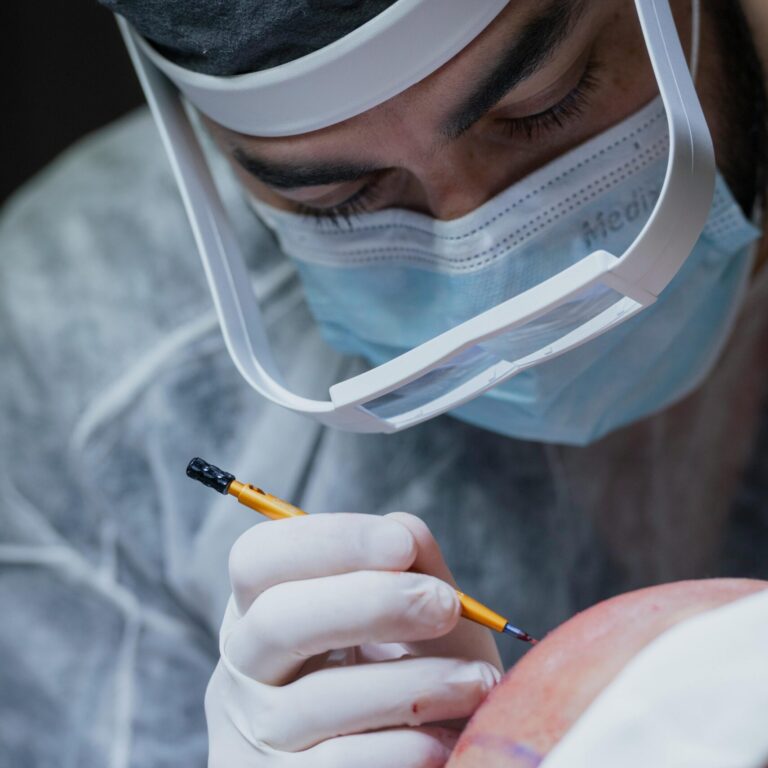
FUE requires careful extraction of follicular units using specialized instruments.
Doctors should understand:
- Manual FUE instruments.
- Motorized extraction systems.
- Punch diameter.
- Extraction angle.
- Depth control.
- Follicular transection.
- Graft inspection.
- Graft sorting.
- Hydration and storage.
- Handling-related damage.
The objective is to understand how surgical technique and graft handling influence follicular integrity.
Recipient Site Creation and Implantation
Once donor grafts have been harvested, they must be placed in the recipient area according to the treatment plan.
Important learning areas include:
- Recipient area preparation.
- Site distribution.
- Incision direction.
- Implantation angle.
- Implantation depth.
- Graft placement.
- Density planning.
- Frontal and crown restoration.
The surgeon must consider the natural direction of existing hair and the aesthetic requirements of the recipient area.
3. FUE, FUT and DHI: Which Techniques Should International Doctors Learn?
A doctor researching an international hair transplant course will frequently encounter three terms: FUE, FUT and DHI.
Understanding the differences is important when comparing training programmes.
FUE Hair Transplant Training
Follicular Unit Extraction is a method of harvesting individual follicular units from the donor region.
The grafts are subsequently prepared and transplanted into areas affected by hair loss.
FUE training is particularly important for doctors who want to understand modern follicular unit harvesting.
A structured programme should introduce:
- Donor area assessment.
- Extraction instruments.
- Punch selection.
- Extraction angle and depth.
- Graft handling.
- Follicular unit preservation.
- Recipient site planning.
- Implantation.
- Donor management.
FUE is not simply an instrument-based procedure. It requires careful planning and an understanding of the patient’s donor capacity.
FUT Hair Transplant Training
Follicular Unit Transplantation is a surgical harvesting method in which a strip of scalp tissue is removed from the donor area and dissected into individual follicular units.
Doctors should understand:
- Donor strip planning.
- Scalp laxity.
- Surgical anatomy.
- Tissue handling.
- Microscopic graft dissection.
- Follicular unit preparation.
- Wound closure.
- Scar considerations.
- Postoperative donor care.
Although FUE is widely used in modern hair restoration, understanding FUT provides a broader foundation in follicular unit transplantation.
DHI Hair Transplant Training
Direct Hair Implantation is commonly used to describe an implantation approach involving specialized implanter devices.
Prepared follicular units are loaded into an implanter and placed into the recipient region.
Doctors studying DHI should understand:
- Implanter instrument components.
- Graft loading.
- Graft handling.
- Implantation depth.
- Direction and angle.
- Recipient area planning.
- Coordination between team members.
An important distinction is that FUE describes a harvesting technique, whereas DHI generally describes an implantation approach. These terms should not be treated as entirely interchangeable surgical methods.
Which Technique Should a Beginner Learn First?
For doctors beginning their hair restoration education, FUE fundamentals are a useful starting point because they introduce the principles of donor assessment, individual follicular unit extraction, graft handling and transplantation.
However, a comprehensive educational pathway should also introduce the principles of FUT and different implantation methods.
The appropriate training sequence depends on the doctor’s existing experience and the curriculum offered by the training provider.
4. International Hair Transplant Training: Which Country Should You Choose?
The destination you choose can influence the overall cost, educational experience and convenience of your training journey.
There is no single country that is automatically the best for every medical professional.
The important consideration is whether a specific programme provides suitable education, experienced supervision and transparent clinical arrangements.
Hair Transplant Training in the United States
The United States has established professional education opportunities in hair restoration medicine.
Doctors can investigate surgical observation programmes, workshops, conferences, online education and structured fellowship opportunities.
The International Society of Hair Restoration Surgery (ISHRS) provides educational resources and information about its recognized fellowship training programmes.
Doctors considering US training should investigate:
- Trainer qualifications.
- Clinical training arrangements.
- Programme duration.
- Practical learning opportunities.
- Admission requirements.
- Professional licensing.
- Total tuition and travel expenditure.
Hair Transplant Training in the United Kingdom
The United Kingdom offers a medical education environment in which doctors can explore hair restoration through professional training and clinical observation.
International applicants should carefully distinguish between educational attendance, supervised clinical participation and legal authorization to perform surgical procedures.
The applicable professional registration and scope-of-practice requirements should be reviewed before selecting a course.
Hair Transplant Training in Turkey
Turkey is a prominent international destination for hair transplantation.
Its hair restoration sector attracts patients and medical professionals from different countries.
Doctors considering training in Turkey should examine the actual educational structure rather than relying on the popularity of the country’s hair transplant industry.
Questions to ask include:
- Who conducts the training?
- Is the programme intended for licensed doctors?
- Is practical exposure included?
- How much direct mentorship is available?
- What surgical techniques are covered?
- Are patient safety and complication management addressed?
Hair Transplant Training in Spain
Spain offers professional hair restoration education opportunities, including training and clinical observation with experienced practitioners.
Doctors should investigate the specific trainer, course duration, language of instruction, patient exposure and professional requirements.
Hair Transplant Training in Pakistan
Pakistan is an alternative destination for international doctors comparing hair restoration training opportunities.
Aesthedoc offers a hair transplant training programme in Pakistan under the leadership of Dr. Adnan Bashir, an ABHRS-certified hair transplant surgeon.
The programme is advertised at USD $5,500 and includes theoretical education, FUE surgical training, clinical exposure, mentorship, preoperative planning, postoperative care and complication management.
For doctors considering overseas education, the programme provides an opportunity to investigate a different training destination while comparing the overall investment against other international options.
Prospective applicants should confirm the course schedule, practical participation arrangements, trainer availability and admission requirements directly with Aesthedoc.
5. Why International Doctors Consider Hair Transplant Training in Pakistan
When comparing international programmes, tuition is only one part of the decision.
Doctors travelling abroad must also consider flights, accommodation, local transportation, meals, visa requirements and time away from their existing clinical practice.
Pakistan may be worth investigating for several reasons.
An Alternative International Training Destination
Doctors do not necessarily need to limit their search to the United States, United Kingdom or Turkey.
Comparing additional destinations may help identify a programme that better matches their educational objectives and budget.
Direct Trainer Interaction
The opportunity to communicate directly with the trainer and discuss clinical cases can be valuable.
Before enrolling, applicants should establish how much direct supervision and individual mentoring is available.
Clinical Case Exposure
Different hair restoration cases provide opportunities to understand variations in donor characteristics, hair loss patterns, hairline planning and surgical approaches.
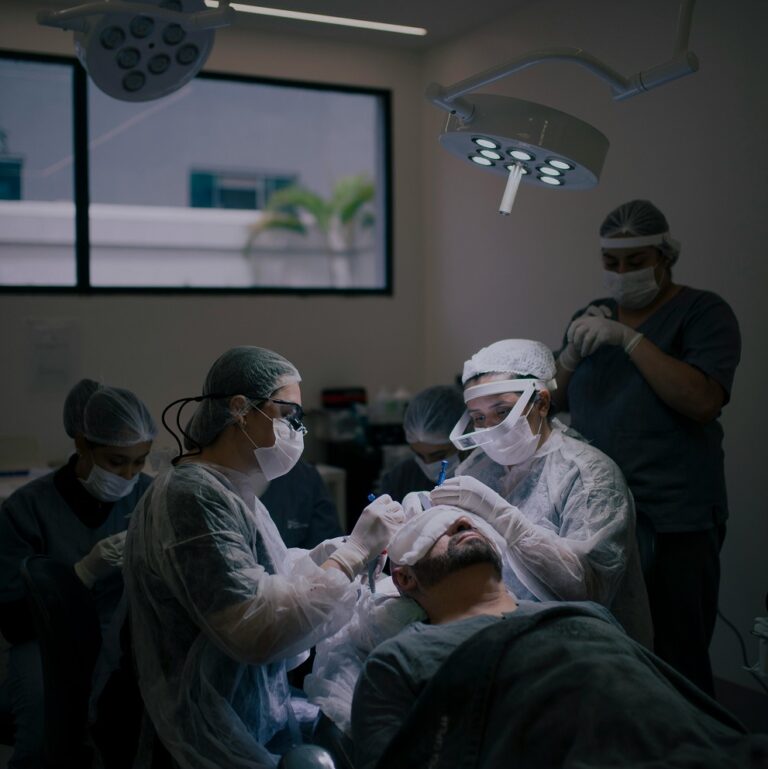
Aesthedoc’s published course information includes live patient case exposure. International trainees should confirm the number and nature of available cases for their selected dates.
Professional Networking
International courses can bring together medical professionals from different countries and clinical backgrounds.
Such educational environments can encourage professional discussions, knowledge exchange and future academic collaboration.
Course Investment
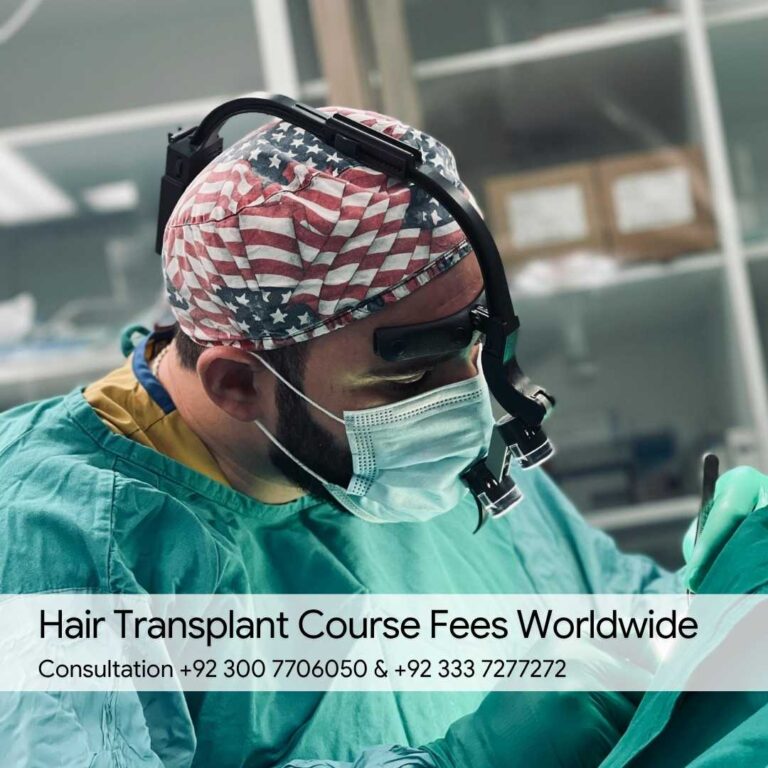
Aesthedoc advertises its hair transplant training programme at USD $5,500.
Applicants should compare this amount with the complete cost of other training opportunities, including travel, accommodation and additional expenses.
The most economical programme is not necessarily the most suitable. The educational content and level of supervision should remain central to the decision.
6. Aesthedoc International Hair Transplant Training Programme
Aesthedoc provides a hair transplant training programme in Pakistan for eligible medical professionals interested in learning modern hair restoration techniques.
The programme is led by Dr. Adnan Bashir, a Diplomate of the American Board of Hair Restoration Surgery (ABHRS).
It is designed around theoretical education, FUE surgical training, clinical exposure and mentorship.
Meet the Trainer: Dr. Adnan Bashir
The quality of surgical education depends significantly on the trainer’s medical qualifications, professional experience and teaching approach.
Dr. Adnan Bashir is an ABHRS-certified hair transplant surgeon and aesthetic medicine trainer.
According to Aesthedoc’s published professional profile, his background includes:
- MBBS from Foundation University Medical College, Islamabad.
- M.Phil in Pharmacology from the University of Health Sciences, Lahore.
- Diplomate of the American Board of Hair Restoration Surgery (ABHRS).
- CPD UK-certified aesthetic trainer.
- Qualifi UK Level 5 and Level 7 trainer in aesthetic medicine.
- Certified HRA-Robograft provider.
- Advanced Cardiac Life Support certification from the American Heart Association.
His published professional profile also describes experience with more than 5,000 FUE procedures involving scalp restoration, beard transplantation, eyebrow reconstruction and corrective procedures.
For prospective trainees, reviewing the trainer’s professional credentials, clinical experience and actual role in teaching is an important part of the enrolment decision.
What Does the Aesthedoc Course Cover?
The programme information identifies several important areas of hair restoration education.
1. Hair Loss Fundamentals and Patient Assessment
- Types of alopecia.
- Hair loss patterns.
- Indications and contraindications.
- Medical versus surgical treatment planning.
- Patient consultation.
- Ethical patient counselling.
2. Hairline Design and Facial Harmony
- Frontal hairline principles.
- Age-appropriate hairline planning.
- Natural density distribution.
- Facial proportions.
- Hair direction and angulation.
3. Donor Area Assessment
- Safe donor area identification.
- Density assessment.
- Donor management.
- Extraction distribution.
- Prevention of overharvesting.
- Long-term donor preservation.
4. FUE Hair Transplant Surgery
- Punch selection.
- Extraction angles.
- Graft harvesting.
- Graft handling and storage.
- Recipient site creation.
- Implantation principles.
- Follicular unit preservation.
5. Advanced Hair Restoration
- Beard hair transplantation.
- Eyebrow restoration.
- Corrective hair transplantation.
- Scar and burn-related restoration.
- Density planning.
6. Postoperative Care and Complication Management
- Postoperative instructions.
- Infection prevention.
- Shock loss considerations.
- Poor growth assessment.
- Donor area healing.
- Revision planning.
The exact practical components and level of supervised participation should be confirmed before enrolment.
Aesthedoc Hair Transplant Course Fee
The published training programme fee is:
USD $5,500
The programme information includes:
- Structured theoretical training.
- FUE surgical training and clinical exposure.
- Live patient case exposure.
- Individual mentoring.
- Preoperative planning.
- Postoperative care protocols.
- Complication management.
The latest tuition, payment schedule, course availability and any included facilities should be confirmed directly with the Aesthedoc admissions team.
7. Who Can Apply for International Hair Transplant Training?
Hair transplant education may be relevant to different medical specialties.
However, admission requirements vary between providers, and surgical participation must remain within the applicant’s legal professional scope.
Dermatologists
Dermatologists have a background in diagnosing and managing hair and scalp conditions.
Hair restoration education can introduce eligible dermatologists to surgical approaches for selected patients with hair loss.
Training may help them understand donor management, follicular unit extraction, graft preservation and recipient area planning.
Plastic Surgeons
Plastic surgeons may find hair restoration training relevant because the specialty combines surgical technique with aesthetic judgment.
Important learning areas include hairline design, donor assessment, graft distribution and reconstruction.
General Surgeons
Eligible general surgeons may consider additional education in follicular unit harvesting and transplantation.
The programme should be evaluated according to the surgeon’s existing experience and the specific competencies they want to develop.
MBBS Doctors
Doctors with an MBBS or equivalent medical qualification may enquire about introductory or professional hair restoration education, depending on the admission policy.
They should understand that completing a short course does not automatically qualify them to perform independent hair transplant surgery.
Aesthetic Physicians
Eligible aesthetic physicians interested in expanding their understanding of hair restoration may benefit from learning the diagnostic, planning and surgical principles involved.
Their ability to perform procedures depends on their professional qualifications, clinical competence and local regulations.
International Medical Graduates
Doctors who have completed medical education outside their current country of residence should review the requirements of the intended training provider.
They may need to provide:
- Medical degree documentation.
- Professional registration details.
- Identification documents.
- Relevant clinical experience.
- Previous surgical training information.
- Additional documents requested by the provider.
8. How Long Does International Hair Transplant Training Take?
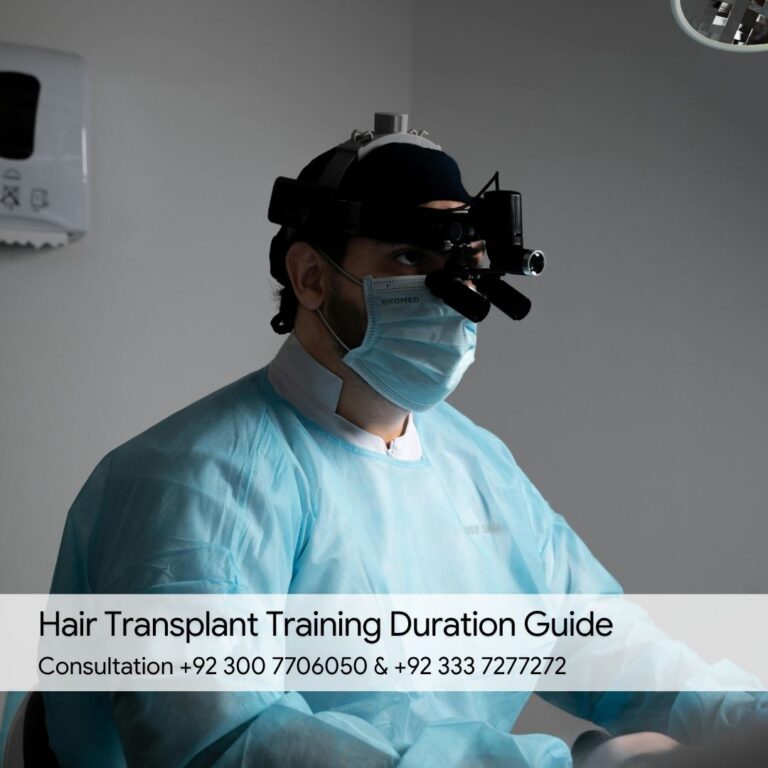
Training duration varies according to the programme’s objectives and educational format.
Short intensive courses can introduce foundational concepts and provide focused practical exposure. Longer programmes may offer more extensive clinical observation, supervised participation and mentorship.
Doctors should distinguish between:
Introductory training: Focuses on anatomy, hair loss assessment, patient selection and fundamental surgical principles.
Intensive practical training: Introduces instruments, graft extraction, handling, recipient site preparation and implantation concepts.
Advanced surgical training: Focuses on donor management, complex hairline planning, corrective procedures and specialized restoration techniques.
Formal fellowship training: A longer structured educational pathway with defined competencies and clinical requirements.
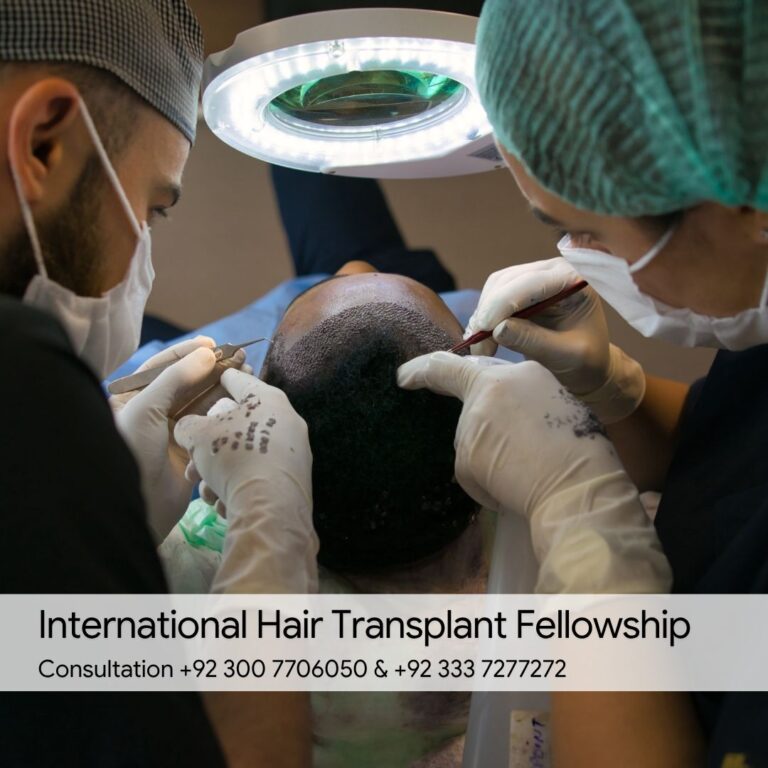
For comparison, the ISHRS-recognized Fellowship Training Program describes a formal fellowship lasting 9–12 months, with a minimum caseload requirement of 70 cases per trainee.
This is a substantially different educational format from a short intensive training course.
Prospective students should therefore compare programmes according to their actual duration, supervision and learning outcomes rather than relying on the words course, diploma, certification or fellowship alone.
9. International Hair Transplant Course vs Fellowship: What Is the Difference?
These terms are frequently used in medical education marketing, but they do not necessarily describe equivalent qualifications.
International Hair Transplant Course
A professional course usually provides a defined period of education covering selected surgical and clinical topics.
It may include lectures, demonstrations, clinical observation, simulation and supervised practical activities.
Hair Transplant Fellowship
A formal fellowship generally involves a longer and more structured educational pathway.
For example, the ISHRS Fellowship Training Program has specific requirements relating to the programme director, training site, curriculum, supervision and clinical case exposure.
Its published programme duration is 9–12 months.
Hair Transplant Certification Programme
A certification programme refers to a course or professional assessment pathway that awards a credential after defined requirements are completed.
Doctors should verify:
- Who issues the certificate.
- What competencies are assessed.
- Whether the qualification is accredited.
- Whether it is recognized by a professional or regulatory organization.
- Whether it provides any specialist or licensing status.
An individual training provider’s certificate should not be represented as an ISHRS fellowship or board certification unless the relevant requirements have actually been met.
10. How to Apply for Hair Transplant Training in Pakistan as an International Doctor
International applicants should approach overseas medical training with a clear understanding of the application and travel process.
The following steps can help make the process more organized.
Step 1: Research the Training Provider
Review the provider’s website, curriculum, trainer profile and available clinical information.
Investigate the programme’s actual educational content rather than relying exclusively on advertising.
Step 2: Confirm Medical Eligibility
Contact the training provider and explain your medical qualifications, professional registration and previous experience.
Ask whether the course accepts applicants from your country.
Step 3: Request the Complete Curriculum
Ask for details of the subjects covered, training sessions, clinical exposure and practical activities.
If hands-on training is advertised, establish precisely what trainees will be permitted to do.
Step 4: Discuss Your Learning Objectives
Explain whether your main interest is:
- FUE extraction.
- Graft handling.
- Hairline design.
- Recipient site creation.
- Implantation techniques.
- Donor management.
- Beard and eyebrow transplantation.
- Corrective hair restoration.
This helps establish whether the programme is appropriate for your professional development needs.
Step 5: Confirm Fees and Course Dates
Request written confirmation of the current course fee, available dates, payment arrangements and any additional costs.
The advertised Aesthedoc fee is USD $5,500.
Step 6: Prepare Travel Documents
International applicants should check the latest Pakistan visa requirements applicable to their nationality.
They should also arrange accommodation, transportation and any documents required by the training provider.
Step 7: Attend the Programme
Participate in the educational sessions and make full use of the opportunity to discuss surgical planning, patient selection, extraction principles and hair restoration techniques with the trainer.
Step 8: Continue Professional Development
After completing the programme, continue learning through appropriate supervised clinical experience, professional education and ongoing assessment of surgical competence.
11. Questions to Ask Before Paying for an International Hair Transplant Course
Before making a financial commitment, international doctors should ask the provider specific questions.
| Question | Why it matters |
|---|---|
| Who personally conducts the training? | Establishes trainer involvement |
| What are the trainer’s qualifications? | Helps assess professional credibility |
| Is the course designed for licensed doctors? | Clarifies admission suitability |
| What techniques are included? | Establishes curriculum relevance |
| Are live cases available? | Clarifies clinical exposure |
| Is practical participation supervised? | Defines the learning experience |
| What is the trainee-to-trainer ratio? | Helps assess individual attention |
| Are patient consent protocols followed? | Supports ethical clinical education |
| Is complication management included? | Establishes the breadth of the curriculum |
| What certificate is issued? | Clarifies the credential |
| What is the complete course fee? | Helps calculate the investment |
| Are accommodation and travel included? | Avoids unexpected expenses |
A reputable training provider should be able to explain its educational arrangements clearly and provide realistic information about what trainees can expect.
12. Patient Safety, Professional Responsibility and International Medical Regulations
Patient safety is an essential part of hair restoration education.
Hair transplantation is a surgical procedure, and its different stages require appropriate clinical knowledge, training and professional responsibility.
The International Society of Hair Restoration Surgery (ISHRS) states that surgical procedures involving scalp incisions, including FUE harvesting and recipient site creation, must be performed by appropriately trained and licensed physicians, subject to applicable professional and legal frameworks.
Its position also emphasizes physician responsibility for preoperative diagnosis, surgical planning, surgical execution and postoperative care.
International doctors should therefore understand three important principles.
Training Does Not Replace Medical Licensing
A course certificate does not automatically authorize an individual to perform hair transplant surgery in another country.
Doctors must comply with the registration, licensing and scope-of-practice rules in the jurisdiction where they intend to work.
Supervision and Patient Consent Matter
Any practical participation involving patients must comply with local regulations, clinical governance, appropriate supervision and informed consent.
Applicants should establish these arrangements before enrolling.
Competence Requires Continued Development
A short training course can introduce important concepts and provide valuable educational exposure.
However, independent surgical practice requires appropriate qualifications, competence, experience and authorization.
Ethical medical education should never promise that attending a short course alone makes someone a fully independent hair transplant surgeon.
13. Is International Hair Transplant Training a Good Investment for Doctors?
The financial value of professional training depends on the doctor’s career objectives and the quality of the education received.
Some medical professionals want to add hair restoration to an existing clinical practice. Others are exploring a longer-term specialization or developing an interest in aesthetic surgery.
Before investing, consider the following factors.
Your Existing Medical Background
Doctors with experience in dermatology, plastic surgery or relevant surgical disciplines may have different learning needs from medical graduates with limited procedural experience.
A suitable course should reflect the applicant’s starting level.
Your Intended Clinical Practice
Consider whether you plan to:
- Work in an established hair restoration clinic.
- Expand an existing medical practice.
- Pursue additional supervised training.
- Develop a specialized hair restoration service.
- Continue academic and professional development.
Your intended practice environment should influence the type of education you select.
Total Training Investment
Calculate tuition, accommodation, travel, meals, visa arrangements and time away from work.
Do not base the decision exclusively on the advertised course fee.
Long-Term Professional Development
Hair restoration requires continuous learning.
Professional development may include attending scientific meetings, reviewing clinical literature, developing surgical skills under supervision and maintaining current professional competence.
The most valuable training investment is one that contributes meaningfully to your long-term clinical development.
14. Why Consider Aesthedoc for International Hair Transplant Training?
For medical professionals researching hair transplant training abroad, Aesthedoc offers an opportunity to explore a programme based in Pakistan.
The programme is led by Dr. Adnan Bashir, an ABHRS-certified hair transplant surgeon.
Its published educational structure includes theoretical training, FUE surgical education, live patient case exposure, mentoring, preoperative planning and postoperative care.
Key Programme Information
Training Institute: Aesthedoc
Lead Trainer: Dr. Adnan Bashir
Professional Credential: Diplomate of the American Board of Hair Restoration Surgery (ABHRS)
Training Country: Pakistan
Advertised Course Fee: USD $5,500
Main Training Focus: FUE Hair Transplantation
Additional Educational Areas: Hairline Design, Donor Management, Graft Handling, Beard and Eyebrow Restoration, Corrective Procedures and Postoperative Care
Who Should Enquire?
- Dermatologists.
- Plastic surgeons.
- General surgeons.
- Qualified medical doctors.
- Eligible aesthetic physicians.
- International medical professionals interested in hair restoration.
Admission and the scope of practical participation are subject to the provider’s requirements and applicable regulations.
15. Frequently Asked Questions About International Hair Transplant Training
What is an international hair transplant training course?
An international hair transplant training course is a professional educational programme that allows eligible medical professionals to study hair restoration techniques in another country.
It may include theoretical education, surgical observation, practical demonstrations, supervised clinical activities and mentorship.
Where can doctors learn FUE hair transplant surgery abroad?
Doctors can explore training opportunities in the USA, UK, Turkey, Spain, Pakistan and other countries.
They should compare trainer qualifications, curriculum, clinical exposure, practical participation, tuition and professional recognition.
Which country is best for international hair transplant training?
There is no universally accepted ranking of countries for hair transplant training.
The best destination depends on the specific training provider, the trainer’s experience, the educational structure, the applicant’s objectives and the relevant professional regulations.
Can international doctors attend hair transplant training in Pakistan?
International doctors can enquire about programmes in Pakistan, including Aesthedoc’s hair transplant training course.
They should confirm admission eligibility, course dates, visa requirements and the practical learning arrangements before making travel plans.
What is the fee for international hair transplant training at Aesthedoc?
Aesthedoc advertises its hair transplant training programme at USD $5,500.
Applicants should contact the institute to confirm the latest price and programme inclusions.
Who conducts the Aesthedoc hair transplant training?
The programme is led by Dr. Adnan Bashir, a Diplomate of the American Board of Hair Restoration Surgery (ABHRS).
Does the programme include hands-on FUE training?
Aesthedoc’s published course information describes FUE surgical training, clinical exposure and live patient cases.
Applicants should request details of the exact practical activities, supervision arrangements and permitted trainee participation.
Is FUE or DHI better for learning hair transplantation?
FUE is a donor harvesting technique, while DHI generally describes an implantation approach using specialized implanter devices.
Both are relevant to modern hair restoration education. The appropriate learning sequence depends on the doctor’s experience and the course curriculum.
Can dermatologists enrol in hair transplant training?
Eligible dermatologists can enquire about professional hair restoration education.
Admission depends on the provider’s criteria and applicable medical regulations.
Can MBBS doctors attend an international hair transplant course?
Some programmes accept MBBS or equivalent medical graduates, subject to eligibility requirements.
However, course attendance does not automatically authorize independent surgical practice.
How long does international hair transplant training take?
Duration varies according to the programme.
An intensive course may provide introductory or focused education, while a formal fellowship may involve several months of structured training and defined clinical requirements.
Does an international hair transplant certificate have worldwide recognition?
Not automatically.
Recognition depends on the issuing organization and the applicable professional or regulatory requirements in each country.
Doctors should verify the status of the specific certificate before enrolment.
Is a hair transplant course the same as an ISHRS fellowship?
No. ISHRS-recognized fellowships have defined programme requirements, including training duration, supervision, curriculum and clinical case exposure.
An independent training course should not be presented as an ISHRS fellowship unless it meets the relevant recognition requirements.
Can doctors from the UK and USA apply for hair transplant training in Pakistan?
Doctors from different countries can contact Aesthedoc to enquire about international admission.
Eligibility, travel arrangements, documentation and visa requirements should be confirmed individually.
What should doctors bring when travelling for hair transplant training?
Applicants should confirm their requirements with the provider. Commonly requested documents may include a medical degree, professional registration details, identification, travel documentation and relevant clinical experience records.
16. Apply for International Hair Transplant Training at Aesthedoc, Pakistan
Developing expertise in hair restoration requires a combination of medical knowledge, surgical education, practical experience and continued professional development.
For doctors interested in FUE hair transplantation and modern hair restoration techniques, choosing a suitable international training programme is an important decision.
Aesthedoc offers a hair transplant training programme in Pakistan under the leadership of Dr. Adnan Bashir, an ABHRS-certified hair transplant surgeon.
The advertised course fee is USD $5,500, with the published programme covering theoretical education, FUE surgical training, live patient case exposure, mentorship, preoperative planning, postoperative care and complication management.
Whether you are a dermatologist, plastic surgeon, general surgeon or another eligible medical professional, you can contact the Aesthedoc team to discuss your qualifications and educational objectives.
Enquire About the International Hair Transplant Training Course
Training Provider: Aesthedoc
Lead Trainer: Dr. Adnan Bashir
Training Location: Pakistan
Advertised Course Fee: USD $5,500
Programme: International Hair Transplant Training for Doctors and Surgeons
WhatsApp / International Enquiries: +92 333 727 7272
Additional Contact: +92 300 7706050
Email: info@aesthedoc.com
Contact the team to request the complete curriculum, upcoming training dates, admission criteria, practical training arrangements and international applicant information.
Explore professional hair restoration education at Aesthedoc and take the next step in developing your knowledge of FUE hair transplantation.
Medical and Professional Disclaimer
This article is intended for medical education and professional information. Hair transplant surgery requires appropriate medical qualifications, surgical competence, clinical supervision where applicable and compliance with the laws of the country in which the procedure is performed. Attendance at a training course does not automatically grant independent surgical privileges, specialist recognition or professional licensing. Practical participation must comply with patient consent, clinical governance and applicable medical regulations.