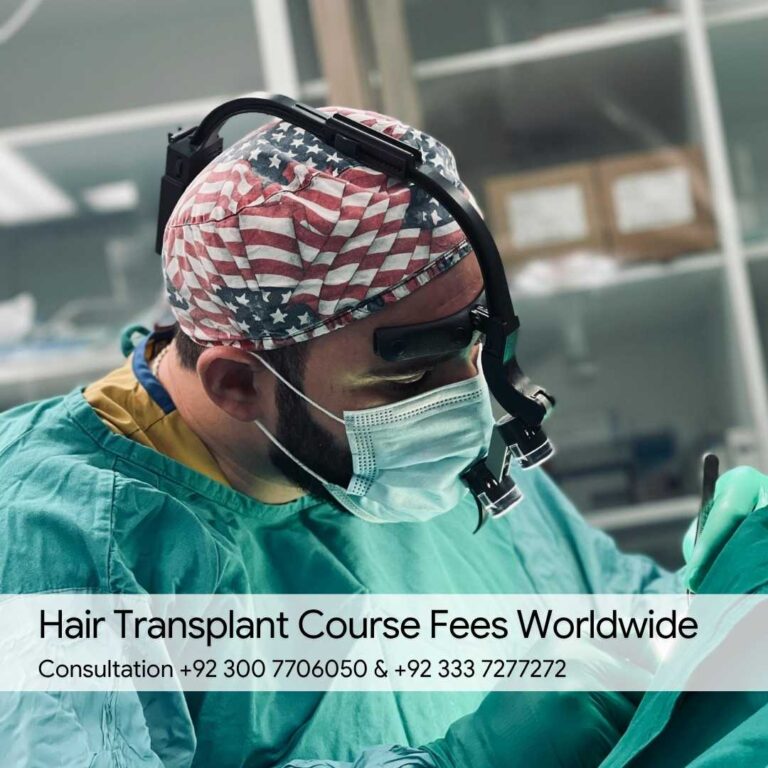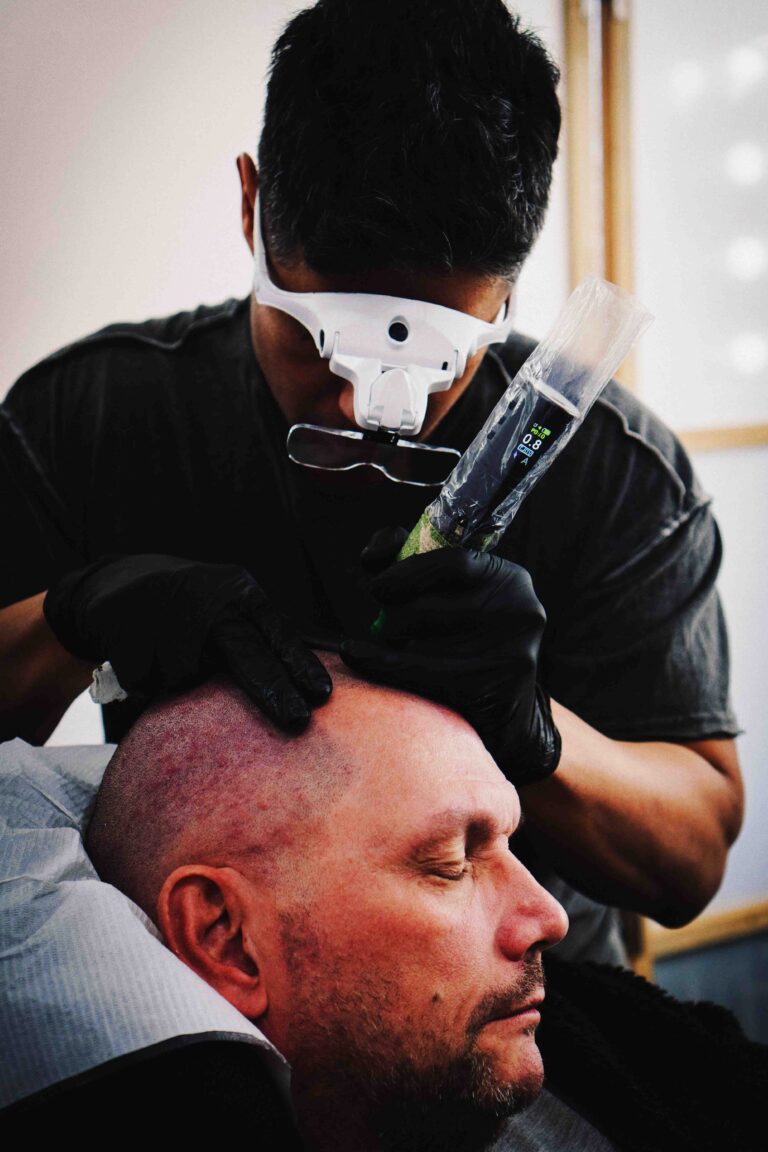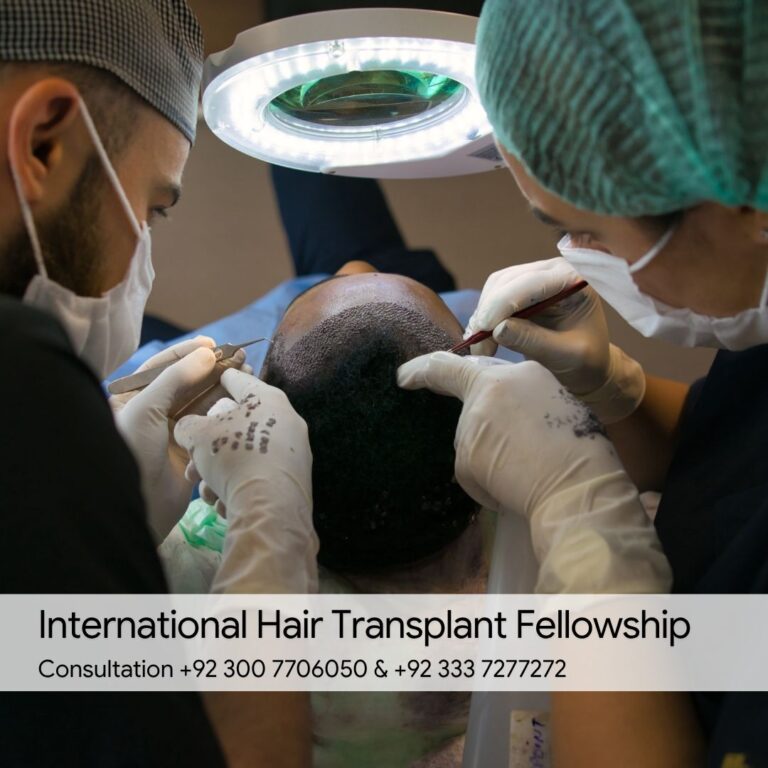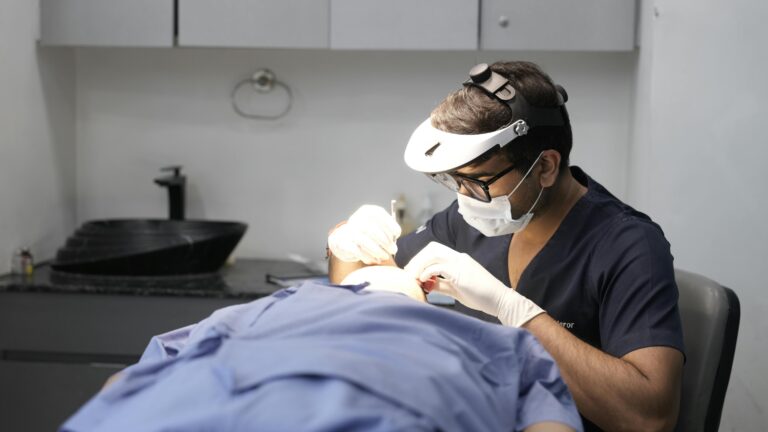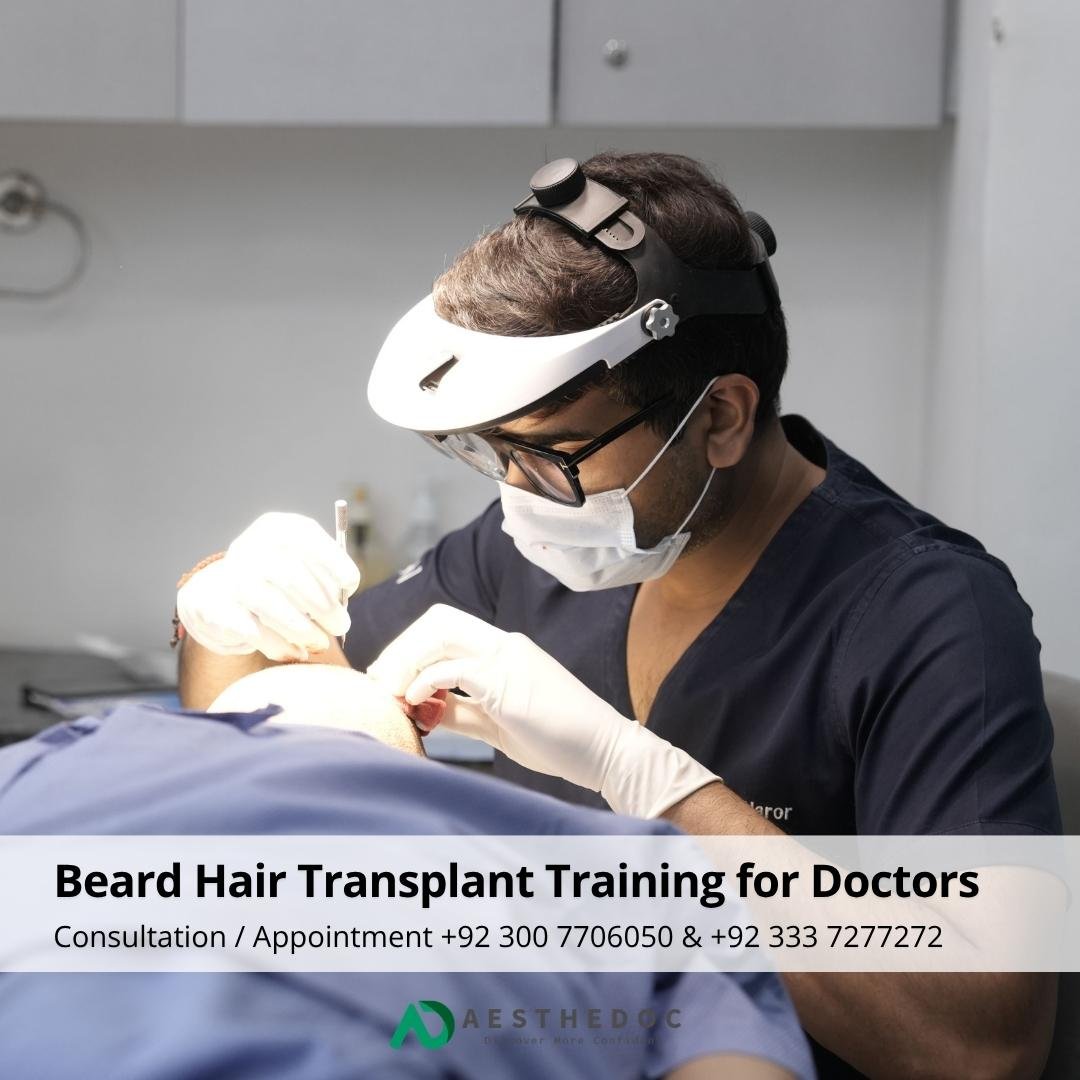
Beard transplantation has become an increasingly important area of modern hair restoration surgery. Men experiencing patchy facial hair, congenital beard gaps, scars, uneven growth or insufficient beard density may consider surgical hair restoration to improve facial hair coverage and appearance.
For hair restoration surgeons, beard transplantation introduces a different set of anatomical, technical and aesthetic considerations compared with conventional scalp hair transplantation. Facial follicles have distinctive growth directions, exit angles and distribution patterns. The recipient area also has complex contours that require careful planning to achieve natural-looking results.
Learning beard hair transplantation therefore requires more than understanding conventional FUE extraction. Doctors must develop an understanding of facial hair anatomy, donor selection, beard design, graft characteristics, recipient site creation, implantation direction and postoperative management.
A surgeon who understands scalp transplantation cannot automatically assume that the same surgical planning principles can be transferred directly to the beard.
This is why specialized beard hair transplant training for doctors should cover the complete facial hair restoration process, including patient assessment, donor management, extraction, graft preparation, facial aesthetics and complication prevention.
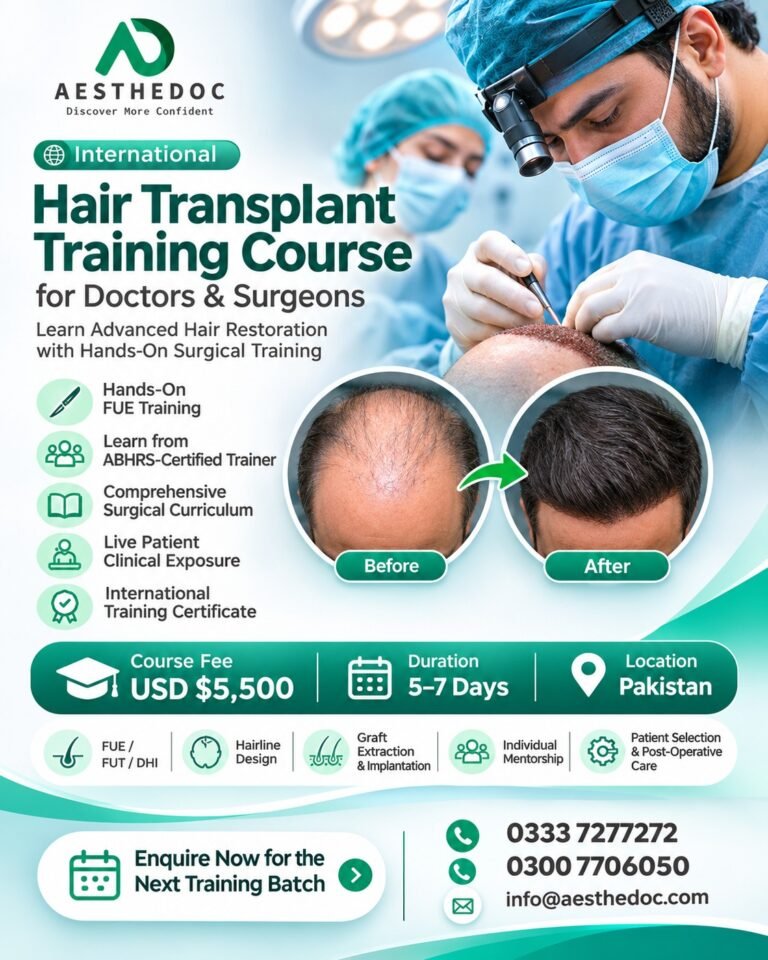
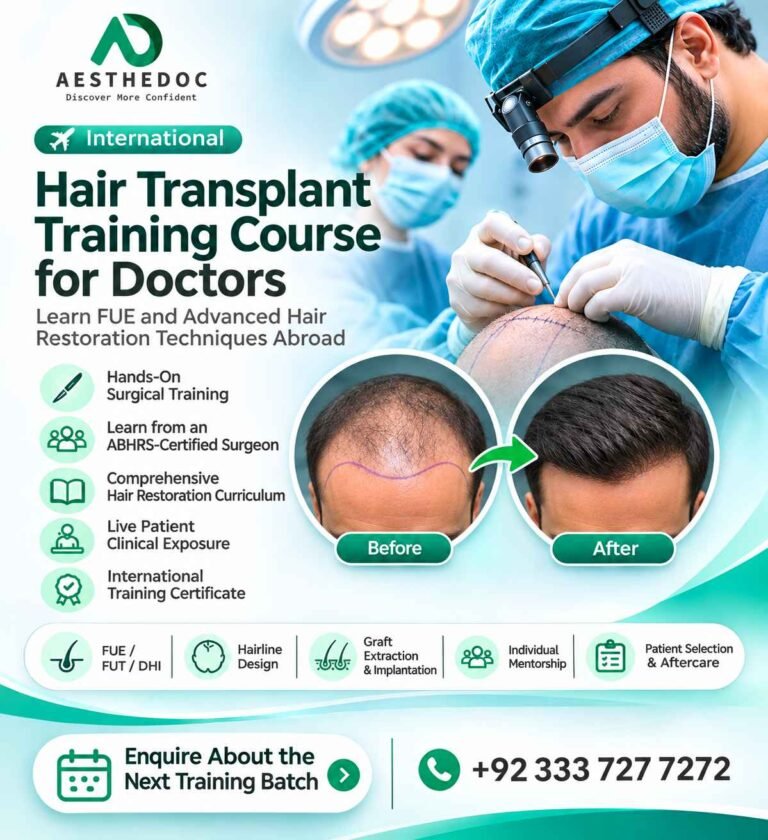
At Aesthedoc Hair Transplant Clinic & Institute in Pakistan, beard and eyebrow transplantation are included among the advanced hair restoration subjects within the hair transplant training programme. The programme is led by Dr. Adnan Bashir, a Diplomate of the American Board of Hair Restoration Surgery (ABHRS).
This comprehensive guide explores beard transplantation techniques, FUE extraction principles, facial hairline design, graft implantation, surgical challenges and the educational components doctors should evaluate when choosing an advanced hair restoration training programme.
Quick Overview: Beard Hair Transplant Training for Doctors
Beard hair transplant training is specialized medical education covering the surgical principles of restoring facial hair using transplanted follicular units.
A comprehensive educational programme should address:
- Facial hair anatomy and follicular characteristics.
- Beard growth patterns and distribution.
- Patient assessment and surgical eligibility.
- Beard donor area selection.
- Scalp-to-beard transplantation.
- Beard-to-beard transplantation.
- FUE extraction principles.
- Graft selection and preparation.
- Cheek beard design.
- Jawline and chin restoration.
- Moustache and goatee transplantation.
- Recipient site creation.
- Implantation angles and directions.
- Graft preservation.
- Scar and burn-related restoration.
- Postoperative management.
- Complication recognition and management.
Aesthedoc Training Information
| Programme detail | Information |
|---|---|
| Institute | Aesthedoc |
| Location | Pakistan |
| Lead trainer | Dr. Adnan Bashir |
| Professional credential | Diplomate, ABHRS |
| Training focus | Hair restoration surgery |
| Advanced modules | Beard and eyebrow transplantation, corrective restoration |
| Educational format | Theory, surgical exposure and mentorship |
| Intended participants | Eligible medical professionals |
| Website | aesthedoc.com |
Prospective trainees should confirm the exact beard transplantation modules, clinical exposure, practical activities and supervision arrangements before enrolment.
1. What Is Beard Hair Transplantation?
Beard hair transplantation is a surgical procedure in which follicular units are transferred into areas of the face where additional hair coverage is desired.
It is used to address different facial hair concerns, including:
- Naturally sparse beard growth.
- Patchy cheeks.
- Incomplete moustache growth.
- Thin goatee areas.
- Uneven jawline coverage.
- Congenital facial hair gaps.
- Beard loss following trauma.
- Burn-related hair loss.
- Surgical scars affecting facial hair.
The objective is to restore facial hair in a way that complements the patient’s facial structure and existing beard characteristics.
Two Different Types of Beard Transplantation
The term beard transplant can describe two different procedures.
1. Transplanting Hair Into the Beard
Follicular units are harvested from another donor region, usually the scalp, and implanted into the facial recipient area.
This approach may be considered for men who want fuller beard coverage or restoration of areas affected by scars.
2. Harvesting Beard Hair for Other Areas
Beard follicles, commonly obtained from suitable areas beneath the jawline, may also be used as donor grafts for scalp hair transplantation.
This is particularly relevant in selected patients with limited scalp donor availability.
Doctors should understand the distinction because donor selection, extraction planning and aesthetic objectives differ between these procedures.
The International Society of Hair Restoration Surgery (ISHRS) discusses both applications in its educational material on beard transplantation. https://ishrs.org/beard-transplant/
2. Why Should Doctors Learn Beard Hair Transplantation?
Beard restoration requires specialized knowledge of facial hair anatomy and aesthetic planning.
For doctors already familiar with scalp hair transplantation, learning facial hair restoration can broaden their understanding of different recipient areas and donor sources.
Expanding Hair Restoration Knowledge
Facial hair transplantation involves different clinical considerations from conventional scalp restoration.
Doctors must understand how to evaluate the facial recipient area, assess available donor follicles and plan the distribution of grafts.
Treating Different Types of Facial Hair Loss
Patients may present with different conditions.
For example, one patient may have naturally sparse cheek hair, while another may have lost facial follicles following a burn injury or surgical procedure.
These cases require different assessments and treatment plans.
Developing Advanced Surgical Skills
Specialized beard transplantation education may introduce doctors to:
- Facial recipient area planning.
- Donor hair matching.
- Facial follicular unit extraction.
- Graft selection.
- Implantation direction.
- Scar restoration.
- Corrective beard transplantation.
Building a Specialized Hair Restoration Practice
Doctors interested in hair restoration may explore facial hair transplantation as an additional area of clinical education.
However, surgical expansion should be based on appropriate qualifications, supervised competency development and local regulatory requirements.
3. Understanding Facial Hair Anatomy
A strong understanding of facial anatomy is essential before studying beard transplantation.
Unlike the scalp, facial hair grows across multiple anatomical regions with different directions and angles.
These variations influence how transplanted follicles should be positioned.
Major Beard Regions
The facial hair region can be divided into several important anatomical zones.
Moustache Region
The upper lip contains follicles that form the moustache.
Its appearance depends on density, hair calibre, direction and the relationship between the two sides of the upper lip.
Cheek Region
The cheek beard extends across the lateral facial area.
Natural density and growth direction vary considerably between individuals.
Jawline Region
The jawline forms an important boundary of the beard and contributes to the overall facial appearance.
Chin Region
The chin contains central and lateral follicular regions that contribute to beard fullness and goatee formation.
Sideburn Region
The sideburns connect scalp hair with facial hair and require careful consideration of direction and transition.
Why Anatomical Knowledge Matters
A surgeon should not treat the entire beard as one uniform recipient area.
Each region has different aesthetic characteristics.
The direction of natural hair growth, facial contours and existing follicular distribution must be considered during surgical planning.
4. Facial Hair Growth Patterns and Follicular Characteristics
Facial hair is influenced by genetics, hormonal activity and individual follicular characteristics.
Androgens play an important role in terminal beard hair development during puberty and adulthood.
However, beard density, distribution and growth patterns vary between individuals.
Beard Hair Characteristics
Doctors should understand:
- Hair shaft diameter.
- Follicular unit composition.
- Hair curl.
- Hair colour.
- Hair direction.
- Growth angle.
- Regional density.
- Existing miniaturization or other follicular abnormalities.
Beard Versus Scalp Hair
Scalp and beard hair may differ in thickness, texture, curl and growth characteristics.
These differences are important when selecting donor follicles for facial restoration.
A donor graft that is technically suitable may still produce an aesthetically inappropriate result if its characteristics do not match the intended recipient area.
Matching Donor and Recipient Hair
Hair characteristics should be evaluated before transplantation.
For example, placing very thick, tightly curled scalp hair into an area containing fine, straight facial hair may produce an unnatural appearance.
Doctors should consider the visual relationship between donor hair and the surrounding facial follicles.
5. Patient Assessment Before Beard Hair Transplant Surgery
Patient selection is one of the most important stages of beard transplantation.
Not every person with patchy facial hair is an appropriate surgical candidate.
Before considering transplantation, doctors should determine why the patient has insufficient beard growth.
Medical History
The consultation should include:
- Medical history.
- Current medication.
- Previous facial surgery.
- History of trauma.
- Previous burns.
- Skin conditions.
- Previous hair restoration procedures.
- Family history of facial hair growth.
- Allergies.
- Healing history.
Understanding the Cause of Beard Gaps
Potential causes include:
- Genetic variations in beard growth.
- Congenital absence of facial hair.
- Alopecia areata affecting the beard.
- Scarring following trauma.
- Burn injuries.
- Surgical scars.
- Previous unsuccessful transplantation.
The underlying condition should be diagnosed before surgery is considered.
Evaluating the Recipient Area
The surgeon should examine:
- Existing beard density.
- Skin condition.
- Scar characteristics.
- Inflammation.
- Active acne.
- Follicular openings.
- Hair direction.
- Recipient area size.
Active dermatological conditions should be appropriately evaluated and managed before considering transplantation.
Understanding Patient Expectations
Some patients want a fuller cheek beard, while others prefer a more defined moustache or goatee.
The consultation should establish the desired appearance and whether the available donor supply can realistically support the proposed design.
6. Beard Design and Facial Aesthetics
Beard design is one of the most important elements of facial hair restoration.
A beard transplant should complement the patient’s natural facial structure rather than impose an artificial pattern.
Cheek Beard Design
The cheek beard is a prominent part of facial hair appearance.
Its upper boundary, density and relationship with the moustache and sideburns should be considered.
A natural cheek beard generally has an irregular transition rather than an excessively straight upper edge.
Jawline Definition
The jawline contributes to the overall appearance of the lower face.
Beard restoration may be planned to improve coverage along the mandibular region.
Chin and Goatee Design
The chin and goatee region require careful consideration of central and lateral hair distribution.
The moustache, chin and surrounding beard should appear visually connected where appropriate.
Moustache Design
Moustache transplantation requires attention to symmetry, hair direction and the relationship between the upper lip and facial proportions.
Sideburn Transition
Sideburn restoration should create a natural transition between scalp hair and beard hair.
The surgeon should consider the existing hairline and direction of growth.
Why Facial Harmony Matters
A successful beard restoration plan should consider the face as a whole.
Important factors include:
- Facial proportions.
- Jawline shape.
- Chin prominence.
- Cheek contours.
- Existing beard density.
- Hair calibre.
- Natural growth direction.
- Patient preferences.
Doctors should understand that beard trends may change, while transplanted follicles can remain long-term. Conservative and age-appropriate design is therefore important.
7. Donor Area Selection for Beard Transplantation
Selecting an appropriate donor region is a major surgical decision.
In many beard restoration procedures, the scalp is used as the donor source.
However, other donor options may be considered in selected cases.
Scalp Donor Area
The occipital and suitable lateral scalp regions are commonly assessed for follicular units.
Doctors should consider:
- Donor density.
- Hair calibre.
- Curl characteristics.
- Hair colour.
- Follicular unit composition.
- Future scalp hair loss.
- Donor availability.
Beard Donor Area
The beard itself may serve as a donor source in selected procedures.
The submandibular region beneath the jawline is commonly discussed as a potential beard donor area.
This may be considered when scalp donor availability is limited or when beard hair characteristics are appropriate for the intended recipient area.
Donor Hair Matching
Donor selection should not depend solely on the number of available grafts.
The surgeon must evaluate whether the donor hair is appropriate for its intended destination.
Donor Preservation
Donor hair is a limited resource.
Excessive extraction may result in visible thinning, irregularity or scarring.
Training should therefore cover long-term donor management rather than focusing exclusively on immediate graft numbers.
8. FUE Beard Transplantation: Extraction Principles
Follicular Unit Excision is a commonly used harvesting approach in beard transplantation.
It involves extracting individual follicular units using specialized punches.
However, facial and scalp extraction present different technical challenges.
Why Beard FUE Requires Specialized Knowledge
Beard follicles may have variable directions and angles across the facial region.
Some follicles may have curved or angled anatomical paths.
The surgeon must understand the relationship between the visible hair shaft and the underlying follicular structure.
Important Extraction Considerations
A comprehensive educational programme should address:
- Facial donor area evaluation.
- Hair direction assessment.
- Punch selection.
- Instrument handling.
- Follicular unit identification.
- Extraction planning.
- Graft inspection.
- Donor preservation.
- Recognition of potential transection.
Beard Donor Extraction
When beard follicles are harvested for scalp restoration, the donor region must be selected carefully.
The under-jaw area is commonly considered because it is less cosmetically prominent than the central facial beard.
The surgeon should avoid creating conspicuous gaps or uneven density.
Scalp Donor Extraction for Facial Restoration
When scalp hair is transplanted into the beard, suitable scalp donor follicles are selected according to their characteristics and the intended facial recipient area.
Doctors should understand how to assess hair thickness, curl and follicular unit composition before selecting grafts.
9. Graft Preparation and Handling for Beard Transplantation
Graft preparation is important because follicular units are delicate living tissue.
The objective is to maintain their integrity from extraction through implantation.
Understanding Facial Recipient Grafts
The surgeon should understand the difference between single-hair and multi-hair follicular units.
Single-hair grafts may be useful in selected facial transition areas, while graft selection elsewhere depends on the intended appearance and available follicles.
Graft Sorting
Grafts can be organized according to:
- Number of hairs.
- Follicular unit size.
- Hair calibre.
- Tissue characteristics.
- Intended recipient location.
Graft Preservation
Important considerations include:
- Gentle handling.
- Suitable storage conditions.
- Maintaining hydration.
- Avoiding unnecessary compression.
- Minimizing out-of-body time.
- Careful graft inspection.
Why Graft Selection Influences Appearance
A beard transplant is not simply about increasing the number of hairs.
The selection of appropriate follicular units contributes to the final appearance and naturalness of facial hair.
10. Recipient Site Creation in Beard Hair Transplantation
Recipient site creation is a technically important stage of facial hair restoration.
The surgeon must account for the unique shape and growth direction of each facial region.
Recipient Site Planning
The surgical plan should identify:
- Areas requiring additional coverage.
- Existing native hair.
- Desired beard boundaries.
- Graft distribution.
- Hair direction.
- Facial contours.
- Available graft numbers.
Implantation Angle
Facial hair generally emerges at shallow angles in many regions.
The surgeon should evaluate the direction and angle of surrounding natural hair before preparing recipient sites.
Implantation Direction
The direction of the graft should follow the natural pattern of the intended facial area.
Incorrect direction may produce an unnatural appearance.
Recipient Site Density
Density requirements vary between the moustache, cheek, chin and jawline.
A uniform distribution across every facial region is not necessarily appropriate.
The final plan should be based on the patient’s existing hair, donor availability and aesthetic objectives.
11. Beard Graft Implantation: Forceps and Implanter Techniques
After graft harvesting and preparation, follicular units must be placed into the recipient area.
Two commonly discussed approaches are forceps implantation and implanter-based implantation.
Forceps Implantation
With forceps implantation, individual grafts are gently held and inserted into previously prepared recipient incisions.
The surgeon must understand how to minimize direct manipulation and avoid damaging delicate follicular structures.
Implanter-Based Implantation
Implanter devices hold grafts within a channel and deliver them into the recipient area through a plunger mechanism.
Depending on the instrument design, the incision may be prepared beforehand or created during placement using a sharp implanter.
Comparing Implantation Methods
| Feature | Forceps | Implanter |
|---|---|---|
| Graft handling | Direct manual handling | Graft loaded into device |
| Recipient sites | Usually prepared beforehand | Pre-made or created during placement |
| Placement | Manual insertion | Plunger-assisted |
| Main learning focus | Graft control | Loading and device handling |
| Instrument requirements | Fine forceps | Specialized implanter |
| Selection | Surgeon and case dependent | Surgeon and case dependent |
Neither technique guarantees better results in every case.
Appropriate instrument selection depends on the surgeon’s experience, graft characteristics, recipient anatomy and surgical plan.
12. Beard Transplantation for Different Facial Regions
Different parts of the face require different restoration strategies.
Doctors should understand the characteristics of each region before developing a surgical plan.
Cheek Beard Transplant
Cheek beard transplantation is often considered for patients with naturally sparse or patchy cheek coverage.
The surgeon should evaluate the upper cheek boundary, existing density and direction of surrounding hair.
Moustache Transplant
Moustache restoration may be considered for patients with insufficient upper lip hair or areas affected by scarring.
The direction and arrangement of grafts are important because the upper lip is a visually prominent facial region.
Goatee Transplant
The goatee connects the chin and moustache regions through the central and lateral facial hair patterns.
Restoration requires attention to symmetry and natural transitions.
Jawline Beard Transplant
Jawline restoration may be considered where facial hair density is insufficient along the lower border of the face.
The surgeon must consider the curvature of the jaw and the direction of existing follicles.
Sideburn Restoration
Sideburn transplantation may be considered for congenital gaps, scars or inadequate density.
The transition between scalp and facial hair must be carefully planned.
13. Beard Transplantation for Scars and Burn Injuries
Facial scarring can result in permanent loss of hair follicles.
Beard transplantation may be considered in selected patients where the recipient tissue is suitable.
Types of Facial Scars
Potential indications include:
- Burn-related scars.
- Traumatic scars.
- Surgical scars.
- Injury-related tissue loss.
- Scarring following previous procedures.
- Selected congenital defects.
Evaluating Scar Tissue
Scar tissue may differ from normal skin in thickness, flexibility, vascularity and healing characteristics.
These differences may influence graft placement and survival.
Preoperative Evaluation
The surgeon should consider:
- Scar maturity.
- Skin condition.
- Tissue thickness.
- Vascularity.
- Previous reconstruction.
- Available donor supply.
- Patient expectations.
Corrective Facial Hair Restoration
Corrective procedures may be required when previous transplantation has resulted in poor direction, irregular density or unnatural design.
These cases require careful assessment because additional donor resources may be limited.
14. Beard Transplantation Complications and Surgical Challenges
Beard transplantation requires careful planning because the face is a highly visible anatomical region.
Doctors must understand potential complications and how to recognize them.
Incorrect Hair Direction
Incorrect implantation angles may result in facial hair growing in an unnatural direction.
This can be particularly noticeable around the cheeks, moustache and chin.
Unnatural Beard Boundaries
An excessively straight or poorly designed cheek boundary may produce an artificial appearance.
Folliculitis
Inflammation of hair follicles may occur after transplantation.
Appropriate evaluation and management are important.
Post-Inflammatory Hyperpigmentation
Some patients may develop pigmentation changes following inflammation or tissue trauma.
This is an important consideration in patients with darker skin types.
Donor Area Scarring
FUE extraction may leave small visible changes in the donor region.
Inappropriate harvesting distribution can result in noticeable thinning or irregularity.
Cobblestoning and Skin Irregularities
Raised or uneven skin texture may develop around implanted grafts.
Appropriate graft preparation and recipient site technique are important considerations.
Poor Graft Growth
Not every transplanted follicular unit necessarily produces visible growth.
Patients should receive realistic counselling about variability in outcomes.
Importance of Complication Management
Training should address prevention, recognition, documentation, follow-up and appropriate corrective management.
Doctors should understand when a complication requires specialist assessment.
15. Postoperative Care Following Beard Hair Transplantation
Postoperative management is an important part of the surgical process.
Patients should receive individualized instructions from their treating surgeon.
Immediate Postoperative Care
Important considerations include:
- Protection of transplanted grafts.
- Avoiding unnecessary pressure.
- Appropriate facial hygiene.
- Monitoring for bleeding.
- Infection prevention.
- Managing swelling.
- Following medication instructions.
Avoiding Trauma
Patients should avoid rubbing, scratching or disturbing the recipient area during the early recovery period.
They should also follow their surgeon’s instructions regarding shaving, cleansing and other facial care activities.
Sun Exposure
Excessive sunlight exposure during early recovery should be avoided according to the treating surgeon’s guidance.
Hair Growth Timeline
Transplanted hair shafts may shed during the early postoperative period.
New visible growth commonly develops over subsequent months.
Final cosmetic assessment generally requires a longer follow-up period, often around 10–14 months, although individual timelines vary.
Follow-Up
Follow-up consultations allow the surgeon to assess:
- Donor healing.
- Recipient healing.
- Graft growth.
- Pigmentation changes.
- Folliculitis.
- Patient satisfaction.
- Need for further treatment.
16. Beard-to-Scalp Hair Transplantation: An Advanced Donor Management Topic
Beard hair can also be used as a donor source for selected scalp restoration cases.
This is particularly relevant for patients with limited scalp donor availability.
When Is Beard Hair Used for Scalp Restoration?
Potential considerations include:
- Previous scalp transplant procedures.
- Limited remaining scalp donor supply.
- Suitable beard density.
- Appropriate donor hair characteristics.
- Need for additional grafts.
Why Beard Hair May Be Useful
Beard follicles may have different thickness and texture characteristics compared with scalp hair.
In selected patients, they may contribute to coverage when used appropriately.
Donor Area Considerations
The surgeon should assess the available beard donor supply and preserve a natural facial appearance.
Excessive harvesting can create visible gaps and uneven beard density.
Hair Characteristics and Matching
Beard hair may not be an ideal replacement for fine frontal scalp hair because of differences in calibre and texture.
Doctors should understand where such grafts may be most appropriate and when alternative donor sources should be considered.
17. What Should a Beard Hair Transplant Training Course Include?
Doctors evaluating a specialized beard transplantation programme should review the complete curriculum.
A comprehensive course should address the following educational areas.
| Training module | Key learning areas |
|---|---|
| Facial hair anatomy | Beard regions and follicular structure |
| Hair growth physiology | Androgen-related growth and follicular characteristics |
| Patient selection | Indications and contraindications |
| Beard design | Cheeks, jawline, chin and moustache |
| Donor selection | Scalp and beard donor evaluation |
| FUE extraction | Facial and scalp donor harvesting principles |
| Graft preparation | Sorting, inspection and preservation |
| Recipient site planning | Direction, angle and distribution |
| Implantation | Forceps and implanter approaches |
| Scar restoration | Burn and trauma-related cases |
| Corrective surgery | Management of previous poor results |
| Postoperative care | Recovery and follow-up |
| Complications | Recognition and management |
| Clinical ethics | Consent and patient safety |
Practical Educational Components
Where included, practical learning may involve:
- Instrument familiarization.
- Facial hair design demonstrations.
- Donor area assessment.
- FUE extraction demonstrations.
- Graft inspection and handling.
- Recipient site planning.
- Implantation demonstrations.
- Live patient case observation.
- Appropriate supervised clinical exposure.
Applicants should confirm whether each component involves observation, simulation or direct supervised clinical participation.
18. Who Should Attend Beard Hair Transplant Training?
Beard transplantation education may be relevant to several medical specialties.
Dermatologists
Dermatologists with an interest in hair disorders and surgical hair restoration may benefit from studying facial hair transplantation.
Plastic Surgeons
Plastic surgeons may be interested in the reconstructive and aesthetic aspects of facial hair restoration, especially scar-related cases.
General Surgeons
Eligible surgeons may explore additional education in FUE harvesting and facial recipient area planning.
MBBS Doctors
Medical graduates may enquire about introductory hair restoration education according to the admission requirements of the training provider.
Aesthetic Physicians
Eligible aesthetic physicians interested in hair restoration may study facial hair anatomy, surgical planning and transplantation principles.
International Medical Professionals
Doctors from the UK, USA, Canada, UAE, Saudi Arabia, Australia, Germany and other countries may contact Aesthedoc regarding international admission.
All clinical participation and subsequent surgical practice must comply with applicable professional licensing requirements.
19. How to Choose the Best Beard Hair Transplant Training Institute
Choosing the right institute requires evaluating the trainer, curriculum, clinical environment and educational arrangements.
Trainer Credentials
Review the trainer’s medical qualifications, board credentials, surgical background and experience in facial hair restoration.
Experience With Beard and Corrective Cases
Beard transplantation is different from routine scalp restoration.
Ask whether the programme includes education on beard and moustache procedures, scar restoration and corrective cases.
Complete FUE Education
Beard transplantation requires understanding extraction and implantation.
A course should explain donor management, graft preparation and recipient site planning.
Clinical Case Exposure
Ask whether trainees can observe real patient procedures and how clinical cases are incorporated into the educational programme.
Supervision
Clarify who supervises clinical participation and which activities trainees are permitted to perform.
Certificate and Professional Recognition
Verify the issuing institution and the exact status of the certificate.
Course attendance should not be presented as an automatic specialist qualification or independent surgical licence.
Patient Safety
Evaluate infection control, informed consent, clinical governance and emergency preparedness.
20. Beard Hair Transplant Training at Aesthedoc, Pakistan
Aesthedoc Hair Transplant Clinic & Institute offers hair restoration education for eligible medical professionals interested in modern transplantation techniques.
The programme is led by Dr. Adnan Bashir, a Diplomate of the American Board of Hair Restoration Surgery (ABHRS).
The published Aesthedoc course curriculum includes beard and eyebrow transplantation as part of its advanced hair restoration education, alongside corrective procedures, scar and burn-related restoration.
Meet Dr. Adnan Bashir
Dr. Adnan Bashir has a medical and academic background and professional experience in hair restoration and aesthetic medicine.
His published qualifications include:
- MBBS – Foundation University Medical College, Islamabad.
- M.Phil Pharmacology – University of Health Sciences, Lahore.
- Diplomate – American Board of Hair Restoration Surgery (ABHRS).
- CPD UK-certified aesthetic trainer.
- Qualifi UK Level 5 and Level 7 trainer in aesthetic medicine.
- Certified HRA-Robograft provider.
- Advanced Cardiac Life Support certification from the American Heart Association.
His professional profile describes experience in FUE hair transplantation, beard restoration, eyebrow reconstruction and corrective hair restoration.
What Doctors Can Learn at Aesthedoc
The published programme covers multiple components of hair restoration.
Hair Loss Fundamentals and Patient Selection
- Types of alopecia.
- Surgical indications and contraindications.
- Patient assessment.
- Ethical counselling.
- Medical and surgical treatment planning.
Donor Area Assessment and Management
- Safe donor area identification.
- Density calculation.
- Donor preservation.
- Overharvesting prevention.
FUE Hair Transplant Surgery
- Punch selection.
- Extraction techniques.
- Graft handling.
- Graft storage.
- Recipient site creation.
- Implantation methods.
Advanced Hair Restoration
- Beard transplantation.
- Eyebrow transplantation.
- Corrective and repair procedures.
- Scar and burn-related restoration.
- Density optimization principles.
Postoperative Care and Complications
- Infection prevention.
- Shock loss management.
- Poor growth assessment.
- Revision planning.
Training Format
Aesthedoc’s published programme describes:
- Structured theoretical education.
- Live patient case exposure.
- One-to-one mentoring.
- Preoperative planning.
- Postoperative care protocols.
- Complication management.
- Practical FUE surgical exposure.
Doctors specifically interested in beard transplantation should request confirmation of the facial hair restoration modules, relevant clinical cases and the extent of supervised participation available during their training.
Why Consider Aesthedoc?
For international medical professionals comparing hair transplant training destinations, Aesthedoc provides an opportunity to study hair restoration in Pakistan under the leadership of an ABHRS Diplomate.
The programme covers both foundational surgical education and advanced hair restoration subjects.
Prospective trainees can contact the institute to discuss their medical background, learning objectives and eligibility.
21. International Beard Hair Transplant Training: Learning in Pakistan
Doctors considering international hair restoration education should evaluate the academic and clinical value of the programme rather than selecting a destination based only on location.
Pakistan is an option for medical professionals interested in structured hair transplant training and exposure to clinical cases.
International Admission
International applicants should confirm:
- Accepted medical qualifications.
- Professional registration documents.
- Course schedule.
- Language of instruction.
- Available clinical exposure.
- Training certificate details.
- Travel documentation.
- Accommodation arrangements.
Learning From Different Clinical Cases
Different patients present different facial hair characteristics, donor limitations and recipient requirements.
Exposure to a range of cases can help doctors understand how treatment planning varies.
Professional Practice After Training
A training certificate does not automatically authorize a doctor to perform beard transplantation independently in another country.
Doctors must comply with the medical licensing, surgical privilege and professional practice requirements of their intended country of practice.
22. Frequently Asked Questions About Beard Hair Transplant Training
What is beard hair transplant training for doctors?
It is specialized medical education covering the principles of facial hair restoration, including patient assessment, donor selection, FUE harvesting, graft preparation, beard design and implantation.
Can doctors learn beard transplantation through FUE training?
FUE provides important foundational knowledge for beard transplantation. However, facial restoration requires additional understanding of facial anatomy, hair direction, recipient site design and aesthetic planning.
What is the difference between a beard transplant and a beard-to-scalp transplant?
A beard transplant usually means placing hair into the facial beard area. Beard-to-scalp transplantation means harvesting follicles from the beard and transferring them to the scalp.
Where are donor hairs taken from for beard transplantation?
Scalp hair is commonly used as a donor source for facial restoration. Other suitable donor options may be considered depending on the patient’s characteristics and surgical objectives.
Can beard hair be used for scalp transplantation?
Yes. Beard follicles can be used as an additional donor source in selected patients, particularly when scalp donor availability is limited.
What is FUE beard transplantation?
It is an approach in which individual follicular units are harvested using FUE instruments and transplanted into the facial recipient area.
Can DHI implanters be used for beard transplantation?
Implanter devices can be used for facial graft placement. Their suitability depends on the recipient anatomy, graft characteristics, instrument design and surgeon’s experience.
Which facial areas can be restored through beard transplantation?
Potential recipient areas include the cheeks, moustache, chin, goatee, jawline and sideburns.
Is beard transplantation suitable for scar restoration?
It may be considered for selected stable scars resulting from trauma, burns or surgery. Careful evaluation of scar tissue is essential.
What complications can occur after beard transplantation?
Potential complications include folliculitis, pigmentation changes, donor scarring, unnatural hair direction, irregular density and poor graft growth.
How long does it take to see beard transplant results?
Visible growth develops gradually over several months. A more complete cosmetic assessment commonly takes approximately 10–14 months, although individual outcomes vary.
Who can attend beard hair transplant training at Aesthedoc?
Eligible medical professionals, including dermatologists, plastic surgeons, general surgeons and other appropriately qualified doctors, can enquire according to the institute’s admission criteria.
Does Aesthedoc include beard transplantation in its training curriculum?
Yes. Beard and eyebrow transplantation are listed among the advanced hair restoration topics on the published Aesthedoc course page.
Who leads hair transplant training at Aesthedoc?
The programme is led by Dr. Adnan Bashir, a Diplomate of the American Board of Hair Restoration Surgery.
Can international doctors attend beard hair transplant training in Pakistan?
International doctors can contact Aesthedoc to discuss admission requirements, available training dates and the clinical learning arrangements.
Does completing beard transplant training make a doctor a specialist?
No. Course attendance does not automatically confer specialist status, board certification or independent surgical privileges. Doctors must meet applicable professional licensing and competency requirements.
23. Enquire About Beard Hair Transplant Training at Aesthedoc
Beard transplantation is a specialized area of hair restoration that combines follicular anatomy, surgical extraction, facial aesthetics and precise graft placement.
Doctors interested in developing their understanding of facial hair restoration should seek structured education that covers donor selection, beard design, FUE principles, graft handling, implantation and complication management.
Aesthedoc Hair Transplant Clinic & Institute offers hair restoration education in Pakistan under the leadership of Dr. Adnan Bashir, a Diplomate of the American Board of Hair Restoration Surgery.
The published programme includes advanced topics such as beard transplantation, eyebrow restoration, corrective procedures and scar-related hair restoration.
If you are a dermatologist, plastic surgeon, general surgeon or another eligible medical professional interested in advanced hair transplant education, contact Aesthedoc to discuss your professional qualifications and training objectives.
Contact Aesthedoc Hair Transplant Training Institute
Institute: Aesthedoc Hair Transplant Clinic & Institute
Lead Trainer: Dr. Adnan Bashir
Professional Credential: Diplomate, American Board of Hair Restoration Surgery (ABHRS)
Training Location: Pakistan
Programme: Hair Transplant Training for Doctors – Advanced Beard Restoration
WhatsApp / International Enquiries: +92 333 727 7272
Additional Contact: +92 300 7706050
Email: info@aesthedoc.com
Contact the institute to request the complete curriculum, available training dates, admission requirements and details about beard transplantation education and supervised clinical exposure.
Expand your knowledge of advanced facial hair restoration through professional medical education and surgical mentorship at Aesthedoc.
Medical and Professional Disclaimer
This article is intended for medical education and general professional information. Beard transplantation is a surgical procedure requiring appropriate medical qualifications, surgical competence and compliance with applicable professional regulations. Donor harvesting, recipient site creation and graft implantation must be performed by appropriately qualified professionals. Training attendance does not independently confer specialist recognition or authorization to practise surgery.