Congenital nevi, commonly referred to as birthmarks or moles present at birth, are pigmented skin lesions that may vary in size, shape, and appearance. While some congenital nevi are small and benign, others, especially large or giant nevi, carry potential health risks, including melanoma development, and often pose aesthetic and psychological concerns.
Managing a congenital nevus requires a specialized, evidence-based approach combining medical evaluation, surgical planning, and ongoing follow-up. In this article, we provide a comprehensive, patient-focused guide on congenital nevus management, written in a professional medical style with clarity for patients considering treatment.
What Is a Congenital Nevus?
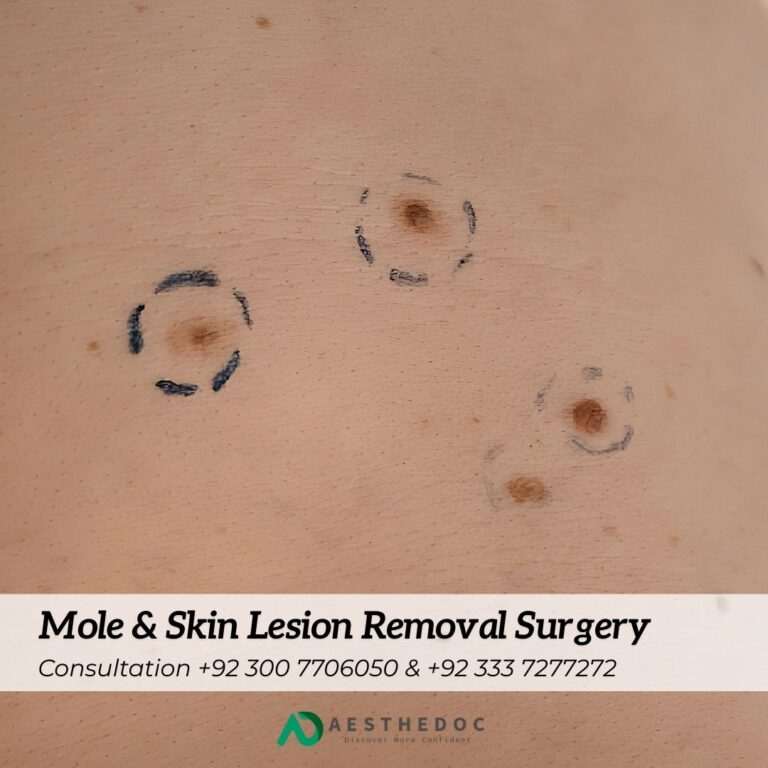
A congenital nevus is a pigmented mole or birthmark present at birth. It arises due to proliferation of melanocytes in the skin during fetal development. These lesions can appear anywhere on the body and are classified based on size and depth:
- Small congenital nevi: <1.5 cm in diameter
- Medium congenital nevi: 1.5–20 cm
- Large or giant congenital nevi: >20 cm
The color may range from light brown to dark black, and the surface can be smooth, hairy, or irregular.
Why Proper Management Matters
Management is important for several reasons:
- Cancer Risk – Large or giant congenital nevi have a higher lifetime risk of melanoma, a serious skin cancer.
- Aesthetic Concerns – Visible or large nevi on the face, neck, or hands may impact self-esteem.
- Functional Considerations – Lesions near joints or sensitive areas can affect movement or cause discomfort.
- Psychological Wellbeing – Children and adults may experience social stigma or self-consciousness.
Early assessment by a qualified plastic surgeon ensures both medical safety and cosmetic optimization.
Types of Congenital Nevi
Congenital nevi can be classified by:
1. Size
- Small (<1.5 cm)
- Medium (1.5–20 cm)
- Large/Giant (>20 cm)
2. Appearance
- Macular: Flat and pigmented
- Papular or Nodular: Raised with or without hair growth
3. Location
- Face, neck, hands, or other visible areas
- Trunk, limbs, or back
4. Hair Growth
- Some congenital nevi develop thick terminal hair, often requiring additional management.
Risks Associated With Congenital Nevi
While most small and medium nevi remain benign, large congenital nevi carry:
- Melanoma risk: Especially in early life or adolescence
- Neurocutaneous melanosis: Rare, involving CNS involvement in giant lesions
- Functional limitations: Near joints or folds
- Psychosocial impact: Particularly in children and adolescents
A plastic surgeon assesses size, location, and potential malignancy risk to decide the best treatment plan.
How Are Congenital Nevi Diagnosed?
Diagnosis involves:
- Clinical Evaluation – Visual inspection of size, color, surface, and symmetry.
- Dermatoscopy – Detailed skin examination for atypical features.
- Photographic Documentation – For monitoring changes over time.
- Imaging (if required) – MRI in case of suspected neurocutaneous involvement.
- Biopsy – Occasionally performed to rule out atypical cells or malignancy.
Management Approaches for Congenital Nevi
Management depends on:
- Age of the patient
- Size and type of nevus
- Location and aesthetic concerns
- Risk of melanoma
Treatment can be surgical or non-surgical.
1. Observation
- Small congenital nevi with low risk may be monitored.
- Regular check-ups and dermatoscopic evaluation are recommended.
- Photographic monitoring helps track changes in color, size, or texture.
2. Surgical Excision
Surgical removal is preferred for:
- Large or giant nevi
- Lesions with melanoma risk
- Cosmetic concerns on visible areas
Surgical strategies include:
- Primary excision: For small lesions that can be closed directly.
- Serial excision: Removing large lesions in stages.
- Tissue expansion: For giant nevi, expanding adjacent healthy skin before excision.
- Flap or graft reconstruction: Using skin from nearby areas or other donor sites for coverage.
3. Laser Therapy
- Helps lighten pigmentation and improve surface texture.
- Often combined with surgical excision.
- Ideal for hair removal and superficial pigmented lesions.
Laser therapy is not a substitute for excision in high-risk lesions but can be adjunctive.
4. Combination Approach
For large or complex lesions:
- Surgery and laser therapy may be combined.
- Staged interventions provide both safety and aesthetic results.
- Plastic surgeons customize plans based on patient anatomy and expectations.
Timing of Treatment
- Early childhood: Often preferred for visible or high-risk lesions.
- Adolescence: Can consider combined aesthetic and functional considerations.
- Adults: Surgical options remain effective, though healing may differ.
Early intervention reduces psychological impact and scar formation.
Surgical Considerations
Plastic surgeons focus on:
- Minimal tension closure
- Scar alignment with skin lines
- Preservation of hair-bearing areas
- Functional preservation in sensitive zones
Postoperative Care
After congenital nevus excision:
- Keep wound clean and dry.
- Avoid sun exposure to prevent hyperpigmentation.
- Apply silicone gel or sheets for scar management.
- Regular follow-up visits for early detection of recurrence or complications.
Complications and Risk Management
Possible complications include:
- Infection
- Scar formation
- Pigmentation changes
- Partial graft loss (if reconstruction used)
Plastic surgeons employ risk-minimizing techniques, including:
- Aseptic protocols
- Precise surgical technique
- Layered closure
- Postoperative monitoring
Psychological and Social Benefits of Treatment
Congenital nevi can impact:
- Self-esteem
- Peer interactions
- Social confidence
Removal or aesthetic management by a qualified surgeon significantly improves psychological well-being.
Frequently Asked Questions
Is congenital nevus dangerous?
Most small nevi are benign, but large or irregular lesions may have melanoma risk.
Can all congenital nevi be removed?
Yes, but the technique depends on size, location, and tissue availability.
Will surgery leave a scar?
Expert plastic surgical repair aims to minimize scarring, often aligning with natural skin lines.
Is early treatment better?
Early treatment reduces aesthetic concerns and psychological impact.
Can hair growth in nevi be managed?
Yes, laser hair removal is safe post-excision or in combination therapy.
Why Choose Aesthedoc Clinic for Congenital Nevus Management?
Aesthedoc Clinic specializes in:
- Expert evaluation of congenital nevi
- Plastic surgical excision for optimal aesthetic and functional outcomes
- Advanced reconstructive techniques
- Laser and adjunctive therapies
- Comprehensive follow-up care
- Clinics in Islamabad and Rawalpindi
Patient safety, meticulous technique, and individualized treatment plans are our priority.
About the Surgeon
Dr Nadiya Tariq – Plastic Surgeon
Academic Qualifications
- FCPS (Plastic Surgery) – College of Physicians & Surgeons Pakistan (CPSP), 2025
- MBBS – University of Health Sciences (UHS), Lahore, 2016
Professional Registrations
- Pakistan Medical & Dental Council (PMDC) – Active Registration
- Irish Medical Council (IMC) – Active Registration
Dr Nadiya Tariq is trained in cosmetic and reconstructive surgery, with expertise in congenital nevus management, scar revision, and minor surgical procedures. She emphasizes anatomical precision, patient safety, and aesthetic outcomes.
Clinic Locations & Contact Information
Aesthedoc – Islamabad
I-8 Markaz, Islamabad
Phone: +92 333 7277272
Email: info@aesthedoc.com
Instagram: @aesthe_doc
Timings: Mon – Sun 9:00 – 19:00
Aesthedoc Clinic – Rawalpindi
3rd Floor, Rajas United Height, Opposite Future World School, Bahria Town Phase 8, Rawalpindi
Phone: +92 300 7706050
Email: info@aesthedocclinic.com
Instagram: @aesthedocclinic
Timings: Mon – Sun 9:00 – 19:00
Schedule a Consultation Today
For safe, effective, and aesthetic congenital nevus management, consult Dr Nadiya Tariq at Aesthedoc Clinic in Islamabad or Rawalpindi. Early assessment ensures minimal complications, optimal cosmetic results, and long-term patient satisfaction.