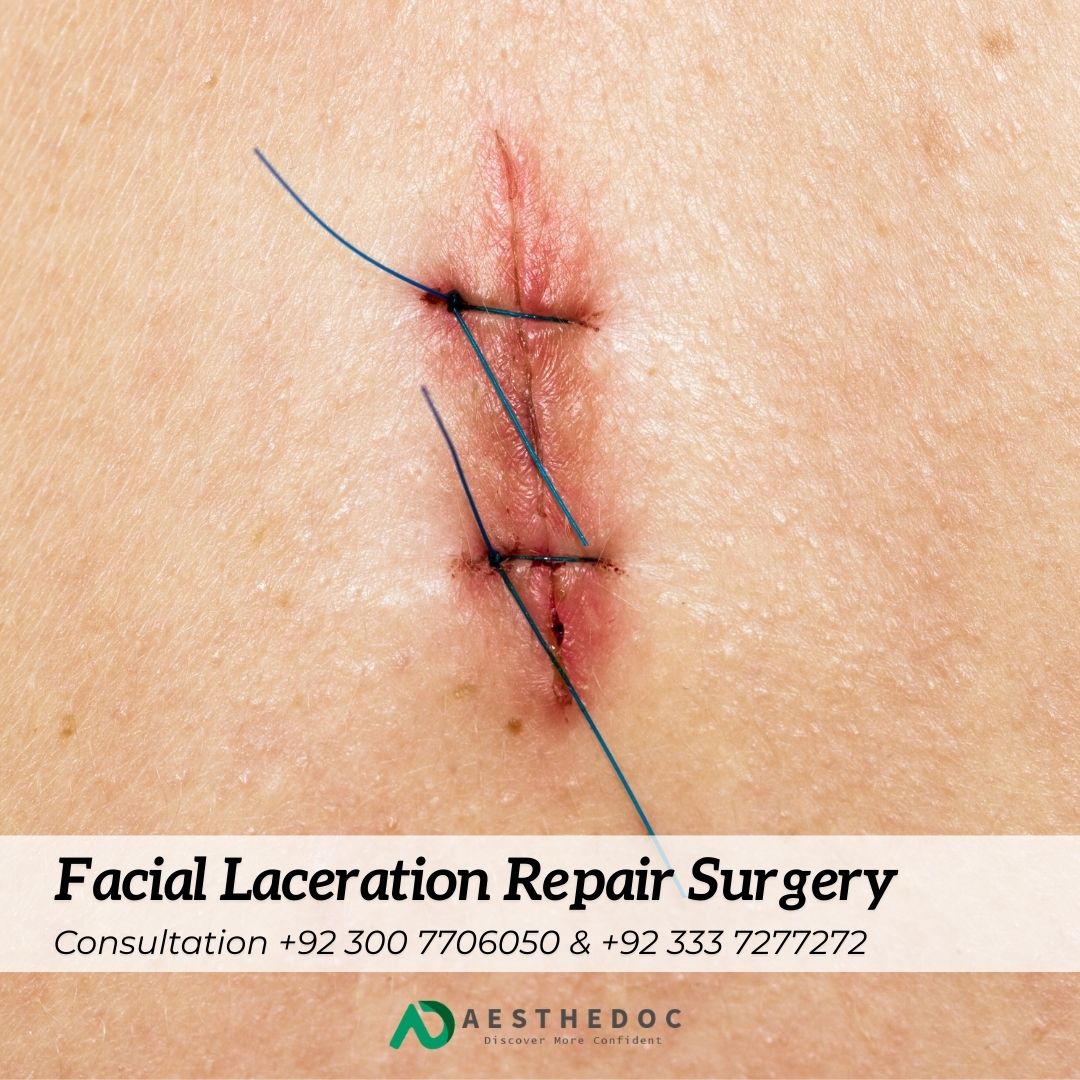
A facial injury can happen suddenly — from road accidents, falls, sports injuries, sharp object trauma, or domestic incidents. While the bleeding and pain are immediate concerns, the long-term impact on appearance, function, and scarring becomes equally important.
Facial Laceration Repair is not just about closing a wound. It is a specialized medical and surgical procedure focused on:
- Proper wound cleaning
- Layered closure of tissues
- Preserving facial function
- Minimizing visible scars
- Preventing long-term deformity
If you are searching for facial cut stitching in Islamabad, plastic surgeon for facial injury in Rawalpindi, or scar-minimizing facial wound repair, this comprehensive medical guide explains everything in a clear, professional, and patient-focused manner.
This article is structured to meet modern search standards, provide accurate medical knowledge, and help patients understand why expert repair matters.
What Is a Facial Laceration?
A facial laceration is a cut or tear in the skin and underlying tissues of the face. It may involve:
- Skin only
- Skin and subcutaneous tissue
- Muscle
- Nerves
- Blood vessels
- Cartilage
- Even bone in severe trauma
Because the face contains delicate structures responsible for:
- Expression
- Speech
- Vision
- Breathing
- Eating
Proper repair is critical.
Common Causes of Facial Lacerations
Facial injuries may result from:
- Road traffic accidents
- Falls
- Sports injuries
- Glass or sharp object cuts
- Dog bites
- Assault
- Domestic accidents
- Workplace trauma
Children and young adults are particularly prone to facial injuries due to active lifestyles.
Why Immediate Proper Repair Is Important
Improper wound closure can lead to:
- Prominent scars
- Asymmetry
- Nerve damage
- Functional problems
- Infection
- Tissue loss
- Long-term cosmetic dissatisfaction
Early, skilled repair significantly improves outcome.
Why Choose a Plastic Surgeon for Facial Laceration Repair?
A plastic surgeon is trained in:
- Detailed facial anatomy
- Layered tissue repair
- Scar minimization techniques
- Aesthetic alignment
- Functional preservation
- Advanced reconstruction
Unlike simple emergency stitching, plastic surgical repair focuses on both healing and cosmetic outcome.
The face is a highly visible area — precision matters.
Types of Facial Lacerations
Facial wounds vary in complexity.
1. Simple Lacerations
- Clean cut
- Minimal tissue loss
- No deep involvement
2. Complex Lacerations
- Irregular edges
- Tissue loss
- Muscle involvement
- Nerve or vessel damage
3. Bite Injuries
- High infection risk
- Crushed tissue
4. Avulsion Injuries
- Tissue partially torn away
5. Deep Facial Cuts
- Involving eyelids, lips, nose, or cheeks
Each type requires different surgical planning.
Areas of the Face That Require Special Attention
Certain facial areas demand expert handling:
Eyelids
Improper repair can affect blinking and vision.
Lips
Critical for speech and eating.
Nose
Important for breathing and facial symmetry.
Cheeks
Prominent aesthetic area.
Forehead
Alignment with natural skin creases is important.
Chin
Supports facial contour.
Initial Assessment of Facial Laceration
At Aesthedoc Clinic, evaluation includes:
- Detailed history of injury
- Time since trauma
- Tetanus status
- Bleeding assessment
- Nerve function examination
- Muscle involvement evaluation
- Depth and length measurement
- Photographic documentation (if needed)
Proper assessment determines the best repair technique.
Step-by-Step Facial Laceration Repair Procedure
- Local anesthesia
- Thorough wound cleaning
- Removal of debris
- Control of bleeding
- Alignment of deep layers
- Layered suturing
- Skin closure with fine sutures
- Sterile dressing
The goal is anatomical restoration and minimal scar formation.
Layered Closure – Why It Matters
Layered closure involves repairing:
- Deep tissue
- Muscle
- Subcutaneous tissue
- Skin
This technique:
- Reduces tension
- Improves healing
- Minimizes scar widening
- Preserves contour
Plastic surgeons specialize in this precision repair.
Is Facial Laceration Repair Painful?
The procedure is performed under local anesthesia.
- Patient remains comfortable
- Pain is minimal
- Mild soreness may occur afterward
Pain medications are prescribed if needed.
Timing of Repair
Ideally:
- Within 6–12 hours of injury
- Up to 24 hours in some cases
Delayed repair increases:
- Infection risk
- Scar formation
- Healing complications
Early treatment gives best cosmetic results.
Healing Process After Facial Laceration Repair
First 48 Hours
- Mild swelling
- Bruising
- Tenderness
5–7 Days
- Suture removal (depending on area)
2–4 Weeks
- Scar begins maturing
3–12 Months
- Scar softens and fades
Scar quality depends on:
- Repair technique
- Patient skin type
- Aftercare
- Sun protection
Scar Minimization Strategies
Plastic surgeons focus on:
- Precise wound edge alignment
- Fine sutures
- Minimal tension
- Natural crease alignment
Post-operative care may include:
- Silicone gel
- Silicone sheets
- Sunblock
- Scar massage
- Laser therapy if needed
When Does a Facial Laceration Need Reconstruction?
Reconstruction is required when:
- Tissue is missing
- Deep structures damaged
- Significant skin loss
- Nerve involvement
- Severe asymmetry
Techniques may include:
- Local flaps
- Skin grafts
- Advanced reconstructive methods
Facial Nerve Considerations
The face contains delicate nerve branches controlling expression.
Injury to facial nerves may cause:
- Drooping
- Asymmetry
- Weak smile
- Eyelid problems
Plastic surgeons assess nerve function carefully during repair.
Risk of Infection
Facial wounds, especially bite injuries, carry infection risk.
Prevention includes:
- Thorough irrigation
- Debridement
- Antibiotics when indicated
- Close follow-up
Early treatment reduces complications.
Special Considerations for Children
Children frequently suffer:
- Forehead cuts
- Lip injuries
- Chin wounds
Repair in children requires:
- Gentle approach
- Careful alignment
- Minimal trauma
- Parental counseling
Children generally heal well with proper repair.
Can Facial Laceration Repair Prevent Scarring Completely?
No surgical repair can eliminate scars completely. However, expert repair:
- Makes scars less noticeable
- Improves long-term appearance
- Preserves natural contours
Early plastic surgical intervention offers best cosmetic outcome.
Long-Term Scar Management
Some scars may:
- Become hypertrophic
- Darken due to sun exposure
- Widen over time
Additional treatments may include:
- Scar revision surgery
- Laser therapy
- Steroid injections
- Microneedling
Follow-up care ensures optimal results.
Cost of Facial Laceration Repair in Pakistan
Cost depends on:
- Severity of injury
- Length of wound
- Depth of involvement
- Need for layered repair
- Reconstruction requirements
Consultation provides individualized cost estimation.
Why Proper Documentation Matters
Professional clinics:
- Maintain medical records
- Provide wound care instructions
- Offer follow-up appointments
- Monitor healing progress
Structured care improves outcomes.
Psychological Impact of Facial Injury
Facial injuries can cause:
- Emotional distress
- Anxiety about scarring
- Social discomfort
- Reduced self-confidence
Timely and expert repair helps restore confidence.
Frequently Asked Questions
Is emergency stitching enough?
Basic stitching may close the wound but may not optimize cosmetic outcome.
How soon should I seek treatment?
Immediately or within 12 hours if possible.
Will I have a visible scar?
Scars fade over time, especially with expert repair and proper care.
Can old scars be corrected?
Yes, through scar revision procedures.
Is hospital admission required?
Most facial lacerations are treated on an outpatient basis.
Why Choose Aesthedoc Clinic for Facial Laceration Repair?
Aesthedoc Clinic offers:
- Sterile clinical environment
- Plastic surgical expertise
- Advanced layered repair techniques
- Scar minimization strategies
- Structured follow-up care
- Clinics in Islamabad and Rawalpindi
Patient safety and long-term cosmetic outcome remain top priorities.
About the Surgeon
Dr Nadiya Tariq – Plastic Surgeon
Academic Qualifications
FCPS (Plastic Surgery) – College of Physicians & Surgeons Pakistan (CPSP), 2025
MBBS – University of Health Sciences (UHS), Lahore, 2016
Professional Registrations
Pakistan Medical & Dental Council (PMDC) – Active Registration
Irish Medical Council (IMC) – Active Registration
Dr Nadiya Tariq has structured postgraduate training in plastic and reconstructive surgery. She specializes in facial trauma repair, scar management, aesthetic reconstruction, and minor surgical procedures.
Her approach focuses on anatomical precision, aesthetic alignment, and long-term functional preservation.
Clinic Locations & Contact Information
Aesthedoc – Islamabad
I-8 Markaz, Islamabad
Phone: +92 333 7277272
Email: info@aesthedoc.com
Instagram: @aesthe_doc
Timings: Mon – Sun 9:00 – 19:00
Aesthedoc Clinic – Rawalpindi
3rd Floor, Rajas United Height, Opposite Future World School, Bahria Town Phase 8, Rawalpindi
Phone: +92 300 7706050
Email: info@aesthedocclinic.com
Instagram: @aesthedocclinic
Timings: Mon – Sun 9:00 – 19:00
Book Immediate Consultation
If you or your child has suffered a facial injury, do not delay treatment. Proper Facial Laceration Repair by a qualified plastic surgeon ensures:
- Accurate wound closure
- Reduced scar visibility
- Preserved facial function
- Improved cosmetic outcome
Schedule your consultation at Aesthedoc Clinic in Islamabad or Rawalpindi with Dr Nadiya Tariq, Plastic Surgeon, for expert facial trauma care.
Early treatment significantly improves healing and long-term appearance.