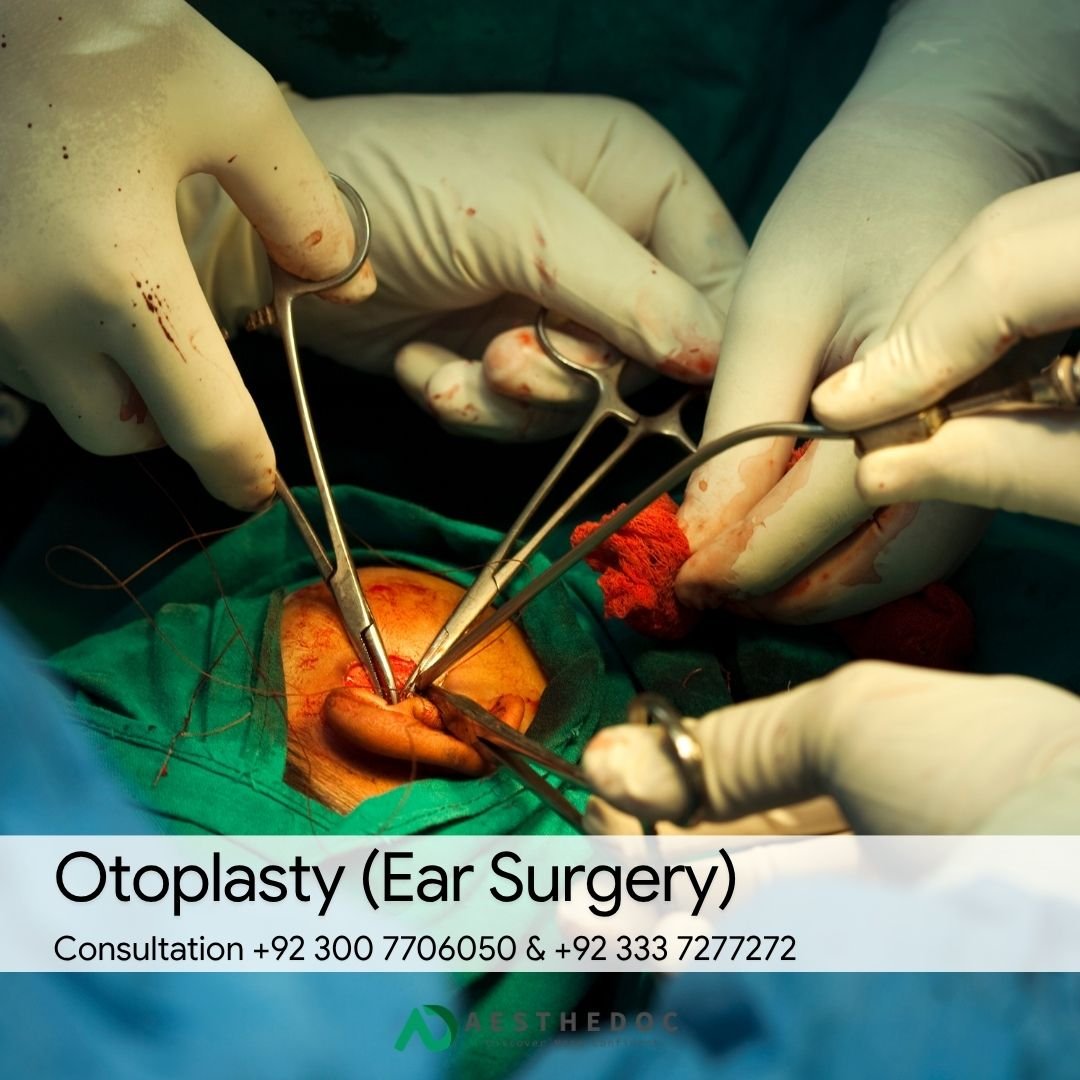
Otoplasty, commonly known as Ear Surgery, Ear Pinning Surgery, or Ear Reshaping Surgery, is a cosmetic and reconstructive surgical procedure performed to improve the shape, position, size, or symmetry of the ears. The procedure is most commonly used to correct prominent ears that project away from the head, but it can also address congenital ear deformities, stretched earlobes, torn earlobes, ear asymmetry, and other aesthetic concerns.
Although prominent ears do not usually affect hearing, they can have a significant impact on self-confidence and emotional well-being. Many children, teenagers, and adults seek Otoplasty because they feel self-conscious about their ears or have experienced teasing or bullying. Modern surgical techniques aim to create ears that appear natural, balanced, and proportionate to the rest of the face.
Unlike temporary cosmetic solutions, Otoplasty provides long-lasting structural correction by reshaping the ear cartilage and repositioning the ears closer to the head while preserving their natural contours.
Otoplasty can improve:
- Prominent ears
- Protruding ears
- Ear asymmetry
- Congenital ear deformities
- Misshapen ears
- Large ears (Macrotia)
- Torn earlobes
- Stretched earlobes
- Deformed ear cartilage
- Cosmetic appearance of the ears
Many patients combine Otoplasty with other facial cosmetic procedures such as Rhinoplasty, Blepharoplasty, Facelift, or Chin Augmentation to achieve overall facial harmony.
At Aesthedoc Clinic, Otoplasty is performed by experienced Plastic, Reconstructive and Cosmetic Surgery Specialists using modern surgical techniques that prioritize patient safety, natural-looking results, and preservation of normal ear anatomy.
Whether your concern is prominent ears, asymmetry, or a congenital ear shape difference, Otoplasty may help improve facial balance and confidence.
What is Otoplasty?
Otoplasty is a surgical procedure designed to improve the appearance and position of the external ears.
The surgery may involve:
- Repositioning the ears closer to the head
- Reshaping ear cartilage
- Correcting asymmetry
- Reducing ear size
- Repairing damaged earlobes
- Correcting congenital ear deformities
The objective is to create ears that appear symmetrical, proportional, and natural while preserving normal hearing and ear function.
Ear Anatomy
Understanding ear anatomy is essential for successful Otoplasty.
The external ear consists of several important structures, including:
- Helix
- Antihelix
- Concha
- Tragus
- Antitragus
- Lobule (earlobe)
- External auditory canal
- Auricular cartilage
- Ear skin
- Blood vessels
- Sensory nerves
The ear cartilage provides structure and flexibility, allowing the surgeon to reshape the ear while maintaining a natural appearance.
Understanding Ear Shape and Development
The shape of the ears is determined by genetics and cartilage development during fetal growth.
By approximately 5–6 years of age, the ears have reached nearly their adult size, making this an appropriate age for Otoplasty in selected children.
Common causes of prominent ears include:
- Underdeveloped antihelical fold
- Enlarged conchal bowl
- Combination of both
- Congenital cartilage differences
- Trauma
- Previous surgery
Otoplasty addresses these structural differences rather than simply tightening the skin.
Why is Otoplasty Performed?
Patients choose Ear Surgery for various cosmetic and reconstructive reasons.
Common concerns include:
- Prominent ears
- Ears that stick out
- Uneven ears
- Large ears
- Congenital deformities
- Torn earlobes
- Stretched earlobes
- Trauma-related deformities
- Cosmetic concerns
- Improved facial symmetry
The goal is to improve appearance while maintaining normal ear function.
Conditions Otoplasty Can Treat
Prominent Ears
The most common reason for Otoplasty is correction of ears that project excessively from the sides of the head.
Surgery reshapes the cartilage and repositions the ears closer to the scalp for a more balanced appearance.
Ear Asymmetry
Some people naturally have one ear positioned differently from the other.
Otoplasty can improve ear symmetry while respecting normal anatomical variation.
Large Ears (Macrotia)
Macrotia refers to ears that are disproportionately large compared to the face.
Selected surgical techniques can reduce ear size while preserving natural proportions.
Congenital Ear Deformities
Some individuals are born with structural abnormalities affecting the external ear.
Depending on the specific condition, reconstructive techniques may improve ear shape and appearance.
Torn Earlobes
Heavy earrings, accidental trauma, or jewelry injuries may split the earlobe.
Earlobe repair restores the natural contour and allows future ear piercing after appropriate healing.
Stretched Earlobes
Large gauge earrings may permanently stretch the earlobes.
Surgical repair can reconstruct the earlobe and restore a more natural appearance.
Post-Traumatic Ear Deformities
Injuries to the ear may alter its shape.
Reconstructive Otoplasty can help restore symmetry and contour where appropriate.
Benefits of Otoplasty
Potential benefits include:
- Improved ear position
- Better facial balance
- Increased ear symmetry
- Natural-looking ear contours
- Correction of prominent ears
- Improved confidence
- Long-lasting results
- Minimal visible scarring
- Permanent cartilage reshaping
- Enhanced overall facial harmony
The goal is to improve the appearance of the ears while maintaining a natural, proportionate look.
Who is a Good Candidate?
You may be a suitable candidate if you:
- Have prominent ears
- Have asymmetrical ears
- Are bothered by ear size or shape
- Have torn or stretched earlobes
- Are in good general health
- Have realistic expectations
- Do not smoke or are willing to stop before surgery
Children may also be candidates once ear growth is sufficiently developed, following appropriate evaluation.
Who May Not Be a Suitable Candidate?
Otoplasty may not be recommended for individuals with:
- Active ear infections
- Uncontrolled medical conditions
- Untreated bleeding disorders
- Poor wound healing
- Unrealistic expectations
- Ongoing smoking that significantly impairs healing
A consultation is necessary to determine whether surgery is appropriate.
Types of Otoplasty
Different surgical techniques are selected depending on the patient’s anatomy and treatment goals.
Ear Pinning Surgery
This is the most commonly performed Otoplasty procedure.
The surgeon reshapes the cartilage and repositions the ears closer to the head.
Suitable for:
- Prominent ears
- Excessive ear projection
- Poorly developed antihelical fold
Ear Reshaping Surgery
Cartilage is reshaped to improve the contour of the ear while maintaining a natural appearance.
This may involve cartilage scoring, folding, or suturing techniques.
Ear Reduction Surgery
Patients with unusually large ears may benefit from reduction Otoplasty.
The procedure decreases ear size while preserving normal anatomical landmarks.
Earlobe Repair
This procedure corrects:
- Torn earlobes
- Split earlobes
- Stretched piercing holes
- Gauge-related deformities
It is commonly performed under local anesthesia.
Reconstructive Otoplasty
Reconstructive procedures address congenital abnormalities or traumatic deformities.
Treatment plans vary depending on the severity and type of deformity.
Ear Pinning vs Ear Reduction
| Feature | Ear Pinning | Ear Reduction |
|---|---|---|
| Corrects Prominent Ears | ✔ | Sometimes |
| Reduces Ear Size | ✘ | ✔ |
| Improves Ear Symmetry | ✔ | ✔ |
| Reshapes Cartilage | ✔ | ✔ |
| Changes Ear Projection | ✔ | Mild |
Some patients may benefit from a combination of techniques.
Consultation and Evaluation
Every successful Otoplasty begins with a detailed consultation.
During your assessment, your specialist will evaluate:
- Ear size
- Ear position
- Cartilage strength
- Ear symmetry
- Facial proportions
- Skin quality
- Medical history
- Previous ear surgery
- Lifestyle factors
- Cosmetic goals
Clinical photographs may be taken to assist with surgical planning and documentation.
Preparing for Otoplasty Surgery
Before surgery, patients are generally advised to:
- Stop smoking at least 4–6 weeks before surgery
- Avoid aspirin and certain blood-thinning medications under medical supervision
- Complete recommended laboratory investigations
- Maintain a healthy diet
- Stay well hydrated
- Arrange transportation home after surgery
- Prepare a comfortable recovery area
- Follow fasting instructions if general anesthesia is planned
Proper preparation helps reduce surgical risks and supports a smoother recovery.
Preparing for Otoplasty Surgery
Proper preparation before Otoplasty helps improve surgical safety, optimize healing, and contribute to natural-looking results. During your consultation, your Plastic, Reconstructive and Cosmetic Surgery Specialist will carefully assess your ear anatomy, cartilage strength, skin quality, facial proportions, and treatment goals before recommending the most appropriate surgical technique.
Patients are generally advised to:
- Complete all recommended medical evaluations
- Review current medications and supplements
- Undergo necessary laboratory investigations
- Have standardized clinical photographs taken
- Stop smoking at least 4–6 weeks before surgery
- Avoid aspirin and certain blood-thinning medications under medical supervision
- Maintain a healthy, balanced diet
- Stay well hydrated
- Arrange transportation home after surgery
- Prepare a comfortable recovery area
- Follow fasting instructions if general anesthesia is planned
Carefully following your specialist’s instructions can help reduce complications and promote a smoother recovery.
Step-by-Step Otoplasty Procedure
Every patient’s ears are unique, so Otoplasty is customized according to the individual’s anatomy and cosmetic concerns. However, most procedures follow a similar sequence.
Step 1 – Anesthesia
Otoplasty may be performed under:
- Local anesthesia
- Local anesthesia with IV sedation
- General anesthesia
The choice depends on:
- Patient age
- Complexity of the surgery
- Whether additional procedures are being performed
- Patient preference
Children commonly undergo surgery under general anesthesia, while many adults are suitable candidates for local anesthesia with sedation.
Throughout the procedure, the anesthesia team monitors:
- Heart rate
- Blood pressure
- Oxygen saturation
- Breathing
- Overall patient safety
Step 2 – Surgical Markings
Before surgery begins, the surgeon carefully marks:
- Ear position
- Areas requiring cartilage reshaping
- Skin incisions
- Symmetry reference points
- Natural ear folds
These markings help ensure balanced and predictable results.
Ear Pinning Surgery Technique
Ear pinning is the most frequently performed Otoplasty procedure.
The goal is to reposition prominent ears closer to the head while preserving their natural contours.
Incision Placement
Most commonly, the incision is made behind the ear where it is generally well concealed after healing.
This approach provides access to the ear cartilage without creating a visible scar on the front of the ear.
Cartilage Exposure
The surgeon gently exposes the auricular cartilage while protecting the surrounding skin and soft tissues.
Careful tissue handling helps minimize swelling and supports proper healing.
Cartilage Reshaping Techniques
The ear’s shape is primarily determined by its cartilage. Modern Otoplasty techniques focus on reshaping rather than removing large amounts of cartilage.
Common techniques include:
Cartilage Scoring
Small, controlled scoring of the cartilage allows it to bend into a more natural shape.
This technique is particularly useful when creating or enhancing the antihelical fold.
Advantages include:
- Improved ear contour
- Natural curvature
- Long-lasting correction
Cartilage Folding
Instead of cutting the cartilage extensively, the surgeon may fold it into the desired position.
Benefits include:
- Preservation of cartilage strength
- Smooth ear contour
- Natural appearance
Permanent Cartilage Sutures
Specialized permanent sutures are commonly used to reshape the ear cartilage.
These sutures:
- Create the antihelical fold
- Reduce ear projection
- Maintain long-term correction
- Preserve natural flexibility
This technique has become one of the most widely used methods for correcting prominent ears.
Conchal Bowl Reduction
Some patients have an enlarged conchal bowl that contributes to ear prominence.
When appropriate, the surgeon may:
- Reduce cartilage bulk
- Reposition the conchal bowl closer to the head
- Improve ear projection
This is often combined with cartilage suturing techniques.
Ear Repositioning
After reshaping the cartilage, the ears are repositioned closer to the scalp.
The amount of correction is individualized based on:
- Facial proportions
- Ear symmetry
- Patient preferences
- Natural anatomical variation
The objective is to achieve ears that look balanced rather than overly flattened against the head.
Ear Reduction Surgery
Patients with unusually large ears (macrotia) may require ear reduction.
The procedure may involve:
- Removing carefully planned portions of cartilage
- Reducing excess skin when necessary
- Preserving the natural outline of the ear
- Maintaining ear symmetry
Reduction is performed conservatively to avoid altering the ear’s natural appearance.
Earlobe Repair Procedure
Earlobe repair is commonly performed for:
- Torn earlobes
- Split earlobes
- Stretched piercing holes
- Gauge-related deformities
The procedure generally involves:
- Removal of damaged tissue
- Reconstruction of the earlobe
- Layered closure with fine sutures
- Restoration of natural contour
Most earlobe repairs are performed under local anesthesia.
Patients may usually consider re-piercing after complete healing, following their specialist’s advice.
Reconstructive Otoplasty
Some patients require reconstructive procedures rather than cosmetic ear pinning.
These cases may include:
- Congenital ear deformities
- Trauma
- Previous unsuccessful ear surgery
- Cartilage defects
Treatment plans vary depending on the specific condition and reconstructive requirements.
Step 3 – Checking Ear Symmetry
Before closing the incisions, the surgeon carefully compares both ears.
The evaluation includes:
- Ear projection
- Ear height
- Ear angle
- Symmetry
- Natural contours
Minor adjustments may be made to improve balance.
Step 4 – Closing the Incisions
The incisions are closed using fine sutures.
After closure:
- Protective dressings are applied
- A supportive head bandage is placed
- Postoperative instructions are reviewed
The dressing helps protect the ears while maintaining their new position during the early stages of healing.
How Long Does Otoplasty Take?
The duration of surgery depends on the complexity of the procedure.
| Procedure | Estimated Surgical Time |
|---|---|
| Ear Pinning | 1.5–2.5 hours |
| Ear Reduction | 2–3 hours |
| Earlobe Repair | 30–60 minutes |
| Bilateral Otoplasty | 2–3 hours |
| Reconstructive Otoplasty | 3–5 hours |
Recovery After Otoplasty
Recovery varies between individuals, but most patients experience gradual improvement over several weeks.
First 24 Hours
Patients commonly experience:
- Mild discomfort
- Swelling
- Tightness
- Tenderness
- Temporary numbness
- Mild bruising
Pain is generally manageable with prescribed medication.
Days 2–7
During the first week:
- Swelling gradually begins to improve
- Bruising becomes less noticeable
- The protective dressing may be changed or removed
- Follow-up appointments are scheduled
Patients should avoid sleeping directly on their ears.
Week One
During the first week:
- Most discomfort improves
- Swelling gradually decreases
- Light walking is encouraged
- Normal daily activities can often be resumed gradually
Strenuous activities should still be avoided.
Weeks 2–4
Patients often notice:
- Improved ear position
- Better symmetry
- Less swelling
- Increased comfort
- Growing confidence in the results
Many individuals return to work or school during this period, depending on their recovery.
Months 2–6
Healing continues progressively.
Patients may notice:
- Scar maturation
- Softer ear tissues
- Stable ear position
- Resolution of residual swelling
Six to Twelve Months
By this stage:
- Final contours become more apparent
- Scars continue to soften and fade
- Ear cartilage stabilizes
- Long-term results are well established
Recovery Timeline
| Time After Surgery | Typical Recovery Progress |
|---|---|
| Day 1 | Swelling and mild discomfort |
| Week 1 | Initial healing and dressing removal |
| Week 2 | Swelling continues to improve |
| Month 1 | Most swelling resolves |
| Month 3 | Ear shape appears increasingly natural |
| Month 6 | Scar maturation continues |
| Month 12 | Final results generally visible |
Aftercare Instructions
Following postoperative instructions carefully helps optimize healing and maintain the surgical results.
Patients are generally advised to:
- Wear the recommended headband or dressing as instructed
- Sleep on their back with the head elevated
- Avoid sleeping on the ears
- Keep the incision clean and dry
- Take prescribed medications as directed
- Avoid strenuous exercise until approved
- Protect the ears from accidental trauma
- Attend all scheduled follow-up appointments
Benefits of Otoplasty
Potential benefits include:
- Improved ear position
- Better ear symmetry
- Reduced ear prominence
- More balanced facial proportions
- Permanent cartilage reshaping
- Natural-looking results
- Minimal visible scarring
- Long-lasting improvement
- Increased self-confidence
- Enhanced facial harmony
Expected Results
The primary objective of Otoplasty is to create ears that appear proportional, symmetrical, and natural.
Patients may notice:
- Ears positioned closer to the head
- Improved ear contour
- Better facial balance
- Increased confidence
- Long-lasting structural correction
Most swelling resolves over several weeks, while the final results continue to refine over the following months.
Before and After Expectations
Patients should understand that Otoplasty is designed to improve ear shape and position while preserving natural anatomy rather than creating identical ears.
Realistic expectations include:
- Improved ear symmetry
- Reduced prominence
- Better facial harmony
- Long-lasting cosmetic improvement
- Natural-looking ears that complement the rest of the face
Risks and Possible Complications of Otoplasty
Otoplasty is generally considered a safe procedure when performed by an experienced Plastic, Reconstructive and Cosmetic Surgery Specialist. However, like any surgical procedure, it carries potential risks and complications that should be discussed before surgery.
Possible complications include:
- Bleeding (hematoma)
- Infection
- Swelling
- Bruising
- Temporary pain or discomfort
- Temporary numbness of the ear
- Delayed wound healing
- Noticeable scarring
- Suture-related irritation
- Cartilage irregularities
- Ear asymmetry
- Overcorrection (ears positioned too close to the head)
- Undercorrection (residual prominence)
- Recurrence of ear prominence
- Skin contour irregularities
- Allergic reaction to dressings or medications
- Adverse reaction to anesthesia
- Rare cartilage infection (perichondritis)
- Need for revision surgery
Although complications are uncommon, careful patient selection, meticulous surgical technique, and proper postoperative care help reduce these risks.
How to Reduce the Risk of Complications
Patients can help promote a smooth recovery by:
- Choosing an experienced Plastic, Reconstructive and Cosmetic Surgery Specialist
- Following all preoperative instructions
- Stopping smoking at least 4–6 weeks before and after surgery
- Wearing the recommended protective headband
- Avoiding sleeping directly on the ears
- Avoiding contact sports until cleared by the surgeon
- Keeping incisions clean and dry
- Taking prescribed medications as directed
- Attending all scheduled follow-up appointments
- Reporting excessive swelling, redness, fever, or drainage promptly
Success Rate of Otoplasty
Otoplasty has a high success rate and is associated with excellent patient satisfaction when performed for appropriate candidates.
Several factors influence long-term outcomes, including:
- Ear cartilage strength
- Surgical technique
- Healing characteristics
- Patient age
- Compliance with postoperative instructions
- Protection of the ears during healing
- Smoking status
- General health
The objective is to create ears that appear balanced, natural, and proportionate to the face while maintaining normal ear function.
Estimated Otoplasty Cost in Pakistan
The cost of Otoplasty varies depending on the complexity of the procedure, anesthesia, hospital charges, and whether cosmetic or reconstructive surgery is required.
Estimated Price Table
| Procedure | Estimated Cost (PKR) |
|---|---|
| Consultation | 3,000 – 10,000 |
| Ear Pinning (One Ear) | 120,000 – 220,000 |
| Bilateral Otoplasty | 220,000 – 450,000 |
| Ear Reduction Surgery | 250,000 – 500,000 |
| Earlobe Repair | 25,000 – 75,000 |
| Stretched Earlobe Repair | 35,000 – 90,000 |
| Complex Reconstructive Otoplasty | 400,000 – 900,000 |
Disclaimer: These prices are approximate estimates provided for informational purposes only. Actual costs vary depending on the patient’s anatomy, surgical complexity, investigations, anesthesia, hospital charges, and individualized treatment planning.
Estimated Otoplasty Cost Around the World
| Country | Estimated Cost |
|---|---|
| 🇵🇰 Pakistan | USD 800 – 2,500 |
| 🇮🇳 India | USD 1,000 – 2,500 |
| 🇹🇷 Turkey | USD 1,500 – 3,500 |
| 🇹🇭 Thailand | USD 1,800 – 4,000 |
| 🇲🇾 Malaysia | USD 2,000 – 4,000 |
| 🇦🇪 UAE (Dubai) | USD 3,000 – 6,000 |
| 🇰🇷 South Korea | USD 3,000 – 6,500 |
| 🇬🇧 United Kingdom | USD 5,000 – 8,000 |
| 🇨🇦 Canada | USD 5,000 – 8,500 |
| 🇺🇸 United States | USD 6,000 – 10,000+ |
Frequently Asked Questions (FAQs)
What is Otoplasty?
Otoplasty is a surgical procedure that reshapes or repositions the ears to improve their appearance and facial balance.
What age is suitable for Otoplasty?
Children may be considered for surgery once the ears have reached most of their adult size, typically around 5–6 years of age. Adults can undergo Otoplasty at almost any age if they are suitable candidates.
Does Otoplasty affect hearing?
No. Otoplasty involves the external ear and does not normally affect hearing because it does not alter the structures responsible for hearing.
Is Ear Pinning permanent?
Yes. The structural changes made during Otoplasty are generally intended to be long-lasting, although natural aging and rare recurrence can occur.
Is Otoplasty painful?
Most patients experience mild to moderate discomfort, which is usually well controlled with prescribed pain medication.
How long does surgery take?
Most cosmetic Otoplasty procedures take 1.5 to 3 hours, depending on the technique and whether one or both ears are treated.
How long is recovery?
Many patients return to work or school within 1–2 weeks, although complete healing continues over several months.
Will there be visible scars?
Incisions are usually placed behind the ears where scars are generally well concealed after healing.
Will I need to wear a headband?
Many patients are advised to wear a protective headband during the early recovery period, particularly while sleeping, according to their specialist’s recommendations.
Can both ears be treated at the same time?
Yes. Bilateral Otoplasty is commonly performed to improve symmetry and maintain balanced results.
Can Otoplasty correct one ear only?
Yes. Surgery can be performed on one ear if only one side requires correction.
Can adults undergo Otoplasty?
Yes. Adults commonly undergo Otoplasty with excellent outcomes.
Can Otoplasty repair torn earlobes?
Yes. Earlobe repair is a common procedure that restores the appearance of split or torn earlobes.
Can stretched earlobes be repaired?
Yes. Surgical repair can reconstruct stretched earlobes caused by large-gauge earrings or other trauma.
When can I return to exercise?
Light walking is encouraged soon after surgery. More strenuous activities should only be resumed after approval from your specialist.
When can I sleep on my side?
Patients are usually advised to avoid sleeping directly on their ears until healing has progressed sufficiently and their specialist confirms it is safe.
Are the results natural-looking?
Modern Otoplasty techniques aim to create ears that appear natural and proportionate rather than excessively flattened against the head.
Will my ears look identical?
No. Natural ears are rarely perfectly symmetrical. The goal is improved balance and harmony rather than absolute symmetry.
Can Otoplasty be combined with other procedures?
Yes. Common combination procedures include:
- Rhinoplasty
- Chin Augmentation
- Blepharoplasty
- Facelift
- Facial Fat Grafting
Who is the ideal candidate?
Healthy adults or children with prominent ears, ear asymmetry, or cosmetic ear concerns who have realistic expectations may be suitable candidates.
Why Choose Aesthedoc Clinic?
At Aesthedoc Clinic, Otoplasty is performed using modern surgical techniques that focus on improving ear shape, position, and facial harmony while preserving natural ear anatomy. Our experienced Plastic, Reconstructive and Cosmetic Surgery Specialists provide personalized treatment plans tailored to each patient’s unique anatomy and cosmetic goals.
Our approach includes:
- Comprehensive ear assessment
- Personalized surgical planning
- Advanced cartilage reshaping techniques
- Ear pinning and ear reduction procedures
- Earlobe repair and reconstruction
- Evidence-based surgical care
- Natural-looking aesthetic outcomes
- Modern surgical facilities
- Comprehensive postoperative support
- Patient safety as a priority
Whether your concerns involve prominent ears, ear asymmetry, torn earlobes, or congenital ear differences, our team is committed to providing safe, individualized, and natural-looking results.
Related Procedures
Patients interested in Otoplasty may also wish to learn about:
- Rhinoplasty
- Chin Augmentation
- Blepharoplasty
- Brow Lift
- Facelift
- Neck Lift
- Buccal Fat Removal
- Lip Lift
- Facial Fat Grafting
- Facial Cosmetic Surgery
Conclusion
Otoplasty is an effective cosmetic and reconstructive procedure for improving the appearance, position, and symmetry of the ears. By reshaping cartilage and repositioning the ears closer to the head when appropriate, the procedure can enhance facial balance and improve self-confidence while preserving normal ear function.
A personalized consultation is essential to determine the most appropriate surgical approach based on your anatomy, treatment goals, and overall health.
Book Your Otoplasty Consultation at Aesthedoc Clinic
If you are considering Otoplasty (Ear Surgery), Aesthedoc Clinic offers comprehensive consultations with experienced Plastic, Reconstructive and Cosmetic Surgery Specialists who provide individualized treatment plans for cosmetic and reconstructive ear procedures.
Whether your concerns include prominent ears, asymmetry, torn earlobes, stretched earlobes, or ear shape differences, our team is committed to delivering safe, evidence-based care with natural-looking results.
Schedule Your Consultation Today
Phone: 0333-7277272 | 0300-7706050
Email: info@aesthedoc.com
Book your confidential consultation with Aesthedoc Clinic to discuss your ear surgery goals and explore the treatment options best suited to your needs.