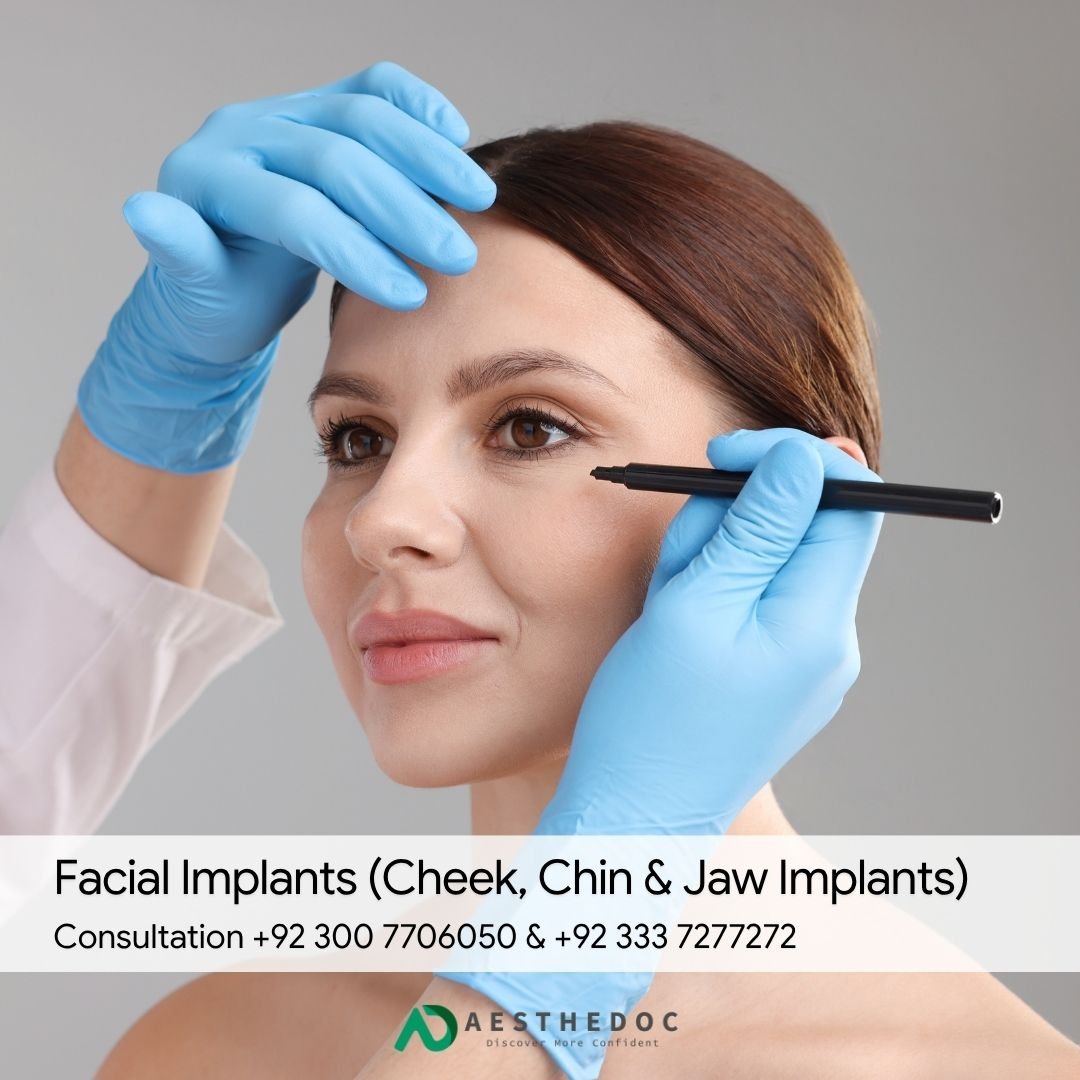
Facial Implant Surgery is a cosmetic facial procedure designed to enhance facial contours, improve structural balance, and create stronger facial definition through the placement of biocompatible implants. Common facial implants include Cheek Implants (Malar Implants), Chin Implants (Mentoplasty Implants), and Jaw Implants (Mandibular Angle Implants).
Some individuals naturally have underdeveloped facial bones, while others experience age-related loss of facial support or changes following trauma. Facial Implant Surgery offers a permanent solution for enhancing facial proportions by increasing projection and improving harmony between the forehead, nose, cheeks, lips, chin, and jawline.
Unlike injectable fillers, which provide temporary volume, facial implants offer long-term structural enhancement and are particularly suitable for patients seeking permanent facial contouring.
Facial Implant Surgery may improve:
- Flat cheeks
- Weak chin
- Poor jawline definition
- Facial asymmetry
- Underdeveloped facial bones
- Loss of facial projection
- Congenital facial imbalance
- Facial contour deficiencies
- Post-traumatic facial deformities
- Overall facial harmony
Many patients combine Facial Implant Surgery with:
- Rhinoplasty
- Facelift
- Neck Lift
- Facial Fat Grafting
- Lip Lift
- Buccal Fat Removal
- Blepharoplasty
- Forehead Reduction Surgery
At Aesthedoc Clinic, Facial Implant Surgery is performed by experienced Plastic, Reconstructive and Cosmetic Surgery Specialists using advanced surgical planning and modern implant materials to achieve balanced, natural-looking facial enhancement. Every treatment plan is customized according to the patient’s facial anatomy, skeletal proportions, and cosmetic goals.
What are Facial Implants?
Facial implants are specially designed, biocompatible medical devices placed over facial bones to improve contour, projection, and symmetry. They are available in different shapes and sizes to address specific anatomical concerns.
The primary goals of Facial Implant Surgery include:
- Enhancing facial contours
- Improving facial balance
- Increasing skeletal projection
- Strengthening weak facial features
- Restoring facial symmetry
- Achieving long-lasting aesthetic enhancement
Modern implants are designed to integrate well with surrounding tissues while maintaining a natural appearance.
Facial Anatomy
A comprehensive understanding of facial anatomy is essential for successful Facial Implant Surgery.
Important anatomical structures include:
- Cheekbones (zygoma)
- Maxilla
- Mandible
- Chin (mentum)
- Mandibular angle
- Facial muscles
- Facial nerve branches
- Facial arteries and veins
- Soft tissue envelope
- Skin and subcutaneous fat
Each structure contributes to facial shape, expression, and balance. Careful surgical planning helps achieve harmonious enhancement while preserving normal function.
Understanding Facial Balance
Facial attractiveness is influenced by the relationship between different facial structures rather than the appearance of a single feature.
Important proportions include:
- Forehead to chin ratio
- Midface projection
- Chin projection
- Jawline definition
- Facial width
- Cheek prominence
- Nose-to-chin relationship
- Facial symmetry
Facial implants are designed to improve these relationships while maintaining natural facial harmony.
Why is Facial Implant Surgery Performed?
Patients choose Facial Implant Surgery for various cosmetic and reconstructive reasons.
Common concerns include:
- Weak chin
- Flat cheekbones
- Poor jawline definition
- Facial asymmetry
- Congenital skeletal deficiencies
- Age-related facial volume loss
- Desire for stronger facial contours
- Improved facial profile
The goal is to create balanced facial proportions without producing an exaggerated appearance.
Conditions Facial Implant Surgery Can Improve
Weak Chin
A recessed chin may affect facial balance and profile. Chin implants can improve projection and lower facial harmony.
Flat Cheekbones
Cheek implants enhance midface projection, creating more defined and youthful facial contours.
Poor Jawline Definition
Jaw implants can improve mandibular angle projection and create a stronger jawline.
Facial Asymmetry
Selected patients with mild skeletal asymmetry may benefit from customized implant placement.
Congenital Facial Deficiencies
Some individuals are born with underdeveloped facial bones that can be improved through implant surgery.
Age-Related Volume Loss
In selected patients, facial implants may restore structural support lost with aging. Depending on the clinical situation, facial fat grafting or a facelift may also be considered.
Post-Traumatic Facial Deformities
Facial implants may help restore contour and improve symmetry in carefully selected patients after facial injuries.
Benefits of Facial Implant Surgery
Potential benefits include:
- Permanent facial enhancement
- Improved facial proportions
- Better profile balance
- Stronger jawline
- Enhanced cheek projection
- Improved chin definition
- Increased facial symmetry
- Long-lasting results
- Customized implant selection
- Increased self-confidence
Who is a Good Candidate?
You may be a suitable candidate if you:
- Have underdeveloped facial contours
- Desire permanent facial enhancement
- Are in good general health
- Have realistic cosmetic expectations
- Have stable facial bone structure
- Do not smoke or are willing to stop before surgery
A detailed consultation and facial analysis are essential to determine whether Facial Implant Surgery is appropriate for your needs.
Who May Not Be a Suitable Candidate?
Facial Implant Surgery may not be recommended for individuals with:
- Active facial infections
- Poor wound healing
- Uncontrolled medical conditions
- Severe untreated dental infections (for certain implant approaches)
- Unrealistic cosmetic expectations
- Significant smoking that may impair healing
Alternative treatment options may be discussed depending on the patient’s anatomy and goals.
Types of Facial Implants
Cheek Implants (Malar Implants)
Cheek implants increase projection over the cheekbones to create improved midface contour and facial definition.
They may improve:
- Flat cheeks
- Midface deficiency
- Facial aging
- Poor cheek projection
Chin Implants
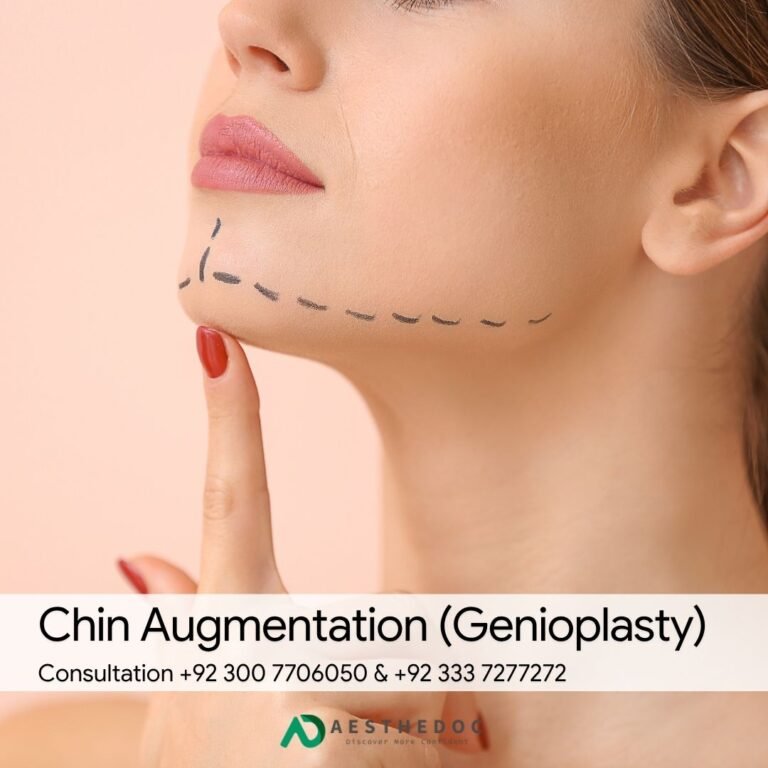
Chin implants improve projection of the lower face and help balance the facial profile.
They are commonly recommended for patients with:
- Receding chin
- Weak profile
- Facial imbalance
- Mild chin deficiency
Jaw Implants
Jaw implants enhance the mandibular angle and jawline, creating stronger lower facial definition.
These implants are commonly chosen by patients seeking:
- Better jawline definition
- Improved facial width
- Enhanced lower facial contour
Combination Facial Implants
Some patients benefit from combining two or more implant types, such as:
- Cheek + Chin Implants
- Chin + Jaw Implants
- Cheek + Jaw Implants
- Full Facial Implant Augmentation
The combination depends on each patient’s facial anatomy and desired outcome.
Facial Implants vs Facial Fat Grafting vs Dermal Fillers
| Feature | Facial Implants | Facial Fat Grafting | Dermal Fillers |
|---|---|---|---|
| Permanent Structural Enhancement | ✔ | Long-lasting | ✘ |
| Uses Patient’s Own Tissue | ✘ | ✔ | ✘ |
| Non-Surgical | ✘ | ✘ | ✔ |
| Immediate Results | ✔ | ✔ | ✔ |
| Repeat Treatments Required | Rare | Occasionally | ✔ |
| Skeletal Projection | ✔ | Limited | Limited |
| Suitable for Large Structural Changes | ✔ | Limited | ✘ |
The most appropriate treatment depends on the patient’s anatomy, aesthetic goals, and preference for permanent versus temporary enhancement.
Consultation and Evaluation
Every successful Facial Implant procedure begins with a comprehensive facial assessment.
During your consultation, your specialist will evaluate:
- Facial symmetry
- Skeletal proportions
- Chin projection
- Cheek prominence
- Jawline definition
- Skin quality
- Dental occlusion (when relevant)
- Medical history
- Cosmetic goals
Clinical photographs and facial measurements help guide individualized surgical planning and implant selection.
Preparing for Facial Implant Surgery
Before surgery, patients are generally advised to:
- Stop smoking at least 4–6 weeks before surgery
- Avoid aspirin and certain blood-thinning medications under medical supervision
- Complete recommended laboratory investigations
- Maintain excellent oral hygiene when intraoral incisions are planned
- Stay well hydrated
- Eat a balanced diet
- Arrange transportation home after surgery
- Follow fasting instructions if general anesthesia is planned
- Carefully follow all personalized preoperative instructions provided by the surgical team
Proper preparation supports healing, minimizes complications, and contributes to optimal long-term results.\
Preparing for Facial Implant Surgery
Successful Facial Implant Surgery begins with careful preparation. During your consultation, your Plastic, Reconstructive and Cosmetic Surgery Specialist will evaluate your facial proportions, bone structure, skin quality, dental health (when relevant), and aesthetic goals to develop a personalized treatment plan.
Patients are generally advised to:
- Complete all recommended medical evaluations
- Discuss current medications and supplements
- Undergo laboratory investigations if required
- Stop smoking at least 4–6 weeks before surgery
- Avoid aspirin and certain blood-thinning medications under medical supervision
- Maintain excellent oral hygiene, especially if intraoral incisions are planned
- Eat a healthy, balanced diet
- Stay well hydrated
- Arrange transportation home after surgery
- Follow fasting instructions if general anesthesia is planned
- Carefully follow all preoperative instructions provided by the surgical team
Good preparation helps reduce complications and supports optimal healing.
Step-by-Step Facial Implant Surgery Procedure
Although every procedure is customized, Facial Implant Surgery generally follows a structured sequence.
Step 1 – Anesthesia
Facial Implant Surgery is usually performed under:
- General anesthesia
- Local anesthesia with intravenous (IV) sedation (selected cases)
The choice depends on:
- Number of implants
- Surgical complexity
- Combination procedures
- Patient preference
- Overall medical condition
Throughout surgery, the anesthesia team continuously monitors:
- Heart rate
- Blood pressure
- Oxygen saturation
- Respiratory status
- Overall patient safety
Step 2 – Surgical Planning
Before making any incision, the surgeon confirms:
- Implant size
- Implant shape
- Implant symmetry
- Facial measurements
- Implant position
- Desired projection
Every implant is selected according to the patient’s unique facial anatomy rather than a standard size.
Step 3 – Surgical Markings
Precise markings are made before surgery to identify:
- Facial landmarks
- Midline
- Implant location
- Areas requiring augmentation
- Symmetry reference points
These markings help achieve balanced facial enhancement.
Step 4 – Incision Placement
The incision depends on the implant being inserted.
Cheek Implant Incisions
Usually placed:
- Inside the upper mouth (intraoral)
- Occasionally beneath the lower eyelid in selected reconstructive cases
The intraoral approach avoids visible facial scars.
Chin Implant Incisions
The incision may be made:
- Inside the mouth
- Beneath the chin within a natural skin crease
Both approaches are commonly used depending on the patient’s anatomy and surgical goals.
Jaw Implant Incisions
Jaw implants are usually inserted through:
- Small incisions inside the mouth
This technique generally avoids external scars.
Step 5 – Creating the Implant Pocket
A carefully sized pocket is created over the facial bone.
The pocket must be:
- Precisely positioned
- Symmetrical
- Stable
- Large enough for the implant
- Small enough to prevent movement
Proper pocket creation is one of the most important factors influencing long-term implant stability.
Step 6 – Implant Placement
The selected implant is gently inserted into the prepared pocket.
Common implant materials include:
- Medical-grade solid silicone
- Porous polyethylene
- Other FDA-approved biocompatible materials
The implant is positioned to provide natural enhancement while maintaining facial balance.
Step 7 – Implant Position Verification
Before closure, the surgeon evaluates:
- Facial symmetry
- Implant projection
- Contour
- Position
- Stability
Minor adjustments are made if necessary to achieve optimal cosmetic results.
Step 8 – Implant Fixation
Depending on the implant type and location, fixation may include:
- Secure tissue pocket placement
- Small titanium screws (selected cases)
- Natural tissue support
Secure fixation reduces the risk of implant movement after surgery.
Step 9 – Wound Closure
The incisions are carefully closed using fine sutures.
The objectives include:
- Proper healing
- Reduced infection risk
- Minimal scarring
- Long-term implant stability
Most intraoral sutures dissolve naturally over time.
Step 10 – Recovery Room
After surgery:
- Vital signs are monitored
- Swelling is assessed
- Pain is controlled
- Postoperative instructions are reviewed
Most patients return home the same day unless additional procedures require overnight observation.
Combination Procedures
Facial Implant Surgery is frequently combined with other facial cosmetic procedures to create balanced facial enhancement.
Common combinations include:
- Chin Implant + Rhinoplasty
- Chin Implant + Neck Liposuction
- Cheek Implants + Facelift
- Cheek Implants + Facial Fat Grafting
- Jaw Implants + Chin Implant
- Jaw Implants + Neck Lift
- Facial Implants + Blepharoplasty
- Facial Implants + Lip Lift
- Facial Implants + Forehead Reduction Surgery
Combining procedures may improve overall facial harmony while reducing the need for multiple recovery periods.
How Long Does Facial Implant Surgery Take?
The duration depends on the number of implants and whether additional procedures are performed.
| Procedure | Estimated Surgical Time |
|---|---|
| Chin Implant | 45–90 minutes |
| Cheek Implants | 1–2 hours |
| Jaw Implants | 2–3 hours |
| Chin + Jaw Implants | 3–4 hours |
| Full Facial Implant Augmentation | 4–6 hours |
| Facial Implants + Rhinoplasty | 5–7 hours |
Recovery After Facial Implant Surgery
Recovery varies depending on the implant type and number of implants placed.
First 24 Hours
Patients commonly experience:
- Mild to moderate swelling
- Facial tightness
- Mild discomfort
- Bruising
- Temporary numbness
Cold compresses may be recommended to reduce swelling.
Days 2–7
During the first week:
- Swelling reaches its peak
- Bruising becomes more noticeable before improving
- Soft foods may be recommended if intraoral incisions were used
- Oral hygiene becomes especially important
Patients usually attend their first postoperative review during this period.
Week Two
By the second week:
- Most bruising improves
- Swelling begins to decrease significantly
- Daily activities gradually resume
- Facial contours become more visible
Many patients return to office-based work during this stage.
Weeks 3–6
Healing continues with:
- Continued reduction in swelling
- Improved facial comfort
- Better implant integration
- More natural facial appearance
Most patients resume exercise after medical clearance.
Months 2–6
During this phase:
- Remaining swelling gradually resolves
- Facial tissues soften
- Final implant position stabilizes
- Facial definition becomes increasingly natural
Six to Twelve Months
By this stage:
- Healing is largely complete
- Final facial contours are established
- Scars continue to mature
- Long-term cosmetic results become fully apparent
Recovery Timeline
| Time After Surgery | Typical Recovery Progress |
|---|---|
| Day 1 | Swelling, tightness, mild discomfort |
| Week 1 | Initial healing, peak swelling |
| Week 2 | Significant improvement in bruising and swelling |
| Month 1 | Facial contours becoming more defined |
| Month 3 | Continued tissue adaptation |
| Month 6 | Final contour becoming established |
| Month 12 | Long-term cosmetic outcome generally achieved |
Aftercare Instructions
Proper postoperative care contributes to successful healing and implant stability.
Patients are generally advised to:
- Sleep with the head elevated
- Apply cold compresses if recommended
- Take prescribed medications exactly as directed
- Complete the prescribed antibiotic course if applicable
- Maintain excellent oral hygiene after intraoral surgery
- Eat soft foods during the initial recovery period
- Avoid smoking throughout healing
- Avoid strenuous exercise until medically cleared
- Attend all follow-up appointments
- Contact the clinic if increasing swelling, fever, severe pain, or drainage develops
Benefits of Facial Implant Surgery
Potential benefits include:
- Permanent facial enhancement
- Improved facial balance
- Stronger jawline definition
- Enhanced cheek projection
- Better chin projection
- Improved facial symmetry
- More defined facial profile
- Long-lasting structural support
- Customized treatment for individual anatomy
- Increased self-confidence
Expected Results
The primary goal of Facial Implant Surgery is to enhance facial structure while preserving a natural appearance.
Patients may notice:
- Improved facial definition
- Better facial proportions
- Enhanced jawline
- Increased cheek prominence
- Improved chin projection
- Better profile balance
- More youthful facial contours
Although improvement is visible immediately after surgery, swelling temporarily obscures the final result.
Before and After Expectations
Patients should understand that:
- Swelling and bruising are temporary.
- Mild numbness is common during early healing.
- Facial tissues gradually adapt to the implants.
- Final results become more refined as swelling resolves.
- Most patients appreciate their final appearance between 3 and 12 months after surgery.
The goal is to achieve balanced, natural-looking facial enhancement that complements the patient’s unique anatomy rather than creating an artificial or exaggerated appearance.
Risks and Possible Complications of Facial Implant Surgery
Facial Implant Surgery is considered a safe and predictable cosmetic procedure when performed by an experienced Plastic, Reconstructive and Cosmetic Surgery Specialist. However, as with any surgical procedure, there are potential risks and complications that patients should understand before proceeding.
Possible complications include:
- Bleeding (hematoma)
- Infection
- Swelling
- Bruising
- Temporary pain or discomfort
- Temporary numbness
- Delayed wound healing
- Implant displacement or movement
- Implant malposition
- Implant rotation
- Implant visibility in patients with thin soft tissue
- Implant asymmetry
- Bone resorption around the implant (rare)
- Capsular formation around the implant
- Injury to nearby nerves (rare)
- Temporary weakness of facial muscles (rare)
- Injury to blood vessels (rare)
- Salivary gland injury (rare)
- Allergic reaction to medications or anesthesia
- Unsatisfactory cosmetic outcome
- Need for implant revision or replacement
- Need for implant removal (uncommon)
Most complications are uncommon and can often be minimized through careful patient selection, meticulous surgical planning, and proper postoperative care.
How to Reduce the Risk of Complications
Patients can help reduce surgical risks by:
- Choosing an experienced Plastic, Reconstructive and Cosmetic Surgery Specialist
- Following all preoperative and postoperative instructions
- Stopping smoking at least 4–6 weeks before and after surgery
- Maintaining excellent oral hygiene if intraoral incisions are used
- Taking prescribed medications exactly as directed
- Avoiding strenuous physical activity during recovery
- Sleeping with the head elevated during the early healing phase
- Attending all scheduled follow-up appointments
- Reporting increasing swelling, fever, drainage, or severe pain immediately
Success Rate of Facial Implant Surgery
Facial Implant Surgery has a high patient satisfaction rate when implant selection and placement are tailored to the patient’s facial anatomy.
Long-term success depends on:
- Appropriate implant selection
- Accurate surgical planning
- Implant stability
- Facial symmetry
- Individual healing
- Good overall health
- Compliance with postoperative care
Because modern facial implants are manufactured from biocompatible materials, they are generally well tolerated and designed for long-term use.
Estimated Facial Implant Surgery Cost in Pakistan
The cost varies according to the implant type, number of implants, surgical complexity, anesthesia, hospital charges, and whether additional facial procedures are performed.
Estimated Price Table
| Procedure | Estimated Cost (PKR) |
|---|---|
| Consultation | 3,000 – 10,000 |
| Chin Implant Surgery | 250,000 – 500,000 |
| Cheek Implant Surgery | 300,000 – 600,000 |
| Jaw Implant Surgery | 400,000 – 800,000 |
| Chin + Jaw Implants | 650,000 – 1,200,000 |
| Full Facial Implant Augmentation | 900,000 – 1,800,000 |
| Facial Implants + Rhinoplasty | 900,000 – 2,000,000 |
Disclaimer: These prices are approximate estimates provided for educational purposes only. Actual treatment costs vary depending on the patient’s anatomy, implant selection, anesthesia, investigations, hospital charges, and individualized surgical planning.
Estimated Facial Implant Surgery Cost Around the World
| Country | Estimated Cost |
|---|---|
| 🇵🇰 Pakistan | USD 2,000 – 7,000 |
| 🇮🇳 India | USD 2,500 – 6,000 |
| 🇹🇷 Turkey | USD 3,500 – 8,000 |
| 🇹🇭 Thailand | USD 4,000 – 9,000 |
| 🇲🇾 Malaysia | USD 4,500 – 9,500 |
| 🇦🇪 UAE (Dubai) | USD 6,000 – 12,000 |
| 🇰🇷 South Korea | USD 6,500 – 12,000 |
| 🇬🇧 United Kingdom | USD 8,000 – 15,000 |
| 🇨🇦 Canada | USD 9,000 – 16,000 |
| 🇺🇸 United States | USD 10,000 – 20,000+ |
Frequently Asked Questions (FAQs)
What are facial implants?
Facial implants are biocompatible medical devices placed over facial bones to improve facial contour, projection, and symmetry.
Are facial implants permanent?
Yes. Facial implants are designed as long-term implants and generally do not require routine replacement unless complications occur or aesthetic goals change.
What materials are facial implants made from?
Common materials include medical-grade silicone and porous polyethylene, both of which are widely used in facial reconstructive and cosmetic surgery.
Can facial implants be removed?
Yes. Facial implants can usually be removed or replaced if medically necessary or if the patient desires a change in appearance.
Will facial implants feel natural?
After healing is complete, most patients report that the implants feel like a natural part of their facial structure.
Can people tell I have facial implants?
When properly planned and positioned, facial implants are intended to enhance natural facial proportions rather than create an artificial appearance.
Which facial implant is most popular?
Chin implants are among the most commonly performed facial implant procedures, followed by cheek implants.
How long does surgery take?
Depending on the number of implants, surgery generally takes between 45 minutes and 6 hours.
Are facial implants painful?
Mild to moderate discomfort is expected after surgery and is usually controlled with prescribed medications.
When can I return to work?
Many patients return to office-based work within 7–14 days, depending on the extent of surgery and their recovery.
How long does swelling last?
Most swelling improves within 2–4 weeks, although subtle swelling may continue to improve over several months.
Can I exercise after surgery?
Light walking is encouraged soon after surgery. More strenuous exercise should only be resumed after approval from your specialist.
Will facial implants affect my smile?
Properly positioned implants are not intended to interfere with normal facial movement or smiling after healing.
Can facial implants improve facial asymmetry?
Yes. Mild to moderate facial asymmetry may be improved through individualized implant selection and placement.
Can facial implants be combined with Rhinoplasty?
Yes. Combining facial implants with Rhinoplasty is common and can improve overall facial balance.
Can facial implants replace dermal fillers?
Facial implants provide permanent structural enhancement, whereas dermal fillers offer temporary soft-tissue volume. The appropriate treatment depends on the patient’s anatomy and goals.
Can I undergo MRI scans with facial implants?
Most modern facial implants are MRI-compatible, but patients should inform healthcare providers about any implanted medical devices before imaging studies.
Will I have visible scars?
Many facial implant procedures use intraoral incisions, which avoid visible facial scars. When external incisions are used, they are typically placed within natural skin creases.
Am I a good candidate?
Healthy adults with underdeveloped facial contours, realistic expectations, and a desire for permanent facial enhancement may be suitable candidates following a comprehensive consultation.
How long do the results last?
Facial implants are intended to provide long-term structural enhancement and generally remain in place permanently unless removed or revised.
Why Choose Aesthedoc Clinic?
At Aesthedoc Clinic, Facial Implant Surgery is performed using modern surgical techniques and high-quality implant materials to enhance facial balance while preserving a natural appearance. Our experienced Plastic, Reconstructive and Cosmetic Surgery Specialists develop individualized treatment plans based on detailed facial analysis, skeletal proportions, and each patient’s aesthetic goals.
Our approach includes:
- Comprehensive facial assessment
- Personalized implant selection
- Advanced surgical planning
- Natural-looking facial enhancement
- Modern surgical facilities
- Evidence-based treatment protocols
- Comprehensive postoperative care
- Long-term follow-up
- Patient safety as our highest priority
Whether you are seeking improved chin projection, enhanced cheek contours, a stronger jawline, or overall facial balance, our team is committed to delivering safe, customized treatment with aesthetically pleasing results.
Related Procedures
Patients considering Facial Implant Surgery may also be interested in:
- Chin Augmentation (Genioplasty)
- Buccal Fat Removal
- Facial Fat Grafting
- Rhinoplasty
- Facelift
- Neck Lift
- Lip Lift
- Forehead Reduction Surgery
- Blepharoplasty
- Brow Lift
- Facial Cosmetic Surgery
Conclusion
Facial Implant Surgery is a versatile cosmetic procedure that provides permanent enhancement of facial contours, helping improve balance, symmetry, and overall facial harmony. Whether performed for cosmetic refinement or reconstruction, carefully selected implants can create natural-looking improvements tailored to each patient’s anatomy.
A detailed consultation with an experienced Plastic, Reconstructive and Cosmetic Surgery Specialist is essential to determine the most appropriate implant type, size, and surgical approach to achieve safe, predictable, and long-lasting results.
Book Your Facial Implant Consultation at Aesthedoc Clinic
If you are considering Facial Implant Surgery, Aesthedoc Clinic offers comprehensive consultations with experienced Plastic, Reconstructive and Cosmetic Surgery Specialists who provide personalized treatment plans using advanced facial augmentation techniques.
Whether your goal is to enhance your chin, cheeks, jawline, or overall facial balance, our team is committed to delivering evidence-based care with natural-looking results.
Schedule Your Consultation Today
📞 Phone: 0333-7277272 | 0300-7706050
📧 Email: info@aesthedoc.com
Book your confidential consultation with Aesthedoc Clinic to discuss your facial enhancement goals and explore the treatment options best suited to your needs.