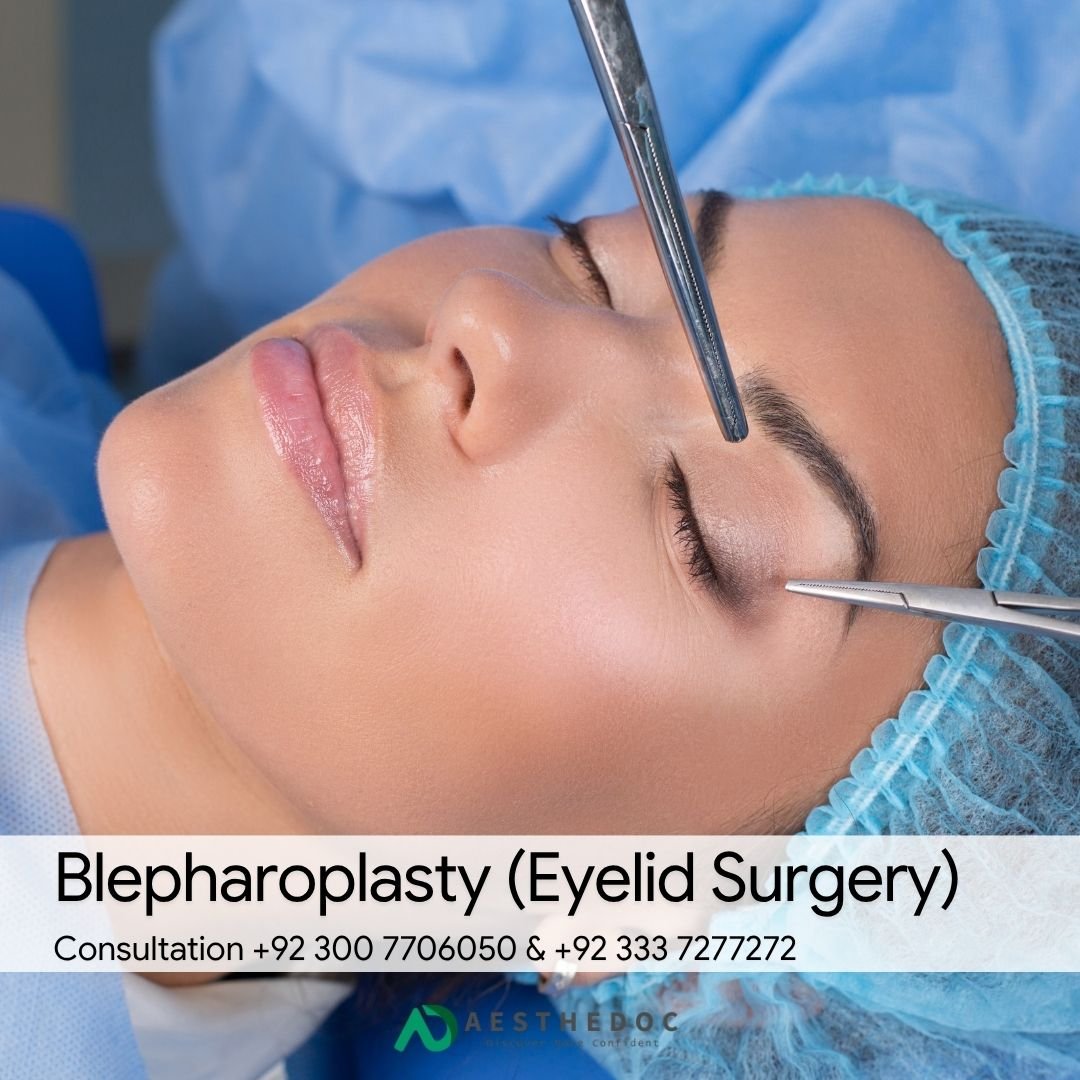
Blepharoplasty, commonly known as Eyelid Surgery or Eyelid Lift Surgery, is a cosmetic and reconstructive surgical procedure that improves the appearance of the upper eyelids, lower eyelids, or both. The procedure removes or repositions excess skin, fat, and muscle to create a more youthful, refreshed, and alert appearance while preserving the natural shape and function of the eyes.
The eyes are often the first facial feature to show visible signs of aging. As collagen and elastin decrease with age, the eyelid skin gradually loses elasticity. This may result in drooping upper eyelids, puffy lower eyelids, under-eye bags, excess skin, wrinkles, and a tired or aged appearance. In some individuals, severe upper eyelid skin laxity may even interfere with the upper field of vision.
Blepharoplasty is one of the most commonly performed facial plastic surgery procedures worldwide because it can provide both cosmetic and functional benefits. Modern surgical techniques focus on preserving natural eyelid anatomy while avoiding an overcorrected or hollow appearance.
Blepharoplasty can improve:
- Drooping upper eyelids
- Hooded eyelids
- Puffy upper eyelids
- Under-eye bags
- Excess eyelid skin
- Loose lower eyelid skin
- Fine wrinkles around the eyes
- Fat herniation beneath the eyes
- Tired or aged appearance
- Visual obstruction caused by excess upper eyelid skin
Many patients combine Blepharoplasty with Brow Lift, Facelift, Neck Lift, Fat Grafting, Laser Skin Resurfacing, or Chemical Peels to achieve comprehensive facial rejuvenation.
At Aesthedoc Clinic, Blepharoplasty is performed by experienced Plastic, Reconstructive and Cosmetic Surgery Specialists using advanced surgical techniques tailored to each patient’s anatomy, skin quality, and aesthetic goals. Every treatment plan is individualized to achieve natural-looking results while maintaining healthy eyelid function and protecting the eyes.
Whether your concern is drooping eyelids, puffy eye bags, or age-related eyelid changes, Blepharoplasty may help restore a brighter, younger, and more refreshed appearance.
What is Blepharoplasty?
Blepharoplasty is a surgical procedure that rejuvenates the eyelids by removing or repositioning excess skin, fat, and muscle around the eyes.
The procedure may involve:
- Upper eyelids
- Lower eyelids
- Both upper and lower eyelids
Depending on the patient’s needs, surgery may be performed for cosmetic improvement, functional correction, or a combination of both.
Blepharoplasty can improve:
- Excess upper eyelid skin
- Drooping eyelids
- Puffy eyelids
- Under-eye bags
- Wrinkles around the eyes
- Tired facial appearance
- Hooded eyelids
- Vision obstruction caused by excess skin
The objective is to create brighter, smoother, and naturally youthful eyes while maintaining normal eyelid function.
Understanding Eyelid Aging
The eyelids undergo several changes as we age.
Common contributing factors include:
- Reduced collagen production
- Loss of skin elasticity
- Weakening of eyelid muscles
- Fat herniation
- Gravity
- Genetics
- Sun exposure
- Smoking
- Weight fluctuations
- Natural aging
These changes may result in:
- Drooping upper eyelids
- Hooded eyelids
- Puffy lower eyelids
- Under-eye bags
- Loose eyelid skin
- Wrinkles
- Dark shadows beneath the eyes
- Tired facial appearance
Understanding the underlying causes helps determine the most appropriate surgical technique.
Eyelid Anatomy
Successful Blepharoplasty requires a detailed understanding of eyelid anatomy.
Important structures include:
- Upper eyelid skin
- Lower eyelid skin
- Orbicularis oculi muscle
- Orbital septum
- Levator muscle
- Müller muscle
- Orbital fat pads
- Tarsal plate
- Eyelashes
- Lacrimal gland
- Tear drainage system
- Facial nerves
- Blood vessels
Modern Blepharoplasty techniques preserve these structures whenever possible to maintain healthy eyelid function and a natural appearance.
Why is Blepharoplasty Performed?
Patients choose Blepharoplasty for a variety of cosmetic and functional reasons.
Common concerns include:
- Drooping upper eyelids
- Puffy lower eyelids
- Excess eyelid skin
- Under-eye bags
- Hooded eyes
- Wrinkles around the eyes
- Visual obstruction
- Facial aging
- Tired appearance
- Desire for long-lasting rejuvenation
The procedure is tailored to restore a refreshed appearance while preserving the natural shape of the eyes.
Conditions Blepharoplasty Can Improve
Drooping Upper Eyelids
Excess skin may hang over the eyelashes, making the eyes appear smaller and more tired.
Upper Blepharoplasty removes excess skin to restore a more open appearance.
Hooded Eyelids
Low or heavy upper eyelids may create a hooded appearance.
Depending on the underlying cause, treatment may involve Blepharoplasty, Brow Lift, or both.
Puffy Upper Eyelids
Fat accumulation in the upper eyelids may create fullness.
Surgery can reposition or remove excess fat while preserving a natural contour.
Under-Eye Bags
Bulging fat beneath the eyes is one of the most common reasons for Lower Blepharoplasty.
The procedure smooths the transition between the lower eyelid and the cheek.
Loose Lower Eyelid Skin
With aging, the lower eyelid skin may become loose and wrinkled.
Removing excess skin can improve contour and firmness.
Fine Wrinkles Around the Eyes
Although Blepharoplasty primarily addresses skin and fat, it may also soften wrinkles caused by excess skin. Additional skin resurfacing procedures may be recommended for fine lines related to skin texture.
Vision Obstruction
In some individuals, severe upper eyelid skin laxity may partially block the upper field of vision.
Upper Blepharoplasty may improve both appearance and function in appropriate cases.
Benefits of Blepharoplasty
Potential benefits include:
- More youthful eye appearance
- Reduced under-eye bags
- Removal of excess eyelid skin
- Improved upper visual field (when affected by excess skin)
- Brighter, more refreshed eyes
- Better eyelid contour
- Long-lasting rejuvenation
- Natural-looking results
- Improved facial harmony
- Increased confidence
The goal is to enhance the eyes without making them appear over-tightened or unnatural.
Who is a Good Candidate?
You may be a suitable candidate if you:
- Have drooping upper eyelids
- Notice under-eye bags
- Have excess eyelid skin
- Are bothered by puffy eyelids
- Are in good general health
- Have realistic expectations
- Do not smoke or are willing to stop before surgery
- Have stable vision and healthy eyes
A consultation with a qualified specialist is necessary to determine the most appropriate treatment plan.
Who May Not Be a Suitable Candidate?
Blepharoplasty may not be recommended for individuals with:
- Uncontrolled medical conditions
- Active eye infections
- Severe dry eye syndrome
- Untreated glaucoma (requires specialist assessment)
- Uncontrolled thyroid eye disease
- Untreated bleeding disorders
- Unrealistic expectations
- Ongoing smoking that significantly impairs healing
Alternative treatment options may be discussed depending on the individual’s condition.
Types of Blepharoplasty
Different Blepharoplasty techniques are available depending on the patient’s anatomy and concerns.
Upper Blepharoplasty
Upper Blepharoplasty focuses on removing excess skin and, when appropriate, excess fat from the upper eyelids.
It can improve:
- Hooded eyelids
- Drooping eyelids
- Excess skin
- Visual obstruction
- Upper eyelid puffiness
Lower Blepharoplasty
Lower Blepharoplasty addresses:
- Under-eye bags
- Bulging fat
- Loose skin
- Wrinkles beneath the eyes
The procedure creates a smoother transition between the eyelids and cheeks.
Quad Blepharoplasty
Quad Blepharoplasty combines:
- Upper Blepharoplasty
- Lower Blepharoplasty
This comprehensive approach rejuvenates both upper and lower eyelids during a single operation.
Transconjunctival Blepharoplasty
This technique removes or repositions lower eyelid fat through an incision inside the eyelid.
Advantages include:
- No external scar
- Faster healing
- Excellent for younger patients with prominent fat bags and minimal excess skin
Skin Pinch Blepharoplasty
A Skin Pinch technique removes small amounts of excess lower eyelid skin without disturbing deeper tissues.
It is suitable for carefully selected patients with mild skin laxity.
Upper Blepharoplasty vs Lower Blepharoplasty
| Feature | Upper Blepharoplasty | Lower Blepharoplasty |
|---|---|---|
| Excess Skin | ✔ | Mild |
| Under-Eye Bags | ✘ | ✔ |
| Puffy Eyelids | ✔ | ✔ |
| Vision Improvement | Possible | No |
| Wrinkle Reduction | Mild | Moderate |
| Hooded Eyes | ✔ | ✘ |
Many patients benefit from combining both procedures for complete eyelid rejuvenation.
Consultation and Evaluation
Every successful Blepharoplasty begins with a comprehensive consultation.
During your assessment, your specialist will evaluate:
- Eyelid skin quality
- Fat distribution
- Brow position
- Eye symmetry
- Vision concerns
- Tear production
- Medical history
- Previous eye surgeries
- Lifestyle factors
- Aesthetic goals
Clinical photographs may be taken to assist with surgical planning and document your preoperative appearance.
Preparing for Blepharoplasty Surgery
Before surgery, patients are generally advised to:
- Stop smoking at least 4–6 weeks before surgery
- Avoid aspirin and certain blood-thinning medications under medical supervision
- Complete recommended blood investigations
- Undergo any necessary eye assessments
- Maintain a healthy diet
- Stay well hydrated
- Arrange transportation home after surgery
- Prepare a comfortable recovery area
- Follow fasting instructions before anesthesia
Proper preparation helps reduce surgical risks and supports a smoother recovery.
Preparing for Blepharoplasty Surgery
Proper preparation before Blepharoplasty helps improve surgical safety, optimize healing, and contribute to natural-looking results. During your consultation, your Plastic, Reconstructive and Cosmetic Surgery Specialist will evaluate your eyelid anatomy, skin quality, brow position, fat distribution, eye health, and facial proportions before recommending the most appropriate surgical technique.
Patients are generally advised to:
- Complete all recommended medical evaluations
- Review current medications and supplements
- Undergo necessary blood investigations
- Have standardized clinical photographs taken
- Stop smoking at least 4–6 weeks before surgery
- Avoid aspirin and certain blood-thinning medications under medical supervision
- Stay well hydrated
- Eat a balanced, nutritious diet
- Arrange transportation home after surgery
- Prepare a comfortable recovery area
Following your specialist’s instructions carefully helps reduce surgical risks and supports a smoother recovery.
Step-by-Step Blepharoplasty Procedure
Although every patient’s treatment plan is individualized, most Blepharoplasty procedures follow a similar sequence.
Step 1 – Anesthesia
Blepharoplasty may be performed under:
- Local anesthesia with sedation
- Intravenous (IV) sedation
- General anesthesia
The choice depends on:
- Whether upper, lower, or both eyelids are treated
- Patient preference
- Surgical complexity
- Whether additional facial procedures are performed simultaneously
During surgery, the anesthesia team continuously monitors:
- Heart rate
- Blood pressure
- Oxygen saturation
- Breathing
- Overall patient safety
Step 2 – Surgical Markings
Before making any incision, the surgeon carefully marks:
- Natural eyelid creases
- Skin to be removed
- Fat compartments
- Symmetry landmarks
- Important anatomical structures
These markings help achieve balanced, natural-looking results.
Upper Blepharoplasty Procedure
Upper Blepharoplasty focuses on correcting drooping upper eyelids and excess skin.
Incision Placement
The incision is typically placed within the natural upper eyelid crease.
Once healed, the scar is often well concealed when the eyes are open.
Skin Removal
Excess skin causing hooding or heaviness is carefully removed while preserving enough skin to allow normal eyelid closure.
Removing too much skin is avoided to maintain healthy eyelid function.
Fat Management
Depending on the patient’s anatomy, the surgeon may:
- Preserve fat
- Reposition fat
- Remove small amounts of excess fat
Modern Blepharoplasty emphasizes fat preservation whenever appropriate to avoid a hollow appearance.
Muscle Adjustment
Small portions of the orbicularis oculi muscle may be modified in selected patients to improve contour while preserving eyelid function.
Closure
The incision is closed using fine sutures designed to minimize visible scarring.
Lower Blepharoplasty Procedure
Lower Blepharoplasty addresses under-eye bags, excess skin, and lower eyelid aging.
Several surgical approaches may be used depending on the patient’s anatomy.
Transcutaneous Lower Blepharoplasty
This traditional approach involves an incision placed just below the lower eyelashes.
The surgeon can:
- Remove excess skin
- Tighten the lower eyelid
- Reposition or remove fat
- Improve lower eyelid contour
This technique is often selected when both excess skin and fat are present.
Transconjunctival Lower Blepharoplasty
The transconjunctival approach uses an incision inside the lower eyelid.
Advantages include:
- No visible external scar
- Preservation of lower eyelid support
- Faster recovery in appropriate candidates
- Excellent treatment for prominent under-eye fat bags
This approach is commonly recommended for younger patients with minimal excess skin.
Fat Repositioning vs Fat Removal
One of the most important advances in modern Blepharoplasty is the shift from routine fat removal to fat preservation and repositioning.
Fat Removal
Excess fat may be removed when significant bulging is present.
Advantages include:
- Reduced puffiness
- Improved contour
However, excessive fat removal can result in a hollow appearance.
Fat Repositioning
Rather than removing fat, the surgeon may reposition it to fill the tear trough and create a smoother transition between the lower eyelid and cheek.
Potential benefits include:
- Natural-looking rejuvenation
- Reduced hollowing
- Better facial harmony
- Improved lower eyelid contour
Step 3 – Eyelid Tightening
When necessary, the lower eyelid may be tightened to improve support and reduce the risk of postoperative eyelid laxity.
This may involve specialized techniques such as:
- Canthopexy
- Canthoplasty
These procedures help maintain proper eyelid position during healing.
Step 4 – Skin Redraping
After fat management and tissue adjustment, the remaining skin is gently repositioned.
The surgeon carefully:
- Removes excess skin when appropriate
- Maintains natural eyelid shape
- Preserves eyelid function
- Ensures symmetry between both eyes
The goal is a refreshed appearance rather than an over-tightened look.
Step 5 – Closing the Incisions
The incisions are closed with fine sutures that promote precise wound healing.
Following closure:
- Protective ointment may be applied
- Cold compresses are often recommended
- Detailed postoperative instructions are provided
How Long Does Blepharoplasty Take?
The duration of surgery depends on the technique used and whether additional procedures are performed.
| Procedure | Estimated Surgical Time |
|---|---|
| Upper Blepharoplasty | 45–90 minutes |
| Lower Blepharoplasty | 1–2 hours |
| Upper + Lower Blepharoplasty | 2–3 hours |
| Blepharoplasty + Brow Lift | 3–5 hours |
| Blepharoplasty + Facelift | 4–6 hours |
Recovery After Blepharoplasty
Recovery varies between individuals, but most patients experience gradual improvement over several weeks.
First 24 Hours
Patients commonly notice:
- Mild discomfort
- Swelling
- Bruising
- Watery eyes
- Temporary blurred vision from lubricating ointments
- Mild tightness around the eyelids
These symptoms usually improve over the following days.
Days 2–7
During the first week:
- Swelling typically peaks
- Bruising becomes more noticeable before gradually fading
- Cold compresses may help reduce swelling
- Follow-up appointments are scheduled
- Sutures are removed if non-absorbable sutures are used
Patients should avoid rubbing their eyes.
Week One
During the first week:
- Most discomfort improves significantly
- Bruising begins to fade
- Swelling gradually decreases
- Light walking is encouraged
Most patients continue avoiding strenuous physical activity.
Weeks 2–4
Patients often notice:
- More open, refreshed eyes
- Reduced puffiness
- Improved eyelid contour
- Less bruising
- Greater comfort
Many individuals return to office-based work within this period.
Months 2–6
Healing continues gradually.
Patients may observe:
- Progressive scar maturation
- Improved eyelid contour
- Natural blending of the surgical changes
- Resolution of any residual swelling
Six to Twelve Months
By this stage:
- Scars continue to fade
- Eyelid tissues soften
- Final contour becomes fully established
- Long-term results become more apparent
Recovery Timeline
| Time After Surgery | Typical Recovery Progress |
|---|---|
| Day 1 | Swelling and mild discomfort |
| Week 1 | Initial healing and possible suture removal |
| Week 2 | Bruising significantly improves |
| Month 1 | Most swelling resolves |
| Month 3 | Eyelid contours appear increasingly natural |
| Month 6 | Scar maturation continues |
| Month 12 | Final results generally visible |
Aftercare Instructions
Following postoperative instructions carefully helps optimize healing and long-term results.
Patients are generally advised to:
- Apply cold compresses as instructed
- Sleep with the head elevated
- Avoid rubbing the eyes
- Use prescribed eye drops or ointments
- Avoid contact lenses until approved
- Wear sunglasses outdoors
- Protect healing skin from excessive sun exposure
- Avoid strenuous exercise until cleared
- Take prescribed medications as directed
- Attend all scheduled follow-up appointments
Benefits of Blepharoplasty
Potential benefits include:
- Brighter, more youthful eyes
- Reduced under-eye bags
- Improved upper eyelid contour
- Less hooding
- Better facial harmony
- More alert appearance
- Long-lasting rejuvenation
- Natural-looking results
- Improved confidence
- Enhanced visual field in selected functional cases
Expected Results
The primary objective of Blepharoplasty is to rejuvenate the eyes while preserving natural eyelid function and facial expression.
Patients may notice:
- Smoother eyelids
- Reduced puffiness
- Improved eyelid contour
- Less hooding
- Softer under-eye bags
- Brighter, refreshed appearance
- Better balance between the eyes and surrounding facial features
Results continue to improve over several months as swelling resolves and tissues settle.
Before and After Expectations
Blepharoplasty is intended to refresh and rejuvenate the eye area, not completely change a person’s appearance.
Patients should expect:
- A naturally younger-looking eye region
- Improved eyelid definition
- Reduced signs of aging
- Better facial balance
- Long-lasting improvement while allowing the face to continue aging naturally
Risks and Possible Complications of Blepharoplasty
Blepharoplasty is generally considered a safe procedure when performed by an experienced Plastic, Reconstructive and Cosmetic Surgery Specialist. However, like all surgical procedures, it carries potential risks that should be discussed during your consultation.
Possible complications include:
- Bleeding (hematoma)
- Infection
- Swelling
- Bruising
- Dry eyes
- Temporary blurred vision
- Increased tearing
- Temporary sensitivity to light
- Delayed wound healing
- Noticeable scarring
- Temporary numbness
- Asymmetry
- Difficulty completely closing the eyes (usually temporary)
- Lower eyelid retraction (rare)
- Ectropion (rare)
- Entropion (rare)
- Changes in eyelid contour
- Adverse reaction to anesthesia
- Vision changes (very rare)
- Need for revision surgery
Fortunately, serious complications are uncommon. Careful surgical planning, meticulous technique, and adherence to postoperative instructions help minimize these risks.
How to Reduce the Risk of Complications
Patients can support a safe recovery by:
- Choosing an experienced Plastic, Reconstructive and Cosmetic Surgery Specialist
- Following all preoperative and postoperative instructions
- Stopping smoking at least 4–6 weeks before and after surgery
- Avoiding blood-thinning medications unless medically advised
- Applying prescribed eye ointments and drops
- Sleeping with the head elevated
- Avoiding rubbing the eyes
- Wearing sunglasses outdoors
- Avoiding strenuous activities until cleared by your specialist
- Attending all follow-up appointments
Success Rate of Blepharoplasty
Blepharoplasty is one of the most frequently performed facial cosmetic surgeries and is associated with a high level of patient satisfaction when performed on appropriate candidates.
Several factors influence the final outcome, including:
- Eyelid anatomy
- Skin quality
- Fat distribution
- Brow position
- Surgical technique
- Healing characteristics
- Smoking status
- General health
- Compliance with postoperative care
The goal is to create brighter, more youthful eyes while preserving natural eyelid movement and function.
Estimated Blepharoplasty Cost in Pakistan
The cost of Blepharoplasty depends on whether the procedure involves the upper eyelids, lower eyelids, or both, as well as the complexity of the surgery, anesthesia, and hospital charges.
Estimated Price Table
| Procedure | Estimated Cost (PKR) |
|---|---|
| Consultation | 3,000 – 10,000 |
| Upper Blepharoplasty | 180,000 – 350,000 |
| Lower Blepharoplasty | 220,000 – 400,000 |
| Upper + Lower Blepharoplasty | 350,000 – 650,000 |
| Transconjunctival Blepharoplasty | 250,000 – 450,000 |
| Blepharoplasty + Brow Lift | 500,000 – 900,000 |
Disclaimer: The above prices are approximate estimates provided for informational purposes only. Actual treatment costs vary according to the patient’s anatomy, surgical complexity, investigations, anesthesia, operating facility, and individualized treatment plan.
Estimated Blepharoplasty Cost Around the World
| Country | Estimated Cost |
|---|---|
| 🇵🇰 Pakistan | USD 1,000 – 3,500 |
| 🇮🇳 India | USD 1,200 – 3,500 |
| 🇹🇷 Turkey | USD 2,000 – 4,500 |
| 🇹🇭 Thailand | USD 2,500 – 5,000 |
| 🇲🇾 Malaysia | USD 2,500 – 4,500 |
| 🇦🇪 UAE (Dubai) | USD 3,500 – 7,000 |
| 🇰🇷 South Korea | USD 3,500 – 8,000 |
| 🇬🇧 United Kingdom | USD 5,000 – 9,000 |
| 🇨🇦 Canada | USD 5,500 – 9,500 |
| 🇺🇸 United States | USD 6,000 – 12,000+ |
Frequently Asked Questions (FAQs)
What is Blepharoplasty?
Blepharoplasty is a surgical procedure that improves the appearance of the upper eyelids, lower eyelids, or both by removing or repositioning excess skin, fat, and, when appropriate, muscle.
What is the difference between Upper and Lower Blepharoplasty?
Upper Blepharoplasty primarily treats excess skin and hooding of the upper eyelids, while Lower Blepharoplasty focuses on under-eye bags, puffiness, and loose lower eyelid skin.
Can Blepharoplasty improve vision?
In some patients, excess upper eyelid skin may partially obstruct the upper visual field. Upper Blepharoplasty may improve this when the obstruction is caused by redundant skin.
Does Blepharoplasty remove dark circles?
Blepharoplasty can improve shadows caused by under-eye fat bags. However, dark circles related to pigmentation or skin quality may require additional treatments.
Will the surgery remove under-eye bags?
Yes. Lower Blepharoplasty is commonly performed to reduce or reposition fat that causes under-eye bags.
Is Blepharoplasty painful?
Most patients experience mild discomfort rather than severe pain. Symptoms are usually well managed with prescribed medication.
How long does the surgery take?
Most procedures take between 45 minutes and 3 hours, depending on the surgical technique and whether both upper and lower eyelids are treated.
How long is the recovery period?
Most patients return to office-based work within 10–14 days, while complete healing continues over several months.
Will there be visible scars?
Upper eyelid incisions are placed within the natural eyelid crease, while lower eyelid incisions are typically hidden just below the eyelashes or inside the eyelid, depending on the technique.
Can men undergo Blepharoplasty?
Yes. Blepharoplasty is commonly performed for both men and women seeking eyelid rejuvenation.
Can Blepharoplasty be combined with other procedures?
Yes. Common combination procedures include:
- Brow Lift
- Facelift
- Neck Lift
- Fat Grafting
- Laser Skin Resurfacing
- Chemical Peels
How long do Blepharoplasty results last?
Results are long-lasting. Many patients continue to enjoy improvement for 10–15 years, although natural aging continues.
Will I look unnatural?
Modern Blepharoplasty techniques aim to preserve the natural contour of the eyelids and avoid an overcorrected or hollow appearance.
When can I wear makeup again?
Most patients can resume eye makeup after the incisions have healed adequately and with approval from their specialist.
When can I wear contact lenses?
Contact lenses should only be resumed after clearance from your specialist, usually once the eyelids have healed sufficiently.
Does Blepharoplasty stop aging?
No. The procedure rejuvenates the eyelids but does not stop the natural aging process.
Who is the ideal candidate?
Healthy adults with drooping eyelids, under-eye bags, or excess eyelid skin who have realistic expectations may be suitable candidates.
Why Choose Aesthedoc Clinic?
At Aesthedoc Clinic, Blepharoplasty is performed using advanced surgical techniques that prioritize natural-looking eyelid rejuvenation while preserving healthy eyelid function. Our experienced Plastic, Reconstructive and Cosmetic Surgery Specialists develop personalized treatment plans based on each patient’s anatomy, concerns, and aesthetic goals.
Our approach includes:
- Comprehensive eyelid assessment
- Personalized surgical planning
- Upper and lower eyelid surgery
- Advanced fat preservation and repositioning techniques
- Evidence-based surgical care
- Natural-looking outcomes
- Modern surgical facilities
- Comprehensive postoperative care
- Patient safety as a priority
- Confidential consultations
Whether your concerns include drooping upper eyelids, under-eye bags, hooded eyes, or excess eyelid skin, our team is committed to helping you achieve refreshed, balanced, and natural-looking results.
Related Procedures
Patients interested in Blepharoplasty may also wish to explore:
- Brow Lift (Forehead Lift)
- Facelift (Rhytidectomy)
- Neck Lift (Platysmaplasty)
- Chin Augmentation
- Lip Lift
- Buccal Fat Removal
- Facial Fat Grafting
- Rhinoplasty
- Otoplasty (Ear Surgery)
- Facial Cosmetic Surgery
Conclusion
Blepharoplasty is one of the most effective facial rejuvenation procedures for improving drooping eyelids, under-eye bags, and age-related eyelid changes. By carefully removing or repositioning excess skin and fat, the procedure restores a brighter, more refreshed appearance while preserving the natural shape and function of the eyes.
A comprehensive consultation is essential to determine the most appropriate surgical technique and develop an individualized treatment plan that aligns with your facial anatomy and aesthetic goals.
Book Your Blepharoplasty Consultation at Aesthedoc Clinic
If you are considering Blepharoplasty (Eyelid Surgery), Aesthedoc Clinic offers comprehensive consultations with experienced Plastic, Reconstructive and Cosmetic Surgery Specialists who provide individualized treatment plans for both cosmetic and functional eyelid concerns.
Whether your concerns include drooping upper eyelids, under-eye bags, hooded eyes, or excess eyelid skin, our team is committed to delivering safe, evidence-based care and natural-looking results.
Schedule Your Consultation Today
📞 Phone: 0333-7277272 | 0300-7706050
📧 Email: info@aesthedoc.com
Book your confidential consultation with Aesthedoc Clinic to discuss your eyelid rejuvenation goals and learn about the treatment options best suited to your needs.