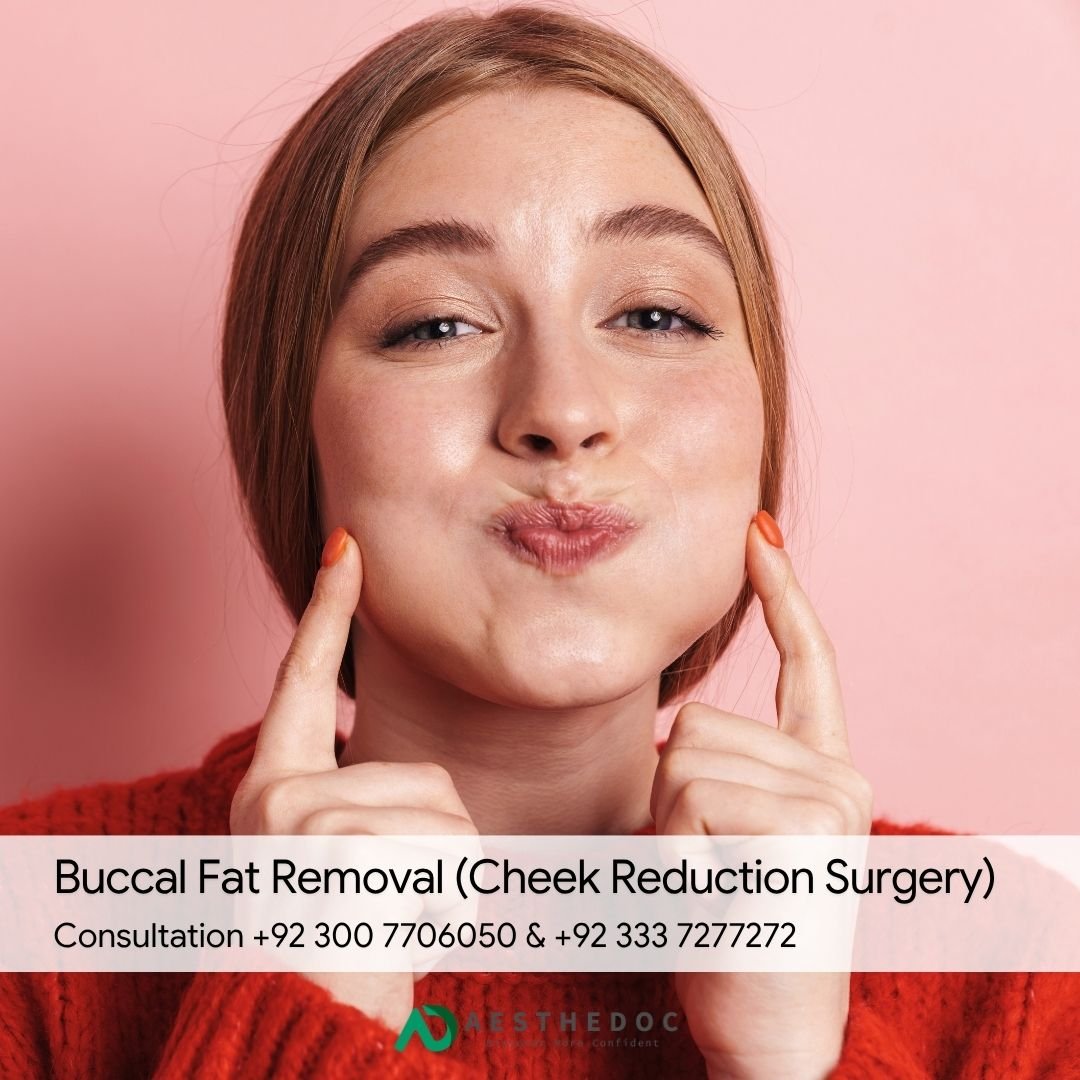
Buccal Fat Removal, also known as Buccal Lipectomy, Cheek Reduction Surgery, or Cheek Slimming Surgery, is a cosmetic facial surgical procedure designed to reduce fullness in the lower cheeks by removing a portion of the buccal fat pad. The procedure helps create a slimmer, more sculpted facial appearance with improved cheekbone definition and jawline contour.
Some individuals naturally have fuller or rounder cheeks despite maintaining a healthy body weight. This facial fullness is often caused by prominent buccal fat pads rather than excess body fat. Buccal Fat Removal permanently reduces the volume of these fat pads, resulting in a more defined mid-face and enhanced facial proportions.
The procedure is especially popular among patients seeking:
- A slimmer facial appearance
- Better cheekbone definition
- Improved jawline visibility
- Reduced “baby face” appearance
- Enhanced facial contours
- Better facial harmony
Modern Buccal Fat Removal is performed using minimally invasive surgical techniques through small incisions placed inside the mouth, leaving no visible external scars.
The procedure may be performed alone or combined with other facial cosmetic procedures such as:
- Chin Augmentation
- Rhinoplasty
- Facelift
- Neck Lift
- Facial Fat Grafting
- Lip Lift
- Neck Liposuction
- Blepharoplasty
At Aesthedoc Clinic, Buccal Fat Removal is performed by experienced Plastic, Reconstructive and Cosmetic Surgery Specialists using evidence-based techniques that prioritize facial balance, patient safety, and natural-looking outcomes. Rather than creating an excessively hollow appearance, the goal is to refine facial contours while preserving youthful facial harmony.
What is Buccal Fat Removal?
Buccal Fat Removal is a cosmetic surgical procedure that removes part of the buccal fat pad, a naturally occurring pocket of fat located deep within the lower cheeks.
The objective is to:
- Reduce cheek fullness
- Improve facial definition
- Highlight the cheekbones
- Enhance jawline contours
- Create better facial balance
The amount of fat removed is carefully tailored to each patient. Removing too much fat may create an overly hollow appearance, particularly as natural facial aging occurs. Therefore, conservative treatment planning is essential.
Buccal Fat Pad Anatomy
The buccal fat pad is a specialized fat compartment located deep within the cheek.
Nearby structures include:
- Buccinator muscle
- Facial muscles
- Facial artery and vein
- Facial nerve branches
- Parotid duct (Stensen’s duct)
- Skin and subcutaneous tissues
- Cheek soft tissue
- Jawline structures
A thorough understanding of facial anatomy is essential to safely remove buccal fat while protecting surrounding nerves, muscles, and salivary ducts.
Understanding Facial Contours
Facial attractiveness is influenced by the balance between:
- Forehead
- Cheekbones
- Mid-face
- Jawline
- Chin
- Neck
Prominent buccal fat pads may create:
- Rounded cheeks
- Poor cheekbone definition
- A fuller facial appearance
- Reduced jawline visibility
- A youthful “baby face” appearance
Carefully reducing buccal fat can improve facial contour without compromising natural facial proportions.
Why is Buccal Fat Removal Performed?
Patients seek Buccal Fat Removal for several cosmetic reasons.
Common concerns include:
- Full or chubby cheeks
- Round facial appearance
- Poor cheekbone definition
- Weak facial contours
- Desire for a slimmer face
- Persistent cheek fullness despite weight loss
- Better facial proportions
- Enhanced profile appearance
The procedure is intended to refine facial shape rather than dramatically change facial identity.
Conditions Buccal Fat Removal Can Improve
Full or Chubby Cheeks
Individuals with naturally prominent buccal fat pads may have persistent cheek fullness that does not improve with diet or exercise.
Round Facial Shape
Removing part of the buccal fat pad can create a slimmer, more contoured facial appearance in carefully selected patients.
Poor Cheekbone Definition
Reducing cheek fullness may improve the visibility of the cheekbones and create more defined facial contours.
Weak Jawline Appearance
Although Buccal Fat Removal does not directly change the jawbone, reducing lower cheek volume may improve the visual transition between the cheeks and jawline.
Facial Imbalance
Excess cheek fullness can make the mid-face appear disproportionately wide compared with the chin and jawline. Buccal Fat Removal may improve facial harmony in suitable candidates.
Persistent Facial Fullness After Weight Loss
Some patients maintain a healthy body weight yet continue to have full cheeks due to naturally larger buccal fat pads. Buccal Fat Removal addresses this anatomical concern rather than general body fat.
Benefits of Buccal Fat Removal
Potential benefits include:
- Slimmer facial appearance
- Better cheekbone definition
- Improved facial contours
- Enhanced jawline visibility
- Long-lasting results
- No visible external scars
- Improved facial proportions
- Increased confidence
- Natural-looking enhancement
- Permanent reduction of buccal fat volume
Who is a Good Candidate?
You may be a suitable candidate if you:
- Have naturally full cheeks
- Maintain a stable, healthy weight
- Desire improved facial definition
- Have realistic expectations
- Are in good general health
- Do not smoke or are willing to stop before surgery
- Have adequate facial soft tissue volume
A detailed consultation is necessary to determine whether Buccal Fat Removal is appropriate for your facial anatomy.
Who May Not Be a Suitable Candidate?
Buccal Fat Removal may not be recommended for individuals with:
- Naturally thin or narrow faces
- Significant age-related facial volume loss
- Progressive facial fat loss disorders
- Active oral infections
- Uncontrolled medical conditions
- Unrealistic cosmetic expectations
- Heavy smoking that may impair healing
In some cases, alternative facial contouring procedures may provide more appropriate results.
Types of Buccal Fat Removal
Standard Buccal Fat Pad Reduction
This is the most commonly performed technique.
A carefully measured portion of the buccal fat pad is removed through a small incision inside the mouth to improve facial definition while preserving natural fullness.
Conservative Buccal Fat Removal
Some patients require only a small reduction in buccal fat to achieve subtle enhancement.
This approach minimizes the risk of an overly hollow appearance and is particularly suitable for younger patients or those with naturally slimmer faces.
Buccal Fat Removal with Facial Contouring
Buccal Fat Removal may be combined with other facial contouring procedures such as:
- Chin Augmentation
- Neck Liposuction
- Rhinoplasty
- Facial Fat Grafting
- Facelift
- Lip Lift
Combining procedures may provide more comprehensive facial balance while reducing the need for multiple separate surgeries.
Buccal Fat Removal vs Facial Liposuction
| Feature | Buccal Fat Removal | Facial Liposuction |
|---|---|---|
| Removes Buccal Fat Pad | ✔ | ✘ |
| Removes Surface Fat | ✘ | ✔ |
| Slims Lower Cheeks | ✔ | Limited |
| Improves Jawline | Indirectly | ✔ |
| Treats Double Chin | ✘ | ✔ |
| Internal Incision | ✔ | ✘ |
| Visible External Scar | Usually None | Small hidden incision |
Both procedures address different facial fat compartments and may sometimes be performed together when appropriate.
Consultation and Evaluation
Every successful Buccal Fat Removal procedure begins with a comprehensive facial assessment.
During your consultation, your specialist will evaluate:
- Facial proportions
- Cheek fullness
- Cheekbone prominence
- Jawline definition
- Chin projection
- Skin quality
- Facial symmetry
- Medical history
- Previous facial procedures
- Cosmetic goals
Standardized clinical photographs and facial profile analysis help guide treatment planning and determine whether Buccal Fat Removal alone or in combination with other procedures is the best option.
Preparing for Buccal Fat Removal Surgery
Before surgery, patients are generally advised to:
- Stop smoking at least 4–6 weeks before surgery
- Avoid aspirin and certain blood-thinning medications under medical supervision
- Complete recommended laboratory investigations
- Maintain good oral hygiene
- Stay well hydrated
- Follow a balanced diet
- Arrange transportation home after surgery
- Prepare a comfortable recovery area
- Follow fasting instructions if sedation or general anesthesia is planned
Proper preparation helps optimize healing, reduce complications, and support a smooth recovery.
Preparing for Buccal Fat Removal Surgery
Proper preparation before Buccal Fat Removal helps improve surgical safety, reduce complications, and promote a smooth recovery. During your consultation, your Plastic, Reconstructive and Cosmetic Surgery Specialist will evaluate your facial anatomy, cheek volume, skin quality, jawline definition, and overall facial proportions to determine whether Buccal Fat Removal is the most appropriate treatment.
Patients are generally advised to:
- Complete all recommended medical evaluations
- Review current medications and supplements
- Undergo necessary laboratory investigations
- Have standardized clinical photographs taken
- Stop smoking at least 4–6 weeks before surgery
- Avoid aspirin and certain blood-thinning medications under medical supervision
- Maintain good oral hygiene
- Stay well hydrated
- Eat a healthy, balanced diet
- Arrange transportation home after surgery
- Prepare a comfortable recovery area
- Follow fasting instructions if sedation or general anesthesia is planned
Following your specialist’s instructions helps optimize healing and improve overall surgical outcomes.
Step-by-Step Buccal Fat Removal Procedure
Buccal Fat Removal is customized according to each patient’s facial anatomy and aesthetic goals. Although every procedure is individualized, the surgical process generally follows these steps.
Step 1 – Anesthesia
Buccal Fat Removal may be performed under:
- Local anesthesia
- Local anesthesia with IV sedation
- General anesthesia
The choice depends on:
- Patient preference
- Complexity of the procedure
- Whether additional facial procedures are planned
- Overall health
Throughout surgery, the anesthesia team continuously monitors:
- Heart rate
- Blood pressure
- Oxygen saturation
- Breathing
- Overall patient safety
Step 2 – Surgical Markings
Before surgery begins, the surgeon evaluates and marks important facial landmarks.
These include:
- Facial midline
- Cheek contours
- Jawline
- Cheekbone prominence
- Symmetry reference points
Although the incision is placed inside the mouth, external facial assessment is essential for achieving balanced, natural-looking results.
Intraoral Incision
Modern Buccal Fat Removal is performed through a small incision inside the mouth.
The incision is typically made on the inner lining of the cheek near the upper molar region.
Advantages include:
- No visible external scar
- Direct access to the buccal fat pad
- Minimal skin trauma
- Faster healing
Exposure of the Buccal Fat Pad
After making the incision, the surgeon carefully separates the soft tissues to access the buccal fat compartment.
Extreme care is taken to protect nearby structures, including:
- Facial nerve branches
- Buccinator muscle
- Parotid (Stensen’s) duct
- Blood vessels
- Oral mucosa
Proper anatomical knowledge is essential to safely expose the fat pad while minimizing the risk of injury.
Buccal Fat Pad Delivery
The buccal fat pad is gently encouraged through the incision using careful surgical technique.
Only the appropriate amount of fat is removed.
The surgeon avoids excessive fat removal because over-resection may result in:
- Hollow cheeks
- Premature facial aging
- Unnatural facial contours
- Long-term volume deficiency
Modern facial aesthetics emphasize conservative treatment to maintain youthful facial fullness.
Conservative Fat Removal
Rather than removing the entire buccal fat pad, the surgeon usually removes only a carefully calculated portion.
The amount removed depends on:
- Facial width
- Existing cheek volume
- Age
- Skin elasticity
- Overall facial proportions
- Desired cosmetic outcome
This individualized approach helps achieve a slimmer face while preserving natural facial balance.
Achieving Facial Symmetry
Before completing the procedure, both cheeks are carefully evaluated.
The surgeon compares:
- Remaining cheek volume
- Facial symmetry
- Cheek projection
- Jawline contour
- Mid-face proportions
Minor adjustments may be made to improve balance while respecting natural facial asymmetry.
Controlling Bleeding
Any small blood vessels are carefully managed during surgery.
Meticulous bleeding control helps reduce:
- Bruising
- Swelling
- Hematoma formation
- Postoperative discomfort
Closing the Incision
The incision inside the mouth is closed using absorbable sutures.
These sutures typically dissolve naturally during healing and usually do not require removal.
After closure:
- The surgical area is cleaned
- Recovery instructions are reviewed
- Patients receive guidance regarding oral hygiene and diet
Combination Procedures
Buccal Fat Removal is frequently combined with other facial cosmetic procedures to improve overall facial harmony.
Common combinations include:
- Buccal Fat Removal + Chin Augmentation
- Buccal Fat Removal + Rhinoplasty
- Buccal Fat Removal + Neck Liposuction
- Buccal Fat Removal + Facelift
- Buccal Fat Removal + Neck Lift
- Buccal Fat Removal + Lip Lift
- Buccal Fat Removal + Facial Fat Grafting
Combining procedures may provide more comprehensive facial contouring while reducing overall recovery time compared with separate operations.
How Long Does Buccal Fat Removal Take?
The duration of surgery depends on whether Buccal Fat Removal is performed alone or combined with additional procedures.
| Procedure | Estimated Surgical Time |
|---|---|
| Buccal Fat Removal | 45–90 minutes |
| Buccal Fat Removal + Chin Augmentation | 2–3 hours |
| Buccal Fat Removal + Rhinoplasty | 3–5 hours |
| Buccal Fat Removal + Facelift | 4–6 hours |
| Buccal Fat Removal + Neck Lift | 3–5 hours |
Recovery After Buccal Fat Removal
Recovery varies between individuals, but most patients experience gradual improvement over several weeks.
First 24 Hours
Patients commonly experience:
- Mild swelling
- Mild discomfort
- Tightness
- Temporary numbness
- Slight bruising
- Mild difficulty chewing
These symptoms are expected and generally improve steadily.
Days 2–7
During the first week:
- Swelling reaches its peak
- Bruising gradually improves
- Soft foods are recommended
- Oral hygiene becomes particularly important
- Follow-up appointments are scheduled
Patients should avoid vigorous chewing during this period.
Week One
Most patients notice:
- Improved comfort
- Reduced swelling
- Healing of the intraoral incision
- Gradual return to light daily activities
Strenuous physical activity should still be avoided.
Weeks 2–4
During this stage:
- Facial swelling continues to decrease
- Cheek contours become more apparent
- Jawline definition improves
- Patients usually return to normal routines
Months 2–6
Healing continues as:
- Remaining swelling resolves
- Facial tissues settle
- Cheek definition becomes increasingly visible
- Final contours begin to emerge
Six to Twelve Months
By this stage:
- Final facial contour is typically established
- Soft tissues have fully adapted
- Long-term results become evident
- Facial harmony continues to appear natural
Recovery Timeline
| Time After Surgery | Typical Recovery Progress |
|---|---|
| Day 1 | Mild swelling and discomfort |
| Week 1 | Initial healing of the incision |
| Week 2 | Noticeable reduction in swelling |
| Month 1 | Most swelling resolves |
| Month 3 | Facial contours become more defined |
| Month 6 | Continued soft tissue refinement |
| Month 12 | Final long-term results |
Aftercare Instructions
Following postoperative instructions carefully helps optimize healing and long-term results.
Patients are generally advised to:
- Maintain excellent oral hygiene
- Use any prescribed mouth rinse as directed
- Eat soft foods during the early recovery period
- Stay well hydrated
- Avoid smoking
- Avoid strenuous exercise until approved
- Avoid excessive facial pressure
- Take prescribed medications as directed
- Attend all scheduled follow-up appointments
Benefits of Buccal Fat Removal
Potential benefits include:
- Slimmer facial appearance
- Better cheekbone definition
- Enhanced jawline visibility
- Improved facial contours
- More balanced facial proportions
- Long-lasting reduction in cheek fullness
- No visible external scars
- Natural-looking facial refinement
- Increased self-confidence
- Permanent reduction of excess buccal fat
Expected Results
The primary objective of Buccal Fat Removal is to create a slimmer, more sculpted facial appearance while preserving natural facial harmony.
Patients may notice:
- Reduced lower cheek fullness
- Improved cheekbone prominence
- Better jawline definition
- Enhanced facial balance
- More refined facial contours
- Long-lasting aesthetic improvement
Results continue to improve gradually as swelling resolves over several months.
Before and After Expectations
Buccal Fat Removal is designed to refine facial contours rather than dramatically change facial identity.
Patients should expect:
- More defined cheeks
- Improved facial proportions
- Subtle, natural-looking enhancement
- Permanent reduction in buccal fat volume
- Better harmony between the cheeks, chin, and jawline
Realistic expectations and individualized treatment planning are essential for achieving satisfying long-term results.
Risks and Possible Complications of Buccal Fat Removal
Buccal Fat Removal is generally considered a safe cosmetic procedure when performed by an experienced Plastic, Reconstructive and Cosmetic Surgery Specialist. However, like any surgical procedure, it carries potential risks and complications that should be discussed during your consultation.
Possible complications include:
- Bleeding (hematoma)
- Infection
- Swelling
- Bruising
- Temporary pain or discomfort
- Temporary numbness of the cheek
- Delayed wound healing
- Injury to the parotid (Stensen’s) duct
- Temporary weakness of nearby facial muscles (rare)
- Injury to facial nerve branches (rare)
- Excessive fat removal leading to hollow cheeks
- Facial asymmetry
- Persistent swelling
- Scar tissue formation within the cheek
- Salivary gland complications (rare)
- Adverse reaction to anesthesia
- Unsatisfactory cosmetic outcome
- Need for revision surgery
Although these complications are uncommon, proper surgical planning, meticulous technique, and adherence to postoperative instructions significantly reduce the overall risk.
How to Reduce the Risk of Complications
Patients can help optimize healing and minimize complications by:
- Choosing an experienced Plastic, Reconstructive and Cosmetic Surgery Specialist
- Following all preoperative and postoperative instructions
- Stopping smoking at least 4–6 weeks before and after surgery
- Maintaining excellent oral hygiene
- Using prescribed mouthwash if recommended
- Avoiding strenuous exercise during the early recovery period
- Following dietary recommendations
- Taking prescribed medications exactly as instructed
- Attending all scheduled follow-up appointments
- Contacting the clinic promptly if fever, increasing pain, excessive swelling, or drainage develops
Success Rate of Buccal Fat Removal
Buccal Fat Removal has a high satisfaction rate among carefully selected patients with naturally full cheeks and realistic expectations.
Long-term outcomes are influenced by:
- Facial anatomy
- Age
- Skin elasticity
- Amount of fat removed
- Surgical technique
- Healing characteristics
- Smoking status
- Overall health
- Compliance with postoperative care
Modern surgical techniques emphasize conservative fat removal to preserve youthful facial volume while improving cheek definition.
Estimated Buccal Fat Removal Cost in Pakistan
The cost of Buccal Fat Removal varies depending on surgical complexity, anesthesia, hospital charges, and whether it is combined with other facial contouring procedures.
Estimated Price Table
| Procedure | Estimated Cost (PKR) |
|---|---|
| Consultation | 3,000 – 10,000 |
| Buccal Fat Removal | 180,000 – 350,000 |
| Buccal Fat Removal + Chin Augmentation | 400,000 – 800,000 |
| Buccal Fat Removal + Rhinoplasty | 700,000 – 1,500,000 |
| Buccal Fat Removal + Facelift | 900,000 – 2,000,000 |
| Buccal Fat Removal + Neck Lift | 800,000 – 1,800,000 |
Disclaimer: These prices are approximate estimates provided for educational purposes only. Actual treatment costs vary depending on the patient’s facial anatomy, surgical complexity, investigations, anesthesia, hospital charges, and individualized treatment planning.
Estimated Buccal Fat Removal Cost Around the World
| Country | Estimated Cost |
|---|---|
| 🇵🇰 Pakistan | USD 1,000 – 3,000 |
| 🇮🇳 India | USD 1,200 – 3,000 |
| 🇹🇷 Turkey | USD 1,800 – 4,000 |
| 🇹🇭 Thailand | USD 2,000 – 4,500 |
| 🇲🇾 Malaysia | USD 2,000 – 4,500 |
| 🇦🇪 UAE (Dubai) | USD 3,500 – 6,500 |
| 🇰🇷 South Korea | USD 4,000 – 7,000 |
| 🇬🇧 United Kingdom | USD 5,000 – 8,500 |
| 🇨🇦 Canada | USD 5,500 – 9,000 |
| 🇺🇸 United States | USD 6,000 – 10,000+ |
Frequently Asked Questions (FAQs)
What is Buccal Fat Removal?
Buccal Fat Removal is a cosmetic surgical procedure that removes a portion of the buccal fat pad to create a slimmer, more sculpted facial appearance.
Is Buccal Fat Removal permanent?
Yes. The fat removed during surgery does not grow back. However, future weight changes and the natural aging process can still affect facial appearance.
Will my face look too hollow?
Modern Buccal Fat Removal emphasizes conservative fat reduction. Careful patient selection and individualized surgical planning help reduce the risk of an overly hollow appearance.
Does Buccal Fat Removal leave visible scars?
No. The incision is made inside the mouth, so there are typically no visible external scars.
Is Buccal Fat Removal painful?
Most patients experience mild to moderate discomfort that is generally well controlled with prescribed medications.
How long does the surgery take?
Buccal Fat Removal usually takes 45 to 90 minutes when performed as a standalone procedure.
How long is the recovery period?
Many patients return to work within 5–10 days, while final facial contours continue to develop over several months.
When will I see the final results?
Initial improvement becomes noticeable after swelling decreases, but the final facial contour is generally appreciated between 3 and 6 months after surgery.
Can both cheeks be treated during the same surgery?
Yes. Buccal Fat Removal is usually performed on both cheeks during the same procedure to improve facial balance and symmetry.
Will Buccal Fat Removal make me look older?
When excessive fat is removed, hollowing can occur over time. Modern techniques focus on conservative removal to preserve youthful facial contours.
Can Buccal Fat Removal be combined with Rhinoplasty?
Yes. Buccal Fat Removal is commonly combined with Rhinoplasty to enhance overall facial harmony.
Can Buccal Fat Removal improve my jawline?
By reducing fullness in the lower cheeks, the jawline may appear more defined. Additional procedures such as Chin Augmentation or Neck Liposuction may be recommended for more comprehensive contouring.
Does Buccal Fat Removal help with weight loss?
No. The procedure is not a weight-loss treatment. It specifically reduces the buccal fat pad within the cheeks.
Will my cheeks become fuller again?
The removed buccal fat does not regenerate. However, overall facial appearance may change naturally with aging or significant weight gain.
Can I eat normally after surgery?
Patients are generally advised to begin with soft foods before gradually returning to a normal diet as healing progresses.
When can I exercise again?
Light walking is encouraged soon after surgery. More strenuous exercise should only resume after approval from your specialist.
Am I a good candidate?
Healthy adults with naturally full cheeks, stable body weight, and realistic expectations may be suitable candidates after consultation.
Can men undergo Buccal Fat Removal?
Yes. Buccal Fat Removal is suitable for both men and women seeking improved facial definition.
Does Buccal Fat Removal affect chewing?
No. The procedure removes a portion of the buccal fat pad and does not normally affect the muscles responsible for chewing.
Can the procedure be reversed?
No. Removed buccal fat cannot be replaced. In selected cases, facial fat grafting or fillers may be considered if additional facial volume is desired in the future.
Why Choose Aesthedoc Clinic?
At Aesthedoc Clinic, Buccal Fat Removal is performed using modern facial contouring techniques that focus on improving cheek definition while preserving natural facial balance. Our experienced Plastic, Reconstructive and Cosmetic Surgery Specialists create personalized treatment plans based on each patient’s facial anatomy and aesthetic goals.
Our approach includes:
- Comprehensive facial assessment
- Individualized surgical planning
- Conservative buccal fat reduction
- Advanced facial contouring techniques
- Evidence-based surgical care
- Natural-looking aesthetic outcomes
- Modern surgical facilities
- Comprehensive postoperative support
- Patient safety as a priority
Whether your concerns involve full cheeks, a round facial appearance, or poor cheekbone definition, our team is committed to delivering safe, personalized, and natural-looking results.
Related Procedures
Patients interested in Buccal Fat Removal may also wish to learn about:
- Chin Augmentation (Genioplasty)
- Rhinoplasty
- Facelift
- Neck Lift
- Neck Liposuction
- Facial Fat Grafting
- Lip Lift
- Blepharoplasty
- Brow Lift
- Otoplasty
- Facial Cosmetic Surgery
Conclusion
Buccal Fat Removal is an effective facial contouring procedure for carefully selected individuals with naturally full cheeks who desire a slimmer, more sculpted facial appearance. By conservatively reducing the buccal fat pad, the procedure can enhance cheekbone definition, improve jawline visibility, and create better facial harmony while maintaining natural-looking results.
A thorough consultation is essential to determine whether Buccal Fat Removal is appropriate for your facial anatomy and cosmetic goals.
Book Your Buccal Fat Removal Consultation at Aesthedoc Clinic
If you are considering Buccal Fat Removal (Cheek Reduction Surgery), Aesthedoc Clinic offers comprehensive consultations with experienced Plastic, Reconstructive and Cosmetic Surgery Specialists who provide individualized treatment plans using modern facial contouring techniques.
Whether your concerns include naturally full cheeks, poor cheekbone definition, or a round facial appearance, our team is committed to delivering safe, evidence-based care and natural-looking results.
Schedule Your Consultation Today
📞 Phone: 0333-7277272 | 0300-7706050
📧 Email: info@aesthedoc.com
Book your confidential consultation with Aesthedoc Clinic to discuss your facial contouring goals and explore the treatment options best suited to your needs.