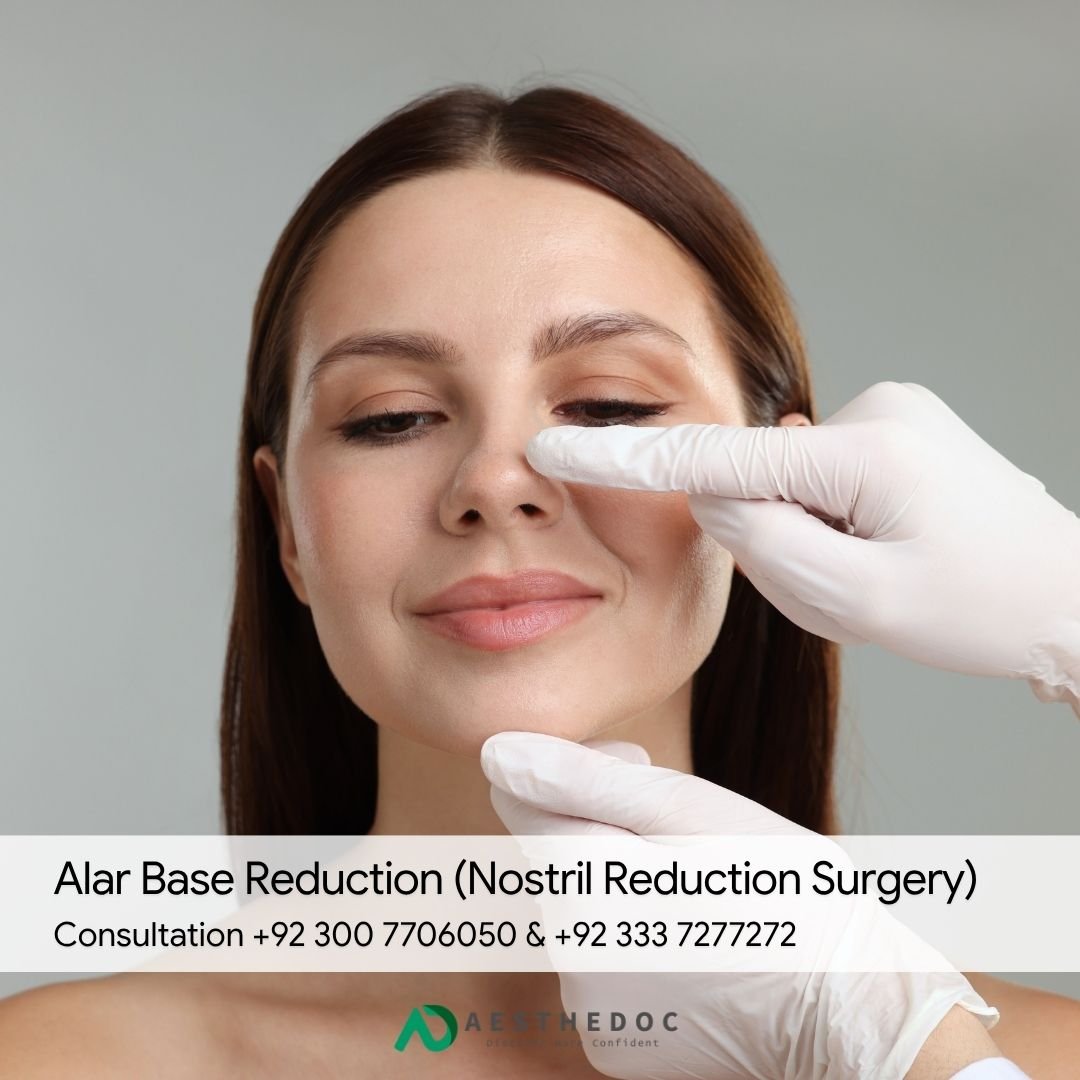
Alar Base Reduction, also known as Nostril Reduction Surgery, is a cosmetic surgical procedure designed to reduce the width of the nostrils and improve the overall balance and proportion of the nose. It is one of the most commonly performed adjunctive procedures during rhinoplasty but can also be carried out as a standalone surgery for patients who are satisfied with the shape of their nose but wish to reduce the size or flare of their nostrils.
The width and shape of the nostrils significantly influence facial harmony. Some individuals naturally have wide or flared nostrils due to genetics, while others develop asymmetry following trauma, previous nasal surgery, or congenital differences. For many patients, even a small reduction in nostril width can create a more refined and balanced facial appearance.
Alar Base Reduction involves carefully removing a small amount of tissue from the base of the nostrils to decrease their width while preserving natural contours and maintaining proper nasal function. The goal is not to create an artificially narrow nose but to achieve facial balance that complements the patient’s unique facial features.
At Aesthedoc Clinic, Alar Base Reduction is performed by experienced Plastic, Reconstructive and Cosmetic Surgery Specialists using meticulous surgical techniques focused on natural-looking outcomes, patient safety, and individualized treatment planning.
Whether performed alone or combined with rhinoplasty, this procedure can enhance nasal symmetry, improve facial proportions, and increase confidence while preserving normal breathing.
What is Alar Base Reduction?
Alar Base Reduction is a surgical procedure that decreases the width of the nostrils by removing a carefully measured amount of tissue from the alar base—the area where the nostrils meet the cheeks.
The procedure aims to:
- Reduce nostril flare
- Narrow excessively wide nostrils
- Improve nasal symmetry
- Enhance facial harmony
- Create better balance between the nose and other facial features
- Preserve natural breathing
The amount of tissue removed is customized for each patient to achieve subtle, proportional results.
Understanding Nasal Anatomy
Understanding the anatomy of the nose helps explain how Alar Base Reduction works.
The nose consists of:
- Nasal bones
- Upper lateral cartilages
- Lower lateral cartilages
- Septum
- Alar cartilages
- Alar base
- Nostrils (nares)
- Soft tissue and skin
The alar base forms the outer edge of each nostril and contributes to the overall width of the nose. Excess width or flare in this region can make the nose appear disproportionately broad even when the bridge and tip are well proportioned.
A detailed anatomical assessment helps determine whether Alar Base Reduction alone is appropriate or whether it should be combined with rhinoplasty for a more comprehensive result.
Why is Alar Base Reduction Performed?
Patients choose Alar Base Reduction for a variety of cosmetic reasons.
Common indications include:
- Wide nostrils
- Flared nostrils
- Broad nasal base
- Nostril asymmetry
- Facial imbalance
- Ethnic nasal refinement while preserving natural features
- Residual nostril widening after rhinoplasty
- Congenital nostril differences
- Post-traumatic nostril deformity
The procedure is tailored to enhance facial harmony rather than dramatically altering the individual’s natural appearance.
Common Concerns Addressed by Alar Base Reduction
Wide Nostrils
Some individuals naturally have nostrils that appear wider than the rest of the nose.
Alar Base Reduction can decrease the width while maintaining a natural contour.
Flared Nostrils
Nostril flare may become more noticeable when smiling or speaking.
Surgery can reduce excessive flare while preserving facial expressions.
Nostril Asymmetry
Minor differences in nostril size or shape are common, but significant asymmetry may affect facial balance.
The procedure can improve symmetry by carefully reshaping one or both nostrils.
Broad Nasal Base
A wide nasal base may make the nose appear larger than it actually is.
Reducing the alar base can create a more balanced relationship between the nose, lips, and eyes.
Post-Rhinoplasty Refinement
Some patients undergo Alar Base Reduction after rhinoplasty if the nostrils remain wider than desired following reshaping of the nasal bridge or tip.
Benefits of Alar Base Reduction
Potential benefits include:
- Narrower nostrils
- Reduced nostril flare
- Improved facial harmony
- Better nasal symmetry
- Balanced facial proportions
- More refined nasal appearance
- Natural-looking results
- Minimal visible scarring when healed
- Long-lasting improvement
- Increased self-confidence
The procedure is designed to enhance the nose without making it appear over-operated.
Who is a Good Candidate?
You may be a suitable candidate if you:
- Have naturally wide nostrils
- Have flared nostrils
- Desire improved facial balance
- Have completed facial growth
- Are in good general health
- Have realistic expectations
- Do not smoke or are willing to stop before surgery
- Wish to refine nostril shape without major rhinoplasty
A consultation with a qualified specialist is necessary to determine whether this procedure is appropriate for your goals.
Who May Not Be a Suitable Candidate?
Alar Base Reduction may not be appropriate for individuals with:
- Active skin or nasal infection
- Poor wound healing
- Uncontrolled medical conditions
- Unrealistic expectations
- Significant breathing problems requiring other nasal surgery
- Ongoing smoking that may impair healing
Patients with functional nasal obstruction may benefit from additional procedures such as septoplasty or septorhinoplasty.
Types of Alar Base Reduction
The surgical technique depends on the patient’s anatomy and desired outcome.
Wedge Excision Technique
A small wedge of tissue is removed from the base of the nostril.
Suitable for:
- Wide nostrils
- Mild to moderate flare
- Cosmetic refinement
Sill Excision
Tissue is removed from the nostril sill to decrease nostril width.
This technique is often used when:
- Nostrils are excessively wide
- The alar base requires narrowing
- Facial proportions would benefit from subtle refinement
Combined Wedge and Sill Excision
Some patients require both techniques to achieve optimal symmetry and proportion.
The procedure is carefully planned to avoid overcorrection and preserve natural nasal contours.
Can Alar Base Reduction Be Combined with Other Procedures?
Yes. Alar Base Reduction is frequently performed alongside other facial procedures.
Common combinations include:
- Rhinoplasty
- Septorhinoplasty
- Tip Plasty
- Chin Augmentation
- Facelift
- Lip Lift
- Buccal Fat Removal
Combining procedures may provide more comprehensive facial harmony while allowing a single recovery period.
Consultation and Evaluation
Every successful Alar Base Reduction begins with a detailed consultation.
During your assessment, the specialist evaluates:
- Nostril width
- Alar flare
- Nasal symmetry
- Skin quality
- Facial proportions
- Breathing function
- Previous nasal surgery
- Medical history
- Cosmetic concerns
- Treatment goals
Clinical photographs may be taken to assist with surgical planning and to document your preoperative appearance.
Preparing for Alar Base Reduction Surgery
Patients are generally advised to:
- Stop smoking at least four weeks before surgery
- Avoid aspirin and certain blood-thinning medications if medically appropriate
- Complete recommended blood investigations
- Maintain a healthy diet
- Stay hydrated
- Arrange transportation home after surgery
- Prepare a comfortable recovery space
- Follow fasting instructions if general anesthesia is planned
Proper preparation supports a smoother surgical experience and recovery.
Preparing for Alar Base Reduction Surgery
Proper preparation helps improve surgical safety, supports healing, and contributes to achieving natural-looking results. During your consultation, your Plastic, Reconstructive and Cosmetic Surgery Specialist will develop a personalized treatment plan based on your facial proportions, nasal anatomy, and aesthetic goals.
Before surgery, you may be advised to:
- Undergo a comprehensive medical evaluation
- Discuss previous nasal surgery or facial trauma
- Have clinical photographs taken for surgical planning
- Complete recommended blood investigations
- Stop smoking at least 4–6 weeks before surgery
- Avoid aspirin and certain blood-thinning medications under medical supervision
- Stay well hydrated
- Eat a nutritious diet before surgery
- Arrange transportation home
- Prepare a comfortable recovery area
Patients should always follow the individualized instructions provided by their surgical team.
Step-by-Step Alar Base Reduction Procedure
Every patient’s anatomy is unique, so the exact surgical plan varies according to the width of the nostrils, degree of flare, skin thickness, and overall facial proportions.
Step 1 – Anesthesia
Alar Base Reduction may be performed under:
- Local anesthesia
- Local anesthesia with sedation
- General anesthesia (when combined with rhinoplasty or other facial procedures)
The most appropriate option depends on the complexity of surgery and whether additional procedures are being performed.
Step 2 – Surgical Markings
Before surgery begins, precise measurements are taken.
The specialist carefully marks:
- Alar base width
- Nostril symmetry
- Planned incision lines
- Amount of tissue to be removed
Accurate markings help achieve balanced and symmetrical results while avoiding excessive narrowing.
Step 3 – Incision Placement
Small incisions are strategically placed within the natural crease where the nostril meets the cheek.
This location helps:
- Conceal scars
- Preserve natural contours
- Maintain nostril shape
- Minimize visible scarring after healing
Careful incision placement is an important aspect of achieving aesthetically pleasing results.
Wedge Excision Technique
One of the most commonly used techniques involves removing a small wedge-shaped section of tissue from the outer base of the nostril.
This technique is particularly effective for:
- Wide nostrils
- Mild to moderate nostril flare
- Improving facial balance
Only the amount of tissue necessary to achieve the desired result is removed.
Sill Excision Technique
In patients with a broad nasal base, tissue may be removed from the nostril sill.
This technique helps:
- Reduce nostril width
- Improve symmetry
- Create smoother transitions between the nostrils and cheeks
Combined Technique
Some patients benefit from combining wedge excision with sill excision.
This approach may provide:
- Better overall proportion
- Improved nostril symmetry
- More natural-looking refinement
- Balanced facial aesthetics
The specialist selects the most appropriate technique after careful evaluation.
Tissue Preservation
Modern Alar Base Reduction emphasizes tissue preservation.
The procedure aims to:
- Maintain natural nostril contours
- Preserve breathing function
- Avoid overcorrection
- Create subtle refinement
- Support long-term stability
Conservative tissue removal generally produces the most natural results.
Closing the Incisions
Once the desired correction has been achieved:
- Fine sutures are used to close the incisions
- The nostril contours are carefully aligned
- Symmetry is reassessed before completing the procedure
The use of meticulous closure techniques helps optimize healing and minimize scar visibility.
How Long Does Alar Base Reduction Take?
The procedure is relatively short compared with full rhinoplasty.
| Procedure | Estimated Surgical Time |
|---|---|
| Alar Base Reduction Only | 45–90 minutes |
| Combined with Rhinoplasty | 2–4 hours |
| Combined with Septorhinoplasty | 3–5 hours |
Recovery After Alar Base Reduction
Recovery is generally quicker than recovery after full rhinoplasty because the surgery focuses only on the nostril base.
Most patients experience gradual improvement over several weeks.
First 24 Hours
Patients commonly notice:
- Mild discomfort
- Swelling
- Slight bruising
- Tightness around the nostrils
- Minimal blood-stained drainage
These symptoms are expected and usually improve within a few days.
Days 2–7
During the first week:
- Swelling gradually decreases
- Bruising begins to fade
- Sutures remain in place
- Patients are encouraged to rest
Avoid:
- Heavy lifting
- Vigorous exercise
- Touching the surgical area
- Smoking
Week One
At approximately one week:
- Sutures are often removed
- Healing progresses well
- Most patients feel comfortable returning to office-based work
Residual swelling may still be present.
Weeks 2–4
Most patients experience:
- Continued reduction in swelling
- Improved nostril symmetry
- Better definition
- Increased confidence
The nose begins to appear more refined.
Months 2–6
Subtle healing continues.
Scar tissue softens gradually, and the final contour becomes increasingly apparent.
Recovery Timeline
| Time After Surgery | Typical Recovery Progress |
|---|---|
| Day 1 | Mild swelling and discomfort |
| Week 1 | Suture removal (if applicable) |
| Week 2 | Most bruising resolves |
| Month 1 | Significant improvement in swelling |
| Month 3 | Scar continues to mature |
| Month 6 | Final refinement usually visible |
Aftercare Instructions
Following postoperative guidance helps support healing and optimize long-term results.
Patients are generally advised to:
- Keep the incision sites clean
- Apply prescribed ointments if recommended
- Avoid excessive facial movement during early healing
- Sleep with the head elevated
- Avoid smoking
- Protect scars from sun exposure
- Avoid strenuous exercise until approved
- Attend all follow-up appointments
Scar Management
Because the incisions are placed in the natural crease between the nostril and cheek, scars typically become much less noticeable over time.
Scar care may include:
- Silicone scar gel or sheets (if advised)
- Sun protection
- Gentle massage after healing (if recommended)
- Regular follow-up assessments
Scar maturation continues for several months.
Benefits of Alar Base Reduction
Potential benefits include:
- Narrower nostrils
- Reduced nostril flare
- Improved facial harmony
- Better nasal symmetry
- Balanced facial proportions
- Natural-looking refinement
- Long-lasting cosmetic improvement
- Minimal visible scarring
- Enhanced confidence
When performed with careful planning, the procedure can provide subtle yet meaningful aesthetic improvements without changing the overall character of the face.
Expected Results
The goal of Alar Base Reduction is to achieve a refined nose that remains in harmony with the patient’s facial features.
Possible improvements include:
- Reduced nostril width
- Improved nostril symmetry
- Less alar flare
- Better proportion between the nose and face
- More balanced facial profile
- Preservation of natural breathing
Final results become more apparent as swelling subsides and scars mature over several months.
Before and After Expectations
Patients should have realistic expectations before surgery.
Alar Base Reduction is intended to:
- Refine the nostrils rather than completely change the appearance of the nose
- Improve proportion rather than create an artificially narrow nose
- Enhance facial balance while preserving ethnic and individual characteristics
A thorough consultation, careful measurements, and individualized planning contribute to achieving results that look natural and complement the patient’s unique facial anatomy.
Risks and Possible Complications of Alar Base Reduction
Alar Base Reduction is generally considered a safe cosmetic procedure when performed by a qualified Plastic, Reconstructive and Cosmetic Surgery Specialist. However, like any surgical procedure, it carries potential risks that patients should understand before making a decision.
Possible complications include:
- Bleeding
- Infection
- Swelling
- Bruising
- Temporary discomfort
- Delayed wound healing
- Visible scarring
- Hypertrophic or raised scars (rare)
- Asymmetry of the nostrils
- Overcorrection or undercorrection
- Changes in nostril shape
- Temporary numbness
- Skin irritation
- Reaction to anesthesia
- Need for revision surgery
Fortunately, serious complications are uncommon when the procedure is carefully planned and patients follow all postoperative instructions.
How to Reduce the Risk of Complications
Patients can help achieve the best possible outcome by:
- Choosing an experienced surgical specialist
- Following all preoperative instructions
- Stopping smoking before and after surgery
- Avoiding blood-thinning medications unless medically required
- Keeping the incision area clean
- Attending scheduled follow-up visits
- Avoiding strenuous exercise during the initial healing period
- Protecting healing scars from direct sunlight
Proper postoperative care is an important part of achieving natural-looking, long-lasting results.
Success Rate of Alar Base Reduction
Alar Base Reduction has a high patient satisfaction rate when the procedure is performed on carefully selected candidates.
Successful outcomes depend on:
- Accurate surgical planning
- Facial proportions
- Skin quality
- Healing characteristics
- Conservative tissue removal
- Surgical technique
- Patient expectations
The objective is to create a balanced, refined appearance while preserving the natural character of the nose.
Estimated Alar Base Reduction Cost in Pakistan
The cost of Alar Base Reduction varies depending on whether it is performed as a standalone procedure or combined with rhinoplasty, the complexity of the correction, anesthesia requirements, and hospital or clinic fees.
Estimated Price Table
| Procedure | Estimated Cost (PKR) |
|---|---|
| Consultation | 3,000 – 10,000 |
| Alar Base Reduction (Local Anesthesia) | 80,000 – 180,000 |
| Alar Base Reduction (Sedation) | 120,000 – 220,000 |
| Combined with Rhinoplasty | 250,000 – 600,000 |
| Combined with Revision Rhinoplasty | 500,000 – 900,000 |
Disclaimer: These prices are approximate estimates for educational purposes only. Final costs vary depending on the patient’s anatomy, surgical complexity, anesthesia, facility charges, investigations, and the individualized treatment plan discussed during consultation.
Estimated Alar Base Reduction Cost Around the World
Treatment costs vary internationally based on surgeon expertise, healthcare systems, operating facility fees, and the complexity of the procedure.
| Country | Estimated Cost |
|---|---|
| 🇵🇰 Pakistan | USD 500 – 1,500 |
| 🇮🇳 India | USD 800 – 2,000 |
| 🇹🇷 Turkey | USD 1,500 – 3,500 |
| 🇹🇭 Thailand | USD 1,500 – 3,500 |
| 🇲🇾 Malaysia | USD 1,500 – 3,000 |
| 🇦🇪 UAE (Dubai) | USD 2,500 – 5,500 |
| 🇰🇷 South Korea | USD 2,500 – 6,000 |
| 🇬🇧 United Kingdom | USD 4,000 – 7,500 |
| 🇨🇦 Canada | USD 3,500 – 7,000 |
| 🇺🇸 United States | USD 4,500 – 9,000+ |
Frequently Asked Questions (FAQs)
What is Alar Base Reduction?
Alar Base Reduction is a cosmetic surgical procedure that narrows wide or flared nostrils by removing a small amount of tissue from the base of the nose.
Is Alar Base Reduction the same as rhinoplasty?
No. Rhinoplasty reshapes the overall nose, while Alar Base Reduction specifically focuses on reducing the width of the nostrils. The two procedures can be performed separately or together.
Will the surgery affect my breathing?
When performed correctly, the procedure is designed to preserve normal nasal function and breathing.
Is the procedure painful?
Most patients experience only mild discomfort, which is usually well controlled with prescribed medication.
How long does the procedure take?
Alar Base Reduction typically takes between 45 and 90 minutes when performed as a standalone procedure.
Will I have visible scars?
Incisions are usually placed within the natural crease where the nostril meets the cheek, making scars much less noticeable after healing.
How long is the recovery?
Most patients return to desk work within a few days to one week. Swelling continues to improve over the following weeks, and scar maturation may take several months.
Can the procedure be combined with rhinoplasty?
Yes. Alar Base Reduction is commonly performed with rhinoplasty to improve overall nasal proportions.
Will my nose look natural?
The goal is to achieve subtle refinement while maintaining harmony with your facial features and preserving your natural appearance.
Can Alar Base Reduction correct asymmetrical nostrils?
Yes. Mild to moderate nostril asymmetry can often be improved during the procedure.
Is the result permanent?
The tissue removed during surgery does not grow back, so the structural changes are generally long-lasting.
Can I wear glasses after surgery?
If Alar Base Reduction is performed alone, glasses are usually not a problem. If combined with rhinoplasty, your specialist may advise temporary precautions.
When can I exercise again?
Light walking is encouraged soon after surgery, but strenuous exercise should only be resumed after approval from your specialist.
Can smokers undergo Alar Base Reduction?
Smoking increases the risk of delayed healing and visible scarring. Patients are strongly encouraged to stop smoking before and after surgery.
Is there an ideal age for Alar Base Reduction?
The procedure is generally considered after facial growth is complete. Suitability depends on overall health, anatomy, and individual goals rather than age alone.
Why Choose Aesthedoc Clinic?
At Aesthedoc Clinic, we understand that even small refinements to the nose can have a significant impact on facial harmony and self-confidence. Our experienced Plastic, Reconstructive and Cosmetic Surgery Specialists provide individualized treatment plans designed to achieve balanced, natural-looking results while prioritizing patient safety.
Our approach includes:
- Personalized consultations
- Comprehensive facial analysis
- Advanced surgical planning
- Modern, evidence-based techniques
- Natural-looking aesthetic outcomes
- Preservation of normal nasal function
- Careful scar placement and management
- Compassionate postoperative care
- Long-term follow-up support
- Confidential patient-centered treatment
Whether you are seeking standalone nostril reduction or combining the procedure with rhinoplasty, our team is committed to helping you make informed decisions about your treatment options.
Related Procedures
Patients interested in Alar Base Reduction may also wish to learn about:
- Rhinoplasty
- Revision Rhinoplasty
- Septorhinoplasty
- Tip Plasty
- Chin Augmentation
- Lip Lift
- Buccal Fat Removal
- Facelift
- Neck Lift
- Blepharoplasty
Conclusion
Alar Base Reduction is an effective procedure for reducing wide or flared nostrils while maintaining the natural appearance of the nose. When carefully planned and performed by an experienced specialist, the procedure can improve facial proportions, enhance symmetry, and create subtle, long-lasting refinement.
A detailed consultation and individualized surgical plan are essential to achieving results that complement your facial features while preserving normal breathing and nasal function.
Book Your Alar Base Reduction Consultation at Aesthedoc Clinic
If you are considering Alar Base Reduction (Nostril Reduction Surgery), Aesthedoc Clinic offers comprehensive consultations with experienced Plastic, Reconstructive and Cosmetic Surgery Specialists. We provide personalized assessment, advanced surgical planning, and patient-centered care to help you achieve balanced, natural-looking results.
Whether you wish to reduce nostril flare, improve symmetry, or enhance the overall appearance of your nose, our team is here to guide you through every step of your treatment journey.
Schedule Your Consultation Today
📞 Phone: 0333-7277272 | 0300-7706050
📧 Email: info@aesthedoc.com
Book your confidential consultation with Aesthedoc Clinic to discuss your goals and explore the treatment options best suited to your needs.