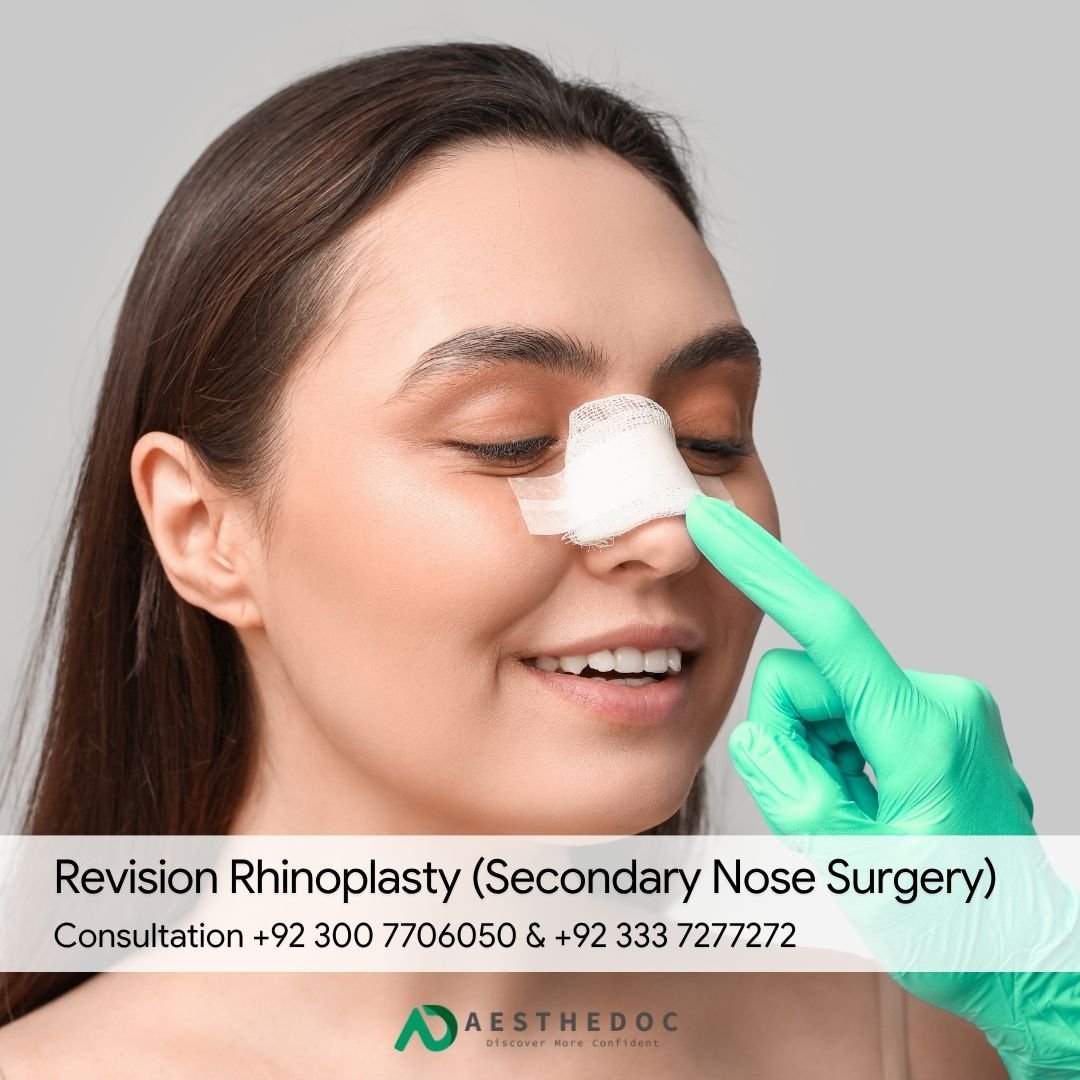
Revision rhinoplasty, also known as secondary rhinoplasty, is a specialized surgical procedure performed to improve the appearance, function, or both after a previous nose surgery. While primary rhinoplasty can produce excellent outcomes for many patients, some individuals may experience persistent breathing difficulties, cosmetic concerns, scar tissue formation, structural collapse, or healing changes that require additional surgical correction.
Revision rhinoplasty is generally considered more complex than primary rhinoplasty because the normal anatomy has already been altered. Scar tissue, reduced cartilage support, and previous surgical changes often require advanced planning and reconstructive techniques to achieve a successful outcome. The procedure may involve rebuilding the nasal framework, improving airflow, correcting asymmetry, refining the nasal tip, or restoring natural facial harmony.
Patients seek revision rhinoplasty for many reasons. Some are unhappy with the cosmetic appearance of their nose after the first surgery, while others continue to experience functional problems such as nasal obstruction or difficulty breathing. In many cases, both cosmetic refinement and functional reconstruction can be performed during the same procedure.
At Aesthedoc Clinic, Revision Rhinoplasty is performed by experienced Plastic, Reconstructive and Cosmetic Surgery Specialists who evaluate each patient individually and develop a personalized surgical plan based on their anatomy, previous surgery, healing pattern, and treatment goals. Every consultation includes a comprehensive examination, discussion of expectations, and detailed explanation of the procedure, recovery, and potential outcomes.
Whether your goal is to correct an over-resected bridge, improve nasal symmetry, restore structural support, or address breathing difficulties after previous surgery, revision rhinoplasty offers an opportunity to improve both appearance and function through carefully planned reconstructive surgery.
Table of Contents
- What is Revision Rhinoplasty?
- Why Do Patients Need Revision Rhinoplasty?
- Who is a Good Candidate?
- Common Problems Corrected
- Primary vs Revision Rhinoplasty
- Types of Revision Rhinoplasty
- Consultation and Assessment
- Preparation Before Surgery
- Step-by-Step Surgical Procedure
- Recovery Timeline
- Risks and Complications
- Benefits
- Expected Results
- Estimated Prices
- FAQs
- Why Choose Aesthedoc Clinic?
- Book Your Consultation
What is Revision Rhinoplasty?
Revision rhinoplasty is a corrective nose surgery performed after one or more previous rhinoplasty procedures. The objective is to improve nasal appearance, restore normal breathing, strengthen weakened nasal structures, or address complications that developed after the initial operation.
Unlike primary rhinoplasty, revision surgery often requires reconstruction rather than simple reshaping. The specialist may need to rebuild cartilage support, correct scar tissue, straighten the nose, improve airway function, or restore lost volume using cartilage grafts.
Every revision rhinoplasty is unique because no two patients have the same surgical history or healing pattern. A detailed evaluation is essential to identify the underlying cause of the problem and determine the most appropriate surgical approach.
Why Do Patients Choose Revision Rhinoplasty?
Although many primary rhinoplasty procedures are successful, revision surgery may be considered when patients continue to experience cosmetic or functional concerns.
Common reasons include:
- Persistent breathing difficulties
- Crooked nose after healing
- Collapsed nasal bridge
- Pinched nasal tip
- Overly reduced nose
- Under-corrected deformity
- Asymmetrical nostrils
- Twisted nose
- Visible irregularities
- Scar tissue formation
- Nasal valve collapse
- Drooping tip
- Saddle nose deformity
- Dissatisfaction with cosmetic appearance
- Complications following previous surgery
- Trauma after rhinoplasty
- Changes during healing
Some patients notice these issues shortly after surgery, while others develop gradual changes over several months or years.
Why is Revision Rhinoplasty More Difficult?
Revision rhinoplasty is one of the most technically demanding procedures in facial plastic surgery.
Several factors increase its complexity:
Scar Tissue
Previous surgery creates scar tissue that makes dissection more difficult and limits tissue flexibility.
Reduced Cartilage
Many patients have already had cartilage removed during the first operation, making reconstruction more challenging.
Altered Anatomy
The natural landmarks of the nose may have changed significantly after the initial surgery.
Weakened Structural Support
Excessive cartilage removal can lead to collapse of the nasal framework, requiring reconstruction with grafts.
Healing Variability
Every patient heals differently. Thick skin, scar formation, and tissue contraction all influence the final result.
Because of these challenges, revision rhinoplasty requires careful planning and meticulous surgical technique.
Common Problems Corrected with Revision Rhinoplasty
Revision rhinoplasty can address a wide range of cosmetic and functional concerns.
Crooked Nose
Residual asymmetry or shifting during healing may leave the nose visibly crooked.
Revision surgery aims to restore proper alignment while maintaining natural facial balance.
Breathing Problems
Internal structural abnormalities may reduce airflow after primary surgery.
Common causes include:
- Collapsed nasal valves
- Deviated septum
- Scar tissue
- Narrowed nasal passages
Correcting these issues can improve breathing and overall nasal function.
Pinched Nasal Tip
Excessive cartilage removal may create an unnatural, pinched appearance.
Structural grafts are often used to restore support and improve tip definition.
Saddle Nose Deformity
Loss of structural support may cause the bridge to collapse, creating a depressed nasal profile.
Reconstruction using cartilage grafts can restore height and stability.
Wide Nose After Surgery
Some patients continue to feel their nose appears too wide despite previous surgery.
Revision procedures may refine the bridge, nasal bones, or soft tissues to improve overall proportions.
Over-Resected Nose
Removing too much cartilage or bone during the first operation may produce an artificial appearance.
Revision rhinoplasty focuses on rebuilding natural support rather than removing additional tissue.
Persistent Dorsal Hump
Occasionally, a dorsal hump remains after healing or becomes more noticeable over time.
Additional contouring may improve the nasal profile.
Nasal Valve Collapse
The nasal valves play an important role in breathing.
Weakness or collapse can cause:
- Difficulty breathing
- Nasal obstruction
- Exercise intolerance
- Chronic congestion
Structural grafts may restore support and improve airflow.
Primary Rhinoplasty vs Revision Rhinoplasty
| Primary Rhinoplasty | Revision Rhinoplasty |
|---|---|
| First nose surgery | Corrective surgery after previous rhinoplasty |
| Normal anatomy | Altered anatomy |
| Less scar tissue | Significant scar tissue may be present |
| Usually simpler | Technically more complex |
| May not require grafts | Frequently requires cartilage grafts |
| Shorter surgical time | Often longer surgical time |
| Faster recovery | Recovery may be slightly longer |
Who is a Good Candidate?
Revision rhinoplasty may be suitable for individuals who:
- Are unhappy with previous rhinoplasty results
- Continue to experience breathing difficulties
- Have healed completely from previous surgery
- Are in good general health
- Have realistic expectations
- Wish to improve both appearance and function
Most specialists recommend waiting approximately 12 months after the initial rhinoplasty before considering revision surgery, unless an urgent medical issue requires earlier intervention.
Who Should Delay Revision Rhinoplasty?
Surgery may be postponed if:
- Healing from the first surgery is incomplete
- Significant swelling remains
- Active nasal infection is present
- Medical conditions are uncontrolled
- Smoking continues despite medical advice
- Expectations are unrealistic
A careful consultation helps determine the safest timing for surgery.
Types of Revision Rhinoplasty
Different surgical approaches may be recommended depending on the patient’s concerns.
Minor Revision Rhinoplasty
Used for small contour irregularities or subtle cosmetic refinements.
Major Revision Rhinoplasty
Involves structural reconstruction of the nose, frequently using cartilage grafts.
Functional Revision Rhinoplasty
Focuses on restoring normal breathing while improving nasal support.
Cosmetic Revision Rhinoplasty
Performed primarily to improve appearance after previous surgery.
Reconstructive Revision Rhinoplasty
Recommended for severe deformities caused by trauma, infection, previous surgery, or congenital conditions.
Consultation for Revision Rhinoplasty
Successful revision surgery begins with a detailed consultation.
Your specialist will carefully evaluate:
- Previous surgical history
- Current nasal appearance
- Breathing function
- Skin thickness
- Scar tissue
- Cartilage support
- Facial proportions
- Previous operative reports (if available)
- Medical history
- Treatment goals
High-quality clinical photographs are often taken to assist with surgical planning and to document the current condition of the nose.
The consultation is also an opportunity to discuss realistic expectations, recovery, potential risks, and the individualized treatment plan.
Preparing for Revision Rhinoplasty Surgery
Careful preparation is one of the most important steps toward achieving a successful revision rhinoplasty outcome. Since revision procedures are generally more complex than primary rhinoplasty, patients undergo a thorough evaluation to ensure the surgery is planned safely and effectively.
Before surgery, your specialist may recommend:
- A complete medical assessment
- Review of previous rhinoplasty records (if available)
- Clinical photographs
- Blood investigations
- Nasal examination
- Airway assessment
- CT scan (in selected cases)
- Stopping smoking several weeks before surgery
- Avoiding blood-thinning medications under medical supervision
- Maintaining a healthy diet and hydration
- Arranging transportation after surgery
- Preparing a comfortable recovery area at home
Patients should always follow the personalized preoperative instructions provided by their treating specialist.
Step-by-Step Revision Rhinoplasty Procedure
Every revision rhinoplasty is customized according to the patient’s anatomy, previous surgery, and desired outcome. The procedure generally involves reconstructing and strengthening the nose rather than simply reshaping it.
Step 1 – Anesthesia
Revision rhinoplasty is usually performed under general anesthesia to maximize patient comfort and allow precise surgical correction.
Throughout the procedure, the anesthesia team continuously monitors:
- Blood pressure
- Heart rate
- Oxygen saturation
- Breathing
- Temperature
Step 2 – Surgical Incisions
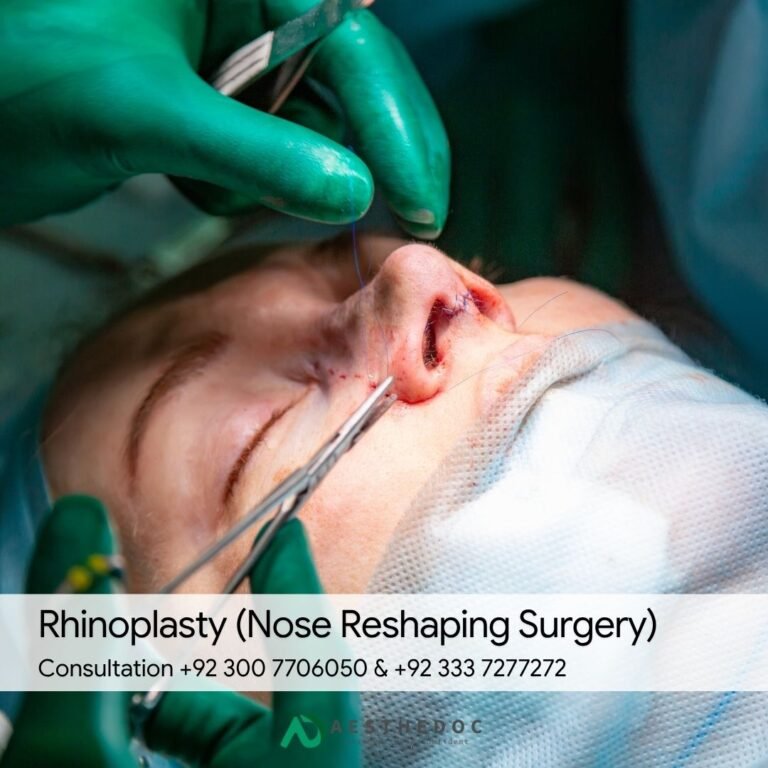
Most revision rhinoplasty procedures are performed using the open rhinoplasty technique.
A small incision is made across the columella, allowing the specialist to fully visualize the altered nasal structures.
Open revision surgery provides better access for:
- Scar tissue removal
- Structural reconstruction
- Cartilage graft placement
- Complex nasal reshaping
In carefully selected cases, a closed approach may also be appropriate.
Step 3 – Scar Tissue Management
One of the most challenging aspects of revision rhinoplasty is working around scar tissue from the previous surgery.
The specialist carefully:
- Releases scar tissue
- Preserves healthy tissue
- Restores normal anatomy where possible
- Creates a stable foundation for reconstruction
Step 4 – Structural Reconstruction
Revision rhinoplasty frequently focuses on rebuilding the nose rather than removing additional tissue.
This may involve:
- Straightening the nasal framework
- Rebuilding the bridge
- Correcting asymmetry
- Strengthening the nasal tip
- Improving airway support
- Restoring facial balance
Each reconstruction is individualized according to the patient’s anatomy.
Cartilage Grafting in Revision Rhinoplasty
Many revision procedures require cartilage grafts because the original cartilage has already been removed during previous surgery.
Cartilage provides:
- Structural strength
- Long-term support
- Better breathing
- Improved contour
- More natural results
Septal Cartilage
If sufficient cartilage remains within the nasal septum, it may be used for reconstruction.
Advantages include:
- Same surgical field
- Excellent compatibility
- Good structural support
Ear Cartilage
When septal cartilage is unavailable, cartilage may be obtained from the ear.
Ear cartilage is commonly used for:
- Tip reconstruction
- Minor structural support
- Soft contour correction
Harvesting ear cartilage generally does not significantly alter the appearance of the ear.
Rib Cartilage
Complex revision cases sometimes require rib cartilage.
Rib cartilage offers:
- Large graft volume
- Strong structural support
- Reconstruction of major deformities
- Correction after multiple previous surgeries
Although rib cartilage requires an additional surgical site, it provides excellent material for rebuilding severely damaged noses.
Septoplasty During Revision Surgery
Some patients continue to experience breathing problems after primary rhinoplasty.
Correction may involve:
- Straightening the septum
- Removing internal obstruction
- Repairing collapsed nasal valves
- Improving airflow
- Supporting weakened structures
Functional correction can often be performed during the same operation.
How Long Does Revision Rhinoplasty Take?
The duration depends on the complexity of the reconstruction.
| Procedure | Estimated Surgical Time |
|---|---|
| Minor Revision | 2–3 hours |
| Moderate Revision | 3–4 hours |
| Major Revision | 4–6 hours |
| Complex Reconstruction | 5–7 hours |
Revision surgery generally requires more operating time than primary rhinoplasty because of scar tissue and reconstruction.
Recovery After Revision Rhinoplasty
Recovery varies depending on the complexity of surgery and the extent of reconstruction.
Although healing takes time, most patients gradually notice improvements over the following months.
First 24 Hours
Patients commonly experience:
- Mild discomfort
- Swelling
- Bruising
- Nasal congestion
- Small amount of blood-stained drainage
Rest, hydration, and prescribed medications help support early recovery.
First Week
During the first week:
- Swelling reaches its maximum
- Bruising begins to improve
- Nasal splint remains in place
- Follow-up appointment is scheduled
Patients should avoid:
- Nose blowing
- Heavy lifting
- Strenuous activity
- Smoking
Weeks 2–4
Patients usually notice:
- Significant improvement in bruising
- Reduced swelling
- Better breathing
- Improved comfort
Many individuals return to office work within two weeks, depending on their recovery and job requirements.
Months 1–3
Healing continues gradually.
Patients begin to appreciate:
- Better contour
- Improved nasal symmetry
- Enhanced tip definition
- Improved airway function
Six to Twelve Months
Final refinement occurs slowly.
Subtle swelling continues to resolve, particularly around the nasal tip.
The final outcome may not be fully visible until 12–18 months after surgery.
Recovery Timeline
| Time After Surgery | Typical Recovery |
|---|---|
| Day 1 | Swelling and mild discomfort |
| Week 1 | Splint removal |
| Week 2 | Bruising improves |
| Month 1 | Significant swelling decreases |
| Month 3 | Better definition appears |
| Month 6 | Most healing complete |
| Month 12–18 | Final result develops |
Recovery Tips
Patients are encouraged to:
- Sleep with the head elevated
- Avoid smoking
- Stay hydrated
- Eat nutritious meals
- Avoid wearing heavy glasses if advised
- Protect the nose from injury
- Avoid strenuous exercise until cleared
- Attend all follow-up appointments
- Follow medication instructions carefully
Good postoperative care plays an important role in supporting healing and optimizing surgical outcomes.
Benefits of Revision Rhinoplasty
Revision rhinoplasty can provide both functional and aesthetic improvements for appropriately selected patients.
Potential benefits include:
- Improved breathing
- Better facial balance
- Correction of previous surgical deformities
- Restoration of nasal support
- Improved symmetry
- Better tip definition
- Enhanced confidence
- Correction of collapsed nasal bridge
- Improved airway function
- Long-term structural stability
Because every patient is unique, expected outcomes vary depending on the condition being treated and the extent of reconstruction.
Expected Results
The goal of revision rhinoplasty is to create a nose that appears natural, functions well, and complements the patient’s facial features.
Depending on the individual case, surgery may improve:
- Nasal shape
- Facial harmony
- Airflow
- Symmetry
- Bridge contour
- Tip support
- Profile appearance
Patients should understand that revision surgery aims for meaningful improvement rather than absolute perfection. Realistic expectations and careful surgical planning contribute to higher patient satisfaction.
Risks and Possible Complications of Revision Rhinoplasty
Like any surgical procedure, revision rhinoplasty has potential risks. Because this surgery is more complex than primary rhinoplasty, careful planning and postoperative care are particularly important.
Possible risks include:
- Infection
- Bleeding
- Prolonged swelling
- Bruising
- Temporary numbness
- Scar tissue formation
- Delayed wound healing
- Nasal asymmetry
- Persistent breathing difficulty
- Skin irregularities
- Cartilage graft movement
- Graft absorption (rare)
- Unsatisfactory cosmetic outcome
- Need for additional revision surgery
- Reaction to anesthesia
Fortunately, serious complications are uncommon when surgery is performed by a qualified Plastic, Reconstructive and Cosmetic Surgery Specialist and patients carefully follow postoperative instructions.
How to Reduce the Risk of Complications
Patients can help improve healing by:
- Choosing an experienced surgical team
- Stopping smoking before surgery
- Following medication instructions
- Attending follow-up appointments
- Avoiding strenuous exercise during recovery
- Protecting the nose from accidental injury
- Eating a healthy, protein-rich diet
- Staying hydrated
- Avoiding self-medication
Good communication with your specialist throughout recovery is essential.
Revision Rhinoplasty Success Rate
Although revision rhinoplasty is more technically demanding than primary rhinoplasty, modern reconstructive techniques allow many patients to achieve meaningful improvements in both appearance and breathing.
Success depends on:
- The condition of the nasal tissues
- Previous surgical changes
- Cartilage availability
- Healing characteristics
- Surgical planning
- Patient expectations
The primary objective is to restore function and create a natural-looking nose that complements the patient’s facial features.
Estimated Revision Rhinoplasty Cost in Pakistan
The cost of revision rhinoplasty depends on the complexity of the previous surgery, the need for cartilage grafts, hospital charges, anesthesia, and the length of the operation. Revision procedures generally require more operating time than primary rhinoplasty because reconstruction is often necessary.
Estimated Price Table
| Procedure | Estimated Cost (PKR) |
|---|---|
| Consultation | 3,000 – 10,000 |
| Minor Revision Rhinoplasty | 250,000 – 450,000 |
| Moderate Revision Rhinoplasty | 350,000 – 650,000 |
| Major Revision Rhinoplasty | 500,000 – 900,000 |
| Complex Reconstruction with Cartilage Grafts | 700,000 – 1,200,000 |
Disclaimer: These are estimated private-sector prices provided for informational purposes only. The final treatment cost depends on your individual condition, surgical complexity, hospital charges, anesthesia requirements, investigations, and the personalized treatment plan recommended during consultation.
Estimated Revision Rhinoplasty Cost Around the World
Revision rhinoplasty is typically more expensive than primary rhinoplasty because of its technical complexity and the need for reconstructive techniques.
| Country | Estimated Cost |
|---|---|
| 🇵🇰 Pakistan | USD 1,000 – 4,000 |
| 🇮🇳 India | USD 2,000 – 5,000 |
| 🇹🇷 Turkey | USD 3,500 – 7,000 |
| 🇹🇭 Thailand | USD 3,500 – 7,000 |
| 🇲🇾 Malaysia | USD 3,000 – 6,000 |
| 🇦🇪 UAE (Dubai) | USD 6,000 – 12,000 |
| 🇰🇷 South Korea | USD 6,000 – 12,000 |
| 🇬🇧 United Kingdom | USD 10,000 – 18,000 |
| 🇨🇦 Canada | USD 8,000 – 15,000 |
| 🇺🇸 United States | USD 12,000 – 25,000+ |
Frequently Asked Questions (FAQs)
What is revision rhinoplasty?
Revision rhinoplasty is a secondary surgical procedure performed to improve the appearance or function of the nose after a previous rhinoplasty.
Why do patients need revision rhinoplasty?
Common reasons include dissatisfaction with cosmetic results, breathing problems, asymmetry, scar tissue, or structural collapse following the initial surgery.
Is revision rhinoplasty more difficult than primary rhinoplasty?
Yes. Scar tissue, altered anatomy, and reduced cartilage make revision surgery significantly more complex.
How long should I wait after my first rhinoplasty?
Most patients should wait approximately 12 months to allow complete healing before considering revision surgery, unless an urgent medical issue requires earlier treatment.
Is revision rhinoplasty painful?
Most patients experience mild to moderate discomfort that can usually be managed with prescribed medications.
Will I need cartilage grafts?
Many revision procedures require cartilage grafts to rebuild support, although not every patient needs them.
Where does the cartilage come from?
Cartilage may be taken from the nasal septum, ear, or rib depending on the amount of reconstruction required.
Can revision rhinoplasty improve breathing?
Yes. Functional reconstruction can improve airflow when nasal obstruction is caused by structural problems.
Will there be visible scars?
Open revision rhinoplasty leaves a small scar on the columella that usually becomes less noticeable over time. Closed techniques do not leave external scars.
How long is the recovery?
Most patients return to routine daily activities within two weeks, while the final result continues to develop over 12–18 months.
Can I wear glasses after surgery?
Heavy glasses should be avoided until your specialist advises that it is safe.
Will my nose look natural?
The goal of revision rhinoplasty is to restore a natural appearance that harmonizes with your facial features.
Can revision rhinoplasty fix a collapsed nose?
Yes. Structural grafts can often restore support to a collapsed nasal bridge or tip.
How long does surgery take?
Most procedures take between 3 and 6 hours, depending on complexity.
Is revision rhinoplasty permanent?
The structural improvements are generally intended to be long-lasting, although normal aging and healing continue over time.
Why Choose Aesthedoc Clinic?
Revision rhinoplasty requires careful evaluation, advanced surgical planning, and a personalized approach. At Aesthedoc Clinic, every patient receives a comprehensive consultation with an experienced Plastic, Reconstructive and Cosmetic Surgery Specialist to determine the most appropriate treatment plan based on their previous surgery, nasal anatomy, and treatment goals.
Our approach emphasizes:
- Individualized treatment planning
- Modern reconstructive surgical techniques
- Functional and cosmetic assessment
- Comprehensive preoperative evaluation
- Patient safety
- Personalized postoperative care
- Evidence-based surgical practice
- Confidential consultations
- Long-term follow-up
Whether you require correction of cosmetic concerns, improved breathing, or reconstruction after previous surgery, our team is committed to providing compassionate, patient-centered care.
Related Procedures
Patients interested in Revision Rhinoplasty may also wish to learn about:
- Rhinoplasty (Primary Nose Surgery)
- Septorhinoplasty
- Alar Base Reduction
- Tip Plasty
- Chin Augmentation
- Buccal Fat Removal
- Facelift
- Neck Lift
- Blepharoplasty
- Otoplasty
Conclusion
Revision rhinoplasty offers patients an opportunity to improve both the appearance and function of the nose after previous surgery. Although it is more technically demanding than primary rhinoplasty, advances in reconstructive techniques and careful surgical planning allow many patients to achieve meaningful, natural-looking improvements.
A thorough consultation, realistic expectations, and individualized treatment planning are essential to achieving the best possible outcome. If you are considering revision rhinoplasty, discussing your concerns with a qualified specialist is the first step toward understanding your treatment options.
Book Your Revision Rhinoplasty Consultation at Aesthedoc Clinic
If you are considering Revision Rhinoplasty (Secondary Nose Surgery), Aesthedoc Clinic offers comprehensive consultations with experienced Plastic, Reconstructive and Cosmetic Surgery Specialists. Our team provides personalized assessment, advanced surgical planning, and compassionate care to help address both cosmetic and functional concerns after previous nose surgery.
Whether you wish to improve breathing, restore nasal structure, or refine the appearance of your nose, we are committed to developing a treatment plan tailored to your individual needs.
Schedule Your Consultation Today
📞 Phone: 0333-7277272 | 0300-7706050
📧 Email: info@aesthedoc.com
Take the next step toward restoring confidence and improving nasal function by booking your confidential consultation with the surgical team at Aesthedoc Clinic.