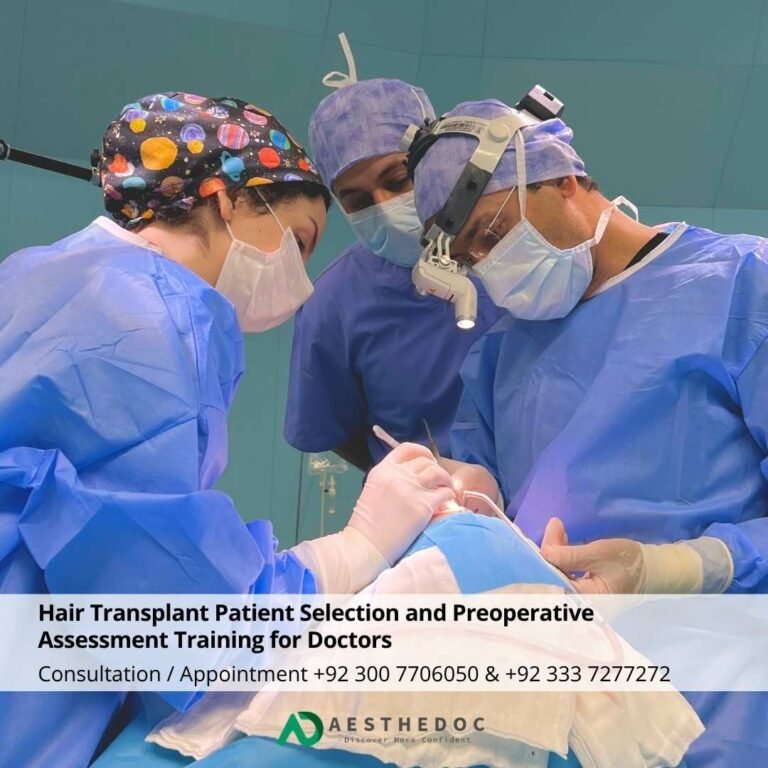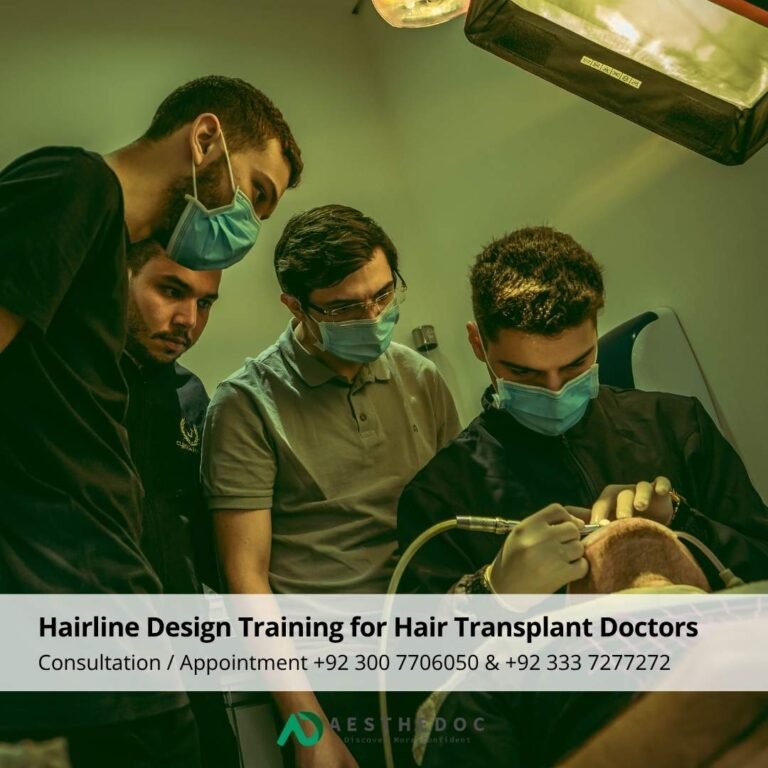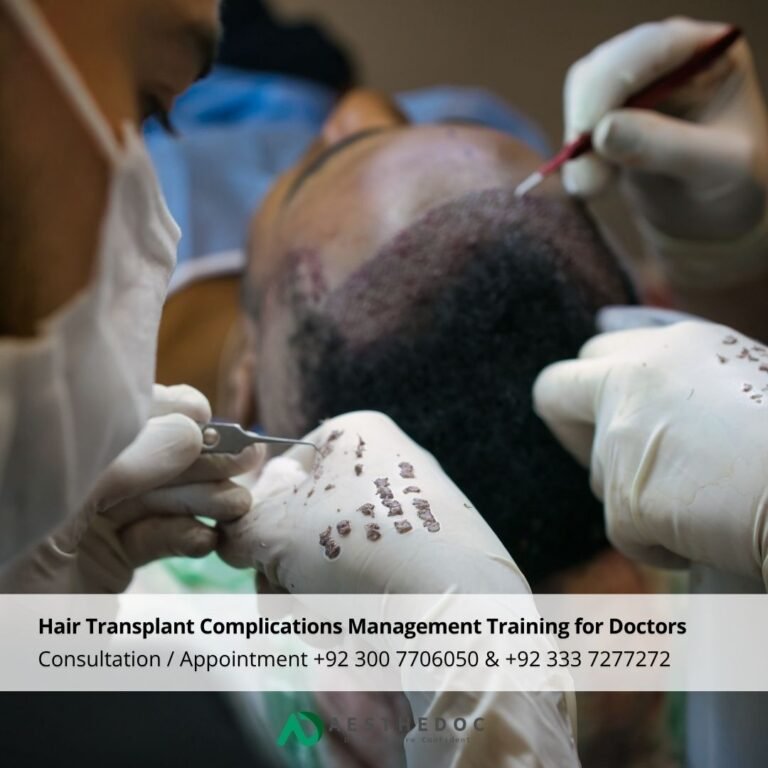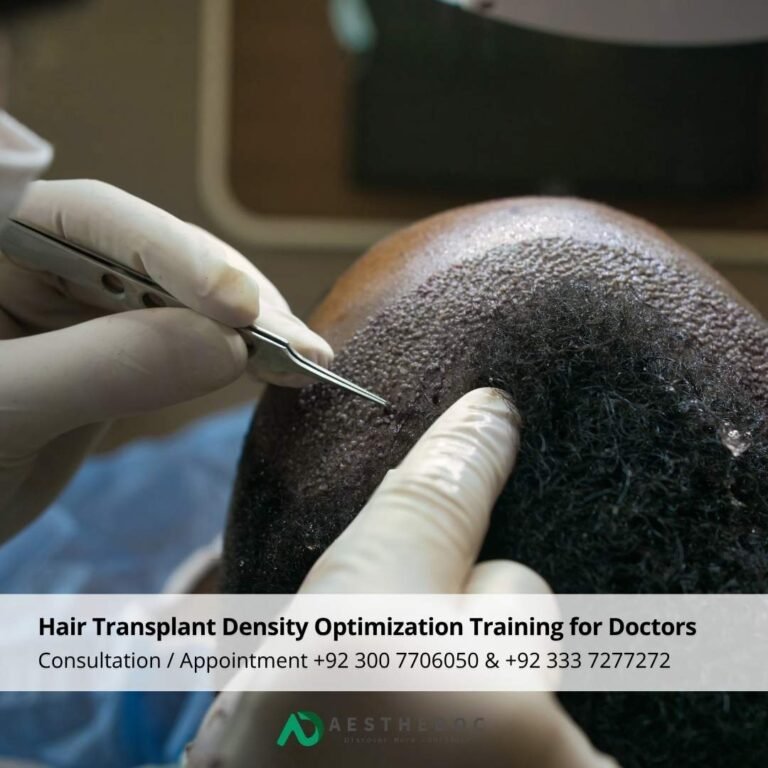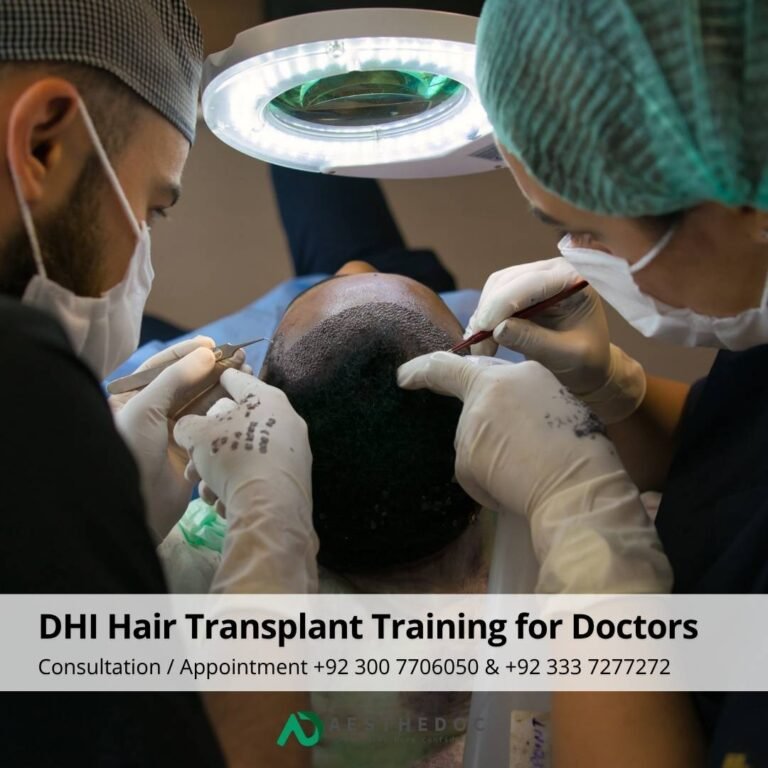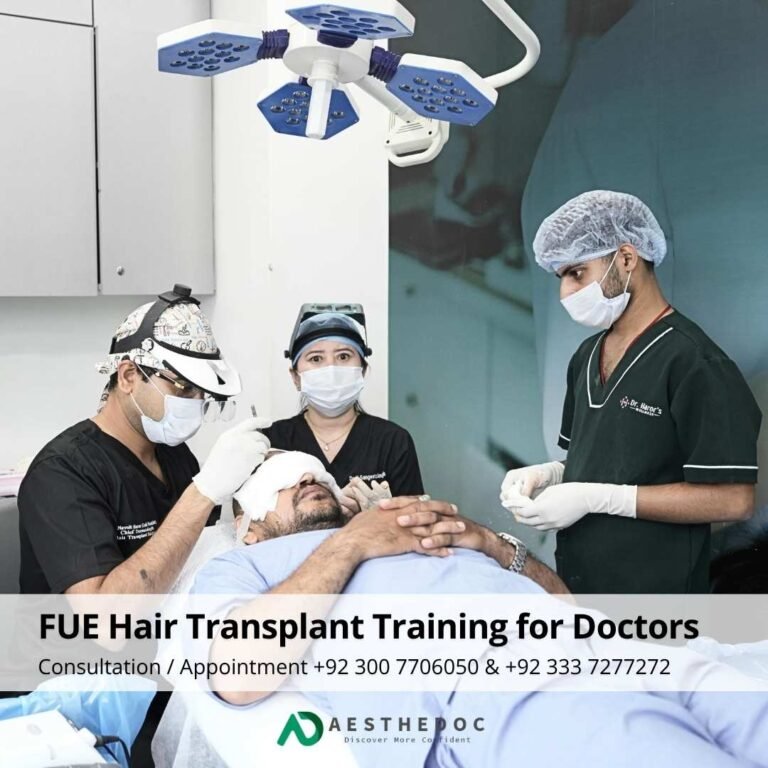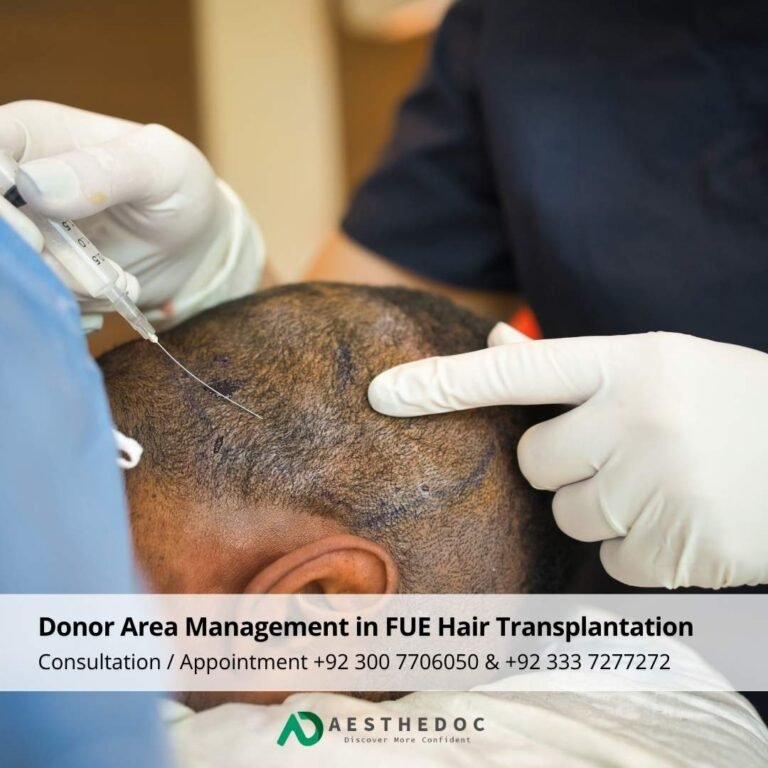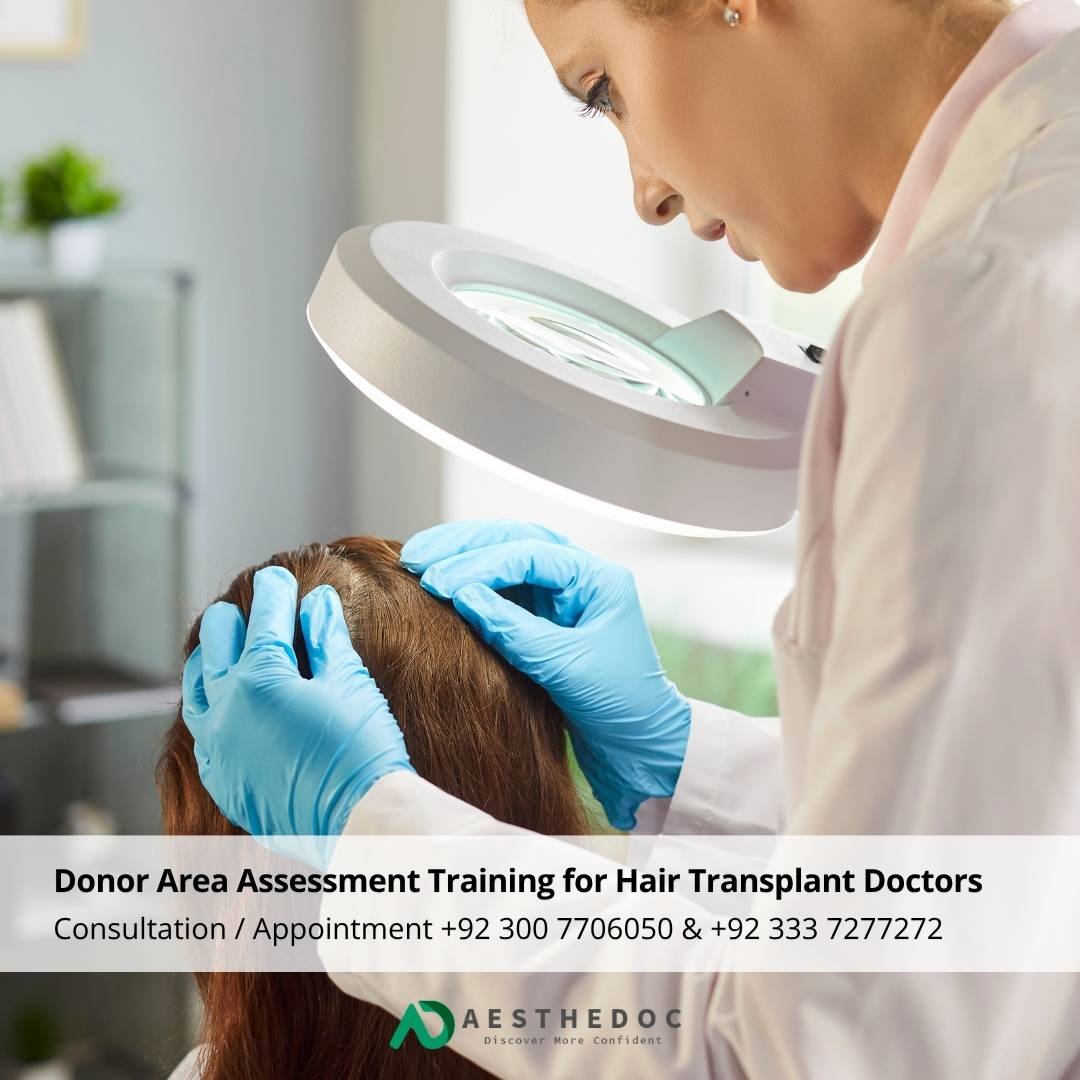
A successful hair transplant is not determined only by the number of grafts extracted or implanted. One of the most important factors in long-term hair restoration is the quality and management of the donor area. A patient may have significant hair loss and request a high number of grafts, but the available donor supply is limited. If that supply is poorly assessed or excessively harvested, the patient may experience visible thinning, uneven density, scarring or reduced options for future procedures.
For doctors entering hair restoration surgery, learning to evaluate the donor area is therefore an essential part of FUE hair transplant training. The surgeon must understand how to assess donor density, identify suitable harvesting regions, evaluate hair characteristics, estimate the available follicular unit supply and plan extraction in a way that respects the patient’s long-term needs.
Donor management is not simply a technical step before graft extraction. It is a complete planning process that connects the patient’s current hair loss, expected future progression, donor characteristics, surgical goals and realistic treatment options.
This guide explains the principles of donor area assessment and management for medical professionals interested in advanced hair transplant training. It explores donor anatomy, follicular unit density, safe donor zone evaluation, graft calculations, overharvesting prevention, FUE planning, patient counselling and long-term donor preservation.
1. Understanding the Donor Area in Hair Transplant Surgery
The donor area is the region from which follicular units are obtained for transplantation. In conventional scalp FUE procedures, the surgeon generally evaluates the occipital and parietal scalp because these areas may contain hair that is more resistant to the effects of androgenetic alopecia.
However, not every patient has the same donor characteristics. The location, density, distribution and long-term stability of donor hair vary between individuals.
A surgeon must avoid assuming that every patient has an identical safe donor zone. A proper assessment considers the patient’s hair loss pattern, family history, age, scalp characteristics, hair calibre, miniaturisation and the possibility of future progression.
Why the donor area matters
The donor area is a finite resource. Once follicular units are removed, they are not naturally replaced in the same location. This makes donor preservation particularly important in patients who may require additional procedures later in life.
A poorly planned extraction pattern can create:
- Visible thinning in the donor region.
- Uneven density or patchy appearance.
- Excessive extraction from limited areas.
- Reduced flexibility for future hair restoration.
- A less favourable appearance with short hairstyles.
- Scarring or changes in scalp texture.
- Difficulty planning corrective procedures.
The objective is not simply to extract the maximum possible number of grafts. It is to use the available donor supply responsibly while maintaining an acceptable appearance and preserving future treatment options.
2. Donor Area Anatomy and the Concept of the Safe Donor Zone
Understanding scalp anatomy is an important foundation of FUE hair transplant training. The occipital and parietal regions are commonly evaluated as potential donor areas, but their suitability must be assessed individually.
The concept of a safe donor zone refers to the scalp region where follicular units are considered relatively more resistant to the progressive miniaturisation associated with androgenetic alopecia.
It is important to understand that the term “safe” does not mean that every follicle in this region is permanently protected. Donor hair characteristics can vary, and some patients may demonstrate thinning or miniaturisation in areas that appear suitable during an initial examination.
Occipital donor region
The occipital region is located at the back of the scalp. It is commonly considered during donor assessment because it may provide a substantial proportion of available follicular units.
Assessment should consider:
- Overall hair density.
- Hair calibre and shaft characteristics.
- Follicular unit distribution.
- Scalp laxity and skin characteristics.
- Evidence of miniaturisation.
- Existing scars or previous surgical changes.
Parietal donor regions
The parietal regions are located on the sides of the scalp. They may contribute to the available donor supply, depending on the patient’s anatomy and hair characteristics.
The surgeon should examine whether density and hair calibre remain consistent across the proposed harvesting region. The boundaries of a suitable donor zone should not be selected using a fixed measurement alone.
Why donor zone boundaries vary
The donor zone is influenced by several factors:
- Hair loss pattern: Patients with different patterns of androgenetic alopecia may have different long-term donor considerations.
- Age: A younger patient may experience further progression of hair loss over time.
- Family history: A family history of extensive hair loss may influence long-term planning.
- Miniaturisation: Reduced hair shaft diameter can indicate changes in follicular characteristics.
- Hair calibre: Thick and coarse hair may provide different visual coverage from fine hair.
- Previous procedures: Earlier FUE or FUT surgery may have changed the distribution of available donor follicles.
The surgeon should assess the complete clinical picture rather than relying on a standard donor area template.
3. Donor Density Assessment: Understanding Follicular Units and Hair Count
Donor density assessment is one of the most important components of hair transplant planning.
A common mistake among inexperienced practitioners is to focus only on the number of hairs visible in a small area without understanding the difference between individual hairs and follicular units.
A follicular unit is a naturally occurring group of hair follicles that emerge from the scalp through a shared opening. A follicular unit may contain one, two, three or occasionally more terminal hairs.
Follicular unit density versus hair density
These two measurements describe different characteristics.
Follicular unit density refers to the number of follicular units within a defined scalp area.
Hair density refers to the number of individual hair shafts within that area.
For example, an area may contain a relatively small number of follicular units but a higher number of total hairs because many units contain multiple hairs.
This distinction matters when estimating the potential cosmetic contribution of the donor supply.
Factors affecting donor density
Donor density varies considerably between patients. Assessment may consider:
- Follicular units per square centimetre.
- Individual hairs per square centimetre.
- The proportion of single-hair units.
- The proportion of two-hair and multi-hair units.
- Hair shaft diameter.
- Hair colour in relation to scalp colour.
- Curl pattern and hair texture.
- Distribution of density across the donor region.
No single density figure should be treated as a universal standard for every patient. Measurement methods, equipment, scalp characteristics and the selected assessment area can influence the findings.
Why density should be assessed in multiple regions
A single measurement may not represent the entire donor area. Density can vary between the central occipital region, lateral occipital areas and parietal regions.
A comprehensive assessment should therefore consider multiple representative areas and document any meaningful differences.
This allows the surgeon to develop a more realistic understanding of the available donor supply.
4. The Role of Trichoscopy in Donor Area Evaluation
Trichoscopy can provide useful information about scalp and hair characteristics during preoperative assessment. It allows clinicians to examine follicular openings, hair shafts and signs of miniaturisation at higher magnification.
For hair restoration professionals, understanding trichoscopic findings can improve the quality of donor evaluation.
What can trichoscopy help assess?
Depending on the equipment and clinical context, trichoscopy may help evaluate:
- Hair shaft diameter variation.
- Miniaturisation.
- Follicular unit characteristics.
- Hair density patterns.
- Scalp inflammation.
- Scaling or other visible scalp abnormalities.
- Potential signs of scarring alopecia.
Identifying miniaturisation
Miniaturisation is a process in which terminal hairs gradually become smaller and finer. It is particularly relevant when evaluating patients with androgenetic alopecia.
If miniaturisation is present in a proposed donor region, the surgeon should consider whether the area is appropriate for harvesting and whether additional diagnostic evaluation is necessary.
Trichoscopy is not a substitute for clinical judgement
A trichoscopic image should be interpreted alongside the patient’s medical history, examination, hair loss pattern and treatment goals.
The presence or absence of a particular finding does not independently establish the long-term suitability of the entire donor area.
5. Hair Characteristics That Influence Donor Quality
Donor quality is not determined by density alone. The physical characteristics of hair can have a major influence on the appearance of the final result.
Hair calibre
Hair calibre refers to the diameter of individual hair shafts. Coarser hair may provide greater visual coverage than fine hair when other factors are comparable.
Patients with fine hair may require different expectations and planning considerations from patients with thick hair.
Hair colour and scalp contrast
The contrast between hair colour and scalp colour can affect the visual appearance of density.
For example, dark hair against a lighter scalp may create a different visual impression from light hair against a similar skin tone.
This does not change the number of available follicular units, but it can influence how much coverage a given number of grafts may visually provide.
Hair curl and texture
Curly or wavy hair may create additional visual coverage because of the way hair shafts occupy space. However, curl pattern may also influence the technical considerations involved in extraction.
The surgeon should understand the patient’s natural hair characteristics before establishing treatment expectations.
Follicular unit composition
The distribution of single-hair, two-hair and multi-hair follicular units is also relevant.
A donor area with a greater proportion of multi-hair units may have a different potential cosmetic contribution compared with one containing predominantly single-hair units.
The surgeon should evaluate these characteristics together rather than relying on one measurement.
6. Graft Calculation and Donor Supply Estimation
Graft calculation is a central part of preoperative hair transplant planning.
Patients frequently ask how many grafts they need. However, the number of grafts required should never be decided solely by the patient’s preferred number or by a commercial package.
The surgeon must assess both the recipient area’s needs and the donor area’s limitations.
What is a graft?
In hair transplantation, the term graft commonly refers to a follicular unit containing one or more hair follicles. It should not be confused with the number of individual hairs.
For accurate communication, clinicians should distinguish between:
- Number of grafts.
- Number of follicular units.
- Number of individual hairs.
- Estimated recipient coverage.
- Available donor supply.
Factors influencing graft requirements
The estimated graft requirement may depend on:
- Size of the recipient area.
- Degree and pattern of hair loss.
- Existing hair density.
- Hairline design.
- Hair calibre and texture.
- Desired cosmetic coverage.
- Donor area quality.
- Potential future hair loss.
- Patient expectations.
- Whether the procedure is a primary or corrective transplant.
A patient with extensive hair loss may request a large number of grafts, but the surgeon must determine whether the donor supply can reasonably support the proposed plan.
Why graft estimates should be realistic
Overestimating available grafts can create unrealistic expectations and encourage excessive extraction.
Underestimating recipient requirements can also lead to a treatment plan that does not adequately address the patient’s concerns.
The purpose of graft calculation is to develop a balanced plan that considers the current cosmetic objective and the long-term donor reserve.
7. FUE Donor Management and Extraction Planning
Follicular Unit Extraction (FUE) is a hair transplantation technique in which follicular units are individually harvested from the donor area.
Although FUE avoids the linear donor incision associated with conventional strip harvesting, it still involves the removal of tissue and may leave small extraction scars.
The appearance of the donor region depends on multiple factors, including patient characteristics, extraction distribution, technique, healing and the number of follicular units removed.
Why extraction distribution matters
If harvesting is concentrated in a limited area, the donor region may develop uneven thinning.
A balanced extraction plan aims to avoid unnecessary concentration and preserve an acceptable appearance across the donor region.
The surgeon must evaluate:
- The distribution of available follicular units.
- Existing variations in density.
- The intended extraction pattern.
- The patient’s hairstyle preferences.
- Previous extraction sites.
- The expected appearance after healing.
Punch selection and donor characteristics
Punch selection is one of the technical considerations in FUE. The choice of instrument and approach should be based on the patient’s follicular anatomy, hair characteristics and the clinical circumstances.
A surgeon should understand the relationship between the extraction instrument, follicular unit characteristics and the risk of tissue trauma.
This is an area where supervised practical education and careful clinical judgement are particularly important.
Extraction should not be driven by a target number alone
A fixed graft target should not override donor safety.
If the donor area cannot reasonably support the requested number of grafts, the surgeon should discuss alternative treatment planning rather than attempting to meet the target at any cost.
8. Preventing Donor Area Overharvesting
Overharvesting is one of the most important complications to understand in FUE hair transplant surgery.
It occurs when too many follicular units are removed from a donor region or when extraction is distributed in a way that produces an undesirable appearance.
Overharvesting can be particularly difficult to correct because removed follicles do not simply grow back in their original locations.
Common causes of overharvesting
Potential contributing factors include:
- Inadequate preoperative donor assessment.
- Unrealistic graft promises.
- Poor extraction distribution.
- Failure to consider future hair loss.
- Inappropriate donor zone boundaries.
- Excessive focus on immediate cosmetic coverage.
- Limited understanding of available donor reserves.
- Previous procedures that were not properly documented.
Visible signs of donor overharvesting
Patients may develop:
- Patchy areas of reduced density.
- Uneven donor appearance.
- Visible scalp through the hair.
- Noticeable extraction marks.
- Reduced suitability for very short hairstyles.
- Limited donor availability for future procedures.
The degree of visible change varies according to the patient’s characteristics and the distribution of extraction.
Strategies for preventing overharvesting
A responsible donor management approach includes:
1. Complete preoperative evaluation
Assess the donor region before discussing a final graft target.
2. Document baseline characteristics
Record relevant density, hair calibre, miniaturisation and existing scars.
3. Establish realistic treatment goals
The proposed recipient coverage should be compatible with the available donor supply.
4. Plan extraction distribution
Avoid concentrating extraction in a small area without a sound clinical reason.
5. Consider future procedures
The donor area should be evaluated as a long-term resource rather than a one-time supply.
6. Maintain transparent patient communication
Explain the limitations of donor availability and the potential consequences of excessive harvesting.
9. Donor Area Assessment in Younger Hair Transplant Patients
Younger patients may seek hair transplantation because they are concerned about early hairline recession or visible thinning.
However, early intervention requires careful planning because androgenetic alopecia can progress over time.
A patient who appears to have a suitable donor area and a relatively small recipient region today may develop more extensive hair loss in the future.
Why age matters
Age alone does not determine whether a patient is suitable for surgery. However, younger patients may have a longer period during which hair loss can progress.
The surgeon should consider:
- Current hair loss pattern.
- Family history.
- Evidence of miniaturisation.
- Stability of hair loss.
- Patient expectations.
- Potential future recipient areas.
- Available donor reserve.
Avoiding an isolated hairline approach
A low or aggressively designed hairline may create a cosmetic problem if surrounding hair continues to recede.
The surgeon should consider the patient’s long-term facial proportions and the possibility of future hair loss.
A conservative and age-appropriate plan may be more suitable than attempting to recreate a youthful hairline without considering future progression.
Medical management and surgical planning
Some patients may benefit from medical management of hair loss as part of an overall treatment strategy. The suitability of medical treatments must be assessed individually by an appropriately qualified clinician.
Hair transplantation should not automatically replace medical evaluation or appropriate treatment of an underlying hair loss condition.
10. Donor Area Assessment in Advanced Hair Loss
Patients with advanced androgenetic alopecia may have a large recipient area and limited donor resources.
These cases require particularly careful planning because the available donor supply may not be sufficient to recreate the density of the patient’s original hair.
Balancing coverage and density
In advanced hair loss, the surgeon may need to prioritise the most visually important areas rather than attempting uniform density across the entire scalp.
The treatment plan should consider:
- Frontal coverage.
- Mid-scalp requirements.
- Crown involvement.
- Existing hair distribution.
- Donor availability.
- Hair characteristics.
- Future progression.
The final plan should reflect realistic cosmetic goals and the patient’s long-term needs.
The importance of expectation management
Patients may arrive with reference photographs or expectations based on online advertisements. These images may not represent what is achievable with their own donor supply.
The surgeon should explain that results vary and that graft numbers alone do not guarantee a particular level of coverage.
11. Donor Area Management in Patients With Previous Hair Transplant Surgery
Patients who have undergone earlier FUE or FUT procedures require a different assessment from first-time hair transplant patients.
Previous surgery may have reduced donor density, altered tissue characteristics or created scars.
A new procedure should not be planned without understanding the history of earlier harvesting.
Review of previous surgery
The assessment should include:
- Number of previous procedures.
- Estimated grafts extracted.
- Previous donor harvesting regions.
- History of donor complications.
- Existing extraction scars.
- Current donor density.
- Patient satisfaction with previous results.
- Any available surgical documentation.
Residual donor supply
The surgeon must evaluate the remaining donor supply rather than assuming that the patient can safely undergo another large procedure.
Previous extraction patterns may not be uniform, and some regions may have less remaining density than others.
When corrective planning may be required
Some patients seek treatment because earlier procedures produced visible donor thinning or an unnatural appearance.
Depending on the clinical findings, options may include conservative revision planning or other approaches selected by an appropriately qualified surgeon.
Not every donor problem can be fully corrected. The patient should receive a realistic explanation of limitations before agreeing to another procedure.
12. Donor Area Scarring and Healing Considerations
FUE is often described as a technique that leaves small extraction marks rather than a linear scar. However, it is not scar-free.
Each extraction site involves tissue disruption, and the final appearance depends on the patient’s healing characteristics, technique and extraction pattern.
Factors that may influence donor scarring
These may include:
- Individual healing response.
- Skin and scalp characteristics.
- Extraction instrument and technique.
- Density and distribution of harvesting.
- Previous surgical procedures.
- Postoperative complications.
- Patient-specific medical factors.
FUE versus FUT donor considerations
FUE and FUT involve different donor harvesting approaches.
FUE involves individual follicular unit extraction and may produce multiple small scars. FUT involves removal of a strip of scalp tissue and generally produces a linear donor scar.
Neither technique is universally appropriate for every patient. The decision should be based on clinical suitability, patient preferences, donor characteristics and the surgeon’s assessment.
13. Donor Area Preservation for Future Hair Restoration
Long-term donor preservation should be part of every comprehensive hair transplant plan.
A patient may initially require treatment for frontal recession but later develop thinning in the mid-scalp or crown. If the donor area has already been excessively harvested, future options may be limited.
The donor area as a long-term resource
A responsible surgeon should consider the likely progression of hair loss and the possibility of future treatment.
This includes evaluating whether the current procedure is likely to leave adequate donor flexibility for future needs.
Planning across multiple procedures
Some patients may require staged treatment rather than a single large procedure.
A staged approach may allow the surgeon to reassess hair loss progression, patient satisfaction and available donor supply before considering additional surgery.
However, the number and timing of procedures should be determined individually.
Patient education
Patients should understand that:
- Donor follicles are limited.
- Extracted follicles do not regenerate in their original locations.
- FUE can leave small scars.
- Additional procedures may not always be possible.
- Hair loss may continue after transplantation.
- A transplant does not stop the underlying progression of androgenetic alopecia.
Clear communication helps patients make informed decisions and reduces unrealistic expectations.
14. Donor Area Assessment in Beard and Body Hair Transplantation
In selected cases, surgeons may evaluate beard or body hair as additional donor sources.
These approaches require an understanding of the differences between scalp hair and non-scalp hair.
Beard and body hair may differ in calibre, growth cycle, texture, length and other characteristics. Their suitability depends on the intended recipient area and the patient’s individual anatomy.
Beard hair as a donor source
Beard hair may be considered in selected patients, including some individuals with limited scalp donor supply.
However, beard hair is not identical to scalp hair and should not automatically be treated as a direct substitute.
Body hair transplantation
Body hair transplantation involves additional technical and selection considerations.
The surgeon must evaluate whether the available hair characteristics are appropriate for the intended cosmetic objective.
Why specialised assessment is important
Additional donor sources require careful counselling about limitations, healing and expected appearance.
They should be considered as part of an individual treatment plan rather than presented as a guaranteed solution for inadequate scalp donor supply.
15. Preoperative Donor Assessment: A Structured Clinical Workflow
A structured workflow helps make donor assessment more consistent and improves communication between the clinical team and patient.
The following framework is educational and should be adapted to the clinician’s training, local regulations and professional scope of practice.
Step 1: Review the patient’s history
Gather information about:
- Hair loss duration and progression.
- Previous hair restoration procedures.
- Family history.
- Relevant medical history.
- Current and previous hair loss treatments.
- Patient expectations and concerns.
Step 2: Examine the scalp
Assess the donor and recipient areas, including visible density differences, scars, scalp condition and any signs that may require further investigation.
Step 3: Evaluate hair characteristics
Consider hair calibre, texture, colour contrast, curl pattern and follicular unit composition.
Step 4: Assess miniaturisation
Use appropriate examination methods, including trichoscopy where indicated, to identify possible miniaturisation or other abnormalities.
Step 5: Estimate donor availability
Develop a realistic estimate based on the patient’s actual donor characteristics rather than relying on a standard graft package.
Step 6: Consider future hair loss
Evaluate whether the treatment plan is compatible with possible progression and future restoration needs.
Step 7: Discuss the treatment plan
Explain the proposed objectives, limitations, potential risks, alternatives and expected postoperative course.
Step 8: Document the findings
Maintain appropriate clinical records, photographs and relevant measurements in accordance with professional and regulatory requirements.
16. Common Donor Management Mistakes Made by Inexperienced Practitioners
Donor management requires more than learning how to operate an FUE device. It involves clinical assessment, judgement, patient selection and long-term planning.
Some common mistakes include:
Mistake 1: Treating every donor area as identical
Donor density, hair calibre and miniaturisation vary between individuals. A standard harvesting plan may not be suitable for every patient.
Mistake 2: Focusing only on the requested graft count
The patient’s desired graft number should not determine the final surgical plan without a proper donor assessment.
Mistake 3: Ignoring future hair loss
A treatment plan that focuses only on current hair loss may create problems if the condition progresses.
Mistake 4: Confusing hairs with grafts
A graft is not necessarily one individual hair. Misunderstanding this distinction can lead to inaccurate planning and communication.
Mistake 5: Failing to document baseline donor density
Without baseline records, evaluating the donor region after surgery or during future consultations becomes more difficult.
Mistake 6: Ignoring previous procedures
A patient with previous FUE or FUT surgery requires an assessment of remaining donor resources and existing scars.
Mistake 7: Promising scar-free results
FUE may leave small scars. Patients should receive accurate information rather than absolute guarantees.
Mistake 8: Neglecting patient expectations
The surgeon must explain what the donor supply can realistically achieve and discuss alternatives when the patient’s expectations are not clinically reasonable.
17. The Importance of Hands-On Donor Assessment Training
Reading about donor assessment is useful, but clinical training is important for understanding how these principles apply to real patients.
Doctors learning FUE hair transplantation should develop the ability to recognise differences in donor density, follicular unit composition, hair calibre and scalp characteristics.
A structured educational programme may help trainees understand the relationship between:
- Patient selection and donor suitability.
- Hair loss progression and future planning.
- Donor density and graft estimation.
- Extraction distribution and donor appearance.
- Graft handling and recipient planning.
- Surgical objectives and long-term preservation.
Practical exposure should take place under appropriate supervision and within the trainee’s professional scope, with patient safety and consent as essential priorities.
18. Choosing a Hair Transplant Training Course for Donor Management
Doctors and surgeons comparing hair transplant training programmes should evaluate more than the course title or advertised duration.
Donor area assessment is a fundamental part of hair restoration, so the curriculum should address both clinical decision-making and the technical considerations involved in FUE.
What should doctors look for?
Donor area evaluation: Does the programme explain how donor suitability, density and miniaturisation are assessed?
Graft planning: Does it address the difference between graft counts, follicular units and individual hairs?
Overharvesting prevention: Does it explain why extraction distribution and donor preservation matter?
Patient selection: Does it cover indications, contraindications and realistic treatment planning?
Hairline and recipient planning: Does it connect donor availability with the patient’s cosmetic objectives?
Postoperative assessment: Does it include donor healing, complications and follow-up considerations?
Trainer experience: Are the trainer’s relevant qualifications and clinical experience clearly presented?
Supervised learning: Is the nature of practical exposure explained clearly, including the trainee’s role and level of involvement?
A credible course should provide transparent information about its curriculum, supervision, patient consent arrangements and limitations.
19. How Donor Management Training Supports Better Clinical Decision-Making
Donor management influences almost every stage of hair restoration surgery.
A clinician who understands donor limitations is better positioned to explain why a patient may need a conservative approach, why a requested graft count may not be appropriate or why future hair loss must be considered before surgery.
Better patient selection
Donor assessment helps identify patients whose expectations and available donor resources may not be compatible.
More realistic treatment planning
The surgeon can develop a plan based on measurable patient characteristics rather than commercial graft targets.
Improved patient communication
Clear explanations of donor limitations help patients understand the reasons behind a recommended treatment strategy.
Better long-term planning
A donor preservation mindset helps clinicians consider future procedures and the possibility of progressive hair loss.
More responsible practice development
Doctors establishing a hair restoration service should understand that patient safety, ethical selection and realistic outcomes are essential to building a sustainable clinical practice.
20. Learn Hair Transplant Donor Management at Aesthedoc
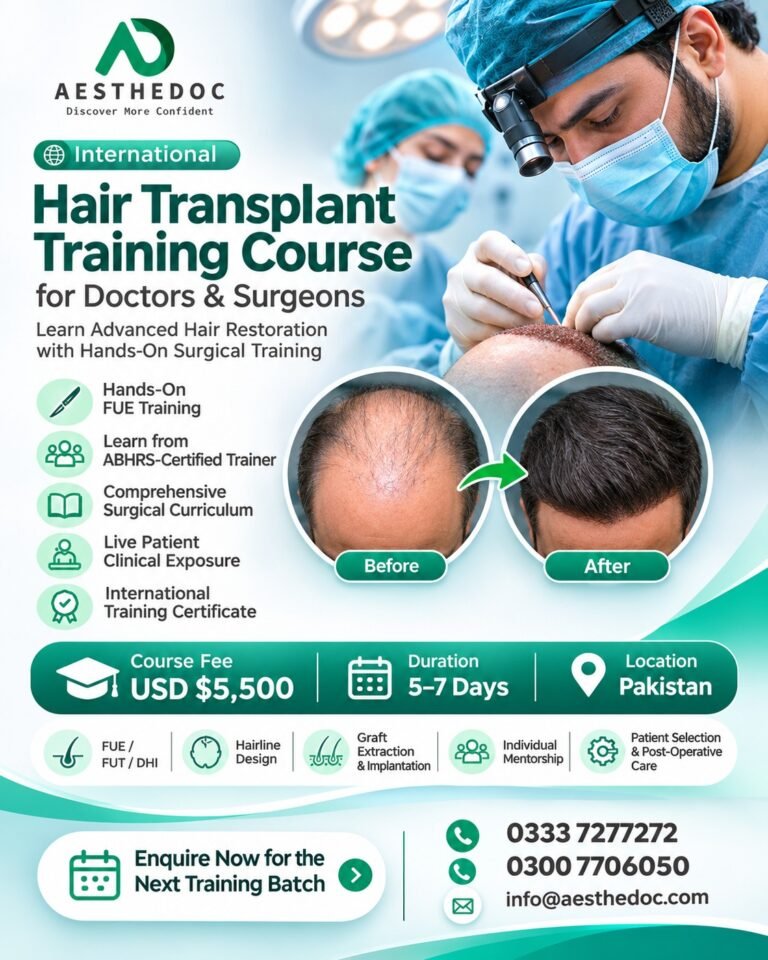
Doctors and surgeons interested in developing their knowledge of donor area assessment and FUE hair restoration can explore the Hair Transplant Course for Doctors & Surgeons at Aesthedoc, Pakistan.
The programme is led by Dr. Adnan Bashir, described on the Aesthedoc course page as a Master Aesthetic Trainer and ABHRS-certified Hair Transplant Surgeon.
The published curriculum includes donor area assessment and management, safe donor zone identification, density calculation, overharvesting prevention and long-term donor preservation. It also covers patient selection, hairline design, FUE surgery, graft handling, advanced restoration techniques, postoperative care and complications management.
The course page lists structured theoretical training, hands-on FUE surgical exposure, live patient cases and one-to-one mentoring. The published course fee is USD $5,500.
Doctors considering enrolment should contact Aesthedoc to confirm current dates, eligibility, practical participation arrangements, course details and any travel requirements before making plans.
Course details:
WhatsApp / Call: +92 333 727 7272
The programme is intended for eligible medical professionals, including MBBS doctors, general surgeons, plastic surgeons, dermatologists and aesthetic physicians. Course completion should not be interpreted as automatic specialist recognition, medical licensure or independent surgical privileges in another country. Participants must comply with the licensing, credentialing and scope-of-practice requirements applicable in their own jurisdiction.
Conclusion
Donor area assessment is one of the foundations of responsible hair transplant surgery. A surgeon must understand that the donor supply is limited and that its management has consequences extending beyond the immediate procedure.
Accurate evaluation of follicular unit density, hair calibre, miniaturisation, donor zone characteristics and previous surgical changes supports more realistic graft planning. Equally important is the ability to recognise when a patient’s requested graft number is not compatible with their available donor supply.
Preventing overharvesting, documenting baseline characteristics and considering future hair loss are essential parts of long-term donor preservation.
For doctors developing their skills in FUE hair transplantation, donor management should be treated as a core clinical competency—not an optional technical detail. A strong foundation in donor assessment supports better patient selection, more responsible surgical planning and a more sustainable approach to hair restoration.
Frequently Asked Questions
1. What is donor area assessment in hair transplantation?
Donor area assessment is the clinical evaluation of the scalp region from which follicular units may be harvested. It considers density, hair calibre, follicular unit composition, miniaturisation, scalp characteristics and long-term suitability.
2. Why is donor area assessment important in FUE?
FUE removes follicular units individually from the donor region. Because extracted follicles do not naturally return to their original locations, the surgeon must plan harvesting carefully to reduce visible thinning and preserve future options.
3. What is the safe donor zone?
The safe donor zone refers to scalp regions generally considered more resistant to androgenetic hair loss. Its boundaries and suitability vary between patients and require individual clinical assessment.
4. What is the difference between hair density and graft density?
Hair density refers to the number of individual hair shafts in a defined area. Graft or follicular unit density refers to the number of follicular units in that area. One graft may contain more than one hair.
5. Can donor hair grow back after FUE extraction?
Follicular units removed during FUE do not naturally regenerate in their original locations. The surrounding hair remains, but the donor area may show reduced density depending on the extraction pattern and other factors.
6. What is donor area overharvesting?
Overharvesting occurs when too many follicular units are removed or extraction is distributed poorly, resulting in visible thinning, patchiness or an undesirable donor appearance.
7. Can donor overharvesting be corrected?
Some cases may be improved through carefully selected corrective approaches, but complete restoration is not always possible. The options depend on the remaining donor supply, scars, hair characteristics and the patient’s clinical condition.
8. Is FUE completely scar-free?
No. FUE generally produces small extraction scars rather than the linear scar associated with FUT, but it is not a scar-free procedure. Scar visibility varies between patients.
9. Can a patient undergo multiple FUE procedures?
Some patients may be suitable for additional procedures, but this depends on the remaining donor supply, previous extraction pattern, healing, current hair loss and overall treatment goals. Multiple procedures should never be assumed to be suitable for everyone.
10. Does donor density determine how many grafts can be extracted?
Donor density is an important factor, but it is not the only one. Hair calibre, follicular unit composition, donor zone characteristics, scalp condition, extraction distribution and future needs must also be considered.
11. Can beard hair be used when scalp donor hair is limited?
Beard hair may be considered in selected cases. Its characteristics differ from scalp hair, so suitability depends on the patient’s anatomy and the intended restoration objective.
12. What should doctors learn in donor management training?
Doctors should understand donor anatomy, density assessment, follicular unit composition, miniaturisation, graft estimation, safe extraction planning, overharvesting prevention, donor scarring and long-term preservation.
13. Who can attend a professional hair transplant training course?
Eligibility depends on the programme and local professional regulations. Aesthedoc describes its hair transplant course as intended for medical professionals such as MBBS doctors, general surgeons, plastic surgeons, dermatologists and aesthetic physicians.
14. Where can doctors learn FUE hair transplant donor management?
Doctors can explore structured hair transplant training programmes that include donor assessment, FUE planning and practical learning. Aesthedoc offers a hair transplant course in Pakistan with a published curriculum covering donor area management and overharvesting prevention.
15. Does completing a hair transplant course allow a doctor to practise independently?
Not automatically. Course completion does not replace medical licensure, specialist credentials, surgical privileges or any additional training required by the relevant regulatory authority. Doctors must follow the laws and professional requirements of the country where they intend to practise.