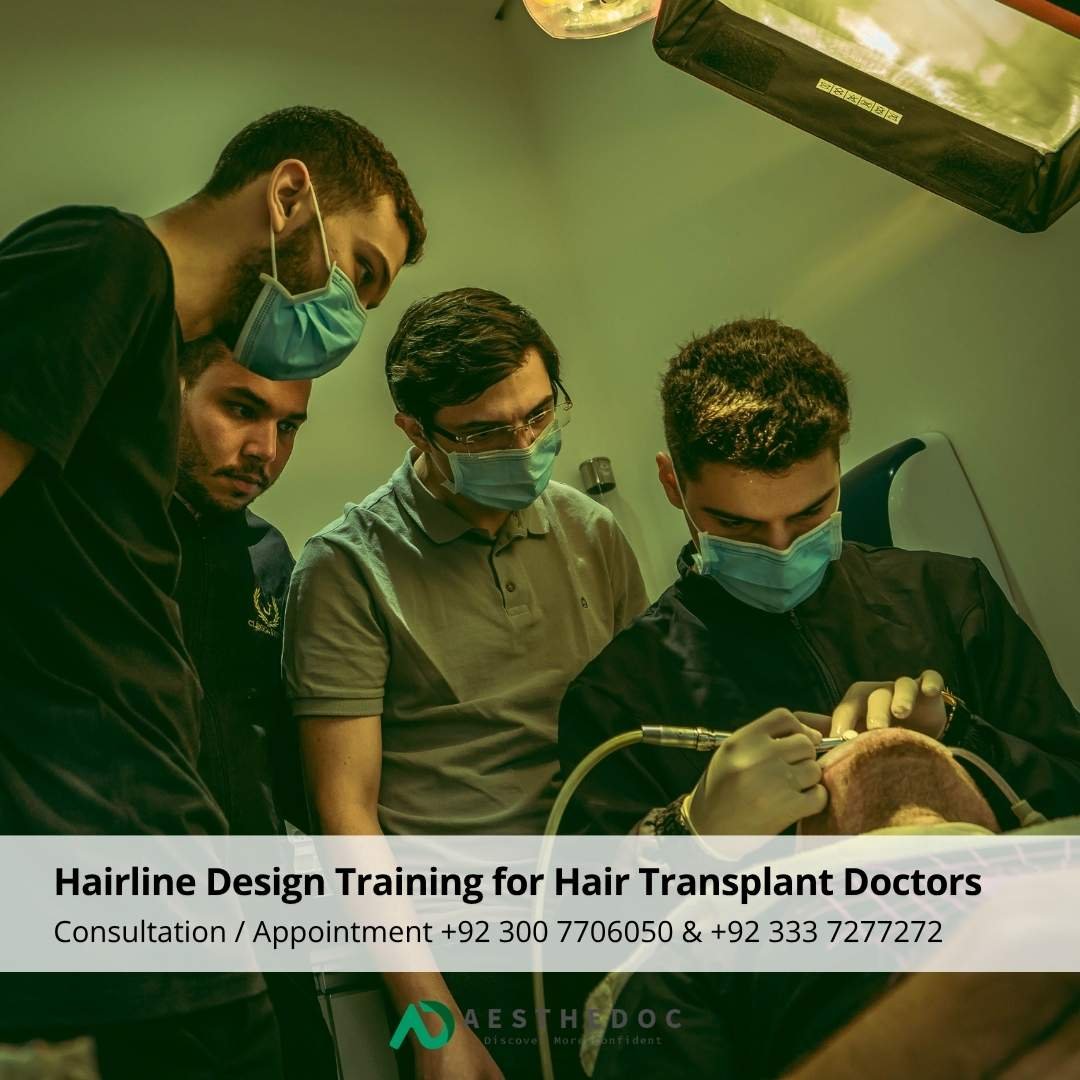
Hairline design is one of the most visually important stages of hair transplant surgery. It influences how the face is framed, how natural the transplanted hair appears and whether the result remains appropriate as the patient ages. Even when graft extraction and implantation are technically successful, an unsuitable hairline can make the overall result look artificial.
For doctors and surgeons learning hair restoration, hairline design requires more than drawing a line across the forehead. It involves understanding facial proportions, existing hair characteristics, age, gender-related patterns, ethnicity, hair loss progression and the limitations of the donor supply.
A natural-looking hairline should complement the patient’s facial structure rather than follow a universal template. It should also be planned with the possibility of future hair loss in mind. A design that appears attractive immediately after surgery may become problematic if surrounding native hair continues to recede.
This guide explores the principles of hairline design and facial harmony for medical professionals interested in hair transplant training. It covers facial assessment, age-appropriate planning, male and female hairline characteristics, ethnic considerations, natural irregularity, graft distribution, patient communication and common design mistakes.
1. What Is Hairline Design in Hair Transplant Surgery?
Hairline design is the process of planning the frontal boundary of the hair-bearing scalp before a hair transplant. It establishes where transplanted hair will begin and how the frontal region will transition into the existing scalp hair.
The hairline is not simply a cosmetic border. It affects the perceived proportions of the forehead, the balance of facial features and the overall appearance of the patient’s hairstyle.
A carefully planned hairline considers:
- Facial shape and proportions.
- Current hair loss pattern.
- Age and likely future progression.
- Existing hairline characteristics.
- Donor hair availability.
- Hair calibre, texture and direction.
- Gender-related aesthetic considerations.
- Ethnic and individual variation.
- Patient preferences and realistic expectations.
The objective is to create a design that looks appropriate for the individual patient, not to reproduce an identical hairline for every person.
Why hairline design matters
The frontal hairline is highly visible during everyday interactions. It is often examined closely in photographs, video calls and social situations.
An unnatural hairline may appear too straight, too low, too dense or disconnected from the patient’s facial structure. It can also look inconsistent with the surrounding native hair.
For this reason, hairline planning should be treated as a central part of surgical decision-making rather than a minor step before recipient-site creation.
2. Understanding Facial Harmony in Hair Restoration
Facial harmony refers to the relationship between facial features and their overall proportions. In hair transplantation, the hairline contributes to the visual balance between the forehead, eyebrows, temples and the rest of the face.
A surgeon should assess the complete face rather than designing the hairline using forehead height alone.
Facial proportions
Traditional facial analysis sometimes divides the face into approximate horizontal thirds:
- Upper third: hairline to the glabella or brow region.
- Middle third: brow region to the base of the nose.
- Lower third: base of the nose to the chin.
These proportions can provide a general reference during assessment, but they should not be treated as rigid rules. Natural facial variation is common, and an individual’s existing proportions may not match an idealised diagram.
A transplant surgeon should avoid forcing a patient’s hairline into a mathematical formula when doing so would create an unnatural or age-inappropriate appearance.
Forehead height
Forehead height is one factor in hairline planning, but it is not the only consideration.
The surgeon should examine:
- The patient’s original or previous hairline, if known.
- The shape of the forehead.
- Brow position.
- Facial width and length.
- Temporal recession.
- Existing facial asymmetry.
- The patient’s hairstyle preferences.
A high forehead does not automatically mean that the hairline should be lowered as much as possible. The appropriate design depends on the patient’s overall appearance and available donor resources.
Facial shape
Facial shape may influence the visual effect of a proposed hairline.
Common descriptive categories include oval, round, square, rectangular, heart-shaped and diamond-shaped faces. These categories are useful as broad references, but most people do not fit perfectly into one classification.
The surgeon should use facial shape as one part of the assessment rather than a formula for selecting a fixed hairline.
3. Male Hairline Design Principles
Male hairlines commonly change with age. A mature adult hairline may sit higher and show some temporal recession compared with the hairline seen during adolescence.
This natural evolution is important when planning transplantation.
The mature male hairline
A mature hairline is not necessarily a sign of significant hair loss. Some degree of recession at the temples can be part of normal adult hairline development.
The surgeon should distinguish between a naturally mature hairline and progressive androgenetic alopecia.
Avoiding an excessively low hairline
A very low frontal hairline may create an artificial appearance, especially in an adult patient whose facial features and age are inconsistent with a juvenile hairline.
It may also consume a larger proportion of the available donor supply, leaving fewer grafts for future areas of progression.
The design should be appropriate for the patient’s current age and potential future hair loss.
Frontal and temporal balance
The frontal hairline and temporal regions work together to frame the face.
A design that focuses only on the central frontal hairline may fail to address the overall appearance of the temples. Conversely, excessive temple reconstruction can create an unnatural shape if it is not consistent with the patient’s facial structure and existing hair.
The surgeon should evaluate the frontal and temporal regions as parts of one aesthetic unit.
Masculine hairline characteristics
Male hairlines vary widely. Some have relatively straight frontal contours, while others show more rounded or irregular patterns.
The surgeon should assess the patient’s natural characteristics and preferences instead of assuming that every male patient requires the same angular or recessed design.
4. Female Hairline Design Principles
Female hairline planning requires a different aesthetic assessment in many patients. Female hairlines are often more rounded, with different temporal contours and a different relationship to the forehead.
However, female hairlines also vary significantly between individuals.
Common female hairline characteristics
Some women have:
- A relatively rounded frontal contour.
- Less pronounced temporal recession.
- A lower or more continuous frontal border.
- Fine transition hairs along the hairline.
- Individual variations in central and lateral density.
These are general patterns rather than universal rules.
Female hairline restoration considerations
Women seeking hair transplantation may present with several different concerns, including:
- Congenital or naturally high hairlines.
- Frontal thinning.
- Temporal recession.
- Traction-related hair loss.
- Scarring alopecia.
- Hairline changes following surgery or trauma.
The cause of hair loss should be evaluated before planning a transplant. Not every form of female hair loss is suitable for surgery, and some conditions require medical assessment or stabilisation before surgical intervention is considered.
Avoiding inappropriate hairline lowering
A patient may request a lower hairline because of dissatisfaction with forehead height. The surgeon must evaluate whether the proposed change is clinically and aesthetically appropriate.
The available donor supply, scalp characteristics, hair loss diagnosis and expected result should all be discussed.
Individualised design
Female hairline design should not be based solely on gender. Facial proportions, ethnicity, natural hair characteristics and patient preferences remain essential.
5. Age-Appropriate Hairline Planning
Age is one of the most important factors in long-term hairline design.
A patient in their twenties may still experience substantial progression of androgenetic alopecia. A patient in their forties or fifties may have a more established pattern, although future changes can still occur.
Why younger patients require caution
A young patient may request a low, dense and youthful hairline. However, if surrounding native hair continues to recede, the transplanted frontal region may become isolated.
This can create an unnatural appearance and may require additional procedures.
Planning for future hair loss
The surgeon should consider:
- Current pattern and severity of hair loss.
- Family history.
- Evidence of miniaturisation.
- Previous progression.
- Patient age.
- Medical management options.
- Donor availability.
- Likely future recipient areas.
No assessment can predict every aspect of future hair loss with certainty. The purpose is to avoid designing a hairline that depends on the assumption that the patient’s current pattern will never change.
Mature design versus youthful design
A mature design aims to remain appropriate as the patient ages. It does not necessarily attempt to recreate the hairline of adolescence.
The best design is one that suits the patient’s current facial appearance while allowing for plausible future changes.
6. Ethnic Considerations in Hairline Design
Hairline characteristics vary across populations and individuals. Differences may include hair texture, curl pattern, hair calibre, forehead proportions and common hairline shapes.
Ethnic considerations are relevant, but they should never be used as rigid stereotypes.
Why ethnicity should be considered
A design that looks natural in one individual may not look appropriate in another because of differences in hair characteristics and facial structure.
The surgeon should consider:
- Natural hairline shape.
- Hair calibre.
- Curl and wave pattern.
- Hair-to-skin colour contrast.
- Facial proportions.
- Temporal hair characteristics.
- The patient’s own aesthetic preferences.
Avoiding stereotypes
Ethnicity does not determine one fixed hairline design. Patients from the same broad ethnic group may have substantially different facial features and hair characteristics.
A proper consultation should focus on the individual rather than assigning a standard design based on background alone.
Hair texture and visual coverage
Hair texture influences the visual appearance of density. Curly, wavy and straight hair may create different coverage effects even when the number of transplanted follicular units is similar.
These characteristics should be considered when planning the frontal transition and overall recipient density.
7. Natural Hairline Irregularity and Soft Transitions
One of the common features of a natural hairline is that it is not perfectly straight or mechanically uniform.
A hairline with a sharply defined, symmetrical border may appear artificial, particularly when the patient’s original hairline had a more irregular contour.
The importance of irregularity
Natural hairlines may contain small variations in height, direction and density. These variations contribute to a softer transition between the forehead and the hair-bearing scalp.
A surgeon should understand the difference between deliberate natural variation and uncontrolled asymmetry.
Frontal transition zone
The frontal transition zone is the area where the forehead gradually meets the hair-bearing region.
Its appearance is influenced by:
- Follicular unit composition.
- Hair calibre.
- Density distribution.
- Hair direction.
- Existing hairline characteristics.
- The patient’s natural hair texture.
A gradual transition may appear more natural than a sharply defined border.
Single-hair follicular units
Single-hair follicular units are often considered when planning the most anterior part of the hairline because they can contribute to a softer visual edge.
The specific use and distribution of follicular units must be determined by the surgeon based on the patient’s anatomy, hair characteristics and treatment plan.
Avoiding a plug-like appearance
Older hair transplantation techniques sometimes produced visible clusters of hair that looked unlike natural growth.
Modern hair restoration planning places greater emphasis on natural follicular unit characteristics, direction and distribution. The objective is to avoid an artificial, repetitive or overly dense frontal pattern.
8. Hairline Design and Temporal Angles
The temporal regions are important because they connect the frontal hairline with the side of the scalp.
A patient may have a satisfactory central hairline but still appear unnatural if the temporal areas are poorly designed.
Understanding temporal recession
Temporal recession can occur as part of normal hairline maturation or androgenetic alopecia.
The surgeon should assess whether the patient requires frontal restoration only or whether the temporal regions also contribute to the aesthetic concern.
Temporal point considerations
The temporal points help frame the upper face and connect the frontal hairline with the sideburn region.
Their shape and position vary between individuals. Reconstruction requires attention to the patient’s natural pattern and the limitations of available donor hair.
Avoiding excessive reconstruction
Attempting to recreate every detail of a youthful temporal hairline may require a substantial number of grafts and may not be appropriate for every patient.
The surgeon should balance the aesthetic objective against donor availability and long-term planning.
9. Hair Direction, Angle and Natural Growth Patterns
Hairline design is not only about position and shape. The direction and orientation of hair also influence the final appearance.
Natural hair grows in patterns that vary across the scalp. The frontal region, temples and central scalp may have different directions and transitions.
Why direction matters
If transplanted hair does not blend with the surrounding hair pattern, it may look disconnected or difficult to style.
Planning should consider:
- Existing hair direction.
- Natural growth patterns.
- Hairline contour.
- Temporal orientation.
- Hair calibre and texture.
- The intended hairstyle.
The relationship between design and implantation
Hairline design establishes the intended aesthetic pattern. Recipient-site planning and implantation must be consistent with that design.
A carefully drawn hairline cannot compensate for poor technical execution. Similarly, technically competent implantation cannot fully correct an unsuitable design.
Both stages must work together.
10. Hairline Design for Different Degrees of Hair Loss
Hairline planning differs according to the patient’s pattern and extent of hair loss.
A patient with early frontal recession presents a different planning challenge from someone with advanced baldness involving the frontal scalp, mid-scalp and crown.
Early hairline recession
Patients with limited recession may have a relatively small recipient area. However, they may also have a greater likelihood of future progression.
The surgeon should avoid treating a small current problem as if it were an isolated and permanent condition.
Frontal and mid-scalp hair loss
When hair loss extends behind the frontal region, the surgeon must consider the relationship between the proposed hairline and the remaining native hair.
A design that is too low may consume donor resources needed to address the mid-scalp.
Advanced hair loss
Patients with extensive hair loss may not have enough donor supply to recreate a dense, low hairline and restore every affected region.
The surgeon may need to prioritise areas according to facial framing, existing hair and realistic cosmetic objectives.
Crown involvement
The crown has a different growth pattern and may require separate planning considerations. A frontal design should not be considered in isolation when the patient also has substantial crown loss.
The entire scalp and long-term donor supply should be considered before finalising the treatment plan.
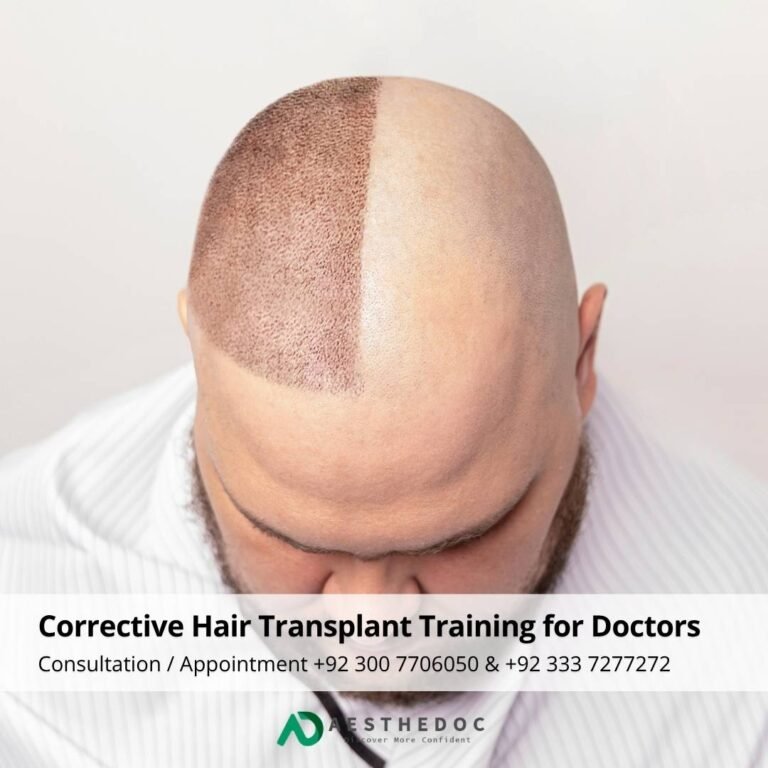
11. Hairline Design in Patients With Previous Transplants
Patients who have undergone previous hair transplantation may request changes because their existing hairline appears too low, too straight, too dense or inconsistent with their facial features.
Corrective cases require careful assessment because the surgeon may be working with an established pattern of transplanted hair and a reduced donor supply.
Common hairline concerns after previous surgery
- An unnaturally straight frontal border.
- A hairline positioned too low.
- Poor temporal transition.
- Visible multi-hair grafts at the front.
- Unnatural hair direction.
- Asymmetry.
- Insufficient density behind the hairline.
- Disconnection from surrounding native hair.
Assessment before revision
The surgeon should review previous procedures, current donor availability, existing graft distribution and the patient’s expectations.
Some concerns may be improved through carefully planned revision approaches, while others may have significant limitations.
Avoid promising complete correction
Corrective hair transplantation is not always able to recreate a completely natural original appearance. The patient should understand the possible limitations before proceeding.
12. Patient Consultation and Hairline Approval
Hairline planning is a collaborative process between the clinician and the patient.
The surgeon brings clinical knowledge and an understanding of long-term planning. The patient brings personal preferences, lifestyle considerations and expectations about appearance.
Both perspectives should be considered.
Understanding the patient’s goals
During consultation, the clinician should explore:
- What aspect of the hairline concerns the patient?
- Is the concern mainly forehead height, temporal recession or frontal thinning?
- What hairstyle does the patient usually prefer?
- Does the patient want a conservative or more noticeable change?
- Are there reference photographs?
- Does the patient understand that future hair loss may continue?
Using reference photographs
Photographs can help clarify a patient’s aesthetic preferences. However, copying another person’s hairline is not an appropriate substitute for individual assessment.
Differences in facial structure, hair calibre, donor availability and hair loss progression may make the same design unsuitable for another patient.
Explaining limitations
The surgeon should discuss:
- What the donor supply may reasonably support.
- Why a very low hairline may not be advisable.
- The possibility of future hair loss.
- The potential need for medical management.
- Surgical risks and limitations.
- The fact that results vary between patients.
Documenting the agreed design
The proposed design and relevant discussions should be documented in the clinical record according to professional standards and local requirements.
The patient should have a clear opportunity to understand the proposed treatment before consent is obtained.
13. Common Hairline Design Mistakes in Hair Transplant Surgery
Hairline design mistakes can affect the appearance of an otherwise technically successful transplant.
Understanding these mistakes is an important part of professional hair restoration education.
Mistake 1: Designing an excessively low hairline
A very low hairline may look unnatural as the patient ages and may consume more donor resources than necessary.
Mistake 2: Creating a perfectly straight frontal border
A rigidly straight hairline may look artificial when it does not match the patient’s natural characteristics.
Mistake 3: Ignoring facial proportions
A design based only on forehead height may fail to account for the patient’s facial structure.
Mistake 4: Using the same design for every patient
Hairline shape, height and transition should be individualised.
Mistake 5: Ignoring future hair loss
A design that does not consider progression may leave transplanted hair isolated from surrounding native hair.
Mistake 6: Neglecting the temples
The frontal hairline and temporal regions should be considered together.
Mistake 7: Overlooking hair calibre and texture
The same design may produce different visual effects in patients with fine, coarse, curly or straight hair.
Mistake 8: Promising a celebrity hairline
Reference photographs can help communicate preferences, but they should not become unrealistic surgical targets.
Mistake 9: Ignoring donor limitations
An attractive design must still be compatible with the patient’s available donor supply.
Mistake 10: Failing to document the plan
Clear documentation supports communication, consent and continuity of care.
14. The Relationship Between Hairline Design and Graft Distribution
Hairline design and graft distribution are closely connected.
The surgeon must consider not only where the hairline should be positioned but also how the available follicular units may contribute to the intended visual result.
Distribution across the frontal region
The frontal transition, central frontal region and areas behind the hairline may have different aesthetic requirements.
The distribution of grafts should reflect the patient’s existing hair, donor characteristics and overall treatment plan.
Density should not be uniform by default
A natural-looking scalp does not necessarily have identical density everywhere.
The surgeon should consider the relationship between the frontal transition, existing hair and the broader recipient area.
Balancing the hairline with future needs
A highly ambitious frontal design may use a significant proportion of the donor supply.
This could limit the options available if hair loss progresses into the mid-scalp or crown.
A balanced plan considers the entire scalp rather than treating the frontal region as an isolated cosmetic project.
15. Hairline Design in Special Clinical Situations
Some patients require additional assessment because their hairline concerns are associated with specific medical or surgical circumstances.
Traction alopecia
Traction alopecia may occur after repeated tension on the hair. Some patients develop frontal or temporal hair loss.
Before considering transplantation, the clinician should evaluate the cause, disease activity, scalp condition and suitability for surgery.
Scarring alopecia
Scarring conditions require careful diagnosis. Hair transplantation may be inappropriate in active disease, and specialist assessment may be necessary.
The surgeon should not treat every area of hair loss as routine androgenetic alopecia.
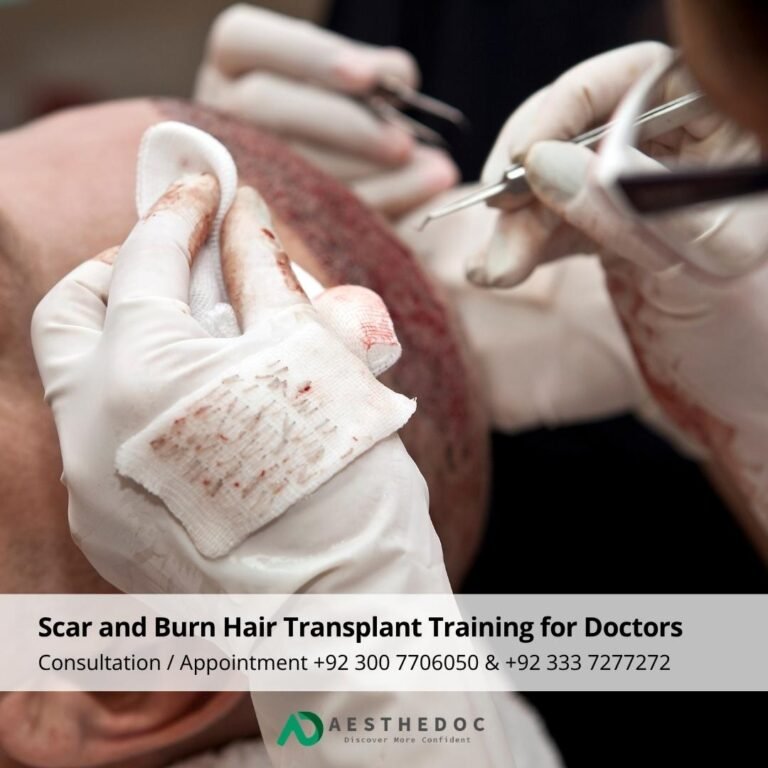
Burn and trauma-related hairline loss
Patients with burns or traumatic scars may seek restoration of the frontal hairline.
These cases can involve altered tissue characteristics, scarring and variable recipient-area suitability. Individual assessment is essential.
Congenitally high hairline
Some patients have a naturally high forehead without progressive hair loss. They may request hairline lowering or restoration.
The surgeon should evaluate the patient’s anatomy, donor supply, expectations and available treatment options before recommending surgery.
16. A Structured Hairline Design Assessment Framework for Doctors
A consistent assessment framework can help clinicians organise the information required before developing a surgical plan.
The following is an educational framework, not a substitute for supervised clinical training or professional judgement.
Step 1: Review the patient’s history
Understand the duration and progression of hair loss, previous procedures, family history, relevant medical factors and treatment history.
Step 2: Examine the full face
Assess forehead shape, facial proportions, brow position, temples and the overall relationship between facial features.
Step 3: Examine the existing hairline
Observe its height, shape, symmetry, temporal pattern and any evidence of miniaturisation.
Step 4: Assess hair characteristics
Consider hair calibre, texture, curl pattern, colour contrast and the characteristics of the available donor supply.
Step 5: Evaluate future hair loss risk
Consider the current pattern, age, family history and other relevant clinical findings.
Step 6: Review donor limitations
Ensure that the proposed design is compatible with the available donor resources and long-term preservation.
Step 7: Discuss aesthetic preferences
Understand the patient’s desired appearance while explaining realistic and clinically appropriate options.
Step 8: Document the proposed design
Record relevant photographs, clinical findings, discussions and the agreed treatment plan according to applicable professional standards.
17. Why Doctors Need Dedicated Hairline Design Training
Hairline design combines clinical assessment with aesthetic judgement. It cannot be mastered simply by learning how to operate an FUE device.
Doctors need to understand why one design may be appropriate for a particular patient but unsuitable for another.
Dedicated training can help medical professionals develop a structured approach to:
- Gender-specific hairline principles.
- Age-appropriate planning.
- Facial harmony.
- Ethnic and individual variation.
- Natural density distribution.
- Donor supply considerations.
- Patient counselling.
- Recipient-area planning.
- Long-term hair loss considerations.
Training should also make clear that aesthetic planning and surgical execution are separate but connected competencies.
A doctor may understand how to draw a proposed hairline but still require further supervised education and appropriate clinical experience before independently performing hair restoration procedures.
18. Choosing a Hair Transplant Training Course With Hairline Design Education
Doctors and surgeons comparing hair transplant courses should examine whether the curriculum includes hairline design and aesthetic planning.
A course focused only on extraction and implantation may not provide sufficient attention to the decisions that shape the patient’s final appearance.
Questions to ask before enrolling
Does the curriculum include facial harmony?
Look for education on facial proportions and the relationship between the hairline and facial structure.
Does it address age-appropriate planning?
The programme should explain why future hair loss matters, particularly in younger patients.
Does it cover gender-specific principles?
Doctors should understand common differences in male and female hairline patterns while learning to individualise the design.
Does it include ethnic considerations?
Training should explain how hair characteristics and facial variation influence aesthetic planning without relying on stereotypes.
Does it discuss natural density distribution?
The programme should connect hairline design with follicular unit characteristics and recipient planning.
Does it cover patient counselling?
Doctors should learn how to discuss expectations, limitations and the possibility of future procedures.
Is the trainer’s experience transparent?
Review the trainer’s qualifications and relevant experience in hair restoration.
Are practical arrangements clearly explained?
Confirm the nature of supervised exposure, trainee participation, patient consent arrangements and the scope of activities included.
19. Learn Hairline Design and FUE Principles at Aesthedoc
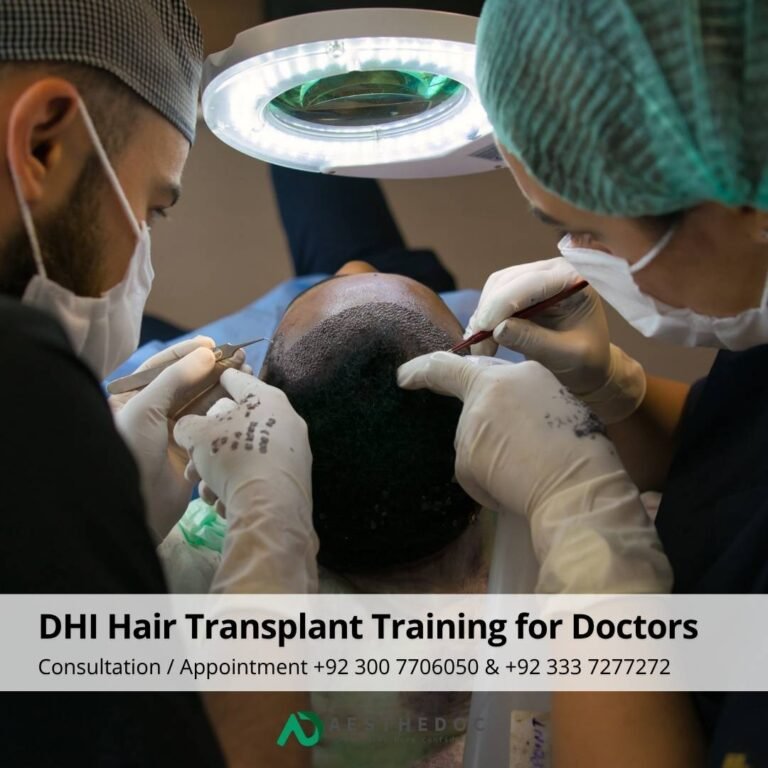
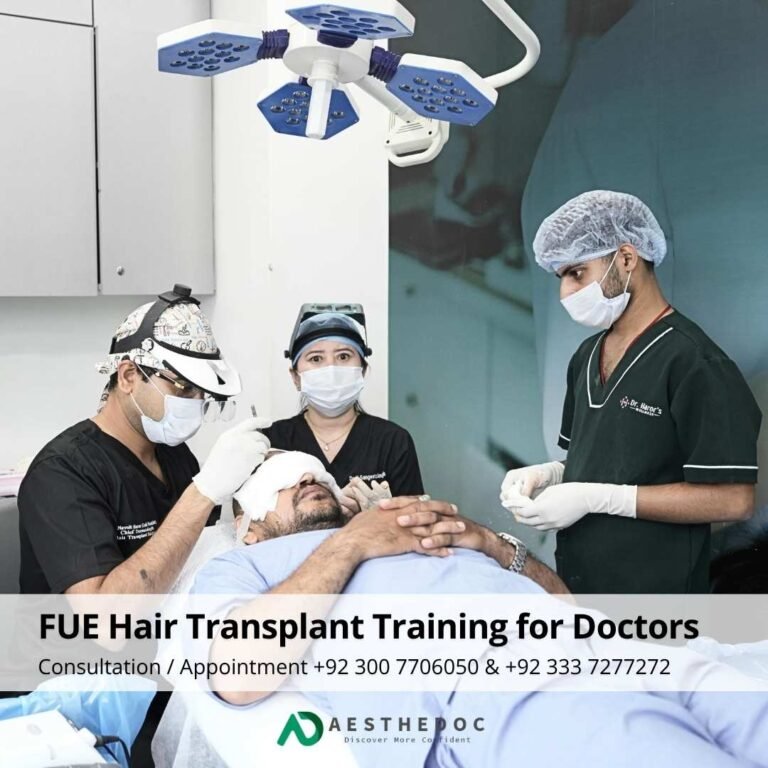
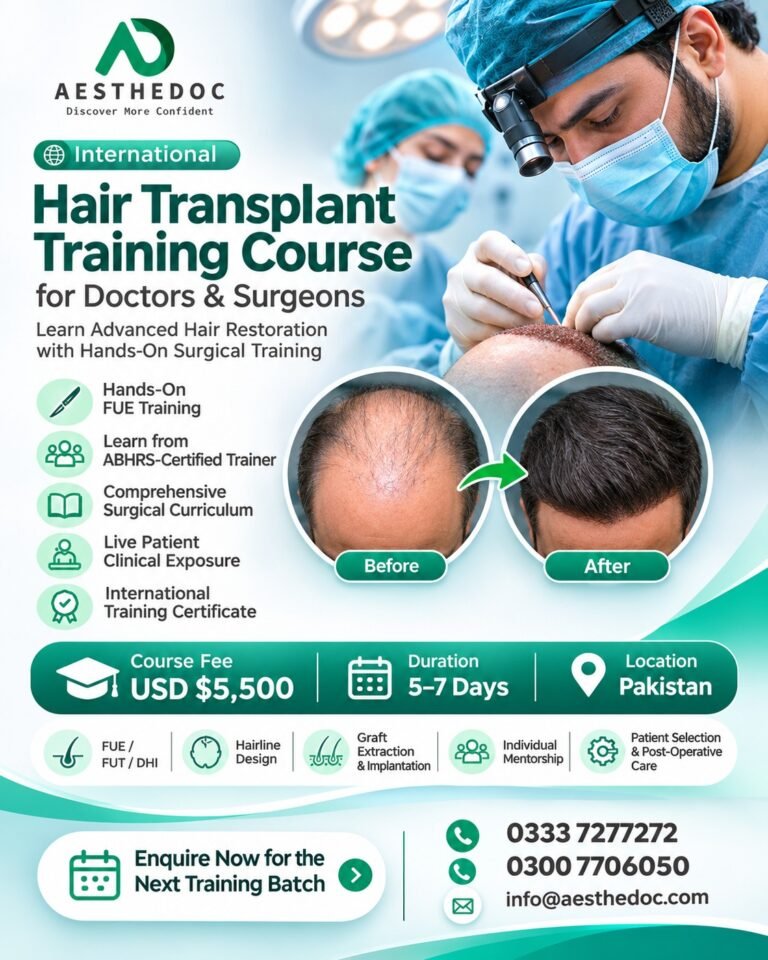
Doctors and surgeons seeking structured education in hair restoration can explore the Hair Transplant Course for Doctors & Surgeons at Aesthedoc, Pakistan.
The published Aesthedoc curriculum includes a dedicated module on hairline design and facial harmony. Its stated learning topics include gender-specific hairline principles, age-appropriate hairline planning, natural density distribution and ethnic considerations.
The programme is led by Dr. Adnan Bashir, identified on the course page as a Master Aesthetic Trainer and ABHRS-certified Hair Transplant Surgeon.
According to the published course information, the programme includes structured theoretical training, hands-on FUE surgical exposure, live patient cases, one-to-one mentoring, preoperative planning, postoperative care protocols and complications management. The published course fee is USD $5,500.
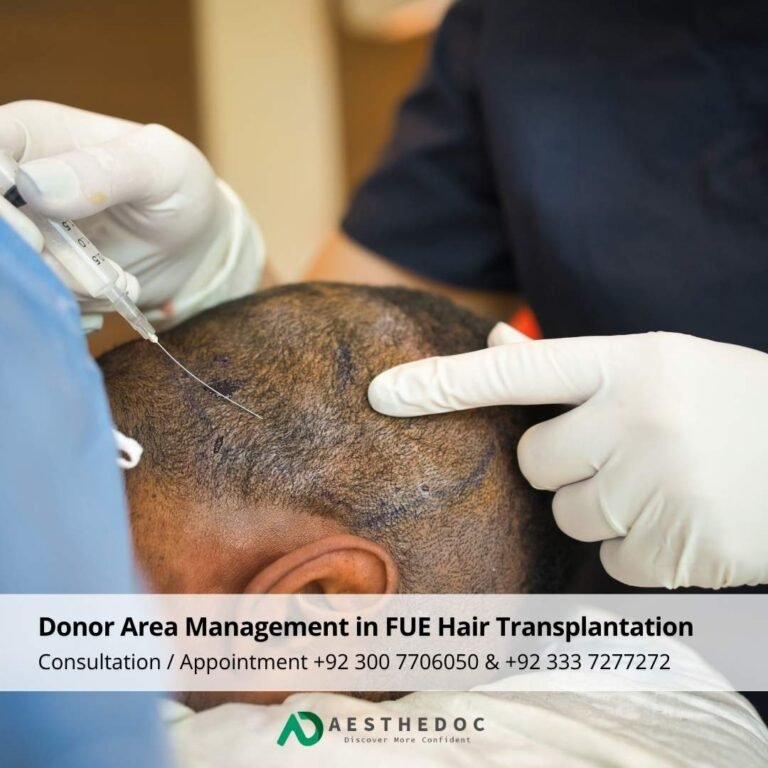
The wider curriculum also covers patient selection, donor area assessment, FUE surgery, advanced hair restoration techniques and postoperative care.
Doctors interested in joining should contact Aesthedoc to confirm current availability, eligibility, course dates, practical participation arrangements and the details included in the published fee.
Course page:
WhatsApp / Call: +92 333 727 7272
The programme is presented for medical professionals, including MBBS doctors, general surgeons, plastic surgeons, dermatologists and aesthetic physicians. Completing a training course does not automatically grant specialist status, medical licensure or independent surgical privileges. Participants must meet the professional and regulatory requirements applicable in the country where they intend to practise.
Conclusion
Hairline design is a central component of natural-looking hair transplantation. It requires the surgeon to consider facial proportions, age, gender-related patterns, ethnicity, hair characteristics, donor availability and the possibility of future hair loss.
A successful design should complement the patient’s individual appearance rather than follow a rigid template. It should also remain realistic in relation to the donor supply and the patient’s long-term treatment needs.
For doctors learning hair restoration, understanding facial harmony and hairline planning is as important as learning the technical principles of FUE. A structured approach to assessment, patient communication and aesthetic decision-making supports more responsible treatment planning.
Hair transplant training should therefore include hairline design as a core subject, helping medical professionals understand not only how procedures are performed but also how surgical goals are planned for individual patients.
Frequently Asked Questions
1. What is hairline design in hair transplant surgery?
Hairline design is the planning of the frontal boundary of the transplanted hair. It considers facial proportions, age, hair characteristics, donor availability and future hair loss.
2. Why is facial harmony important in hairline design?
The hairline frames the upper face and influences the visual balance between the forehead, eyebrows and other facial features. A design that does not suit the patient’s facial structure may look artificial.
3. Should every hair transplant patient have a low hairline?
No. A low hairline is not appropriate for every patient. The surgeon should consider age, facial proportions, donor supply and the possibility of future hair loss.
4. What is an age-appropriate hairline?
An age-appropriate hairline is one that suits the patient’s current appearance and takes possible future hair loss into account. It does not necessarily attempt to recreate an adolescent hairline.
5. Are male and female hairline designs different?
They may involve different aesthetic considerations because common male and female hairline patterns can differ. However, the design should always be individualised rather than based on gender alone.
6. How does ethnicity influence hairline design?
Hair texture, curl pattern, calibre, facial proportions and natural hairline characteristics vary among individuals. These factors should be considered without relying on ethnic stereotypes.
7. Why should a hairline not be perfectly straight?
A perfectly straight border may appear artificial when it does not match the patient’s natural hairline characteristics. Natural variation and a gradual transition can contribute to a more realistic appearance.
8. What is the frontal transition zone?
It is the area where the forehead gradually meets the hair-bearing scalp. Its appearance depends on follicular unit composition, hair calibre, density distribution and natural growth characteristics.
9. Can a hairline be redesigned after a previous transplant?
Some hairline concerns may be addressed through corrective planning. However, the available donor supply, existing grafts, scars and limitations of the previous procedure must be assessed.
10. Does hairline design affect the number of grafts required?
Yes. The position, shape and extent of the proposed hairline influence the recipient area and therefore affect graft planning. The final estimate also depends on hair characteristics and donor availability.
11. Can a hair transplant stop future hair loss?
No. Hair transplantation relocates follicles but does not automatically stop the underlying progression of androgenetic alopecia. Patients may require ongoing medical assessment and management.
12. What should doctors learn in hairline design training?
Doctors should study facial harmony, age-appropriate planning, gender-specific principles, ethnic and individual variation, natural density distribution, donor limitations and patient counselling.
13. Who can attend a hair transplant course at Aesthedoc?
The published programme is intended for medical professionals such as MBBS doctors, general surgeons, plastic surgeons, dermatologists and aesthetic physicians. Prospective participants should confirm eligibility directly with Aesthedoc.
14. Does a hair transplant training certificate allow independent surgical practice?
Not automatically. A course certificate does not replace local medical licensure, specialist credentials, surgical privileges or any additional requirements imposed by the relevant regulatory authority.
15. Where can doctors learn hairline design and FUE hair restoration?
Doctors can explore professional hair transplant training programmes that include aesthetic planning and FUE education. Aesthedoc’s published course curriculum includes hairline design, facial harmony, donor management and FUE surgical training.